

-
ECSP Weekly Watch | May 13 – 17
› A window into what we are reading at the Wilson Center’s Environmental Change and Security Program
UN World Wildlife Crime Report Reveals Harm of Wildlife Trafficking (UN Office on Drugs and Crime)
In the third World Wildlife Crime Report, the UN Office on Drugs and Crime (UNODC) discussed trends in illicit trafficking of protected species, analyzed wildlife crime harms and impacts, and took stock of all current knowledge on intervention effectiveness. This report is more comprehensive than its predecessors in 2016 and 2020 due to increased reporting. Despite 20 years of effort, wildlife trafficking persists and is connected with powerful organized crime groups operating in fragile ecosystems. This has implications not only for the spread of organized crime, but also for biodiversity loss and subsequent impacts on climatic fragility.
-
Key Takeaways from the Innovations in Climate Resilience Conference
›
Historically, efforts to mitigate climate change have taken precedence over building resilience to its impacts. But from Pakistan to the Amazon, communities on the front lines are already experiencing the devastating effects of a warming world.
In recent weeks, devastating floods have claimed the lives of over 450 people in East Africa, as heavy rains linked to El Niño and changing climate patterns overwhelmed communities and infrastructure. Similar tragedies unfolding in Brazil, Pakistan, and Afghanistan underscore the human cost of being unequipped to protect against the worst impacts of climate change.
-
ECSP Weekly Watch | May 6 – 10
›A window into what we are reading at the Wilson Center’s Environmental Change and Security Program
2024 World Migration Report Highlights Climate-Food-Mobility Nexus (International Organization for Migration)
The International Organization for Migration’s flagship World Migration Report 2024 highlights a wide variety of factors contributing to global migration, including conflict, economic or political insecurity, and climate change. Between 2020 and 2022 the number of asylum seekers increased more than 30% to 5.4 million people. The report centers climate change’s impact on food security as a core driver of migration. In 2022, 275 million people faced acute food insecurity, which represents a 146% increase since 2016.
-
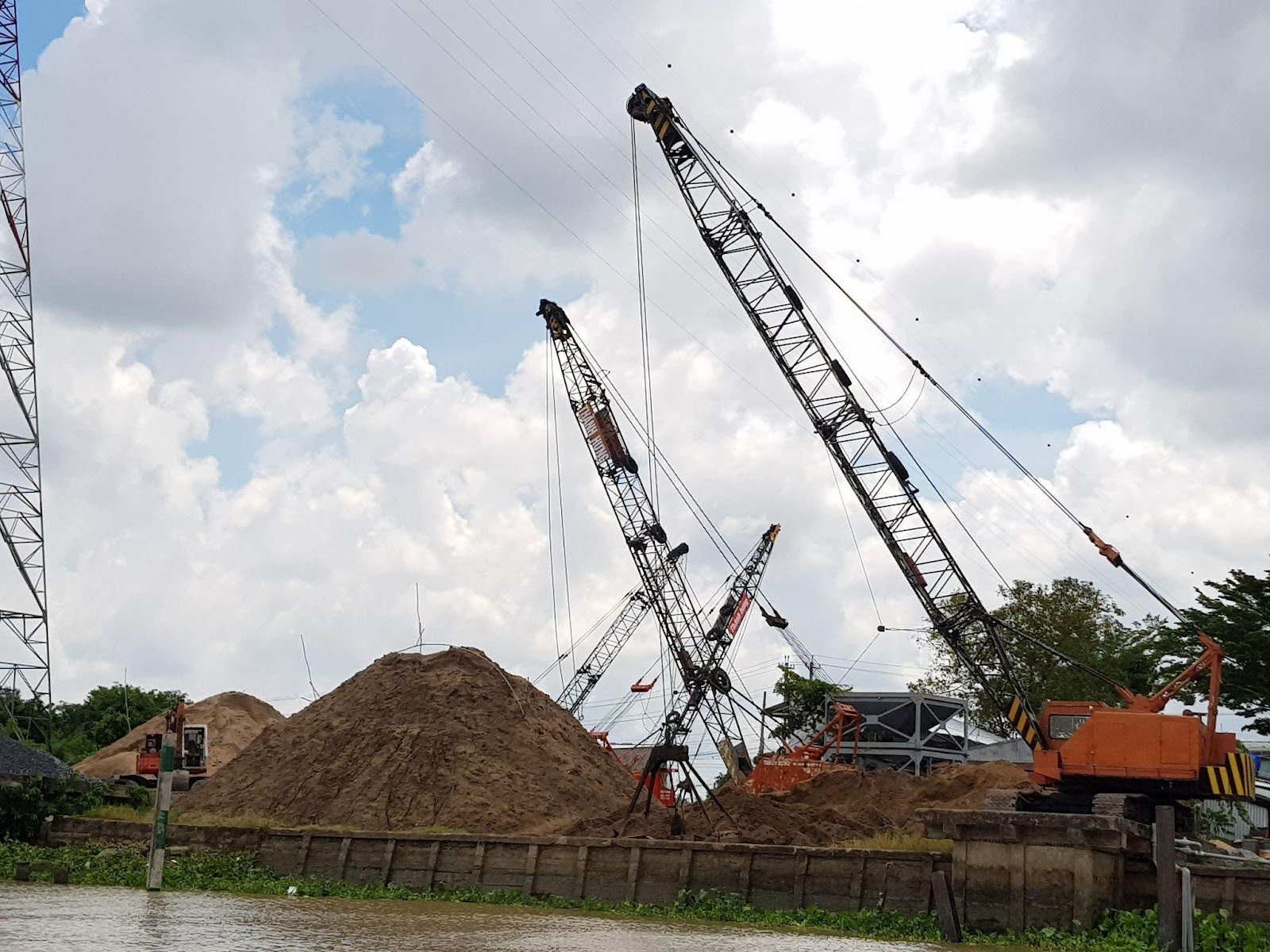
Shifting Sands: Charting a Course for Sustainable Sand Harvesting in Southeast Asia
›The construction boom across Southeast Asia, driven by burgeoning urban development and infrastructure projects, vividly highlights the dual impacts of progress. For instance, the rapid expansion of road networks, ports, and urban centers, while catalyzing economic growth, has also led to significant environmental and social displacement. These projects rely heavily on sand, a fundamental component of concrete and asphalt, extracted in vast quantities from local riverbeds. Annually, this global demand reaches approximately 50 billion tons, positioning sand as the world’s most consumed resource after water. In the Vietnamese Mekong Delta alone, 50 million cubic meters of sand are extracted annually.
-
ECSP Weekly Watch: April 29 – May 3
›A window into what we are reading at the Wilson Center’s Environmental Change and Security ProgramEnvironmental Prize Winners Highlight Local Communities’ Fight Against Fossil Fuels (New York Times)
On Monday, several environmental leaders won the Goldman Environmental Prize, which the Goldman Environmental Foundation awards annually to grassroots environmental activists from each of the world’s six geographic regions. This year’s prize comes as environmental advocacy groups, especially indigenous ones, increasingly fight legal battles against companies or government entities that wish to use their land for oil and gas acquisition or coal mining.
-
ECSP Weekly Watch: April 22 – 26
›A window into what we are reading at the Wilson Center’s Environmental Change and Security ProgramInter-American Court of Human Rights Hears from Climate Victims (The Guardian)
Globally, courts are increasingly linking climate change and human rights violations. Earlier this month, for example, the European Court of Human Rights ruled that weak Swiss government policies violated human rights. Another hearing on the opposite side of the world this week will examine states’ legal responsibilities to tackle climate change. In an inquiry instigated by Colombia and Chile, the Inter-American Court of Human Rights will define states’ legal responsibilities to tackle climate change. It will be the third international court tasked with providing an advisory opinion on climate change, but the only one focusing on human rights.
-
The Arc | Dr. Renata Giannini on Women Environmental Defenders in the Amazon and Climate Mitigation
›In today’s episode of The Arc, ECSP’s Angus Soderberg and Claire Doyle interview Wilson Center Fellow Dr. Renata Giannini about her work with women environmental defenders in the Amazon and their role at COP30 in Brazil. Select quotes from the interview are featured below. -
ECSP Weekly Watch: April 15 – 19
›UNFPA’s State of World Population 2024 Report Highlights SRHR Inequalities (UNFPA)
Over the last 30 years, the world has made immense progress in improving sexual and reproductive health and rights (SRHR) for women and girls around the world. Since 1994, when governments agreed that SRHR was a cornerstone of international development at the Cairo International Conference on Population, rates of unintended pregnancies have fallen 20%, 162 countries have adopted anti-domestic violence laws, and maternal deaths have decreased by 34%.
Showing posts from category environmental justice.

 In today’s episode of The Arc, ECSP’s Angus Soderberg and Claire Doyle interview Wilson Center Fellow Dr. Renata Giannini about her work with women environmental defenders in the Amazon and their role at COP30 in Brazil. Select quotes from the interview are featured below.

