

Showing posts from category environmental health.
-
Women Deliver in the Climate Change Debate
›One of the hottest topics at the “Women Deliver” conference earlier this month—where panels ran the gamut from HIV prevention and family planning to gender-based violence and maternal health—was the intersection of women’s reproductive health, global population growth, and climate change.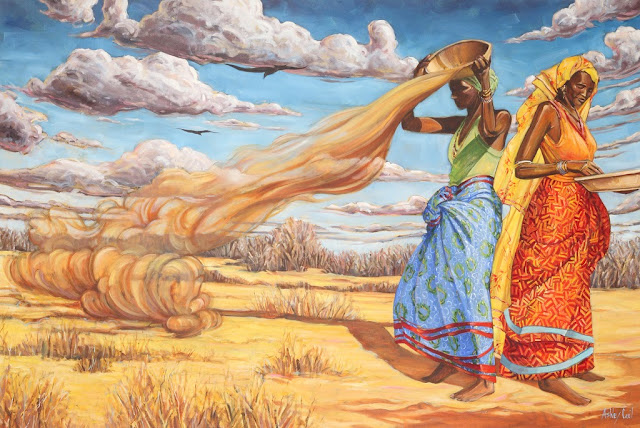
As panelists at three of the conference’s climate-focused events noted, women in poor, rural areas are especially vulnerable to the impacts of climate change. In many developing countries across Africa, Asia, and Latin America, women take on much of the burden of farming, gathering fuel, and supplying fresh water for their communities. As a result, they bear the brunt of hardships when climate change alters seasonal precipitation patterns, or increases scarcity of key natural resources.
In addition, “the more assets, the less vulnerable one person is,” said Lorena Aguilar of the International Union for Conservation of Nature. “Worldwide, compared to men, women tend to have more limited access to resources that would enhance their capacity to adapt to climate change—including land, credit, agricultural inputs, decision-making bodies, technology, and training services.”
Women’s hardship in the face of climate change can also have a negative effect on reproductive health. Aguilar remarked that during the dry season in parts of rural India and Africa, 30 percent or more of women’s daily caloric intake is spent on fetching water alone. The enormous physical strain placed on women’s bodies because of those tasks has resulted in higher miscarriage rates among those populations, she noted.
Educating Girls to Protect the Environment
Organizations like the United Nations and the Global Gender and Climate Alliance have been working in recent years to bridge the gap between women’s rights and climate change, and reframe climate change in terms of human development. But to date, women’s struggles with climate change have not translated into meaningful economic, educational, or healthcare support at the local government level, with women’s welfare “at the very bottom of the priority list” for most developing countries, according to Nickie Imanguli with Advocates for Youth.
The unmet need for family planning tools and services is perhaps the movement’s principal challenge going forward. With an estimated 200 million women having an unmet need for family planning, unintended pregnancies could be exacerbating environmental problems such as depletion of forests, water, and other finite resources. But most panelists expressed optimism that the growing recognition of a connection between climate change and women’s reproductive health might lead to a boost in funding for family planning initiatives in underserved areas of the world.
Speakers at Women Deliver emphasized that reproductive health can be bolstered by improving educational opportunities for girls in poor rural areas. Joy Nayiga with Uganda’s Ministry of Finance Planning Economic Development noted that “girls are more likely than boys to drop out of school to help their mothers gather fuel, wood, and water.” This trend, she said, robs females of an opportunity for educational advancement, and heightens the likelihood they will end up starting families of their own while very young.
Nayiga and other panelists asserted that empowering females through education leads them to take greater control over their own sexual health, making it easier for them to start their families later in life, or perhaps have a smaller number of children.
Encouraging women to take a more active role in family planning in this regard serves as “a win-win situation for women, their communities, and the nations of the world,” by “bending down the overall trajectory of population growth,” asserted the Worldwatch Institute’s Robert Engelman.
Some speakers also argued that enabling women to delay motherhood if they want could yield direct environmental benefits for nations of the Global South that are struggling to adapt to climate change. Since women are often responsible for overseeing agriculture and forest resource management practices in their communities, they help create localized carbon sinks across the developing world.
“Women pull carbon out of the atmosphere and bury it, in farm soils, in trees that they grow,” noted the Worldwatch Institute’s Engelman, who even suggested women’s aggregate impact removing carbon could be more effective than cap-and-trade plans.
Moving Slowly From Talk to Action
Given both their vulnerability to the effects of climate change—and their potential to help offset those same impacts—“women are critical stakeholders in climate change moving forward,” said Population Action International’s Kathleen Mogelgaard. So far, however, while there may be growing discussion about giving women a more prominent seat at the table when developing climate change adaptation and mitigation plans, that has not yet happened.
“We’re not seeing big government investment in empowering women on the issue of climate change,” remarked Leo Bryant, with Marie Stopes International, a U.K.-based NGO specializing in sexual and reproductive health. Instead, Bryant said, it has been NGOs that have been doing much of the heavy lifting of bringing women into the conversation.
But many panelists felt that, in time, governments will recognize it is in their enlightened self-interest to link issues of gender rights and climate change. “By upholding women’s rights,” concluded the IUCN’s Lorena Aguilar, “we are in fact making one of the most crucial preparations associated to climate change that any society can make.”
Click here for additional New Security Beat coverage of reproductive health talks at the Women Deliver conference, or here for more coverage of the interplay between traditional gender roles and family planning.
Sources: International Institute for Sustainable Development, International Union for the Conservation of Nature, Marie Stopes International, Population Action International, Population Reference Bureau, The Times (U.K.), United Nations Development Programme, Women Deliver, Worldwatch Institute.
Photo Credit: “Climate Change Canvas” courtesy of Amnesty International. -
The Contradictions That Define China
›As a China follower who has visited the country numerous times over the past 40 years, I have an enduring love affair with the “old” China, which prided itself on balancing the harmony of nature with its decision-making. It is tragically ironic that despite this impressive historical and cultural backdrop, current choices have pushed the country’s harmony with nature beyond the tipping point.
The atmosphere in Chengdu, the capital of Sichuan Province in central China, tells a cautionary tale of China’s current emphasis on economic growth at the expense of its citizens’ health. With lower annual sunshine totals than London, Chengdu’s perpetually grey, cloudy horizon graphically illustrates the massive industrial waste and coal-fired pollution that plague this booming city.
In April, global health experts convened in Chengdu at the 5th International Academic Conference on Environmental and Occupational Medicine, which was co-sponsored by the U.S. Centers for Disease Control and Prevention and Chinese CDC offices, to report on the impact of climate change on public health.
Because of its geography, the mountain-encircled basin in which Chengdu sits is the natural point of release for daily deposits of air pollutants and dust blown in from India and other countries to the west. A rapid series of satellite views presented by John Petterson, director of the Sequoia Foundation, brought gasps from conference attendees, as these accumulated industrial wastes were shown concentrating against the massive southern Tibetan mountain range, then turning grey and black as they moved east, before being deposited on Sichuan’s vulnerable (and already heavily polluted) basin.
Environmental risk factors, especially air and water pollution, are a major–and worsening–source of death and illness in China. Air quality in China’s cities is among the worst in the world, and industrial water pollution is a widespread health hazard.
And although air pollution is clearly a complex global problem, individual nation-states continue to approach this dilemma as though it lies between its borders alone.
Luckily, this conference was prefaced by a number of timely scientific articles on China in the Lancet. The predominantly Chinese authors clearly take the critical risks that we expect from the Lancet, which is a defender of accountability and transparency in global health. This issue brings shame to other publications who still consider their “place” to be protecting the conventional politico-economic emphasis on decision-making inherent to most industrialized countries.
At the conference, public health and climate experts openly voiced their frustration at the blatant privileging of economic priorities over the health of unknowing populations. China–the fastest growing economy in world history, with unprecedented growth driven by external “demand” and precipitous acceleration of domestic consumption–has become the poster-child for global ignorance. However, the West is an equal and essential partner, having moved their manufacturing to China for cheap labor, lax environmental regulations, and higher profits.
Dr. Mark Keim, senior advisor for the CDC’s National Center for Environmental Health, presented irrefutable evidence that root structure erosion from advancing saltwater has led to starvation in Polynesia, the first recorded evidence-based outcome measure of climate change’s public health effects.
At Mark’s request, I presented evidence on the worsening health impacts of rapid urbanization, specifically within urban enclaves that expand due to dense population growth before protective public health infrastructures and systems are in place (forthcoming in Prehospital and Disaster Medicine). Currently, the megacities in Asia and Africa–where sanitation is ignored and infectious disease is prevalent–now have the highest infant and under-age five mortality rates in the world.
Today, we face the largest gap in health indices between the haves and have-nots since the alarming days before the Alma-Ata Declaration. This new health data was an uncomfortable surprise to many conference attendees, most of whom were experts in the physical and environmental sciences.
We have become too “vertical” in our research over the past 50 years, and thus we fail to recognize that solutions to problems facing the global community must be trans-disciplinary and multi-sectoral, and serve multiple ministries and decision-makers.
If not undone by human decisions, global climate change and climate-warming greenhouse gases will rapidly intensify. This effort requires the best collaboration between science and the humanities, as well as the harmonious lessons of the “old” China.
Frederick M. Burkle, Jr., MD, MPH, DTM, is a senior public policy scholar at the Woodrow Wilson Center and a senior fellow of the Harvard Humanitarian Initiative at the Harvard School of Public Health.
Photo Credit: Chengdu skyline in smog, courtesy Flickr user lonely radio. -
Population and Environmental Challenges in Rwanda
›“Population, Health and Human Settlements” is the second chapter in the Rwandan government’s Rwanda State of Environment and Outlook. The chapter highlights the Rwandan government’s recognition of the interconnections between population, health, and environment, noting that population “can influence the state of the environment” and pose strains “on available public infrastructure, limited land, and natural resources.” The chapter examines Rwanda’s population growth and distribution, the state of “environmental health” in rural and urban areas, and health indicators relating to child and maternal health and HIV/AIDS. It goes on to describe government strategies to “improve settlements and human welfare.” “As population pressure is one of the key drivers of environmental degradation and poverty,” the chapter’s authors write, “the implementation of the population policy, especially aspects that address high fertility rates, gender and reproductive health, migration and human settlements” is increasingly important.The Des Moines Register‘s “Renewal in Rwanda” site hosts a series of articles by IRP Fellow and former Wilson Center Public Policy Scholar Perry Beeman “examining Rwanda’s efforts to build an eco-friendly economy.” Accompanied with interactive maps, photos, and videos, the materials highlight government efforts, share the country’s successes, and describe the vast challenges that lay ahead.
“Renewal in Rwanda” is particularly focused on Gishwati Forest, an area Beeman visited while in Rwanda, and the impacts of its ongoing conservation program on local communities. “Gishwati Area Conservation Program has as much to do with saving the lives of villagers—by sparing them from deadly mudslides and providing them jobs—as it does restoring a once-mighty forest,” writes Beeman in the article “Fighting for an African Forest.” Beeman also calls attention to the program’s more controversial aspects, noting that reforestation efforts would require relocating an estimated 5,000 families. -
City Living: World Health Day 2010 Focuses on Urban Health
›April 7, 2010 // By Julien KatchinoffCelebrating World Health Day, the World Health Organization, with its partners around the globe, today launched an initiative for healthly lives in urban settings, through the theme “1000 Cities, 1000 Lives.” “We are at a critical turning point in history where we can make a difference,” said Dr Ala Alwan, assistant director-general for noncommunicable diseases and mental health.
Since the first World Health Day 60 years ago, the world has seen a dramatic rural exodus. Today, more people live in urban areas than anywhere else. Providing healthy livelihoods for the urban poor is a challenge, as poverty-stricken urban centers face a number of health obstacles, from high child mortality rates, environmental pollution, and widespread disease, to a lack of access to basic water, sanitation, and health care.
“In general, urban populations are better off than their rural counterparts,” said WHO Director-General Margaret Chan. “They tend to have greater access to social and health services and their life expectancy is longer. But cities can also concentrate threats to health such as inadequate sanitation and refuse collection, pollution, road traffic accidents, outbreaks of infectious diseases and also unhealthy lifestyles.”
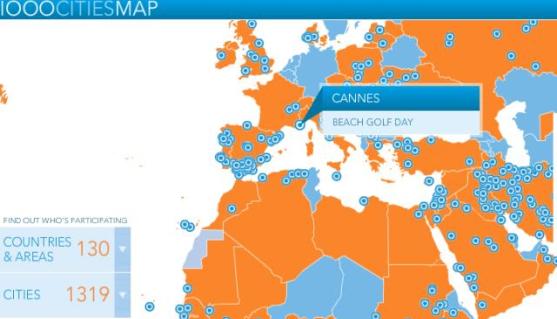
The 1000 Cities campaign hopes to encourage all cities to promote healthy activities during the week following World Health Day (4/7-4/11). Through a new website, the WHO is collecting profiles and pictures in an easy-to-navigate map. Notable activities include HIV/AIDS-awareness flashmobs, skateboarding and cycling competitions, car-free days, outdoor sports events, and dance performances, in cities as diverse as Mandalgobi, Mongolia; Bangalore, India; and Luanda, Angola.
The Wilson Center’s Environmental Change and Security Program and its Comparative Urban Studies Program have collaborated on urbanization events and publications that examine the strong and critical connections between healthy urban populations and environmental sustainability.
With proper attention paid to delivering population, health, and environmental services in our urban centers, it may be possible to leverage the benefits of higher urban densities—such as lower aid dispersion costs, communication access, infrastructure services, and fertile environments for ideas and productivity—to ensure urban sustainability for the future. -
Population, Health, and Environment
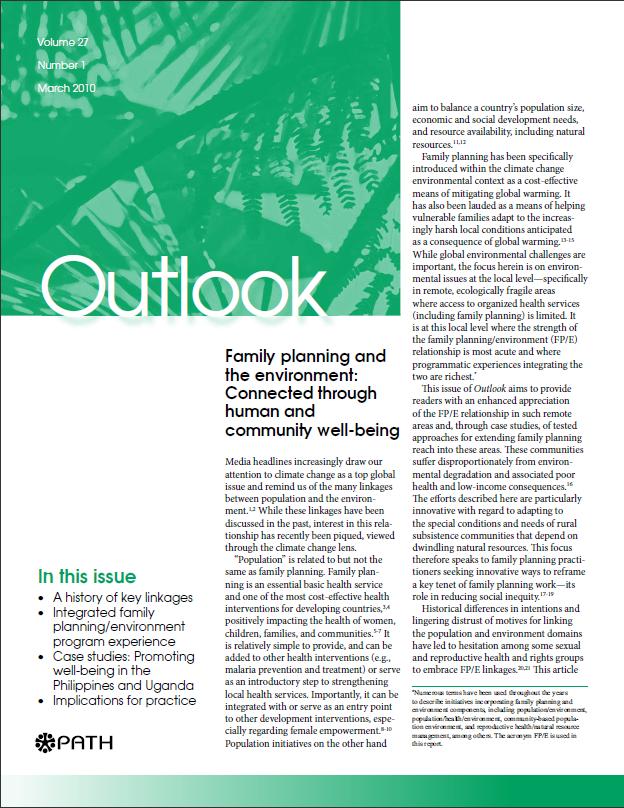
›The WWF and Equilibrium Research released a report on the interplay between the environment and human health. Vital Sites: The Contribution of Protected Areas to Human Health documents the environmental-human health connection, provides case studies from both the developed and developing worlds, and offers recommendations to enhance the health outcomes that can be gained from environmental good governance. “[P]rotected areas are not a luxury but are key sites to protect not only biodiversity, but also ecosystem services and our wider well-being,” the World Bank’s Kathy MacKinnon writes in the foreword.“Family Planning and the Environment: Connected Through Human and Community Well-Being,” part of PATH‘s Outlook series, details the importance of family planning-environmental projects to communities living in remote and ecologically vulnerable areas. Designed for practitioners, the article aims to promote cross-discipline dialogue and offers case studies from the Philippines and Uganda. The article concludes that “more collaborative family planning and environmental efforts aimed at reducing inequities would better ensure sustainable community development as well as the right of individuals to achieve what they value.” -
Send in the Scientists, Says Finnish MP
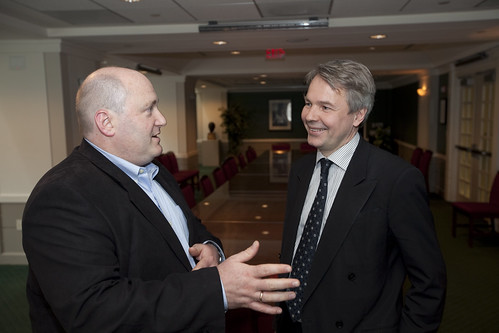
›April 1, 2010 // By Sean PeoplesPekka Haavisto, a Member of the Finnish Parliament, thinks an objective scientific investigation of rumored toxic waste in Somalia would be both doable and politically useful. Haavisto, the former Finnish minister of environment, visited the Woodrow Wilson Center last week and spoke with the Environmental Change and Security Program’s director Geoff Dabelko.
Dabelko wrote about Haavisto’s ideas for a Somalia environmental assessment after a conversation they had late last year in Helsinki:Haavisto is an enthusiastic advocate for environmental missions that may improve the desperate conditions resulting from violent conflicts. “We should be talking with all the factions,” he told me, to investigate the toxic waste charges. Such a thorough and objective assessment could provide a rare and potentially valuable avenue for addressing underlying suspicions and grievances some Somalis hold against those whom they claim dump waste off shore and overfish their waters.
It’s no surprise Haavisto focuses on using scientific environmental assessments in conflict settings. He is the former chairman of the UN Environment Programme’s Post-Conflict Assessment Unit (PCAU)—now called the Disasters and Conflicts Programme—the Geneva-based UNEP unit that assesses environmental threats, remediates hot spots, builds capacity, and supports peacebuilding around environmental issues in post-conflict settings. Haavisto presented UNEP’s work at the Wilson Center in a 2004 presentation. His colleagues, including UNEP Executive Director Achim Steiner, have subsequently launched more recent UNEP contributions at the Wilson Center. ECSP Director Geoff Dabelko serves on UNEP’s Expert Advisory Group on Environment, Conflict, and Peacebuilding. -
Video—Integrating Population, Health, and Environment (PHE) to Conserve Ethiopian Wetlands
›February 1, 2010 // By Julia GriffinIn our latest video interview about PHE programs in Ethiopia, Zuna–a village elder from the Mettu Woreda region of Ethiopia—describes how an integrated intervention by the Ethio-Wetlands and Natural Resources Association (EWNRA) has benefited her community.
EWNRA aims to raise awareness within Ethiopian communities and governmental organizations of the importance of sustainable wetlands management. The organization also imparts local-level training on resource conservation and wise-use labor techniques.
Zuna recounts how EWNRA provided welcome training in sanitation and housekeeping practices that increased both safety and sustainability within her community. The more efficient, cleaner-burning wood stoves introduced in Mettu Woreda, for example, have improved local air quality while decreasing the frequency of skin burns and amount of harvested fuel required for cooking and other activities.
“We are benefiting from all this and I think the benefits from this intervention are good,” she says through an interpreter. “I want them to keep doing this and hopefully we will improve our activities working with them.” -
Lessons from the Field: Focusing on Environment, Health, and Development to Address Conflict
›“Even in the hardest moments of conflict there are opportunities for cooperation, and they need to be seized,” said Juan Dumas, senior advisor of Fundación Futuro Latinamericano during the Pathways to Peace: Stories of Environment, Health, and Conflict roundtable event co-hosted by the Wilson Center’s Environmental Change and Security Program and the Fetzer Institute on January 13th.
“Even as you were talking about the conflict potential,” said Aaron Wolf, professor of Geoscience at Oregon State University, “everywhere you looked there were people talking about water uniting together across boundaries and being able to share… [and] people being willing to talk about water when they wont talk about anything else.”
Dumas and Wolf were joined by Gidon Bromberg, co-director of Friends of the Earth Middle East (FoEME); Shewaye Deribe, project coordinator for the Ethio Wetlands and Natural Resources Association (EWNRA); and Joan Regina L. Castro, executive vice president of the PATH Foundation Philippines, Inc. (PFPI) to discuss work that demonstrates the positive impact multi-dimensional development and peacebuilding programs can have on environmental conflict arenas.
Water as an Entry Point“In the academic world, there’s a growing documentation about the coming wars of the 21st century are going to be about water resources,” said Wolf, discussing how water resources are inherently intertwined with the Arab-Israeli and other regional conflicts. His research, however, suggests the opposite. In recent history, he said, cooperation for the resource, not conflict, was observed in nearly two-thirds of the world’s cross-boundary watersheds.
“Water is a wonderful way to have regional dialogue,” he continued, discussing how technical data and modeling are only part of any successful water conflict resolution. “A language that people have in common, and when we talk about water—because it’s connected to everything we do—we end up talking about our shared vision of the future.”“We came out with a vision that is a shared vision,” echoed Bromberg in describing the Good Water Neighbors (GWN) project—a FoEME program seeking to improve water scarcity and quality in the Jordan River watershed by fostering cooperation between Israeli, Palestinian, and Jordanian leaders. “The Jordan office advocates that vision to the Jordanian government, the Israeli office to Israeli government, the Palestinian office to the Palestinian authority. That’s proven to be very effective because it’s the same vision.”
While hesitant to say the program could lead to or be a model for peace in the Middle East, Bromberg did underscore how multi-dimensional methods used in GWN could productively serve future peacebuilding efforts in the region.
“By empowering young people to go out and improve their own water reality with their own hands [through rainwater harvesting and grey water collection] they learn together, and then they build the facilities within their own communities,” said Bromberg. “…Not only does it empower the youths but it helps create peacemakers.”
Integrated PHE and Conflict Avoidance“Water is common for all of us because it is the base of our life, of our survival,” said Deribe, linking ENWRA’s integrated population, health, and environment (PHE) wetland restoration program in Ethiopia to the greater discussion. “I think it is a lack of altruism, a lack of mutualistic thinking which leads us to this kind of conflict.”
Castro, pointing to her own PHE experience with PFPI, found that multi-sectoral programs promote improved environmental quality and community stability. In the Philippines, her program targeted local youth, fishermen, and policymakers to promote food security through sustainable resource management, improved medical and family planning services, and expanded livelihood training.
Castro found that a PHE program could continue even after funding ran out. “A project can be sustained and can be owned by the local governments and local communities if they are provided the capacity to be able to continue to implement the programs and that they see the value of the programs that they do,” she said.
Lessons in Conflict Resolution
Funding, said Dumas, is the biggest limiting operating factor for organizations that facilitate dialogue in environmental conflict areas. The ability to travel across Latin America on short notice to help resolve conflict has been extremely beneficial to Dumas’ organization; but in an arena where funders require full proposals with specific outcomes and indicators, such availability over the long-term is “not financially sustainable.”
Dumas did, however, suggest ways to reduce the need for conflict resolution while opening accessibility to funding. He recommended that institutions mainstream environmental considerations into all sectors of decision-making, thereby improving capacity to respond to environmental conflicts within the given population. He also suggested the creation of “early action funds” – pools of money that his and other organizations can use on short notice for dialogue facilitation support.



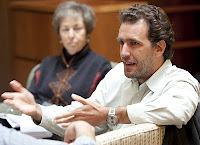 “Even in the hardest moments of conflict there are opportunities for cooperation, and they need to be seized,” said
 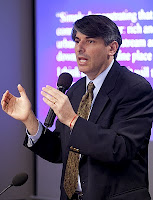 “In the academic world, there’s a growing documentation about the coming wars of the 21st century are going to be about water resources,” said
 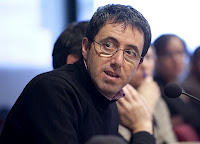 “We came out with a vision that is a shared vision,” echoed
  “Water is common for all of us because it is the base of our life, of our survival,” said

