Showing posts from category environmental health.
-
Population, Health, and Environment Approaches in Tanzania
›“Quality of life, human health, food security, and biodiversity are all connected,” said Elin Torell, research associate for the BALANCED Project and the University of Rhode Island Coastal Resource Center. Torell was joined at the Wilson Center on July 19 by Patrick Kajubili from the Tanzania Coastal Management Partnership, and Alice Macharia, director of the East Africa Program at the Jane Goodall Institute to discuss the importance of integrated population, health, and environment (PHE) initiatives that work to simultaneously improve health and livelihoods, manage natural resources, and conserve ecosystems in Tanzania.
Building Resilient Coastal Communities
The Coastal Resources Center’s work in Tanzania’s Saadani National Park provides an example of an integrated PHE approach that sustains the flows of environmental goods and services, maintains biological diversity, and empowers and improves the wellbeing of local residents, said Torell. Since 1996, the CRC has focused on protecting sea turtles, promoting energy-saving stoves, and tracking elephants, while at the same time improving livelihoods through savings and credit associations, eco-tourism, and beekeeping.
“Adding family planning makes a whole lot of sense,” said Torell. There is a high unmet need for family planning in Tanzania and the population is growing rapidly with an average number of 5.6 children per woman. Family planning not only helps families limit and space births but indirectly works to improve food security and human health, reduce demand for scarce natural resources, and empower women, she said.
“Integration is key,” concluded Torell: A coordinated and synergistic approach that meets the varied needs of local communities will be more effective and sustainable than if interventions were delivered independently.
Effective Integration in the Field
“Conceptual linking is not enough,” said Kajubili. “Integration also needs to happen at the organizational and field levels.”
On the ground, the Tanzania Coastal Management Partnership integrates family planning education and services into conservation work, said Kajubili. Peer educators deliver information about family planning, health, and coastal resources management; and community-based distributors deliver family planning services and supplies.
“Now people easily access reproductive health services,” said Kajubili. To date, the program has increased referrals to health centers, promoted contraceptive use, and reduced the distance that women need to travel to receive family planning services.
“Integration makes sense and cents,” said Kajubili. By combining resources, health and natural resource management organizations can potentially reach a broader population while sharing costs.
But “reinforcing the linkages between PHE of course takes time and education,” said Kajubili, highlighting a major challenge to implementing integrated approaches. “Advocacy is needed to overcome cultural and institutional barriers.”
“What About Our Needs?”
“Socio-economic development; family planning and AIDS education; sustainable forestry and agriculture practices; and water and sanitation all underpin and support sustainable natural resource management,” said Macharia.
The Lake Tanganyika Catchment Reforestation and Education Project (TACARE) led by the Jane Goodall Institute was initiated in 1994 to arrest the rapid degradation of land through tree planting and forest degradation, said Macharia. “But at some point, the communities raised the question: What about our own needs?” she said.
Community members prioritized the need for health services, education, clean water, and financial capital. But environmental degradation was not seen as a major issue, suggesting a need for a more integrated approach to TACARE’s conservation efforts.
“Integrated programs including population, health, and environment activities are cost-efficient and add value to conservation goals,” said Macharia. By responding to the needs of the community, the integrated approach adopted by TACARE has gained more credibility among local people, while a strong focus on building local capacity has helped to ensure sustainability of the program.
While there are many challenges to implementing and maintaining integrated PHE programs, “partnerships at the local, district, and national level are key to making this a success,” concluded Macharia.
Sources: Population Reference Bureau.
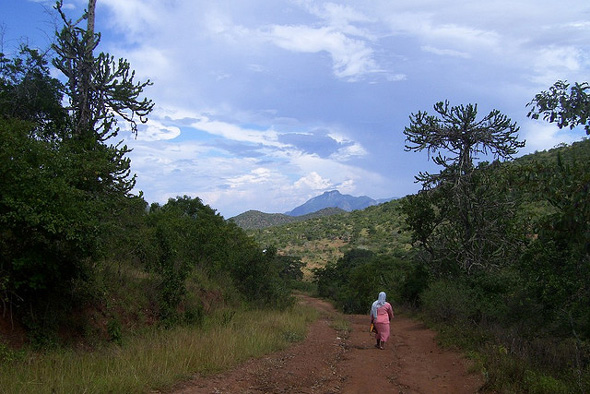
Photo Credit: “Environment near Vumari Village,” courtesy of flickr user treesftf. -
Reducing Health Inequities to Better Weather Climate Change
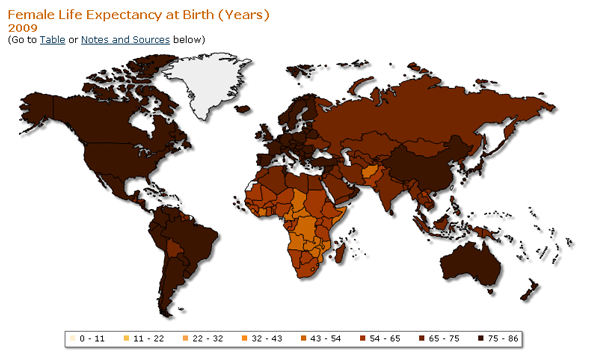
›In an article appearing in the summer issue of Global Health, Dr. Margaret Chan, director-general of the World Health Organization (WHO), brings to light what she calls the starkest statistic in public health: the vast difference in the mortality rates between rich and poor countries. For example, the life expectancy of a girl is doubled if she is born in a developed country rather than in a developing country. Chan writes that efforts to improve health in developing countries now face an additional obstacle: “a climate that has begun to change.”
Climate change’s effect on health has increasingly moved into the spotlight over the past year: DARA’s Climate Vulnerability Monitor measures the toll that climate change took in 2010 on human health, estimating some 350,000 people died last year from diseases related to climate change. The majority of these deaths took place in sub-Saharan Africa, where weak health systems already struggle to deal with the disproportionate disease burden found in the region. The loss of “healthy life years” as a result of global environmental change is predicted to be 500 times greater in poor African populations than in European populations, according to The Lancet.
The majority of these deaths are due to climate change exacerbating already-prominent diseases and conditions, including malaria, diarrhea, and malnutrition. Environmental changes affect disease patterns and people’s access to food, water, sanitation, and shelter. The DARA Climate Vulnerability Monitor predicts that these effects will cause the number of deaths related to climate change to rise to 840,000 per year by 2030.
But few of these will be in developed countries. With strong health systems in place, they are not likely to feel the toll of a changing environment on their health. Reducing these inequities can only be achieved by alleviating poverty, which increases the capacity of individuals, their countries, and entire regions to adapt to climate change. It would be in all of our interests to do just this, writes Chan: “A world that is greatly out of balance is neither stable nor secure.”
Sarah Lindsay is a program assistant at the Ministerial Leadership Initiative for Global Health and a Masters candidate at American University.
Sources: DARA, Global Health, The Lancet, World Health Organization.
Image Credit: Henry J. Kaiser Family Foundation and the World Health Organization. -
Vik Mohan, Rebecca Hill, and Alasdair Harris
In FOCUS: To Live With the Sea: Reproductive Health Care and Marine Conservation in Madagascar
›July 12, 2011 // By Wilson Center StaffDownload FOCUS Issue 23: “To Live With the Sea: Reproductive Health Care and Marine Conservation in Madagascar,” from the Wilson Center.
Christine does not know how old she is. She has 16 children and lives on a remote island off the southwestern coast of Madagascar. She and her children, like other members of the Vezo ethnic group, depend entirely on the ocean for their survival. Her husband, a fisherman, struggles to catch enough to feed his family.
In this isolated area, most girls have their first child before the age of 18, and families with 10 children or more are commonplace. But since the marine conservation NGO Blue Ventures launched a family planning program in 2007, couples and women like Christine are able to make their own reproductive health choices.
Blue Ventures’ Vik Mohan, Rebecca Hill, and Alasdair Harris argue that their integrated approach, which combines reproductive health care and education with conservation and alternative livelihoods, offers these communities – and the marine environment on which they depend – the best possible chances of survival. -
Keith Schneider, Circle of Blue
Double Choke Point: Demand for Energy Tests Water Supply and Economic Stability in China and the U.S.
›The original version of this article, by Keith Schneider, appeared on Circle of Blue.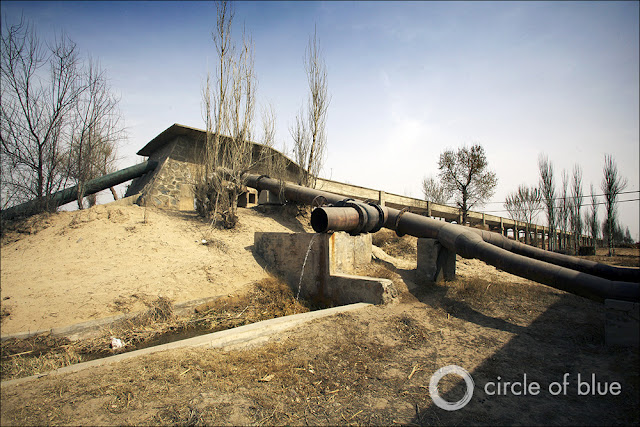
The coal mines of Inner Mongolia, China, and the oil and gas fields of the northern Great Plains in the United States are separated by 11,200 kilometers (7,000 miles) of ocean and 5,600 kilometers (3,500 miles) of land.
But, in form and function, the two fossil fuel development zones – the newest and largest in both nations – are illustrations of the escalating clash between energy demand and freshwater supplies that confront the stability of the world’s two biggest economies. How each nation responds will profoundly influence energy prices, food production, and economic security not only in their domestic markets, but also across the globe.
Both energy zones require enormous quantities of water – to mine, process, and use coal; to drill, fracture, and release oil and natural gas from deep layers of shale. Both zones also occur in some of the driest regions in China and the United States. And both zones reflect national priorities on fossil fuel production that are causing prodigious damage to the environment and putting enormous upward pressure on energy prices and inflation in China and the United States, say economists and scholars.
“To what degree is China taking into account the rising cost of energy as a factor in rising overall prices in their economy?” David Fridley said in an interview with Circle of Blue. Fridley is a staff scientist in the China Energy Group at Lawrence Berkeley National Laboratory in California. “What level of aggregate energy cost increases can China sustain before they tip over?”
“That’s where China’s next decade is heading – accommodating rising energy costs,” he added. “We’re already there in the United States. In 13 months, we’ll be fully in recession in this country; 9 percent of our GDP is energy costs. That’s higher than it’s been. When energy costs reach eight to nine percent of GDP, as they have in 2011, the economy is pushed into recession within a year.”
Continue reading on Circle of Blue.
Photo Credit: Used with permission, courtesy of J. Carl Ganter/Circle of Blue. In Ningxia Province, one of China’s largest coal producers, supplies of water to farmers have been cut 30 percent since 2008. -
The Implications of Urbanization on Food Security and Child Mortality of the Urban Poor
›In the chapter, “Urban Agriculture and Climate Change Adaptation: Ensuring Food Security Through Adaptation,” of the edited volume, Resilient Cities: Cities and Adaptation to Climate Change – Proceedings of the Global Forum 2010, authors Marielle Debbeling and Henk de Zeeuw assess the viability of urban and peri-urban agriculture (UPA) as a method of climate change adaptation for the urban poor. Debbeling and de Zeeuw assert that UPA increases the resilience of cities by diversifying both food supply and income streams for the urban poor; decreasing the negative effects of “heat island effect,” air pollution, and urban flooding; conserving water and utilizing organic waste; and reducing energy use and greenhouse gas emissions. Given the scale and impact of modern urbanization, the authors write that “the integration of UPA into urban development and master plans, urban land use and zoning plans, as well as active maintenance of the protected agricultural zones…is crucial.”In “Urban Area Disadvantage and Under-5 Mortality in Nigeria: The Effect of Rapid Urbanization,” published by Environmental Health Perspectives, authors Diddy Antai and Tahereh Moradi found a significant link between the mortality rate of children under five years of age and a poor and disadvantaged urban environment; such an environment is characterized by poor sanitation, overcrowding, a lack of access to safe water, and high levels of disease-inducing air pollution and hazardous wastes. Although urban living may increase proximity to health care and other social amenities, low- and middle-income countries, such as Nigeria, have overstretched their adaptive capacities and the result is poor health indicators. Antai and Moradi predict that the rapid urbanization of Nigerian cities will bring increased infant mortality, unless individual- and community-based policy interventions are implemented to counter the adverse environmental conditions of deprived areas. -
Measuring Ecosystem Vitality and Public Health With the Environmental Performance Index
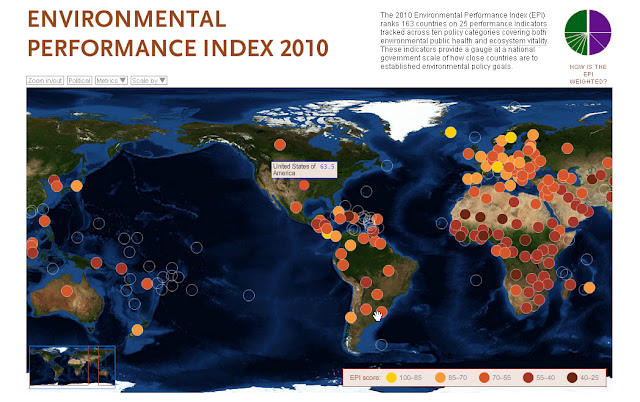
›The Environmental Performance Index (EPI) is a comparative analytic tool for policymakers created jointly by Yale and Columbia Universities in collaboration with the World Economic Forum and Joint Research Centre of the European Commission. The EPI was created in 2006 and is updated biannually. Data is drawn from 25 performance indicators that fall under 10 well-established policy categories, including the environmental burden of disease, the effects of water on human health, and agriculture. The indicators serve as a “gauge at a national government scale of how close countries are to established environmental [and health] policy goals,” write the authors.
The EPI draws data from a diverse array of sources, such as the World Health Organization, Food and Agriculture Organization, University of New Hampshire, and World Resources Institute. Users can view visualizations of the compiled data via an interactive map and the data is also available in the form of rankings charts, individual country profiles, and country group comparisons. The interactive map also allows users to isolate performance indicators or policy categories in order to compare an individual country’s performance with global trends. Furthermore, indicators may be scaled to visually reflect a country’s performance in relation to drivers of environmental performance, like gross domestic product, level of corruption, and government effectiveness.
This tool is particularly useful because users can effectively leverage points for policy change by identifying linkages between environmental policy and other issue areas, such as public health or sanitation. The EPI enables policymakers to visually conceptualize problematic regions, optimize investments in environmental protection, and identify best practices.
The index’s greatest weakness is its inability to track changes in performance over time. A pilot project was launched last year that tracks whether a country has progressed or deteriorated in an area of environmental performance, but the authors note that the project has “raised more questions than answers,” particularly concerning data availability and interpretation. Additionally, there are gaps in the data. Although these gaps signify a data quality weakness, they also support the continued calls for increased data collection by governments and other organizations to better inform environmental decision-making. -
Population and Environment Connections: The Role of Family Planning in U.S. Foreign Policy
›May 11, 2011 // By Geoffrey D. Dabelko“Population and Environment Connections,” was an input paper for the Council on Foreign Relations report, Family Planning and U.S. Foreign Policy: Ensuring U.S. Leadership for Healthy Families and Communities and Prosperous, Stable Societies.
Current global population growth rates are not environmentally sustainable and the increasing demands of a growing global population are increasingly straining supplies of food, energy, and water. The expected consequences of climate change will stress resources further. Population growth dynamics compound challenges presented by increased resource consumption from a rising global middle class, making the world’s population, and the quality and quantity of natural resources, top priorities for governments and the public alike.
Governments and multilateral organizations must recognize the relationship between resource demand, resource supply, and resource degradation across disparate economic and environmental sectors. Formulating appropriate and effective responses to growth-induced resource complications requires both a nuanced understanding of the problem and the use of innovative approaches to decrease finite resource consumption.
Family planning and integrated population, health, and environment (PHE) approaches offer opportunities to address such concerns. These efforts recognize the importance of population-environment linkages at the macro-level. They also operate at the household, community, and state levels, empowering individuals and decreasing community vulnerability by building resilience in a wider sustainable development context. PHE approaches embrace the complex interactions of population, consumption, and resource use patterns. To paraphrase Brian O’Neill, a leading scholar on population-climate connections, PHE approaches offer a way forward that is neither a silver bullet nor a red herring. Addressing population-environment links is an essential step to tackling global sustainability crises.
Download “Population and Environment Connections” from the Council on Foreign Relations. -
How Does Organic Farming in the U.S. Affect Global Food Security?
›The feature story for last month’s Wilson Center newsletter, Centerpoint, was on the popular full-day conference “Rebuilding the U.S. Economy – One Heirloom Tomato at a Time,” hosted by the Program on America and the Global Economy in March. The conference focused on organic, local farming and the idea of creating “sustainable” food production that was healthier but also better for the economy than relying on imports from afar.
ECSP was asked to provide some international context for the discussion with a brief “Point of View.” I tried to paint a little bit of the big picture 21st century supply and demand story and give a sense of how today, globalization has helped linked everyone in this food security discussion:Dramatic events over the last year have shone a spotlight on the problem of global food security: massive fires in Russia, which reduced wheat supplies; famine and drought in Niger and Chad; and food price riots in the Middle East and elsewhere. These stresses come amid price spikes that echo the food crises of 2008 and reveal the linked nature of food security today and some of the fundamental challenges facing poor countries’ efforts to feed their growing populations.
What do you think: What’s the best way to inject the urgency that people looking at demographics and consumption rates around the world are feeling about global food security into a discussion about organic agriculture in the United States? Is there a tension between quality and quantity of food in the organic vs. agrobusiness debate that needs to be addressed in a global context? And what’s the role of policy in determining that balance?
In most countries, food insecurity is a symptom of poverty, poor governance, and/or poor infrastructure. For example, developed countries can often rebound from natural disasters relatively quickly. However, in drought-prone countries like Niger and Chad or flood victims like Pakistan and North Korea, such structural weaknesses leave them unable to bounce back as quickly from extreme events. This makes development efforts more difficult and can cause vulnerable countries to quickly become a burden on their neighbors or more prone to internal instability.
In the long term, reducing vulnerability in developing countries will be one of the most critical factors to ensuring global food security. But to meet the projected demand from increased consumption and continuing population growth, global yields must also increase.
The Green Revolution of the 1960-70s saved millions of lives by introducing heartier strains of rice and improving other staple crops in South and Southeast Asia, and most agree that a “Second Green Revolution” (whether or not it looks like the first) will likely be necessary. If so, the current tensions in the West over organic or sustainable practices versus agribusiness models will need to be reconciled in a way that can provide the most immediate help for the world’s hungry.
An important requirement, however, is that in a more resource-constrained world, these yields must be increased without destroying our future capacity. How we go about this, whether through traditional industry, organic techniques, or a mixture of both, will be one of the defining challenges of the 21st century.