

Showing posts from category environmental health.
-
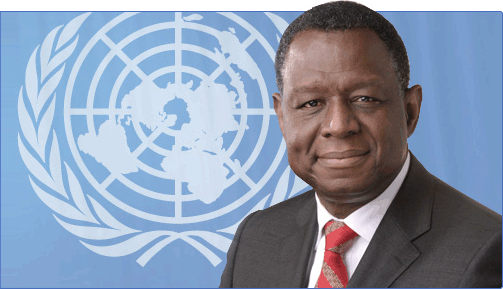
Babatunde Osotimehin Answers Seven Questions on Population
›PSI’s Impact magazine has an interview up with UNFPA Executive Director Babatunde Osotimehin asking him seven questions about population. It’s not likely this will be the last seven-something-themed story as we approach October and the expected seven billion mark for global population, but Karl Hofmann, president and CEO of PSI, asks some good questions, including on the prospect of harnessing the “demographic dividend” and about the barriers facing more integrated development efforts – a critical topic in population, health, and environment (PHE) circles.
On the demographic dividend:Karl Hofmann: Demography can be a key to progress with the right policy environment in place, but it can also be a burden when we don’t have the right framework in place to take advantage of growing populations. Some have described this as the demographic dividend – growing populations as a potent driver of economic growth and development. Give us your perspective on that.
And on integrated development:
Babatunde Osotimehin: I spoke at the 17th African Union Summit this year and one of my messages was that we have the opportunity right now to take advantage of the demographic dividend of young people. It’s important for African governments to understand that they have a youthful population. Most of Africa is under the age of 35. If 85 percent of the African population is under 35, the implication is that you have to have education, social services, housing, all of that, tailored to meet the needs of this population.
Beyond that, given what we’ve seen with the Arab spring uprising and others in many parts of the developing world, young people who are out of work want education and economic opportunities. We want to appeal to member states to provide skills appropriate to development and also ensure that we have continuing conversations with young people about their reproductive health and rights so they can make the choices that will ensure they plan for their families.KH: There are lots of conversations going on in global health circles these days around the synergy of integration. From your perspective, what are the barriers to this integration?
Read the full interview on Impact.
BO: I think it’s bipolar. Some countries are satisfied with vertical programs. Others are resistant to changing their system at the request of a donor. One argument for integration is that you can have the one-stop shop situation where one, two, three trained providers can deliver services at the same time. These include integration of HIV counseling, testing and treatment with family planning, with health education for non-communicable diseases, with immunization for children or with maternity services.
When you look at the components of an integrated system, it is very easy to sell. In terms of investment, it makes sense for the governments to build and put this together. The supervision becomes a lot easier, and the training of health workers would then capture all of the skill sets that would be required. Some countries, like India, Ethiopia and Nigeria have started this kind of integration.
Sources: PSI.
Image Credit: Adapted from UNFPA. -
Karen Seto on the Environmental Impact of Expanding Cities [Part Two]
›“A lot of cities are trying to become green cities,” said Karen Seto in part two of an interview with ECSP about her recently published article, “A Meta-Analysis of Global Urban Land Expansion,” co-authored with Michail Fragkias, Burak Güneralp, and Michael K. Reilly. “I think one of the main policy implications of our study is that how a city urbanizes is critical, because one of the things we are finding is that urban land is growing faster than urban population, and in some cases it is growing much faster.”
Seto said that the cities with the best prospects for implementing green growth and expansion strategies “tend to focus on the low-hanging fruit,” such as planting trees or constructing buildings with green roofs. From the public’s perspective, these types of measures are relatively painless because they “don’t require changing people’s behavior.”
More challenging, said Seto, will be getting rapidly expanding cities to anchor future development around public-transit systems, especially given the changing lifestyle preferences of upwardly mobile urban populations across China and India, for whom private car ownership serves as an important status symbol.
Still, Seto said she is tentatively optimistic about city planners’ ability to grow cities in a sustainable fashion. “We’ve experienced this rapid growth of urban population and urban land areas, but we’re also seeing that over the next 20 years, according to the UN, we’re going to see even more people living in urban areas,” she said.
“We have this window of opportunity to really shape the way in which cities get developed, and I think that’s really one of the big messages of the study.”
Part one of Karen Seto’s interview is available here. The “Pop Audio” series is also available as podcasts on iTunes.
Sources: China Daily, USA Today. -
Karen Seto on the Environmental Impact of Expanding Cities [Part One]
›“When we think about the environmental impacts of rapid urbanization, we really need to unpack what we mean by ‘urbanization,’” said Karen Seto, an associate professor in Yale University’s School of Forestry and Environment Studies, in this interview with ECSP. “There is the demographic component, where more people are living in cities; there is economic urbanization, which is where livelihoods and economies are becoming more urban rather than rural; and then there is the land component – the conversion of land from agriculture and other ecosystems to become urban.”
Seto is the lead author of a new article, “A Meta-Analysis of Global Urban Land Expansion” (with Michail Fragkias, Burak Güneralp, and Michael K. Reilly), which uses satellite imagery to help document the physical expansion of urban areas in developed and developing nations between 1970 and 2000.
Over that period, the population of cities in the developing world boomed. In 1970, there were roughly the same number of city dwellers in developed nations as in developing nations. By the mid-1990s, however, urban residents of the developing world outnumbered their developed-world counterparts by a factor of two to one. Since then, the gap has continued to grow.
According to the report, urban growth sprawled to cover nearly 60,000 square kilometers of previously non-urban areas during the last three decades of the twentieth-century. One of their most interesting finds, said Seto, was that “urban expansion has been occurring in low-elevation coastal zones more than it has been elsewhere.”
“Essentially what that means is that cities are growing precisely in areas that are highly vulnerable to the impacts of climate change, like sea level rise and storm surges,” she said.
Demography and the Environment
Seto acknowledged that many of the today’s discussions surrounding urbanization focus on the negative impacts for the environment and human security – among them the “loss of agricultural land, conversion of forests, biodiversity loss, changes in hydrology, and climate effects.” Ultimately though, she said, urbanization and its attendant land-use changes shouldn’t be viewed through a black-or-white lens.
“Certainly we think about the oncoming demographic transition of something like three billion more people living in cities,” Seto said, but “that means there’s a lot of efficiency to be gained, whether it is in education, energy, sanitation, or health – urbanization allows for opportunities for really efficient use of resources.”
The real challenge to achieving environmentally sustainable urban development, said Seto, is thoughtful city planning: “How we configure ourselves has a big impact on the environment, so it is not the issue of just whether we are urbanizing – the form in which we urbanize [also] has a huge impact.”
Part two of Karen Seto’s interview is available here. The “Pop Audio” series is also available as podcasts on iTunes.
Sources: Population Reference Bureau, UNFPA. -
What’s in a Name? Watch Don Lauro on PHE, HELP, and HELPS
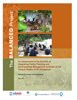
›Population, health, and environment (PHE) expert Don Lauro has worked on integrated projects for decades as a scholar, an implementer, a donor, and an evaluator. He recently visited the USAID-funded BALANCED Project in Tanzania as part of a wider look at this integrated approach. In an interview with ECSP, Lauro said the effort “made me think more broadly…about this area that we call population, health, and environment and what’s really in a name like that.”
“We commonly say PHE, and we all know what we’re talking about,” Lauro said of the population and development community, “but when you look deeply into these projects – or even not so deeply – you see that there’s other things going on as well.”
For example, Lauro pointed to the focus on livelihoods that many PHE programs have: “In the project I saw in Tanzania, there were many microcredit groups on the ground – mostly women – taking small loans for developing little enterprises that they had, like baking bread, raising bees, buying a cow…little enterprises to make their lives a little bit better.”
“Some people don’t use the term ‘PHE’…maybe it’s a ‘HELP’ project; that is health, environment, livelihoods, and population,” Lauro said. “Other people would say it’s maybe something even longer, ‘HELPS’ – health environment, livelihoods, population, and sustainability (or ‘security’ – Ed.).” When he was at the Wilson Center, Gib Clarke coined the “HELP” term in ECSP’s FOCUS Issue 20, arguing that livelihoods is such a critical component that it ought to be more formally recognized.
But, said Lauro, “on the ground they don’t use these terms – they say things like, ‘this is a healthy community program’ or ‘this is a green community program.’”
“I think it’s very important for us to realize what happens on the ground is lot different, and maybe more real, than how we talk about it.” -
Jay Ulfelder, Dart-Throwing Chimp
Public-Health Campaigns as Outsized Threats to Authoritarian Rule
›August 17, 2011 // By Wilson Center StaffThe original version of this article, by Jay Ulfelder, appeared on his blog, Dart-Throwing Chimp.
Are certain forms of popular activism more likely to hasten the fall of dictatorships than others? This question occurred to me after reading a recent Washington Post story describing how one Russian woman, Darya Makarova, has turned her own frustration with the poor health care given to her (now dead) young son into a wider campaign that’s has caught Moscow’s eye:Thousands have turned out for her rallies, written letters, signed petitions or joined in Internet forums. Since Maxim’s death in November, she has raised money to reopen a children’s clinic, with an emergency room, in her community. She has shamed the city into buying three new ambulances, with proper equipment. She has launched a nonprofit organization, Health Care for Children, that has national ambitions. Politicians have sought her out. Pavel Astakhov, who holds the newly created title of children’s ombudsman, came from Moscow to see her – and then appointed her his unpaid deputy, giving her more access and clout. Even officials from the sprawling and notoriously indifferent Health Ministry started to pay attention.
I can see why government officials would be nervous about this still-modest and outwardly apolitical campaign. Popular activism around matters of public health and safety seems like it should pose a special challenge to authoritarian regimes, like Russia’s, that stake their right to rule on paternalistic claims about their ability to deliver both social welfare and social protection.
Movements organized around failures of public health and safety are threatening to these regimes because they call out the paternalistic state for failing at its own game. Whatever the form of government involved, one of the modern state’s fundamental roles is to protect its citizens from public health threats. Even when they serve this function poorly, most autocrats claim to be trying, and these campaigns reveal that they are not succeeding.
Continue reading on Dart-Throwing Chimp.
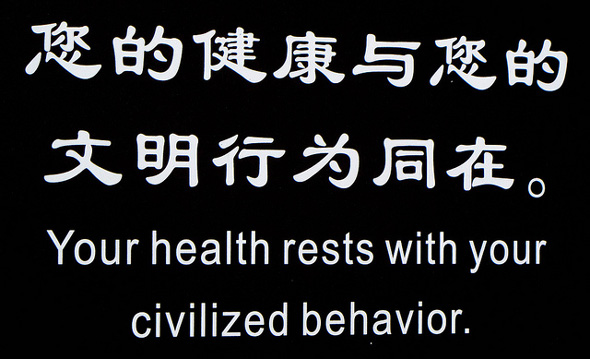
Photo credit: “Your Health rests with…,” courtesy of flickr user okeos. -
Deirdre LaPin, Niger Delta Working Group
Next Step, Clean Up the Niger Delta: The UNEP Ogoni Environmental Report
›August 12, 2011 // By Wilson Center StaffThe original version of this article, by Deirdre LaPin, appeared on the Niger Delta Working Group and AllAfrica.
The long-awaited report from the United National Environmental Program (UNEP) on oil damage in the Ogoni area was presented to President Goodluck Jonathan on August 4 in Abuja. This important study, the first of its kind in the Niger Delta, was conceived well before 2006 by the Federal Government as part of the Ogoni reconciliation and peace process led by Father Matthew Kukah (recently named Bishop of Sokoto). Intended as a major assessment of the impacts of oil production in the Ogoni region, UNEP in an early statement described the aim as to “clarify and de-mystify concerns expressed by local communities.” [Audio Below]
Shell Petroleum Development Company (SPDC) suspended active production in Ogoniland in late 1993 as a response to growing resistance to industry presence led by the martyred freedom fighter and writer Ken Saro-Wiwa. However, the company remained responsible during its withdrawal for monitoring and maintaining its installations, and especially the critical Trans-Niger pipeline serving Bonny Terminal. It also left behind a number of spill sites.
Deirdre LaPin on the History of Inequality in the Niger Delta [Excerpted Version] by ECSP WWC
Over the years the company had mixed success in negotiating with local communities access to spills sites or achieving their complete remediation. The impoverished local population also pursued informal oil production that centered on bunkering (oil pipeline tapping) and bush refining – increasing opportunities for further spills and pollution. In keeping with the “polluter pays” principle, the operator SPDC joint venture funded the U.S. $9.5 million UNEP study.
Last week the press had a field day with the freshly unveiled report.
Journalists whisked together highlights and added spice from the region’s contested history. Some articles cooked in the press kitchen missed key ingredients or simply got them mixed up. The best among them focused on the findings from the study’s careful scientific analysis, which led UNEP to the conclusion that “pollution has perhaps gone further and penetrated deeper than many may have previously supposed.”
This forceful opinion stated in the foreword by UNEP’s executive director Achim Steiner represents a long step beyond the study’s original technical terms of reference or the limited policy aims supporting reconciliation and “de-mystification.”
Now in 2011, UNEP’s thoughtful recommendations, while not assigning blame, point clearly to the need for a genuine shift in the priorities and practices of the oil industry and governmental regulatory agencies operating throughout the Niger Delta. The muscular sub-text rippling throughout the report makes clear that nothing less than ending pollution and full remediation of Ogoniland (and indeed the whole Niger Delta region) should be accepted as an end point.
Continue reading on the Niger Delta Working Group.
For more on the Niger Delta, be sure to also read “Nigeria’s Future Clouded by Oil, Climate Change, and Scarcity,” which includes the full audio interview with Deidre LaPin (excerpted above) on the history of the Niger Delta.
Sources: UNEP.
Photo Credit: NASA Space Shuttle Overflight photo of the Niger Delta, courtesy of NASA. -
Benefits of Integrating Population, Health, and Environment
›“Mainstreaming Environment and Climate Change: Health,” a joint publication from the International Institute for Environment and Development and Irish Aid, is part of a series that aims to show the links between the environment, climate change, and key development sectors, while suggesting key solutions to move into national policies. This health-focused briefing asserts that “nearly one quarter of the global disease burden can be attributed to the environment.” While anyone is prone to the negative effects of climate change, the poor are especially vulnerable because they often live in some of the most precarious environmental conditions. Consequently, the briefing argues that “improving environmental health – raising its profile at national, state and local levels, and integrating environmental health issues into development plans and activities – is critical if we are to reduce poverty and meet the Millennium Development Goals.”In An Assessment of the Benefits of Integrating Family Planning and Environmental Management Activities in the Visayas Region of the Philippines, a study from the University of Rhode Island’s Coastal Resources Center, authors Richard B. Pollnac and Kira Dacanay argue that benefits can be reaped from integrated population, health and environment (PHE) development, but only under certain conditions. Factors influencing the level of benefits include “levels of participation in integrated projects [both by individuals and communities], and how NGOs implement these projects.” Thus, it is important to “tailor strategies based on place-based context and personal characteristics of different participants,” write Pollnac and Dacanay. In the Philippines, the authors suggest that one of the actions future PHE initiatives should take is to “stimulate more project participation, with special efforts in larger, less dense communities and tailor strategies better to different targeted populations within the community.” -
Robert Engelman, Yale Environment 360
The World at 7 Billion: Can We Stop Growing Now?
›August 11, 2011 // By Wilson Center StaffThe original version of this article, by Robert Engelman, appeared on Yale Environment 360.
Demographers aren’t known for their sense of humor, but the ones who work for the United Nations recently announced that the world’s human population will hit seven billion on Halloween this year. Since censuses and other surveys can scarcely justify such a precise calculation, it’s tempting to imagine that the UN Population Division, the data shop that pinpointed the Day of 7 Billion, is hinting that we should all be afraid, be very afraid.
We have reason to be. The 21st century is not yet a dozen years old, and there are already one billion more people than in October 1999 – with the outlook for future energy and food supplies looking bleaker than it has for decades. It took humanity until the early 19th century to gain its first billion people; then another 1.5 billion followed over the next century and a half. In just the last 60 years the world’s population has gained yet another 4.5 billion. Never before have so many animals of one species anything like our size inhabited the planet.
And this species interacts with its surroundings far more intensely than any other ever has. Planet Earth has become Planet Humanity, as we co-opt its carbon, water, and nitrogen cycles so completely that no other force can compare. For the first time in life’s 3-billion-plus-year history, one form of life – ours – condemns to extinction significant proportions of the plants and animals that are our only known companions in the universe.
Did someone just remark that these impacts don’t stem from our population, but from our consumption? Probably, as this assertion emerges often from journals, books, and the blogosphere. It’s as though a geometry text were to propound the axiom that it is not length that determines the area of a rectangle, but width. Would we worry about our individual consumption of energy and natural resources if humanity still had the stable population of roughly 300 million people – less than today’s U.S. number – that the species maintained throughout the first millennium of the current era?
Continue reading on Yale Environment 360.
Robert Engelman is executive director of the Worldwatch Institute, an environmental research organization based in Washington, D.C.
Photo Credit: “Daybreak,” courtesy of flickr user Undertow851. Dawn breaks over California in the United States April 17, 2011 in this photo by NASA astronaut Ron Garan from the International Space Station. The lights of Los Angeles appear in the foreground while San Francisco appears in the back near the horizon.







.jpg)