-
Exposure to Air Pollutants and Heat Made Worse by Climate Change Impact Black Mothers the Most
›
Environmental exposures exacerbated by climate change are contributing to adverse pregnancy outcomes across the United States, with a disproportionate impact on Black women. A new study published in JAMA Network Open draws concrete connections between exposure to air pollution, ozone, and high temperatures during pregnancy and the likelihood of adverse pregnancy outcomes—premature birth, low birth weight, and stillbirth.
-
Reports Highlight the Need for Further Consideration of Gender, Climate, and Security Linkages
› In a recent Stockholm International Peace Research Institute (SIPRI) paper, Elizabeth Seymour Smith, a Research Assistant with SIPRI’s Climate Change and Risk Programme, explores the intersection of climate change, gender, and security in Women, Peace and Security (WPS) national action plans (NAPs) of 80 countries. Using qualitative content analysis, the article finds that states frame and respond to climate change and gender-based security in differing ways.
 -
Cobalt is Critical to the Renewable Energy Transition. How Can We Minimize its Social And Environmental Cost?
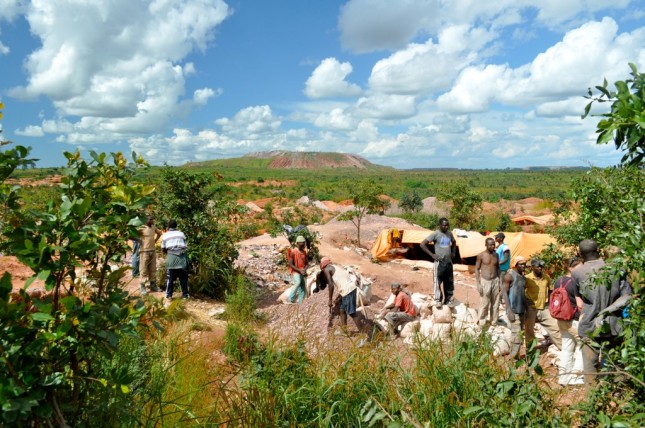
›Its name conjures an image of vivid deep blues. But when cobalt is dug out of the ground in ore form, there’s barely a hint of the rich hue it lends its name to. In the Democratic Republic of the Congo, which produces more than half of the world’s supply, it takes the form of heterogenite, a dull brownish mineral that could easily be mistaken for small clods of dirt.
But people die for this mineral. Children suffer for it. Livelihoods, educations, neighborhoods, environments and personal safety are sacrificed for it.
-
How Environmental Geopolitics Expands Our Understanding of Risk and Security
›The coronavirus has everyone weighing risk and security within a sliding scale of geographic connections and boundaries. Dots and circles of infection pack our virus maps. We more clearly see the fragility of commodity chains that structure our food systems and energy supplies. The virus easily crosses state borders while security protocols within states have been focused on boundaries between individuals and speech droplets. In many ways, human interaction with this microbe illustrates why an environmental geopolitics perspective is powerful.
-
Capturing Greenhouse Gases in China’s Countryside
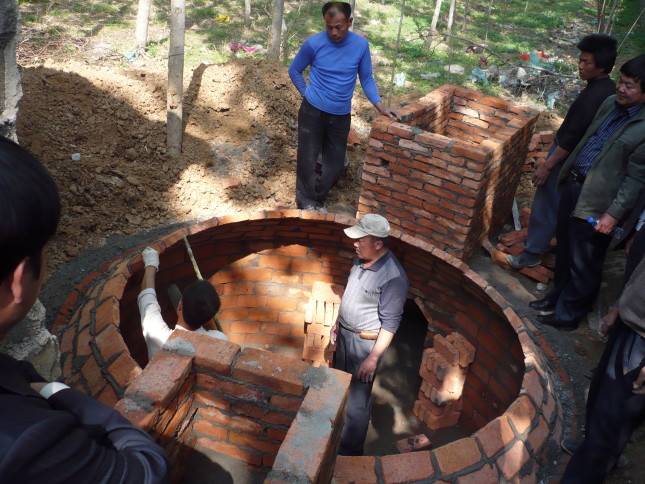
›Spreading manure on crops recycles the nutrients, but as it decomposes it releases methane. And lots of it. Agriculture is the largest source of methane emissions globally. Each year, methane from livestock manure has the warming equivalent of 240 million tons of carbon dioxide, or the same as the annual emissions from 52 million cars.
-
Global Cooperation for the Environment: Policy, Technology, and Community Action
›From the Wilson Center // June 9, 2020 // By Elizabeth M.H. Newbury, Alex Long, Metis Meloche & Magdalena Baranowska“50 years ago, 20 million young people protested about the damage to our Earth. Over the past 5 decades, a lot has happened. Our ozone layer is healing, renewable energy is booming worldwide, environmental awareness has never been higher. But some risks are even more acute than before,” said Denis Hayes, coordinator of the first Earth Day and founder of Earth Day Network, in a video message at a recent Wilson Center event commemorating the 50th Earth Day.
-
Brewing Biogas in the United States and China
›Marmite, a popular food spread developed from yeast at the Burton on Trent brewery in west-central England, is a by-product of brewing beer. The sticky brown food paste adopted the marketing slogan “love it or hate it,” hinting that its strong flavor is an acquired taste. For centuries, Burton on Trent brewed beer, but it has now gained another valuable brewing by-product in addition to Marmite—methane biogas. In 2008, the brewery built an anaerobic digester that converts the beer waste to methane, which is then burned to heat boilers to make beer.
-
How to Create a Successful Cross-Sectoral Collaboration
›It helps to think of collaboration as a skill to develop, rather than a value to impart, said Francesca Gino, Professor and Unit Head of Negotiation, Organization and Markets at Harvard Business School, at a recent Wilson Center virtual event on the importance of cross-sectoral collaboration. Many organizations make collaboration one of their values, she said. However, this has no substantial effect. “It could be a first step, but on its own it doesn’t create a culture where all of a sudden people are collaborating effectively,” Gino said.
Showing posts from category environment.
 In a
In a