

Showing posts from category energy.
-
Covering Climate: What’s Population Got to Do With It?
›November 9, 2009 // By Dan Asin“There’s a correlation between CO2 and population. And it’s that we live in a world of more people, more money and more things, and that all distills down to the need for more energy,” said Dennis Dimick, executive editor of National Geographic, at a Wilson Center event on the media’s coverage of climate change and population, co-sponsored by the Society of Environmental Journalists and the International Reporting Project.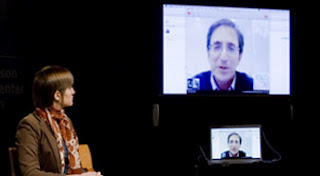
“Thinking about population and trends in population is a vital reality check for assessing policies you hear about on global warming,” said New York Times reporter Andrew Revkin, who joined Dimick and Nation Web Editor Emily Douglas via video conference. “When you start to think about that number—nine billion—a lot of cheery suppositions or assertions you’ve heard about how we’re going to de-carbonize the world without too much effort…[get] challenged in a hurry,” he said.
The Inconvenient Truth of Population
Despite these strong connections, the mainstream media has been reluctant to write about population growth, which Revkin called the “ultimate incremental story.”
“We, I think, are guilty to some extent, in the media, of not paying adequate attention to this part of the whole issue,” he said, partly because there is the perception that “we kind of solved that problem. But, again, just run those numbers: Nine billion people does not solve the climate problem and it has to be considered in every stage of assessing solutions to the climate problem.”
“We need to talk about it so we understand this issue at a level beyond more people means more emissions,” said Douglas. Other factors like levels of consumption, urbanization, and household structure make the population-emissions relationship complex and difficult to explain.
Revkin added that “consumption is even a tougher story to get at in print, because we’re a medium that advertises consumption, among other things.”
The Population-Energy Challenge
One-quarter of the world’s population lacks access to electricity. “We are in this sort of double-vise, trying to constrain our own [energy] demand while also trying to provide the opportunities for people who have little to none,” said Dimick.
With fossil fuels currently providing 80 percent of global energy, and with energy demand estimated to increase dramatically to meet the needs of 2.3 billion more people by 2050, the “scale of the challenge before us . . . is immense,” he said. “To think that we’re somehow simply going to go to solar and wind—I think we’re deluding ourselves.”
Nevertheless, Dimick insisted on the need “to de-carbonize at a tremendous scale.” He proposed sustainably addressing energy needs by improving energy efficiency, expanding mass transit systems, changing land use, and considering nuclear power.
Reproductive Health Is Key
Douglas, who previously edited the RH Reality Check blog, emphasized that population issues go far beyond climate change. “I’m encouraging us to look at population not only from the perspective of the environment, but also from the perspective of individual women and their human rights, their right to determine the number and spacing of their children, and not purely to depress fertility rates in service of mitigating climate change,” she said.According to Douglas, each year 60 million pregnancies—one-third of the global total—are unintended, and 200 million women worldwide have an unmet need for contraception. Family planning programs are “cheap to employ and deploy, and women and societies want them anyway,” said Douglas. A few recent studies have argued that universal access to family planning could be one of the most cost-effective ways to reduce greenhouse gas emissions.
And not just mitigation, but adaptation as well: “Women with access to reproductive health services are healthier and they’re better able to deal with the impacts of climate change,” she said. “Poorer countries are going to need adaptation strategies, and one of those strategies is to allow women to better determine the size of their families.”
However, “many political leaders–not only on the right—don’t like reproductive health programs,” said Douglas. Disagreements over abortion and birth control are part of the problem, as well as past instances of coercive contraceptive methods in some developing countries.
Douglas cited a Population Action International survey that “found that 41 countries identified population growth as a factor that makes them more vulnerable to climate change, but only two of those countries proposed programs that address reproductive health.”
Douglas decried the “significant gap between political leaders’ understanding that population growth makes it more difficult for them to respond to climate change, and political leaders being able to muster the political will that will empower women to better control their own fertility.”
Close-Up on the Most Vulnerable
“We also can’t talk about this as though all people added to the world population produce greenhouse gases in equal measure,” said Douglas. “The world’s richest half billion people, that’s 7 percent of the global population, are responsible for 50 percent of the world’s carbon dioxide emissions. Meanwhile, the poorest 50 percent are responsible for just 7 percent of emissions.”
Revkin urged reporters to use a “close-up lens” when examining population trends impact on climate—especially in “areas of the world where there are significant risks that could be amplified by human-driven climate change, like urban severe flooding and severe rains, like we saw in Manila recently.”
With rapid urbanization in the developing world, “you have to look at places where you have hugely increased numbers of people moving essentially into harm’s way—or being born in harm’s way, if you’re talking about sub-Saharan Africa,” said Revkin.
A Thought Experiment
“What if the whole world were equal in emissions?” Revkin asked. Suppose advanced industrial countries, such as the United States, reduce their annual emissions intensity from 20 tons of CO2 per person to 10 tons. At the same time, suppose rapidly developing countries, such as India, reach the same emissions intensity. In a world with nine billion people that equates to 90 billion tons—“three times today’s current annual emissions of CO2,” he said.
“Probably the single most concrete and substantive thing a young American could to do to lower a carbon footprint is not turning of the lights or driving a Prius, but having fewer children,” said Revkin. “Eventually, should you get credit—if we’re going to become carbon-centric—for having a one child family when you could’ve had two or three? Obviously it’s just a thought experiment, but it raises some interesting questions.”
Drafted by Daniel Asin and Meaghan Parker
Edited by Meaghan Parker -
VIDEO: Carol Dumaine on Energy and Environmental Security in the 21st Century
›November 2, 2009 // By Wilson Center Staff“[W]e’re facing unprecedented challenges, literally things that have never happened in the history of human kind, and that should give us some pause… Not only rising temperatures but dramatic changes in precipitation, possibility of millions of people having to be relocated, and challenges to governance on scales that we perhaps haven’t seen before,” says Carol Dumaine, deputy directory of energy and environmental security at the U.S. Department of Energy, in a conversation with ECSP Director Geoff Dabelko.
Dumaine emphasizes that tackling the 21st century’s broad energy and environmental security challenges requires study by experts from a range of fields, including zoology, virology, and information science. To this end, the Department of Energy hopes to leverage its years of investment and research with “the expertise that exists in the private sector and academia and think tanks.”
Looking toward the future, Dumaine identifies global cooperation as key. “The paradigm is a very diffuse, globally distributed risk, and the response must be very diffuse, globally distributed intelligence.” -
VIDEO: Cleo Paskal on How Climate Change Will Destabilize Energy Supplies
›October 26, 2009 // By Wilson Center Staff“Climate change is going to have a very large effect on the ability to extract, distribute, [and] refine energy—in every sector,” says Cleo Paskal, associate fellow for the Energy, Environment, and Development Programme at Chatham House. “You’re going to very likely see increasing instability,” she tells ECSP Director Geoff Dabelko in this video interview.
When hydroelectric dams are built, Paskal explains, planners inspect the site to determine the river flow, precipitation levels, and similar measures. But with climate change, “those constants have now all become variables, so your hydro generation is going to be severely affected.”
Last year, India “had an 8 percent decline in the ability to generate hydroelectricity because of changing precipitation patterns. This year…it looks like it’s going to be 12 percent because the monsoon is failing.”
Coastal nuclear power plants will face rising sea levels, increasing storm surges, coastal erosion, while those on rivers will find their supply of cooling water declining and warming. “In the summer of 2003, over a dozen French nuclear plants, because it was so hot, had to power down or shut off,” greatly disrupting the country’s energy supply, Paskal explains. “The predictions are that the temperatures that we saw in 2003 will be a one-in-two year event by 2040.”
Offshore oil and natural gas platforms in the Gulf of Mexico are now subject to increasingly strong hurricanes. “Katrina and Rita destroyed over 400 platforms, as well as refining capacity onshore. That creates a global spike in energy prices apart from having to rebuild the infrastructure.”
Meanwhile, offshore rigs in the Niger Delta are vulnerable to sea-level rise and storm surges, while infrastructure built in the Arctic could be at risk as the permafrost continues to melt. -
Bringing the Climate Fight to New Battlefields
›October 23, 2009 // By Geoffrey D. DabelkoThis picture brings the 350 ppm carbon dioxide message to another kind of battlefield. It illustrates the increasing role of the military in bringing non-traditional voices to the political debates over action against climate change. There are plenty of ties, if one scratches the surface and gets into the climate-security field.
The CNA Military Advisory Board, a group of distinguished retired flag officers, has been the most prominent manifestation, but this picture suggests it isn’t just the senior officers with an opinion on climate. President Barack Obama gave a shout out in his MIT speech to Operation Free, a group of Iraq and Afghanistan veterans currently on a bus tour campaigning for energy independence.
Equally important, if not as prominent in this political season, are the present or anticipated impacts of climate on the availability of certain resources (sometimes too much, sometimes too little) and how they might affect economic and political stability. And there are a wide range of reasons for the military to adopt the precautionary principle approach to climate change.
Right now, there is a strong focus on climate-security links in both the research and policy arenas. The challenge is to raise attention, perhaps most productively in a risk framework, without resorting to hyperbole that ultimately produces a backlash.
Photo courtesy of 350.org and Agent Slim. Thanks to Andy Revkin for flagging the picture. -
Wind Farms’ Dirty Laundry Aired in Mexico and the United States
›September 18, 2009 // By Kayly OberMany see wind as a great source of green energy, but some local communities around the world are seeing red. Specific cases in the United States and Mexico—two countries that are now investing heavily in wind energy—highlight the potential for community opposition to wind farms in the rural areas where they are being built.
Mexico was recently dubbed the “Saudi Arabia of alternative energy” by USA Today due to the government and foreign investors’ massive wind energy initiatives. The Isthmus of Tehuantepec, a narrow point between two mountain ranges where wind from the Gulf of Mexico is funneled out to the Pacific Ocean, is known as the one of the windiest places on earth.
Mexican President (and former energy minister) Felipe Calderon has called for the isthmus to produce 2,500 megawatts of electricity from wind power within three years. The project is intended to decrease Mexico’s dependency on its falling oil supplies and stimulate the economy in Oaxaca, one of the poorest states in Mexico.
However, the local community has greeted the initiative with unexpectedly fierce opposition. Residents are angry that the electricity will likely be sold to distant cement plants and big-box stores like Wal-Mart.
In addition, foreign companies have offered local farmers little compensation—about $46 per acre each year—for the land. Residents say they need more, especially since wind farms threaten their traditional livelihoods. Construction stirred up huge amounts of dust and blocked irrigation lines, forcing many farmers to cut crops and herds by more than half.
A group of farmers recently sued three Spanish companies, claiming that the investors aimed to trick poorly educated farmers, many of whom did not speak Spanish, with misleading contracts. Demonstrators in La Venta have disrupted the construction of the Eurus wind farm six times. And territorial disputes have reignited old feuds along racial and political lines in San Mateo del Mar.
Wind farms in the United States are also generating opposition, although of a milder variety. In Flint Hills, Kansas, 100 wind turbines now tower over 20 miles of roads. While most environmentalists cheer such a move, the positive energy prospects on the plains may also bring some negative consequences, such as fragmenting the already fragile prairie ecosystem.
The issue is even more contentious in Cape Cod, where developers are set to construct 170 wind turbines off the coast. Opponents argue that the Cape Wind project will obstruct ocean views, decrease tourism, disrupt traditional fishing trawlers, and block a major bird migration route. In 2008, when the Interior Department issued a favorable report on the project, the late Sen. Edward Kennedy famously announced that its decision “virtually assured years of continued public conflict and contentious litigation.” Local opposition groups, such as the Alliance to Protect Nantucket Sound, have said they are prepared to go to court if the project proceeds.
With the renewable energy footprint of the U.S. set to reach nearly 80,000 square miles of land by 2030, tensions over land-use issues look likely to rise.
These cautionary tales should not deter us from pursuing wind as a viable alternative energy source. Certainly, given the imperative to act against catastrophic climate change, wind should be part of the mix. However, planners and policymakers must consider the likely impacts on the local community; work with affected communities during site selection and construction; and share the benefits of the new projects in order to avoid environmental degradation and social unrest.
Photo: A wind farm in Mexico. Courtesy Flickr user Cedric’s Pics. -
Weekly Reading
›In an Economist.com debate on population growth between John Seager of Population Connection and Michael Lind of the New America Foundation, Seager argues that rapid population growth is “the source of many of the world’s—especially the poor world’s—woes,” as it accelerates environmental degradation and “undermines both security and development.” On the other hand, Lind counters that “countries are not poor because they have too many people,” and asserts that “technology and increased efficiency have refuted what looks like imminent resource exhaustion.”
In Foreign Policy, David J. Rothkopf contends that actions to mitigate climate change—though necessary to avoid very serious consequences—could subsequently spur trade wars, destabilize petro-states, and exacerbate conflict over water and newly important mineral resources (including lithium).
The International Crisis Group (ICG) reports that “the exploitation of oil has contributed greatly to the deterioration of governance in Chad and to a succession of rebellions and political crises” since construction of the World Bank-financed Chad-Cameroon pipeline was completed in 2003. Chad must reform its management of oil resources in order to avoid further impoverishment and destabilization, ICG advises.
The Royal Society and the Institution of Mechanical Engineers (IME)—both based in the United Kingdom—released independent reports on geoengineering the climate. While calling reduction of greenhouse gas emissions “the safest and most predictable method of moderating climate change,” the Royal Society recommends that governments and international experts look into three techniques with the most potential: CO2 capture from ambient air, enhanced weathering, and land use and afforestation. The IME identified artificial trees, algae-coated buildings, and reflective buildings as the most promising alternatives. “Geo-engineering is no silver bullet, it just buys us time,” IME’s Tim Fox told the Guardian.
In “Securing America’s Future: Enhancing Our National Security by Reducing Oil Dependence and Environmental Damage,” the Center for American Progress (CAP) argues that unless the United States switches to other fuels, it “will become more invested in the volatile Middle East, more dependent on corrupt and unsavory regimes, and more involved with politically unstable countries. In fact, it may be forced to choose between maintaining an effective foreign policy or a consistent energy supply.”
The Chinese government is “drawing up plans to prohibit or restrict exports of rare earth metals that are produced only in China and play a vital role in cutting edge technology, from hybrid cars and catalytic converters, to superconductors, and precision-guided weapons,” The Telegraph relates. The move could send other countries scrambling to find replacement sources.
In studying the vulnerability of South Africa’s agricultural sector to climate change, the International Food Policy Research Institute finds that “the regions most vulnerable to climate change and variability also have a higher capacity to adapt to climate change…[and that] vulnerability to climate change and variability is intrinsically linked with social and economic development.” South African policymakers must “integrate adaptation measures into sustainable development strategies,” the group explains. -
Connecting the Dots on Natural Interdependence
›September 3, 2009 // By Brian KleinA vast symphony of natural processes sustains our life on Earth. Recognizing the complex interdependence of nature’s concert reminds us of a simple fact: the social, economic, and environmental challenges we face are not isolated from one another, and neither are their solutions. Tom Friedman drives this point home in a recent New York Times op-ed, “Connecting Nature’s Dots.”
“We’re trying to deal with a whole array of integrated problems—climate change, energy, biodiversity loss, poverty alleviation and the need to grow enough food to feed the planet—separately,” Friedman argues.
“[W]e need to make sure that our policy solutions are as integrated as nature itself. Today, they are not,” he says.
Take, for example, water scarcity—a looming problem that the increasing global incidence of droughts, floods, melting glaciers, and drying rivers will likely exacerbate.
“Droughts make matters worse, but the real problem isn’t shrinking water levels. It’s population growth,” says Robert Glennon, author of Unquenchable: America’s Water Crisis and What To Do About It, in a Washington Post op-ed that points out the integrated nature of our environmental problems. “Excessive groundwater pumping has dried up scores of lakes,” many of which—including Lake Superior—can no longer “float fully loaded freighters, dramatically increasing shipping costs.” Companies reliant on rivers to run their factories or discharge their wastewater have furloughed workers as low flows disrupt normal operations. “Water has become so contentious nationwide,” Glennon continues, “that more than 30 states are fighting with their neighbors over water.”
In addition, while “more people will put a huge strain on our water resources…another problem comes in something that sounds relatively benign: renewable energy, at least in some forms, such as biofuels.” Growing enough corn to refine one gallon of ethanol, for example, can take up to 2,500 gallons of water.
“In the United States, we’ve traditionally engineered our way out of water shortages by diverting more from rivers, building dams, or drilling groundwater wells,” Glennon says. “[But] we’re running out of technological fixes.”
Global food security is also affected. We need the oceans, seas, lakes, rivers, and streams to provide habitat for fish and other marine life—a vital source of sustenance for the poorest segments of our population. Furthermore, wetland areas play a critical role in mitigating the consequences of natural disasters, buffering vulnerable coastal communities from storm surges.
Addressing water scarcity thus requires a complex understanding of the hydrological cycle, its relationship to other natural processes, and humanity’s place in that system.
For years, celebrated environmentalist and entrepreneur Paul Hawken has emphasized the interconnectedness of indigenous, environmental, and social justice movements. In his 2007 book Blessed Unrest, Hawken contends that groups as disparate as land rights reformers in the DR Congo and community members fighting to protect the Anacostia Watershed share fundamental values. Grassroots campaigns of a similar bent have sprung up across the globe, all seeking to right humans’ relationships with the Earth, and with each other.
Policymakers in the U.S. and abroad should take a page from Hawken’s book, recognize the natural interdependence of our problems, and design integrated solutions. Otherwise, our strategies to confront the myriad challenges enumerated by Friedman will fall flat.
Photo courtesy Flickr user aloshbennett. -
A Response to Will Rogers’ “Budgeting for Climate”
›I have a few responses to Will Rogers’ thoughtful critique of my report, “Military vs. Climate Security: Mapping the Shift from the Bush Years to the Obama Era.”
Rogers says that “the report could be read as inferring that the Department of Defense (DoD) has an unnecessarily oversized budget”: that’s true. I think a single country that spends 43 percent of the world’s total military budget—more than the next 14 countries put together—and whose spending has nearly doubled since FY 2000 to the highest level in real terms since World War II, could find some ways to provide for the common defense with less money.
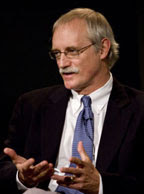 of double-vise, trying to constrain our own [energy] demand while also trying to provide the opportunities for people who have little to none,” said Dimick.
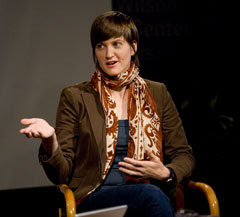 According to Douglas, each year 60 million pregnancies—one-third of the global total—are unintended, and

 A vast symphony of natural processes sustains our life on Earth. Recognizing the complex interdependence of nature’s concert reminds us of a simple fact: the social, economic, and environmental challenges we face are not isolated from one another, and neither are their solutions. Tom Friedman drives this point home in a recent New York Times op-ed, “

