• woodrow wilson center
  • ecsp

New Security Beat

Subscribe:
  • rss
  • mail-to
  • Who We Are
  • Topics
    • Population
    • Environment
    • Security
    • Health
    • Development
  • Columns
    • China Environment Forum
    • Choke Point
    • Dot-Mom
    • Friday Podcasts
    • Navigating the Poles
    • Reading Radar
  • Multimedia
    • Water Stories (Podcast Series)
    • Backdraft (Podcast Series)
    • Tracking the Energy Titans (Interactive)
  • Films
    • Water, Conflict, and Peacebuilding (Animated Short)
    • Paving the Way (Ethiopia)
    • Broken Landscape (India)
    • Scaling the Mountain (Nepal)
    • Healthy People, Healthy Environment (Tanzania)
  • Publications
  • Events
  • Contact Us

NewSecurityBeat

The blog of the Wilson Center's Environmental Change and Security Program
Showing posts from category education.
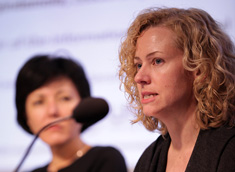
  • Delivering Success: Scaling Up Solutions for Maternal Health (Report Launch)

    ›
    Dot-Mom  //  From the Wilson Center  //  October 24, 2013  //  By Jacob Glass

    Since 2009, the “Advancing Dialogue on Maternal Health” series, co-produced by the Wilson Center, Harvard’s Maternal Health Task Force, and the United Nations Population Fund, has been one of the few public policy forums dedicated to maternal health. [Video Below]

    MORE
  • From Malthus to Ehrlich and Beyond: William Pan on the Roots of PHE

    ›
    Friday Podcasts  //  October 18, 2013  //  By Jacob Glass
    william-pan-blog

    More than four decades ago, Paul Ehrlich and John Holdren said complacency concerning the impact of human population growth is “unjustified and counterproductive.” More than 200 years ago, Thomas Malthus made the case that “the way we have to reduce the birth rate is family planning and delaying marriage, [thus] expanding the number of years between births,” says Duke University’s William Pan in this week’s podcast.

    MORE
  • Coastal Resource Management, Family Planning Integration Build Resilience in Madagascar and The Gambia

    ›
    From the Wilson Center  //  August 26, 2013  //  By Jacob Glass
    Oyster Harvesters in The Gambia

    Growing awareness of the connected challenges of natural resource management, economic growth, and human health has encouraged more integrated models of international development. The experience of two organizations – TRY Oyster Women’s Association, based in The Gambia, and Blue Ventures, based in Madagascar – demonstrates the success of a community-based approach to building resilience, enabling communities to bounce back from adversity and establish a long-term basis for development. [Video Below]

    MORE
  • Taliban Return Threatens Gains in Girls’ Education, Says Razia Jan

    ›
    Friday Podcasts  //  August 23, 2013  //  By Jacob Glass
    Razia Jan

    “There has never been a school for girls in this area; no one really offered them this option,” says Razia Jan in this week’s podcast. “Whenever I see these girls and I talk to my students, I can’t tell you how honored I am that my girls are getting educations.”

    Since 2008, Jan has managed the Zabuli Education Center, an all-girls school located in Afghanistan’s Deh’Subz district. With the support of her organization, Razia’s Ray of Hope Foundation, the school provides free kindergarten-through-ninth-grade education to 400 Afghan girls.

    MORE
  • Young People Are Transforming Afghanistan, Says Maiwand Rahyab

    ›
    Friday Podcasts  //  August 9, 2013  //  By Jacob Glass
    Maiwand Rahyab Podcast

    “I would like to challenge the conventional and popular perceptions about Afghanistan and expose a deeper story of commitment and determination, of struggle and success, of hope and change,” says Counterpart International’s Maiwand Rahyab in this week’s podcast.

    Today – almost 12 years after the United States and its allies invaded Afghanistan – is the next generation of Afghans better off? With 26 percent of girls giving birth before age 18, 1 in 10 Afghan children dying before the age of five, and young people leaving the country in large numbers, this seems like a fair question.

    MORE
  • In Afghanistan, Women’s Health May Be Marker for Taliban Resurgence [Part Two]

    ›
    Dot-Mom  //  From the Wilson Center  //  July 26, 2013  //  By Swara Salih
    Afghanistan Beyond the Headlines Part 2

    “Afghanistan Beyond the Headlines” was a half-day event at the Wilson Center on the country’s unique demography, the plight of women and girls, and prospects for the future. Read part one here.

    Afghanistan’s youth, including more than seven million girls currently in school, are leading the call for new leadership, but many Afghans fear the chilling effect of a resurgent Taliban, said panelists at the Wilson Center during the second half of “Afghanistan Beyond the Headlines.” As the United States prepares to withdraw its forces over the next year, a halt in the country’s progress on women’s health may be the first sign of backsliding on many of the gains made over the last decade. [Video Below]

    MORE
  • Afghanistan’s Youth and the Risks of Taliban Return [Part One]

    ›
    Dot-Mom  //  From the Wilson Center  //  July 25, 2013  //  By Jacob Glass
    Afghanistan Beyond the Headlines Part 1

    As the United States approaches its 2014 deadline for military withdrawal from Afghanistan, one often overshadowed aspect of the conflict is the hard-won progress made by previously marginalized segments of the Afghan population, particularly women, girls, and young people.[Video Below]

    MORE
  • From Ethiopia to Egypt, Girls’ Education Programs Combat Child Marriage

    ›
    Dot-Mom  //  From the Wilson Center  //  July 22, 2013  //  By Swara Salih
    Child brides in Darfur

    According to the UN Population Fund, more than 140 million girls will become child brides between 2011 and 2020 – an estimated 14.2 million young girls marrying too young every year or 39,000 daily. The majority of these girls do not receive access to education or reproductive health services. [Video Below]

    MORE
Newer Posts   Older Posts
View full site

Join the Conversation

  • RSS
  • subscribe
  • facebook
  • G+
  • twitter
  • iTunes
  • podomatic
  • youtube
Tweets by NewSecurityBeat

Trending Stories

  • unfccclogo1
  • Pop at COP: Population and Family Planning at the UN Climate Negotiations

Featured Media

Backdraft Podcast

play Backdraft
Podcasts

More »

What You're Saying

  • Volunteers,At,The,Lagos,Food,Bank,Initiative,Outreach,To,Ikotun, Pan-African Response to COVID-19: New Forms of Environmental Peacebuilding Emerge
    Rashida Salifu: Great piece 👍🏾 Africa as a continent has suffered this unfortunate pandemic.But it has also...
  • A desert road near Kuqa An Unholy Trinity: Xinjiang’s Unhealthy Relationship With Coal, Water, and the Quest for Development
    Ismail: It is more historically accurate to refer to Xinjiang as East Turkistan.
  • shutterstock_1779654803 Leverage COVID-19 Data Collection Networks for Environmental Peacebuilding
    Carsten Pran: Thanks for reading! It will be interesting to see how society adapts to droves of new information in...

What We’re Reading

  • Rising rates of food instability in Latin America threaten women and Venezuelan migrants
  • Treetop sensors help Indonesia eavesdrop on forests to cut logging
  • 'Seat at the table': Women's land rights seen as key to climate fight
  • A Surprise in Africa: Air Pollution Falls as Economies Rise
  • Himalayan glacier disaster highlights climate change risks
More »
  • woodrow
  • ecsp
  • RSS Feed
  • YouTube
  • Twitter
  • Facebook
  • Home
  • Who We Are
  • Publications
  • Events
  • Wilson Center
  • Contact Us
  • Print Friendly Page

© Copyright 2007-2021. Environmental Change and Security Program.

Woodrow Wilson International Center for Scholars. All rights reserved.

Developed by Vico Rock Media

Environmental Change and Security Program

Woodrow Wilson International Center for Scholars

Ronald Reagan Building and International Trade Center

  • One Woodrow Wilson Plaza
  • 1300 Pennsylvania Ave., NW
  • Washington, DC 20004-3027

T 202-691-4000