• woodrow wilson center
  • ecsp

New Security Beat

Subscribe:
  • rss
  • mail-to
  • Who We Are
  • Topics
    • Population
    • Environment
    • Security
    • Health
    • Development
  • Columns
    • China Environment Forum
    • Choke Point
    • Dot-Mom
    • Friday Podcasts
    • Navigating the Poles
    • Reading Radar
  • Multimedia
    • Water Stories (Podcast Series)
    • Backdraft (Podcast Series)
    • Tracking the Energy Titans (Interactive)
  • Films
    • Water, Conflict, and Peacebuilding (Animated Short)
    • Paving the Way (Ethiopia)
    • Broken Landscape (India)
    • Scaling the Mountain (Nepal)
    • Healthy People, Healthy Environment (Tanzania)
  • Publications
  • Events
  • Contact Us

NewSecurityBeat

The blog of the Wilson Center's Environmental Change and Security Program
Showing posts from category education.
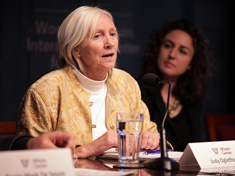
  • Innovative Technology and Trainings Empower New Generation of Midwives

    ›
    Dot-Mom  //  From the Wilson Center  //  October 28, 2014  //  By Heather Randall
    afghan-midwives

    Imagine you are a physician working in a rural health center in a developing country. You’re helping a woman deliver her baby, and it’s just arrived but is not breathing. Meanwhile, the mother has started to hemorrhage. You’re the only one working in the clinic that day, and many life-saving treatments need to start within one minute. You have 60 seconds to make decisions that could cost the lives of two people. [Video Below]

    MORE
  • Dr. Harshad Sanghvi: Reducing Maternal and Child Deaths Requires Better Trained, Empowered Health Workers

    ›
    Dot-Mom  //  Friday Podcasts  //  October 17, 2014  //  By Sarah Meyerhoff
    Sanghvi-small

    Technological solutions, like improved equipment and logistical tools, have been trumpeted as keys to finally ending preventable maternal and child deaths. “But it’s not just technology innovation that we need; it is systems innovation,” says Dr. Harshad Sanghvi in this week’s podcast.

    MORE
  • UN Further Refines Population Projections: 80 Percent Probability of 10-12 Billion People by 2100

    ›
    October 16, 2014  //  By Elizabeth Leahy Madsen
    Johannesburg

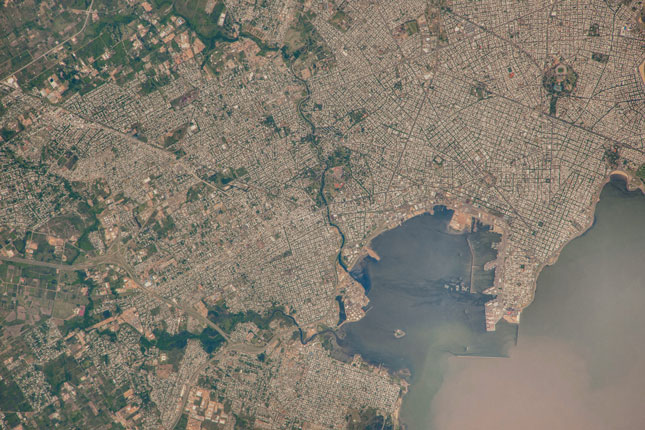
    Seasoned demography geeks know to anticipate the release of the UN Population Division’s World Population Prospects in the spring of odd-numbered years. An off-cycle update published last month in Science, summarizing new results and methodological changes to the projections, therefore provoked a buzz of interest and a mini-flurry of media coverage.

    MORE
  • More Focused Priorities Critical for Sustainable Development Goals, Says Genevieve Maricle

    ›
    Friday Podcasts  //  October 10, 2014  //  By Heather Randall
    maricle_small

    Leaders from around the world gathered in New York last month to discuss the replacements for the Millennium Development Goals, which expire next year. The topics included human rights, economic development, justice, disarmament, and terrorism, just to name a few. And that’s a problem, says Genevieve Maricle, policy adviser to the U.S. Ambassador at the U.S. Mission to the UN, in this week’s podcast.

    MORE
  • New Approaches to Projecting Population Yield Divergent Forecasts and Valuable Insights

    ›
    Reading Radar  //  October 1, 2014  //  By Sarah Meyerhoff

    As the UN General Assembly begins charting a course toward sustainable growth, population projections will likely undergird many of their most important assumptions about the future. As two new papers released last week demonstrate, however, there are differing opinions about how much the world’s population will grow and when it will stabilize.

    MORE
  • Andrew Revkin, Dot Earth

    On the Path Past 9 Billion, Little Crosstalk Between UN Sessions on Population and Global Warming

    ›
    September 22, 2014  //  By Wilson Center Staff
    china_construction

    The original version of this article, by Andrew Revkin, appeared on The New York Times’ Dot Earth blog.

    The United Nations and the streets of Manhattan are going into global warming saturation mode, from Sunday’s People’s Climate March through the Tuesday climate change summit convened by Secretary General Ban Ki-moon and on through an annual green-energy event called Climate Week.

    MORE
  • Global Youth Wellbeing Index Launched

    ›
    Eye On  //  September 15, 2014  //  By Heather Randall

    An estimated 1.8 billion people today are between the ages of 10 and 24 and 85 percent of them live in developing economies and/or fragile states. Such youthful age structures can lead to a number of challenges, including increased potential for instability, and countries with large numbers of young people must find ways to address their unique needs.

    MORE
  • Underage: Addressing Reproductive Health and HIV Needs in Married Adolescent Girls

    ›
    From the Wilson Center  //  September 9, 2014  //  By Katrina Braxton

    child-marriage-poster1

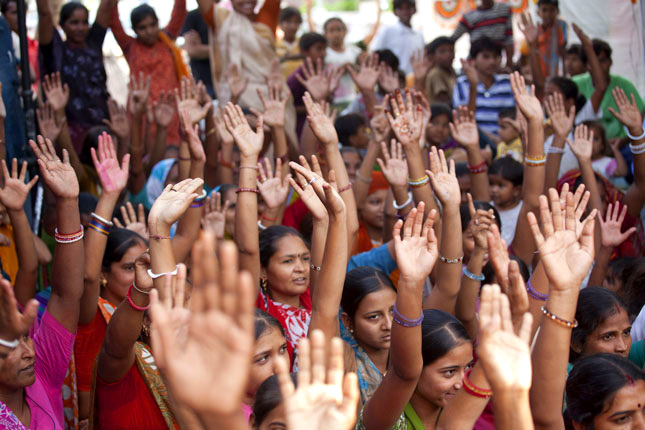
    In July, thousands of people attended the 20th International AIDS Conference and the 2014 Girls Summit to work towards an AIDS-free generation and ending child and forced marriage. But such attention is rare; by and large, these girls are invisible to development efforts. [Video Below]

    MORE
Newer Posts   Older Posts
View full site

Join the Conversation

  • RSS
  • subscribe
  • facebook
  • G+
  • twitter
  • iTunes
  • podomatic
  • youtube
Tweets by NewSecurityBeat

Trending Stories

  • unfccclogo1
  • Pop at COP: Population and Family Planning at the UN Climate Negotiations

Featured Media

Backdraft Podcast

play Backdraft
Podcasts

More »

What You're Saying

  • Volunteers,At,The,Lagos,Food,Bank,Initiative,Outreach,To,Ikotun, Pan-African Response to COVID-19: New Forms of Environmental Peacebuilding Emerge
    Rashida Salifu: Great piece 👍🏾 Africa as a continent has suffered this unfortunate pandemic.But it has also...
  • A desert road near Kuqa An Unholy Trinity: Xinjiang’s Unhealthy Relationship With Coal, Water, and the Quest for Development
    Ismail: It is more historically accurate to refer to Xinjiang as East Turkistan.
  • shutterstock_1779654803 Leverage COVID-19 Data Collection Networks for Environmental Peacebuilding
    Carsten Pran: Thanks for reading! It will be interesting to see how society adapts to droves of new information in...

What We’re Reading

  • Rising rates of food instability in Latin America threaten women and Venezuelan migrants
  • Treetop sensors help Indonesia eavesdrop on forests to cut logging
  • 'Seat at the table': Women's land rights seen as key to climate fight
  • A Surprise in Africa: Air Pollution Falls as Economies Rise
  • Himalayan glacier disaster highlights climate change risks
More »
  • woodrow
  • ecsp
  • RSS Feed
  • YouTube
  • Twitter
  • Facebook
  • Home
  • Who We Are
  • Publications
  • Events
  • Wilson Center
  • Contact Us
  • Print Friendly Page

© Copyright 2007-2021. Environmental Change and Security Program.

Woodrow Wilson International Center for Scholars. All rights reserved.

Developed by Vico Rock Media

Environmental Change and Security Program

Woodrow Wilson International Center for Scholars

Ronald Reagan Building and International Trade Center

  • One Woodrow Wilson Plaza
  • 1300 Pennsylvania Ave., NW
  • Washington, DC 20004-3027

T 202-691-4000