-
Do High Food Prices Cause Social Unrest?
›
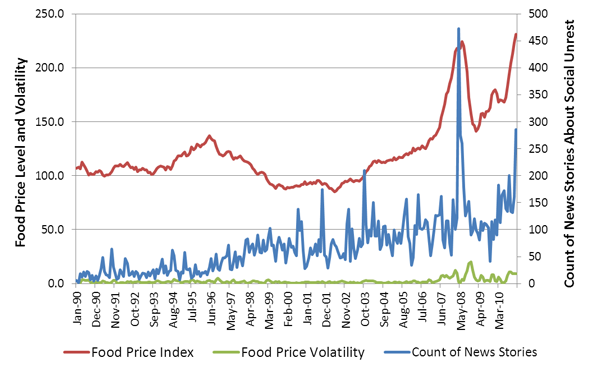
In March 2011, a senior Brookings Institution official wrote that “the crux of the food price challenge is about price volatility, rather than high prices per se” and that “[i]t is the rapid and unpredictable changes in food prices that wreak havoc on markets, politics, and social stability.”
-
Three New Reports Highlight Ongoing Significance of Youth Demographics in Global Trends
›January 2, 2012 // By Elizabeth Leahy MadsenAmidst world population reaching seven billion and last year’s Arab Spring, which in some nations is continuing into this winter, it can be easy to miss emerging pieces of research that tell us something relatively objective about youth and instability. Three new studies give practitioners and policymakers a stronger foundation of evidence to highlight the challenges and opportunities facing the world’s largest generation of young people.
Results of a recent UNICEF staff survey indicate that the people responsible for the UN’s efforts targeting children and youth are seriously concerned about demographic and economic dynamics. Asked to review a list of 20 “global trends,” UNICEF staff rated “growing disparities” and “youth bulge and youth unemployment” as the most significant to children. The results, which the agency will soon publish in a paper on “The Next Generation and Global Trends,” also indicate that staff members feel that UNICEF has a strong capacity to influence the future of these trends.
UNICEF’s recent “Child Outlook” report on global trends discusses the issues highlighted in the survey. The report notes that although many countries are moving toward middle-income status, poverty rates remain stubbornly high, indicating that economic development does not benefit all equally. Income and consumption in such countries tend to be concentrated among the wealthiest households. “While many families will prosper, others are being left behind,” the report explains.
“Tensions and discouragement arising from youth unemployment, combined with higher food prices and fiscal contractions, may have contributed to increased civil unrest, protests, and political instability,” UNICEF asserts. In many developing countries, the number of young people entering the labor market far surpasses the number of available jobs. Although some youth are not working because they are enrolled in secondary or tertiary education, low rates of youth participation in the workforce often are not a matter of choice. Young people, especially those with low levels of education and from poorer families, are often unable to find secure, decent jobs. More than one-quarter of all young people with jobs worldwide live below the poverty line of $1.25 per day.
Economic Pressures on Youth in East Africa
Two other research projects – one published, one still underway – provide additional context to the combination of demographic and economic challenges that face the world’s young people. In the first, part of a recent special U.S. Institute of Peace series on South Sudan, Stephanie Schwartz and Wilson Center fellow Marc Sommers probe the expectations of and obstacles faced by youth in the newly created country.
According to the incipient government’s statistics agency, 72 percent of South Sudan’s population is younger than 30, which places it among the 20 youngest age structures in the world. Only 40 percent of youth ages 15 to 24 are literate, and nearly 80 percent of households depend on agriculture for their income. Based on interviews conducted with urban and rural youth in three areas of South Sudan, the authors find that the pressure of paying rising dowry costs is the most salient issue facing young men, while young women are treated as economic assets with no influence in their own future. The authors’ research suggests that “some young men join armed gangs, at least in part, because they believe it will help them pay dowries.”
Although many young people in South Sudan aspire to the stability of government work, the limited number of jobs and shortage of relevant skills inhibit their aspirations. With an underdeveloped private sector, few opportunities for training, and nepotistic practices in hiring, there is little work for those living in towns and urban areas beyond manual labor and selling goods. The authors recommend that education and job training be expanded, with a focus on equitable access among young people from varied geographic backgrounds.
Across the border in northern Uganda, Chris Blattman, an associate professor of political science at Yale, has been studying the social effects of the government’s youth employment program started in 2007. The program offered grants to small groups of young people for vocational training or to fund the costs of starting a new business. Although a full paper has not yet been published, preliminary findings indicate strong economic benefits of the program which in turn improve social cohesion and community participation while diminishing aggression and “disputes with authorities” among young men. If they bear out, the results may well confirm the oft-repeated policy recommendation that focusing on youth employment is critical to improving national development as well as reducing the likelihood of instability and conflict.
In the year of seven billion, we heard much about the need to invest in young people and the tremendous potential they embody, for demographic dividends as well as overall development. Yet 2011 was also a year of tremendous upheaval, much of which was driven by young people – and their older counterparts – seeking representative and democratic governance. This should serve as a reminder that youth can be a remarkable force for positive change, but in too many places – South Sudan among them – their opportunities, prospects, and contributions are constrained. As the UNICEF survey results reiterate how important this issue is to development programming, the Uganda research may be another important piece of evidence that direct investment in young people reaps tangible results not only for them, but also for society.
Elizabeth Leahy Madsen is a consultant on political demography for the Wilson Center’s Environmental Change and Security Program and senior technical advisor at Futures Group. She was previously a senior research associate at Population Action International.
Sources: Bill and Melinda Gates Institute for Population and Reproductive Health, Chris Blattman, ILO, Sommers and Schwartz (2011), South Sudan National Bureau of Statistics, UNICEF, World Bank.
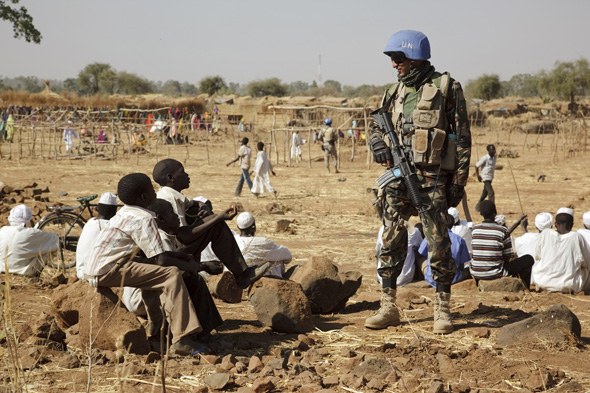
Photo Credit: “UNAMID Peacekeeper Speaks with Sudanese Youth,” courtesy of UN Photo/Albert Gonzalez Farran. -
Susanna Murley for The Huffington Post
Compromise Is Hard: The Problems and Promise of REDD+
›December 6, 2011 // By Wilson Center StaffThe original version of this article, by Susanna Murley, appeared on The Huffington Post.
In Durban this week delegates from around the world are examining the options to mitigate carbon emissions. What looks like the best chance for progress? REDD+ (for Reduced Emissions from Deforestation and Degradation, plus co-benefits – like conservation, sustainable management of forests, and enhancement of forest carbon stocks). REDD+ has been seen as a potentially powerful solution to solve both poverty and deforestation – in one fell swoop.
How does it work? Essentially, these programs would be funded by developed nations to help pay for community forestry projects in developing countries, if the communities can demonstrate – with verifiable data – that their efforts are saving forests that would have been destroyed or if they are planting trees that would permanently sequester carbon.
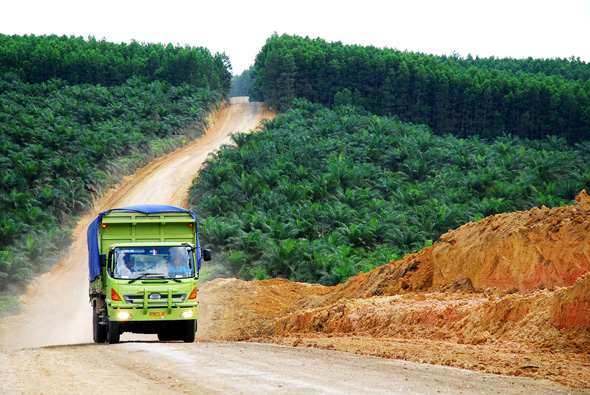
Will this work? Many other systems have tried and failed to reduce deforestation. In Indonesia, where an area of forest about the size of Nevada has been destroyed since 1990, activists have participated in demonstrations, legal actions, blockades and destruction of property to protest timber production. Many international NGOs have joined them in their campaigns against the forestry practices in Indonesia, releasing report after report on the “State of the Forest.” The World Bank and the International Monetary Fund have attempted to regulate forestry as conditions of their loans. None of it worked, and Indonesia continues to see massive amounts of illegal logging and deforestation.
Continue reading on The Huffington Post.
Sources: Center for International Forestry Research, Gellert (2010), MongaBay.com
Photo Credit: “Oil palm plantation,” courtesy of flickr user CIFOR (Ryan Woo). -
Jeanne Nyirakamana, PHE Champion
Reaching Rural Rwandans With Integrated Health and Livelihood Messages
›This PHE Champion profile was produced by the BALANCED Project.
Rwanda is one of the most densely populated countries on the planet, with more than 11 million people in one of Africa’s smallest countries, most of whom depend on the land as subsistence farmers. The country has diverse mountain, lake, and savannah landscapes, and the Virunga Mountain chain in the northwest part of the country is home to one-third of the world’s threatened mountain gorilla population. At the same time, the population throughout the country suffers from high rates of unmet need for contraception, and three percent of the adult population lives with HIV/AIDS. In a land under such intense pressure on natural resources, rural livelihood initiatives are critical to ensuring people have options for meeting their daily health and well-being needs.
For the past three years, Jeanne Nyirakamana has served as head of the health program for the Sustaining Partnerships to Enhance Rural Enterprise and Agribusiness Development (SPREAD) Project. Supported by the U.S. Agency for International Development through Texas A&M; University, the SPREAD Project is integrating a dynamic coffee production and quality improvement program in Rwanda with health outreach to improve community well-being. The health component works to improve the lives of coffee farmers and cooperative members by providing them with health information and services related to family planning, maternal and child health, prevention of sexually-transmitted infections (including HIV), and water and sanitation.
Training Peer Educators
Working closely with the coffee program, Nyirakamana’s team has trained more than 540 men, women, and youth peer educators who have reached more than 95,000 coffee farmers with education and services. Key communication messages highlight the links between sound decision-making and health-seeking behaviors, productive farms and agribusinesses, and strong and healthy families.
The program also leverages and supports local health resources through referrals to existing public health services, organization of mobile clinics, and community-based distribution of a socially marketed water purification solution (Sur Eau) and condoms (Prudence). According to Nyirakamana, one of the project’s greatest successes is the increased acceptance of family planning by farmers and their families and the more than 7,500 farmers who have been tested for HIV. In order to draw in as many coffee farmers as possible, many of the health and livelihood activities take place at the stations where the coffee beans are washed, at other buildings used by the coffee farmer cooperative, or during combined community meetings or home visits. At the washing stations, Nyirakamana’s team supports local health center staff to provide voluntary counseling and testing (VCT) and de-worming services while at the same time SPREAD-trained peer educators and coffee/health extension agents disseminate family planning information.
The cooperatives’ buildings have clean water, hand-washing stations, and small kiosks where condoms and Sur Eau are sold. These community health agents work with SPREAD to ensure that the greater community, not just the coffee farmers, has access to health knowledge and services. They learn how to teach the community about a range of health issues and each month they submit reports showing how many people they reached and with what kinds of messages. They are also becoming increasingly engaged in coffee and agribusiness activities. Through the success of their health activities, these agents are seen as vital community resources.
Integrated Results
By implementing this integrated population, health and environment (PHE) approach, the SPREAD Project staff is ensuring the health of the people and environment and success of the agribusiness. “You cannot care for the environment without first caring for the people who live and use that environment, so when you transmit dual messages [agriculture and health] you are able to hit two birds with one stone,” said Nyirakamana.
According to a 2010 evaluation of the project, farmers and their families reported improvements in personal and household hygiene; an increase in understanding and acceptance of family planning; uptake of HIV and VCT services; and use of condoms and other local health services. As well, they noted shifts in gender norms affecting household revenue use, alcohol, and reproductive health. The agribusiness stakeholders value the integrated approach as a means to more holistically meet farmers’ goals of increased incomes and improved lives and livelihoods.
This PHE Champion profile was produced by the BALANCED Project. A PDF version can be downloaded from the PHE Toolkit. PHE Champion profiles highlight people working on the ground to improve health and conservation in areas where biodiversity is critically endangered.
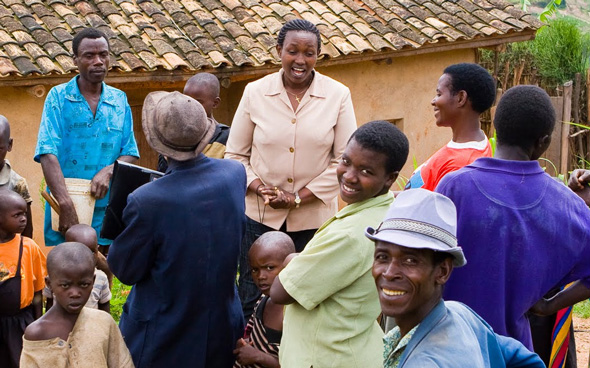
Photo Credit: BALANCED Project. -
The Yasuní-ITT Initiative Is a Practical Climate Solution That Must Be Embraced at Durban
›As the world turns to Durban, South Africa, for this year’s UN climate summit, new findings are turning up the heat on the urgency to address climate change. The reality though is that we no longer have the luxury of resting our hopes solely on an internationally binding climate agreement; we must begin to look more closely at supporting immediate and tangible solutions. By complementing a global top-down effort of continued international negotiations with bottom-up approaches, we increase our chances at mitigating the most damaging effects of climate change. One of the most innovative models of such a bottom-up approach is the Yasuní-ITT Initiative being undertaken by the Government of Ecuador and supported by the UN Development Programme’s Multi-Partner Trust Fund Office (MPTF Office).
-
Jill Shankleman for the U.S. Institute of Peace
Lifting the Veil: What Can We Learn From EITI Reports?
›November 22, 2011 // By Wilson Center StaffThe original version of this article, by Jill Shankleman, appeared on the United States Institute of Peace’s International Network for Economics and Conflict blog.
The Extractive Industries Transparency Initiative (EITI), launched in 2002, now has 35 participating countries that have committed to publish annual, independently verified reports on all mining, oil, and gas payments made by companies to governments and all revenues received by governments from these extractive industry companies. The EITI is based on the premise that making public reliable information about extractive industry payments will make corruption and theft of “resource rents” more difficult and will enable informed debate amongst citizens and politicians about how to use resource wealth. While initially some governments could object to joining on the grounds that EITI was “a bad boys’ club,” Norway is now a fully engaged member; the United States has just announced that it will participate; and Australia stated it will pilot-test the system.
The participants in EITI also include Liberia, East Timor, Sierra Leone, and Côte d’Ivoire, which, as post-conflict states, depend more than most on effective management of their resource wealth to establish the foundations for sustained economic growth. Citizens, journalists, and government officials in all the EITI countries now have access to some information on what extractive industry companies are paying to the government and what the government is receiving.
However, examination of country EITI reports reveals several shortcomings in reporting. What do the reports tell us beyond the headline numbers (i.e., total revenues and the size of any discrepancy between what companies report paying and what governments report receiving)? What do they tell us about revenue trends or about the significance of these revenues in total government receipts? How many countries have a pattern similar to Tanzania whereby the largest contribution documented in their first report was through companies collecting payroll taxes on behalf of the government? What is the value of “social investments,” training levies, or research and development contributions made by extractive industry companies? Where, and to what extent, do oil, gas and mining companies make payments to local governments?
Continue reading on the International Network for Economics and Conflict blog.
Jill Shankleman is a senior scholar at the Woodrow Wilson Center and former senior social and environmental specialist at the World Bank.
Video Credit: “Transparency Counts,” courtesy of vimeo user EITI International. -
Book Review: ‘Plundered Nations? Successes and Failures in Natural Resource Extraction’
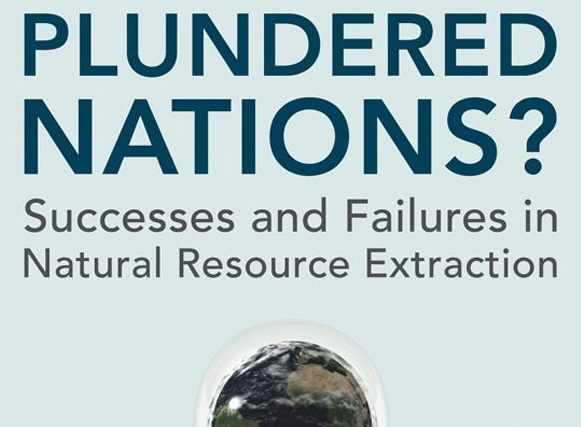
›The principal argument of Plundered Nations? Successes and Failures in Natural Resource Extraction is highlighted by the question mark in the title. In many resource rich countries, natural assets have not led to development. The book advances the hypothesis that “for the depletion of natural assets to be converted into sustained development, a series of decisions has got to be got sufficiently right” (p. 1). That series of decisions is examined in detail through case studies on Cameroon, Chile, Iran, Kazakhstan, Malaysia, Nigeria, Russia, and Zambia, produced by a diverse group of academic and practicing economists under the auspices of the Center for the Study of African Economies and the Oxford Center for the Economics of Resource Rich Countries (OxCarre).
-
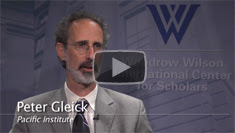
Watch: Understanding Peak Water Can Help Us “Avoid the Worst Disasters,” Says Peter Gleick
›October 26, 2011 // By Kate Diamond“The advantage of the idea of peak water is that it lets us think differently about the limits that face us,” said MacArthur “Genius” Fellow and Pacific Institute President Peter Gleick in this short interview with ECSP. Gleick, who launched the latest edition of The World’s Water at the Wilson Center last week, has been talking about peak water since 2009 when he and Pacific Institute colleague Meena Palaniappan first wrote about the concept in that year’s water report (see our interview from then too).
Renewable vs. Non-Renewable
Peak water is “the idea that we are effectively running into constraints and limits on our water use,” said Gleick, in part because of population growth. “It lets us think differently about the limits to the water that’s available for us to use, and about the water that it’s appropriate for us to use, and about the policies to put in place to avoid the bad things that happen when we reach or exceed peak constraints.”
Gleick breaks the concept into three categories:- Peak renewable water: “Where we can no longer increase the amount of water we’re taking out of rivers – when we take all of it.”
- Peak nonrenewable water: “Where, very much like oil, we’re over-pumping a non-renewable ground water supply – a nonrenewable aquifer – and it becomes more and more expensive and more and more damaging and more and more difficult to pump ground water.”
- Peak ecological water: “Where the use of additional water causes more ecological harm than it provides economic benefit.”
Across all three categories, said Gleick, we are very bad at understanding limits. “We don’t measure peak water carefully, we don’t collect the data necessary to understand when we’re approaching or exceeding peak water limits.”
“But without a doubt we are exceeding peak water limits in more and more regions of the world,” he said. “And that’s going to have implications for our economies. It’s going to have implications for our environment.”
“Understanding and applying the idea of peak water is the first step toward developing strategies and institutions to avoid the worst disasters associated with overuse and inappropriate use of our water resources.”
Showing posts from category economics.