-
John Williams: Helping People and Preserving Biodiversity Hotspots
›March 16, 2012 // By Schuyler Null“Both humans and the number of species in the world are not evenly distributed across the globe,” said John Williams of the University of California, Davis, who recently spoke at the Wilson Center about his contribution to Biodiversity Hotspots: Distribution and Protection of Conservation Priority Areas. “In particular we find that species diversity is concentrated in what’s called the biodiversity ‘hotspots.’”
Largely in the tropics, Mediterranean climates, and along mountain chains, biodiversity hotspots are “where there’s a real concentration in number of species and also unique species – plants and animals that exist nowhere else on Earth,” he said.
“It’s a very complex relationship between biodiversity and human population, because it’s not necessarily [true] that places of high human population are a threat to biodiversity,” said Williams. Many different factors play a role, “like education, like consumption, like economic development, different cultures – how people interface with the natural world – all these things create nuances as far as what that relationship is between biodiversity and where people live.”
“There are some basic things we can do that are going to be good for human welfare, as well as biodiversity,” he continued. A few are addressing lack of education, especially among girls, in areas of high biodiversity; providing basic health services, including family planning, where rural growth rates are highest; and improving physical access to rural areas to promote economic development.
“We see there’s a direct correlation between each additional year of schooling a girl has and their fertility during their lifetime,” Williams said. “As people climb out of poverty, they also choose to have smaller, healthier families.” -
The Missing Links in the Demographic Dividend
›March 9, 2012 // By Elizabeth Leahy Madsen
The “demographic dividend,” a concept that marries population dynamics and development economics, is on the rise in policy circles – Rajiv Shah, Melinda Gates, and African government ministers have all discussed it recently in high-level forums. Most notably for demographers, World Bank Chief Economist Justin Yifu Lin wrote a blog post that focuses on the demographic dividend’s potential to give developing countries a powerful economic boost through declining dependency ratios and a proportionately large working-age population.
-
Melanne Verveer and Others at Heinrich Böll Gender Equity and Sustainable Development Conference
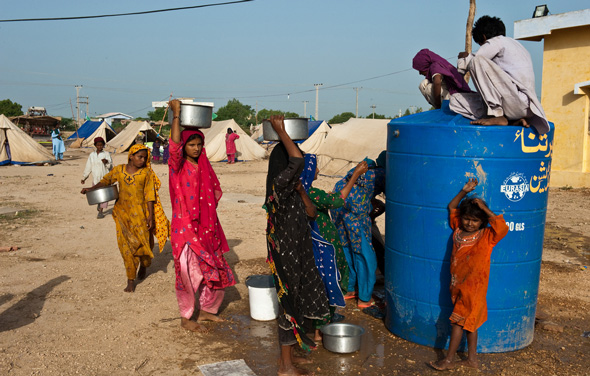
›The Gender Equity and Sustainable Development conference, hosted last month by the Heinrich Böll Foundation, was a testament to the increasing importance of gender and sustainability within the international development community. Representatives from the U.S. government, UN, and countless international non-profits, aid organizations, and corporations demonstrated the vital need for collaboration and innovative action when working towards a more sustainable world.
The conference kicked off with an invigorating speech by the Honorable Melanne Verveer, U.S. Ambassador-at-Large for Global Women’s Issues, who called on the international community to acknowledge the “vital role that women can and must play in sustainable development.”
“Putting a spotlight on the critical role of women in stopping climate change will help to harness the immense human capacity of women worldwide,” said Verveer. By advocating for consideration of gender at every level – from grassroots organizing to policymaking – the ambassador painted a picture of a new era of sustainable development.
Step One: Recognize the Problem
A series of four panels followed the keynote address and focused on the intersections between gender inequity, the economy, trade, food and agriculture, and climate change.
There was clear consensus among all the participants that worldwide consciousness of gender inequity can lead to vast improvements in the status of women while also opening the door for new, innovative approaches to sustainable development. The 16 panel members represented numerous groups, from Oxfam America to Gender Action to the Stockholm Environment Institute, and all spoke to the importance of working for larger structural changes while simultaneously shifting more economic, social, and political power into the hands of women by any means possible.
The panelists described a world in which women represent a tremendous, untapped resource for change. Although women only own approximately one percent of titled land worldwide, they own close to 33 percent of business in the developing world and spend two-thirds of consumer dollars worldwide, which they tend to invest in sectors like health and education that benefit the larger community. Verveer said that data also shows women are more likely to pass environmental legislation and that forestry projects involving women have a higher rate of success.
Humanizing Climate Change
The big question of the conference seemed to be: in a world where women are disproportionately vulnerable to the effects of climate change, why aren’t women given more of a voice in the process of creating a more sustainable world?
Marie Brill, a senior policy analyst at Action Aid USA, pointed to the production of biofuels as a poignant example of a sustainable development plan that has had unintended negative consequences for women around the world. In the developing world, women are primarily responsible for food provisioning, yet many social and legal restrictions prevent women from owning land. If women had better access to land ownership and food insecurity would decrease, she said, and crops yields could increase by as much as 20 to 30 percent.
Foreign ownership of large tracts of land, common in the production of biofuels, makes land title even more difficult for women to acquire or maintain. The industry has also led to price spikes for staple crops like corn, said Brill, meaning poor women are sometimes unable to feed their families.
While biofuels provide an alternative fuel source, their production has been managed in a way that ignores the gender-specific implications of the process. By maintaining an awareness of gender, we can ensure that women do not become victims as we move towards a more sustainable world, Brill said.
Liane Schalatek, the associate director of the Heinrich Böll Foundation North America, suggested that a paradigm shift is needed regarding our approach to climate change.
Approaching climate change from a purely scientific and technological perspective is offensively simplistic, Schalatek said. “We need to humanize climate change and bring social equity into the discourse,” she said, emphasizing that “it is our obligation under international human rights objectives and vital to the success of sustainable development to take a rights-centered approach.”
Molly Shane was an intern for the Sierra Club’s Global Population and Environment Program.
Sources: Boston Consulting Group, Council on Foreign Relations, Food and Agriculture Organization of the United Nations, USAID, U.S. State Department, Women Deliver.
Photo Credit: “Climate Risk and Resilience: Securing the Region’s Future,” courtesy of the Asian Development Bank. -
Military-to-Military Environmental Cooperation: Still a Good Idea for China and the United States
›March 1, 2012 // By Geoffrey D. DabelkoAs Washington begins to assess the recent visit of Chinese Vice President Xi Jinping, who is expected to become president of China early next year, the search for ways to build confidence between the two powers is on the table yet again.
-
USAID’s Donald Steinberg on Futures Analysis for International Development
›February 28, 2012 // By Stuart KentJust as the science fiction writer Isaac Asimov explored the idea of predicting the future to influence the world towards a more prosperous, democratic, and peaceful track, so too must USAID try to better understand the challenges of tomorrow, said Donald Steinberg, deputy administrator for the U.S. Agency for International Development, during an address at USAID’s “Future of Development” symposium at the Wilson Center late last year. “Development now is too important to the United States to be left to actions that occur over 1, or 2, or 5, or even 10 years,” he continued. Looking beyond budgetary cycles, Steinberg asserted that “we have to prepare for future development patterns” by analyzing the present.
Why Aid Matters
Drawing on the President’s remarks during the UN’s 2010 Millennium Development Goals Summit in New York, Steinberg outlined three reasons why development aid is central to U.S. foreign policy.
First, we all stand to benefit from living “in a world that’s peaceful, that’s democratic, that’s prosperous, that’s respectful of human rights and respectful of human dignity,” he argued.
Second, “a world that is developing is in our economic interest,” he said. “Developing nations are our fastest growing markets abroad,” providing lucrative outlets for U.S. trade and investment. Eighty-five percent of new U.S. exports over the next two decades will find their way to recipients of U.S. foreign aid, he said.
Third, aid impacts national security. Countries that are developing and prospering “don’t spew out large numbers of refugees across borders or across oceans,” he said, “they don’t transmit pandemic diseases, they don’t harbor terrorists, or now even pirates” – in short, “they don’t require American forces.”
Looking to the Future
According to Steinberg, we can take hold of the future by being prepared to grasp opportunities, even if they come in the midst of challenges.
“We’re seeing demographic shifts that are complicating once steady development patterns,” he said, “and we’re seeing more uneven distribution of wealth within countries and between countries.” But “maternal and infant mortality have plummeted [and] literacy rates are skyrocketing.”
“We still see rampant corruption and we still see crackdowns on civil society all around the world,” however Steinberg pointed out that 17 new democracies have emerged in Africa in the last 15 years alone.
On climate change, he drew from recent events in the Horn of Africa. “A changing rain pattern – from a drought every 10 years to what is now basically a drought every year – has brought together a perfect storm of famine, war, and drought,” he said. Yet across the border from Somalia, the situation is markedly different – in part because “USAID has had the capability to work with eight million Ethiopians over the past decade to strengthen their resiliency.”
Each of these shows the opportunity for positive change amidst difficult challenges, if we are prepared.
“We went through a period where we had eliminated our office of policy and planning,” said Steinberg, but over the last few years the newly established Policy, Planning, and Learning Bureau at USAID has brought back an emphasis on futures analysis. “We are now seeking to become…the thought leader in the development field,” he said.
Overall, the total amount of official government aid is small compared to other sources from the United States, said Steinberg – around $30 billion a year (compared to $36 billion in private giving, $100 billion in remittance flows, and $1 trillion in private capital flows). To make the most of that, USAID should be “a catalyst for development,” he said, working in partnership, encouraging technological innovation, and advancing cross-sectoral understanding.
“We at AID like to think in terms of budget cycles,” said Steinberg. “We’re starting to think about fiscal year [20]14, but I want you to start thinking about fiscal year 25 and fiscal year 30. I won’t challenge you to think 30,000 years ahead like Isaac Asimov did, but I think we do have to consider what the lessons of today are teaching us about the future.”
Sources: The White House. -
Kaitlin Shilling: Climate Conflict and Export Crops in Sub-Saharan Africa
›“There’s been a tremendous amount of work done on looking for a climate signal for civil conflict, particularly in sub-Saharan Africa, and a lot of this work draws a very clear and simple path – if it rains more, or if it rains less, there will be more or less conflict,” says Stanford University’s Kaitlin Shilling in this short video interview. Unfortunately, that straightforward research does little in the way of helping policymakers: “the only way to change the agricultural outputs due to climate change is to change climate change, reduce climate change, or stop it,” she says, “and we’re not really good at that part.”
Shilling moderated a panel at last month’s National Conference on Science, Policy, and the Environment on climate-conflict research. Agricultural export crops – cotton, coffee, cocoa, tea, vanilla – represent one area where policymakers might be able to intervene to prevent climate-driven conflict, says Shilling. Though not as important from a food security perspective, “these crops are really important” for sub-Saharan economies, as well as for “government revenues, which [are] closely related to government capacity.”
But “the effects of climate change on those crops are less well understood,” Shilling says. How they relate to “government revenues and how those relate to civil conflict is an area that I spend a lot of time doing research on.”
By “understand[ing] the mechanisms that underlie the potential relationship between climate and conflict, we can start identifying interventions that make sense to reduce the vulnerability of people to conflict and help them to adapt to the coming climate change.” -
Stuck: Rwandan Youth and the Struggle for Adulthood (Book Preview)
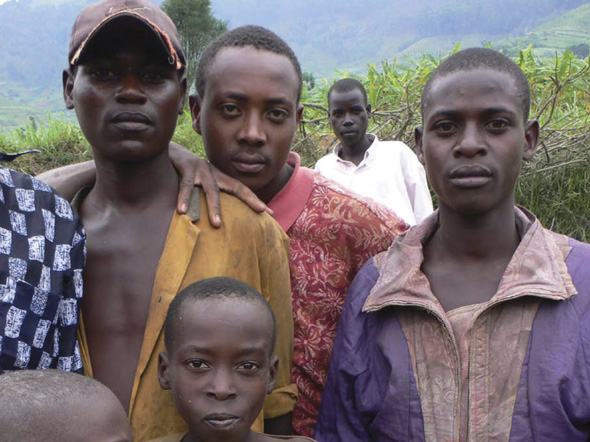
›Several years ago, I wrote that the central irony concerning Africa’s urban youth was that “they are a demographic majority that sees itself as an outcast minority.” Since that time, field research with rural and urban youth in war and postwar contexts within and beyond Africa has led me to revise this assertion. The irony appears to apply to most developing country youth regardless of their location.
-
Afghanistan’s First Demographic and Health Survey Reveals Surprises [Part One]
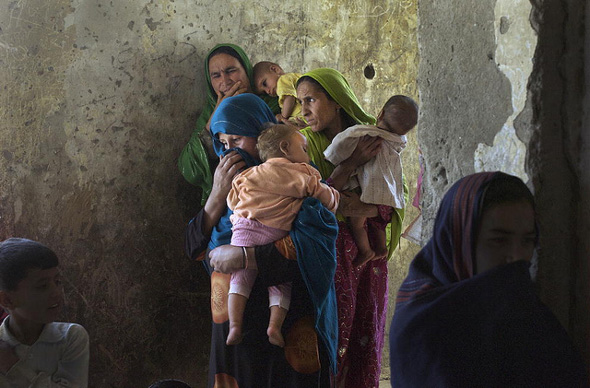
›February 14, 2012 // By Elizabeth Leahy MadsenLate last year, Afghanistan’s first-ever nationally representative survey of demographic and health issues was published, providing estimates of indicators that had previously been modeled or inferred from smaller samples. It shows that Afghan women have an average of five children each, lower than most experts had anticipated, and that their rate of modern contraceptive use is just slightly lower than that of women in neighboring Pakistan.
Showing posts from category economics.