-
On Building a Better (and More Resilient) World: Complexity, Community, and the Precautionary Principle
›April 3, 2013 // By Laurie Mazur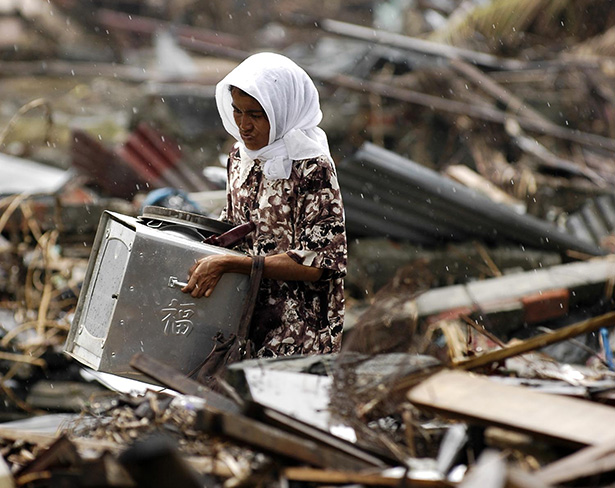
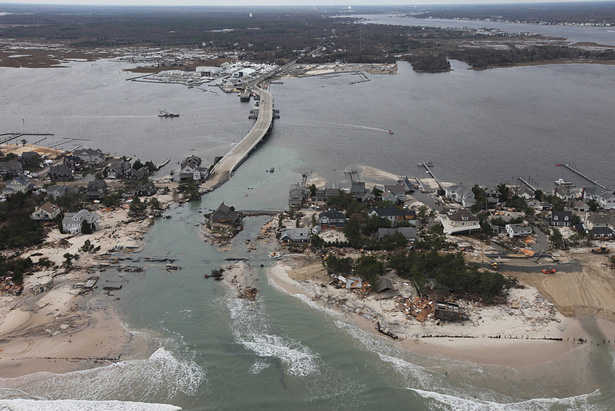
From the 2004 Indian Ocean tsunami to Superstorm Sandy, the last decade has seen an incredible array of natural disasters. Of course, disasters of all kinds are nothing new, but, thanks to the growing scale and interconnectedness of the human enterprise – and the damage we have done to the natural world – the frequency, scale, and consequences of today’s calamities are truly without precedent.
-
Demographic and Environmental Dynamics Shape ‘Global Trends 2030’ Scenarios
›
“However rapid change has been over the past couple decades, the rate of change will accelerate in the future,” states the newest quadrennial report from the National Intelligence Council (NIC), Global Trends 2030: Alternative Worlds. Released late last year, the report identifies the “game-changers, megatrends, and black swans” that may determine the trajectory of world affairs over the next 15 years, including demographic dynamics and natural resource scarcity. [Video Below]
-
Paradigm Shift in Chinese Environmental Sector Needed, Says Activist Wang Canfa
›A well-known Chinese proverb describing the relationship between the central government in Beijing and its people says, “Heaven is high and the emperor is far away” (天高皇帝远, tian gao, huang di yuan). It’s not too far of a stretch to apply the same proverb to the current state of China’s environment sector, where relatively strong pollution control laws are poorly enforced on the ground.
-
The Demographic Dividend in Lower-Income Countries and Global Reproductive Rights Laws
›Many of the fastest growing countries in the world today are also the poorest. A recent bulletin from the National Transfer Accounts Project, “Lower Income Countries and the Demographic Dividend,” examines what it takes for lower-income countries to experience a demographic dividend and the economic growth associated with that period. Achieving the demographic dividend is dependent on a country achieving low fertility rates, which, when coming from a period of high growth, temporarily increases the ratio of the working-age population to dependents, like children and the elderly. For lower-income countries to do this, the report recommends that policymakers invest in healthcare and education programs and focus on boosting the labor force participation rate. Looking forward, the report advises that it is not too early for lower-income countries to begin developing social security and pension programs to support the latter stages of the demographic transition too. -
Africa Can Help Feed Africa: Removing Regional Barriers to Trade in Food Staples
›We need to understand why barriers to trade exist in order to alleviate the food insecurity that confronts Africa, said Makhtar Diop, World Bank vice president for Africa, at the Wilson Center in January.
The World Bank released a new report in October 2012 that is part of a series that concentrates on intraregional trade. Africa Can Help Feed Africa: Removing Regional Barriers to Trade in Food Staples, however, is unique, Diop said, because it “moves the focus from general barriers to trade in Africa to focus on food,” so that policymakers can move away from crisis response and address food insecurity at a base level. [Video Below]
-
Goldilocks Had It Right: How to Build Resilient Societies in the 21st Century
›March 5, 2013 // By Laurie MazurWhen Superstorm Sandy slammed into the U.S. East Coast last October, it was the latest in a series of “teachable moments” about our growing vulnerability to climate change.
-
Mapping China’s Massive West-East Electricity Transfer Project [Infographic]
›The Wilson Center’s China Environment Forum is proud to announce that we are launching our first interactive infographic: a map of China’s West-East Electricity Transfer Project. The map underscores China’s energy and water imbalances and the looming choke point China faces in terms of water, food, and energy security. The map also illustrates how consumer goods made in China’s factories along its eastern coast are powered by coal and hydropower in the country’s western provinces.
-
Aging in the 21st Century: A Celebration and a Challenge
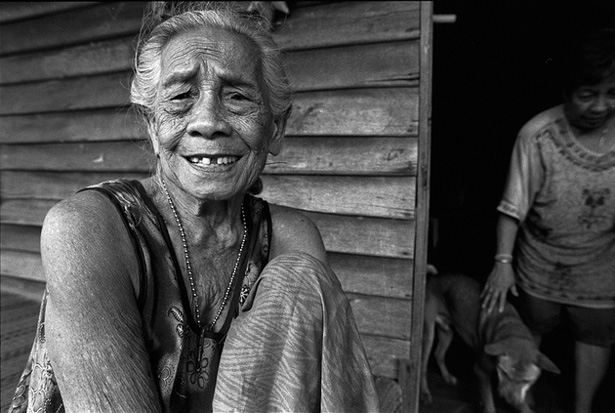
›“We are in the midst of a silent revolution,” said Ann Pawliczko, a senior technical advisor in the population and development branch at the United Nations Population Fund (UNFPA), quoting former UN Secretary-General Kofi Annan. “It is a revolution that extends well beyond demographics, with major economic, social, cultural, psychological, and spiritual implications.”
Showing posts from category economics.