-
Perception Matters: New Insights Into What Determines Resilience
›
Resilience is increasingly recognized as a powerful concept to help practitioners, academics, and policymakers better understand how people respond to shocks and stressors, and how those responses can be linked to longer-term positive or negative development outcomes, such as wellbeing or food (in)security.
-
How to Translate Paris Pledges Into Action? Regulatory Frameworks, Says World Bank’s Grzegorz Peszko
›
Nearly six months after the Paris climate agreement, the international community’s attention has shifted from celebration to implementation. Governments have begun outlining climate pledges in the form of intended nationally determined contributions, or INDCs – which are fast becoming nationally determined contributions, or NDCs, as they begin influencing policy.
-
Why East Africa’s Refugee Crises Can No Longer Be Ignored
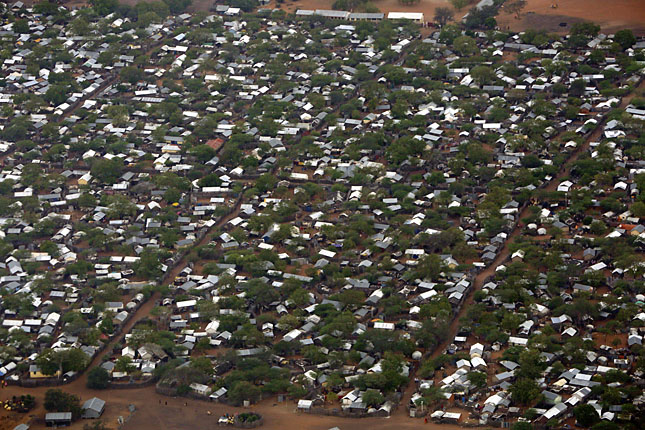
›Citing security concerns, the government of Kenya recently announced their intent to close the world’s largest refugee complex, Dadaab, after almost 25 years. [Video Below]
-
New Approaches to Addressing Gender Inequality in Global Development
›In principle, development organizations and donors have known that gender dynamics affect the success or failure of their efforts for some time. In practice, overturning cultural mores while at the same time improving health outcomes, incomes, or food security can be difficult. [Video Below]
-
Singapore and the Climate Dilemma: There’s No Way to Go it Alone
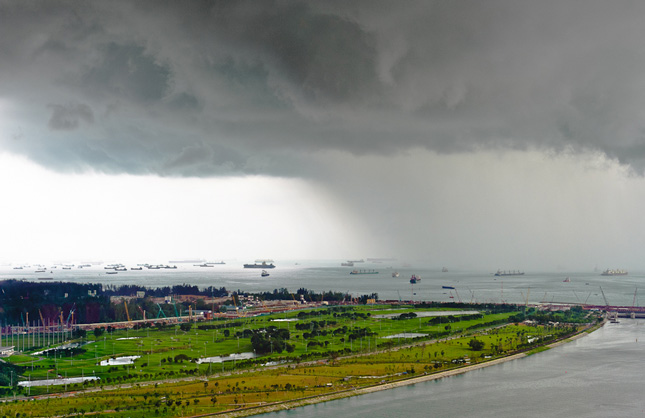
›Anyone visiting Singapore, as I did recently, quickly realizes it is exceptional. A tiny, rich, stable city-state of nearly 6 million people perched uneasily in a region of sprawling mega-countries full of poverty and instability, it also a thriving free market trading and financial center that is meticulously planned and where 80 percent of people live in public housing.
-
El Niño Affects Food for 80 Million, “Paradigm Shift” Needed in Disaster Risk Assessment
›A report by the European Union on global food security finds 240 million people are in food stress thanks to conflict, refugee situations, flooding, drought, and El Niño. Part of a 2012 commitment by the EU to better target the root causes of food insecurity, the report analyzes the hunger situation in 70 countries and provides deeper analysis for 20. -
Global Population and Reproductive Health (Book Preview)
›Population, reproductive health, and environmental sustainability are inextricably linked. Growing populations place increasing demands on the environment, while meeting the reproductive health needs of populations usually slows their growth. Often, however, policymakers, scholars, and journalists discuss these issues separately, as if unrelated.
-
Hunger in Shangri-La: Causes and Consequences of Food Insecurity in the World’s Mountains
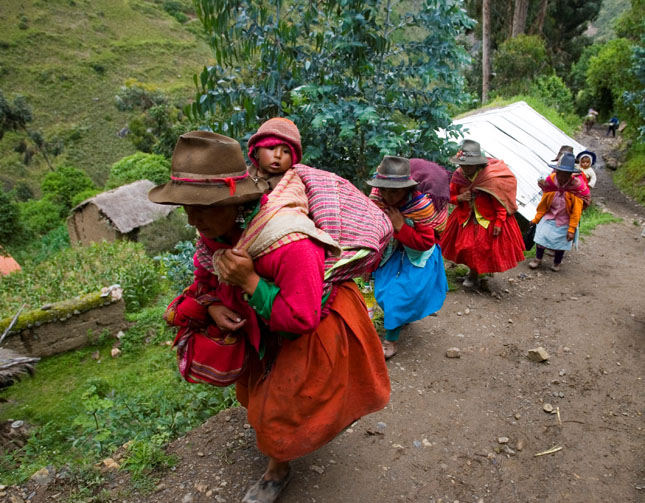
›Over the past decade, the number of undernourished people around the world has declined by around 167 million, to just under 800 million people. However, this positive trend glosses over a stark reality: Food insecurity is increasing in the world’s mountains. This pattern has been under-recognized by development experts and governments, a dangerous oversight with far-reaching social and environmental repercussions.
Showing posts from category economics.