-
Catastrophe and Catalyst: Pakistan’s Foreign Minister on His Nation’s Climate Tragedy
›
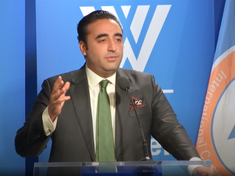
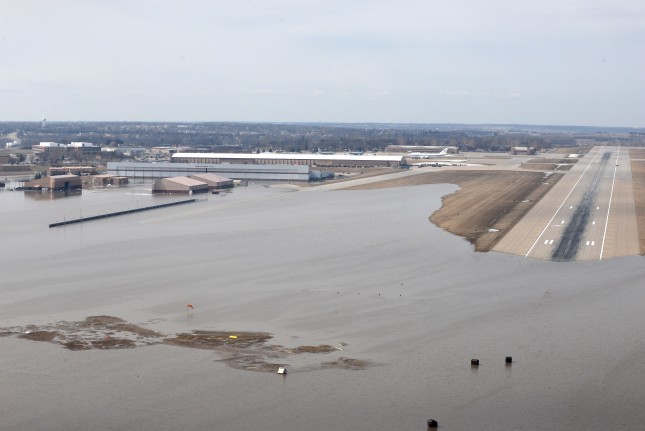
On a recent visit to the Wilson Center, Pakistan’s Foreign Minister Bilawal Bhutto Zardari remarked on the historic nature of the monsoon-related floods that have submerged a huge swath of his country over the last several months.
“These are no normal monsoons and no normal floods,” said Zardari. “We are used to monsoons. We are used to floods. We have provincial mechanisms [and] national mechanisms to deal with such disasters. What we were not prepared for was for floods to descend from the sky.”
-
Climate Change Will Make the Brazilian Military’s Role More Difficult, Finds New Report
›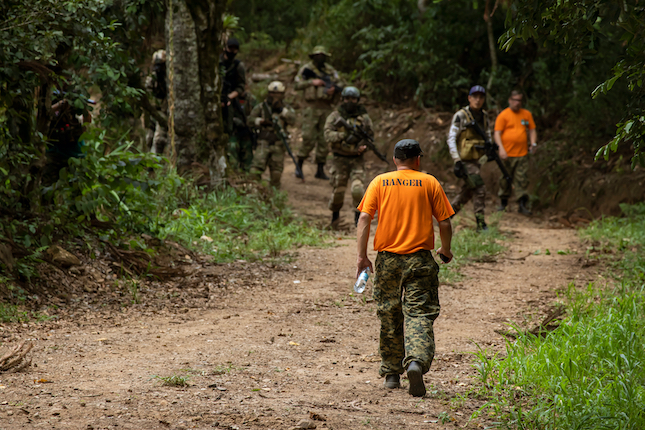
“It is in Brazil’s interest to climate-proof the nation,” said Wilson Center Senior Fellow Sherri Goodman during a recent International Military Council on Climate and Security (IMCCS) event. Referencing a new IMCCS report, Climate and Security in Brazil, Goodman, who is also Secretary General for the IMCCS, said that Brazilian leaders ought to develop counter-deforestation and climate plans as critical elements of the national security agenda.
-
It’s Time for Scenario Planners and Enterprise Risk Managers to Join Forces
›Scenario planning—a powerful method for communicating and examining uncertainty—is once again in vogue as a result of the COVID-19 pandemic. Despite the growing interest in this approach, however, its use is still limited, deployed predominately by the intelligence, business, and military communities.
-
Integrate Gender When Designing Climate Policy
›The team of people tasked with coordinating the global climate change negotiations for the 26th UN Climate Change Conference (COP26) in 2021, we recently learned, consists entirely of men. While not surprising to many feminists in this space, this blatant disregard of gender diversity and women’s perspectives in climate policy is all too common. And it reflects broader ignorance of how gender and climate change intersect.
-
Gender Equality is Important to Building Resilience and Peace during Disasters and Conflict
›“The gender perspective highlights how pre-existing inequalities and vulnerabilities are exacerbated in conflict and in disasters,” said Susanne Kozak, a doctoral candidate at Monash University at a recent event hosted by the Environmental Peacebuilding Association and University of Melbourne’s Faculty of Science.
-
The Top 5 Posts of August 2020
›As Beijing prepares to host the 2022 Winter Olympics, China’s environmental activities are once again on center stage. The Wilson Center’s China Environment Forum took the top spot this month with Karen Mancl and Richard Liu’s coverage of the new program report, “Closing the Loop on China’s Water Pollution,” which details what China can learn from New York, Washington, D.C., and Singapore, to advance its wastewater and carbon reduction targets.
-
To Understand How Disasters Relate to Conflict and Peace, Reframe the Starting Point
›Is the world doomed to be ever-more tumultuous? For years, headlines have suggested that climate change causes or acts as a threat multiplier for violent conflicts. For example, climate change-influenced drought has been labeled a cause of the Syrian conflict and the war in Darfur. Natural hazard-related disasters (“disasters”) like earthquakes that are not related to climate change have also been connected to an increased risk of violent social conflict and political instability. The narratives are often that disasters displace people who then put pressure on already-strained resources and infrastructure in receiving areas, and that disaster-stricken people fight over limited resources in their struggle for survival.
-
From Crises to Building Resilience for U.S. National Security
›This year, three pandemics have shaken the fabric of our society, said Les Williams, Co-Founder and Chief Revenue Officer at Risk Cooperative at a recent event co-hosted by the Wilson Center and Stanford Woods Institute for the Environment on building greater resilience for U.S national security. The spread of COVID-19 highlighted the vulnerabilities in our healthcare system. The murder of George Floyd became the tipping point in communicating the risk that Black Americans have been facing for more than 400 years. And a number of natural disasters exposed society’s vulnerability to climate change.
Showing posts from category disaster relief.