• woodrow wilson center
  • ecsp

New Security Beat

Subscribe:
  • rss
  • mail-to
  • Who We Are
  • Topics
    • Population
    • Environment
    • Security
    • Health
    • Development
  • Columns
    • China Environment Forum
    • Choke Point
    • Dot-Mom
    • Friday Podcasts
    • Navigating the Poles
    • Reading Radar
  • Multimedia
    • Water Stories (Podcast Series)
    • Backdraft (Podcast Series)
    • Tracking the Energy Titans (Interactive)
  • Films
    • Water, Conflict, and Peacebuilding (Animated Short)
    • Paving the Way (Ethiopia)
    • Broken Landscape (India)
    • Scaling the Mountain (Nepal)
    • Healthy People, Healthy Environment (Tanzania)
  • Publications
  • Events
  • Contact Us

NewSecurityBeat

The blog of the Wilson Center's Environmental Change and Security Program
Showing posts from category disaster relief.
  • Natalia Machuca, USAID

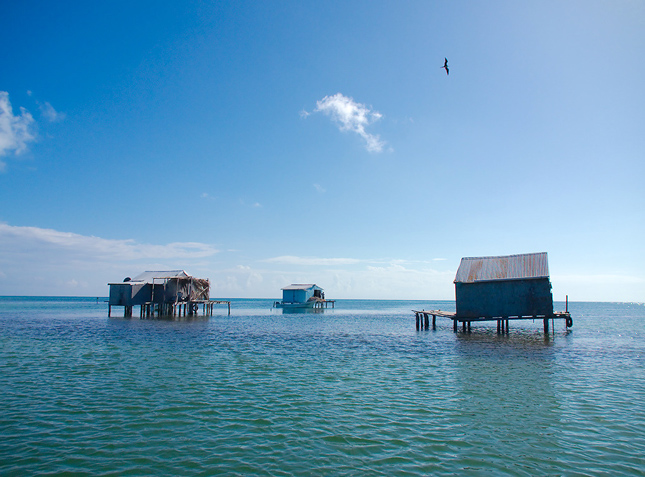
    New Demographic and Health Survey Shows Positive Results in Haiti

    ›
    July 30, 2013  //  By Wilson Center Staff
    Haitian family

    The original version of this article, by Natalia Machuca, appeared on USAID’s Impact blog.

    A newly released nationwide health survey of Haiti shows continuing positive trends on key health-care indicators in particular those of Haitian women and children. The latest survey, undertaken by the Haitian Ministry of Public Health and Population, was conducted in 2012 and compares with the prior survey done in 2006. It shows steady improvements among key indicators despite significant health challenges in Haiti due to the 2010 earthquake and cholera outbreak. Of note were improved indicators for child vaccination and malnutrition, infant and child mortality, women’s health, and contraception use. The report indicated no increase in HIV prevalence, which remained steady.

    MORE
  • Reproductive Health Organizations Embrace Cross-Sectoral Partnerships in Africa

    ›
    From the Wilson Center  //  July 18, 2013  //  By Swara Salih
    Kenyan mother and child

    “The places in the world where the environment is most fragile, women’s health is most fragile,” said Leila Darabi, director of global communications for the Planned Parenthood Federation of America, at the Wilson Center. “The negative impacts on the environment tend to affect women the most. Women are the people who are planting kitchen gardens, women are traditional healers, and so they often feel the impact first when those things are degraded.”

    MORE
  • Youth Farming and Aquaculture Initiatives Aim to Reduce Food and Political Insecurity in Senegal

    ›
    Guest Contributor  //  June 3, 2013  //  By Mark Brennan & Kody Emmanuel

    The 2011-12 West African food crisis led to riots in Senegal and Burkina Faso as well as food insecurity for millions of rural and urban poor across the region. The crisis emerged from a number of factors, including instability in northern Mali, increases in global food prices, and low rainfall in the 2010-2011 and 2011-2012 growing seasons. Many countries in the region are now reassessing and expanding domestic agricultural capabilities. At the top of the agenda for Senegal, a democratic republic on track to reach many Millennium Development Goals, is reducing youth unemployment and increasing domestic agricultural capacity.

    MORE
  • Measuring Community Resilience: Implications for Development Aid

    ›
    Guest Contributor  //  May 28, 2013  //  By Molly Jones

    ‘Toward Resilience’ is a series on the meaning of global resilience and vulnerability today.

    A staggering amount of development dollars – one in three, in fact – are lost due to natural disasters and crises. Certain communities are less affected than others by such disasters; they are more resilient. Knowing where vulnerability and strength exist and how to bolster them could help avoid these losses. Yet, today, very little data exists to help development practitioners understand which adaptive capacities are lagging in a given community.

    MORE
  • Looking Back to Get Ahead: FEMA’s Strategic Foresight Initiative on Natural Disaster Preparedness

    ›
    Guest Contributor  //  May 13, 2013  //  By Alan M. Wright

    ‘Toward Resilience’ is a series on the meaning of global resilience and vulnerability today.

    Natural disasters have dominated news coverage in the past several years, with many observers noting a distressing rise in the frequency and scale of disasters as well as rising costs. Despite these worrying trends, a critical mass of leadership and public support for doing something about it is emerging.

    MORE
  • Bouncing Back: How Do Population Dynamics and Social Cohesion Affect the Resilience of Societies?

    ›
    From the Wilson Center  //  April 9, 2013  //  By Carolyn Lamere

    ‘Toward Resilience’ is a series on the meaning of global resilience and vulnerability today.

    “The scale and the impact of disasters today can be greater than anything we’ve previously experienced,” said Laurie Mazur at the Wilson Center on March 18. “The proliferation of disasters has gotten a lot of people talking about resilience, about how we can lessen our risk and how we can recover more quickly from disasters of all kinds.” [Video Below]

    MORE
  • Laurie Mazur: Build on Natural Tendencies to Strengthen Social Resilience

    ›
    Friday Podcasts  //  April 5, 2013  //  By Carolyn Lamere

    ‘Toward Resilience’ is a series on the meaning of global resilience and vulnerability today.

    “The proliferation of disasters has gotten a lot of people talking about resilience, about how we can lessen our risk, and how we can recover more quickly from disasters of all kinds,” says Laurie Mazur in this week’s podcast.

    Mazur describes the qualities of communities that can weather adversity, including social cohesion and the ability to make decisions for themselves. Above all, she reiterates that “humans are nothing if not resilient,” and the governance structures and disaster mitigation schemes we employ should capitalize on that native resilience, rather than infringe upon it.

    MORE
  • On Building a Better (and More Resilient) World: Complexity, Community, and the Precautionary Principle

    ›
    April 3, 2013  //  By Laurie Mazur

    ‘Toward Resilience’ is a series on the meaning of global resilience and vulnerability today.

    From the 2004 Indian Ocean tsunami to Superstorm Sandy, the last decade has seen an incredible array of natural disasters. Of course, disasters of all kinds are nothing new, but, thanks to the growing scale and interconnectedness of the human enterprise – and the damage we have done to the natural world – the frequency, scale, and consequences of today’s calamities are truly without precedent.

    MORE
Newer Posts   Older Posts
View full site

Join the Conversation

  • RSS
  • subscribe
  • facebook
  • G+
  • twitter
  • iTunes
  • podomatic
  • youtube
Tweets by NewSecurityBeat

Trending Stories

  • unfccclogo1
  • Pop at COP: Population and Family Planning at the UN Climate Negotiations

Featured Media

Backdraft Podcast

play Backdraft
Podcasts

More »

What You're Saying

  • Volunteers,At,The,Lagos,Food,Bank,Initiative,Outreach,To,Ikotun, Pan-African Response to COVID-19: New Forms of Environmental Peacebuilding Emerge
    Rashida Salifu: Great piece 👍🏾 Africa as a continent has suffered this unfortunate pandemic.But it has also...
  • A desert road near Kuqa An Unholy Trinity: Xinjiang’s Unhealthy Relationship With Coal, Water, and the Quest for Development
    Ismail: It is more historically accurate to refer to Xinjiang as East Turkistan.
  • shutterstock_1779654803 Leverage COVID-19 Data Collection Networks for Environmental Peacebuilding
    Carsten Pran: Thanks for reading! It will be interesting to see how society adapts to droves of new information in...

What We’re Reading

  • Rising rates of food instability in Latin America threaten women and Venezuelan migrants
  • Treetop sensors help Indonesia eavesdrop on forests to cut logging
  • 'Seat at the table': Women's land rights seen as key to climate fight
  • A Surprise in Africa: Air Pollution Falls as Economies Rise
  • Himalayan glacier disaster highlights climate change risks
More »
  • woodrow
  • ecsp
  • RSS Feed
  • YouTube
  • Twitter
  • Facebook
  • Home
  • Who We Are
  • Publications
  • Events
  • Wilson Center
  • Contact Us
  • Print Friendly Page

© Copyright 2007-2021. Environmental Change and Security Program.

Woodrow Wilson International Center for Scholars. All rights reserved.

Developed by Vico Rock Media

Environmental Change and Security Program

Woodrow Wilson International Center for Scholars

Ronald Reagan Building and International Trade Center

  • One Woodrow Wilson Plaza
  • 1300 Pennsylvania Ave., NW
  • Washington, DC 20004-3027

T 202-691-4000