-
“We Must Pay Attention”: Hurricanes Harvey and Irma Devastate the Caribbean, Threaten U.S. National Security, Reveal Infrastructure Weakness, Say Wilson Center Experts
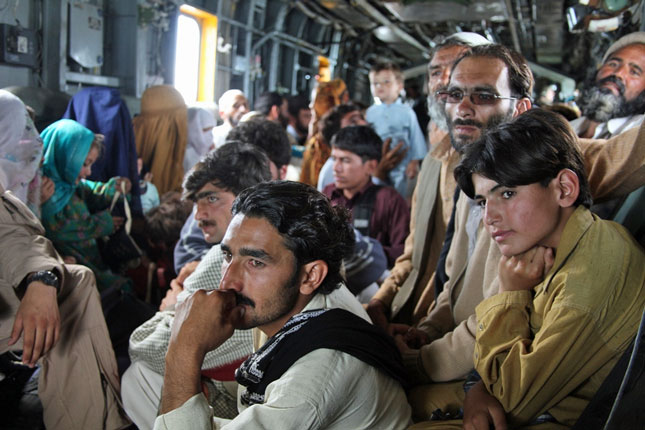
›“This is not an island issue, this is not a Caribbean issue, this is an issue that is [also] critical for us,” says Roger-Mark De Souza, the Wilson Center’s director of population, environmental security, and resilience in a recent video interview. “For us in the United States we have to continue to recognize that we ourselves are also vulnerable.” De Souza remains hopeful about the possibility of rebuilding and rebounding in the face of devastation, but also presses the importance of generating response mechanisms which address environmental hazards before they manifest into disasters. “That means planning, it means investing in community mobilization mechanisms, it means thinking about ways we provide humanitarian assistance.”
-
Former Defense Officials, Officers Discuss Climate Change and National Security on Capitol Hill
›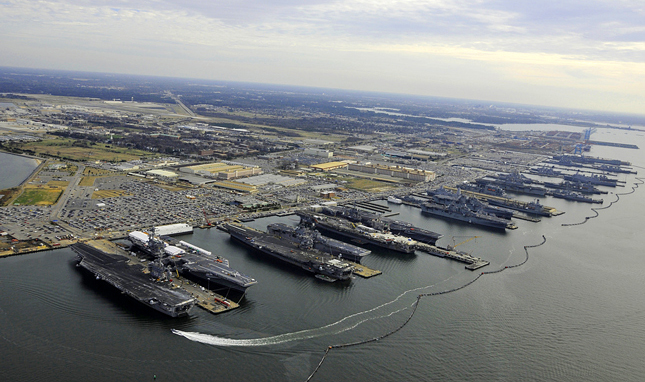
“There’s a lot you can do to mitigate risk once you acknowledge the risk exists,” said John Conger, senior advisor at the Center for Strategic and International Studies at a June 5th briefing on Capitol Hill. Convened by the Environmental and Energy Study Institute, Center for Climate and Security, and the Henry M. Jackson Foundation, the panel of former Department of Defense (DOD) officials and retired military officers included Sherri Goodman, senior fellow at the Wilson Center, and three members of the Military Advisory Board: Brigadier General Gerald Galloway, General Ron Keys, and Rear Admiral Ann C. Phillips.
-
Climate-Induced Migration in the Philippines, and Mercy Corps’ Resilience Work in Ethiopia
› Recent rises in temperature and typhoon frequency and intensity have resulted in more internal migration in the Philippines, according to an article by Pratikshya Bohra-Mishra et al. in Population and Environment. The authors conclude that temperature change and natural disasters, such as typhoons, can have a significant effect on short-distance, sub-national migration because they reduce rice yields, which is used as a proxy for agricultural productivity.
 -
Caribbean Governments Huddle to Discuss Climate Adaptation Plans
›As more climate change seems locked in – some estimates suggest a 1.5-degree Celsius (2.5 degree Fahrenheit) rise above pre-Industrial averages is guaranteed – more governments are allocating resources to adaptation. Caribbean communities that contribute very little to climate change are some of the most vulnerable, and representatives from many met in October 2016 in Grenada to share experiences and build technical capacity.
-
Backdraft #7: Janani Vivekananda on What Renewable Energy Projects Can Learn From Oil, and Future-Proofing Humanitarian Responses
›As more and more development and humanitarian programs contend with climate-related problems, there are important lessons learned from past experience that should not be forgotten, says Janani Vivekananda, formerly of International Alert and now with adelphi, in this week’s episode of “Backdraft.” -
Violence and Water Scarcity Threaten Historic Quadruple Famine
›An international food crisis is currently unfolding on a scale not seen since World War II. More than 20 million people in Somalia, Nigeria, South Sudan, and Yemen are in danger of famine. UN Under-Secretary-General and Emergency Relief Coordinator Stephen O’Brien said in March, “We are facing the largest humanitarian crisis since the creation of the United Nations.”
-
Richard Choularton on 3 Steps to Avert the Famines We See Coming
›There has been great progress in anticipating famines in recent years, with most predicted six or more months ahead of time, says Richard Choularton, senior associate for food security and climate change at Tetra Tech, in this week’s podcast. But action to address their humanitarian impacts has lagged. Responses need to be more consistent and faster, he says, happening “almost without human intervention.” -
Building a Locus of Control: Protecting Yourself From “Climate Trauma”
›January 23, 2017 // By Lynae BresserWith countries declaring drought emergencies and islands facing inundation, it can be difficult to turn away from the big picture when it comes to climate change. If we are to build a climate-resilient society, though, we must look to resilience at its origins, says one group of experts: the individual.
Showing posts from category disaster relief.
 As more and more development and humanitarian programs contend with climate-related problems, there are important lessons learned from past experience that should not be forgotten, says Janani Vivekananda, formerly of International Alert and now with adelphi, in this week’s episode of “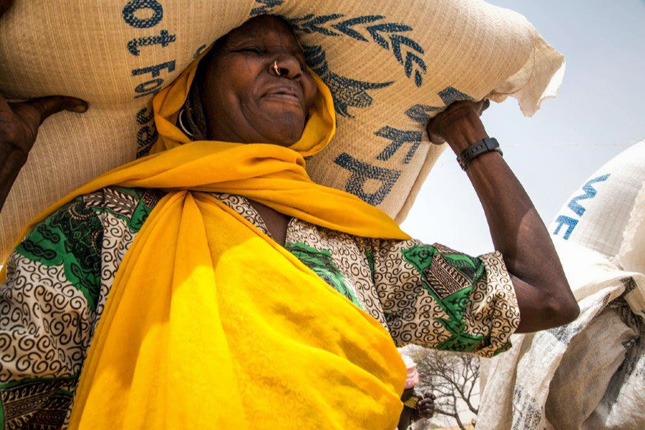
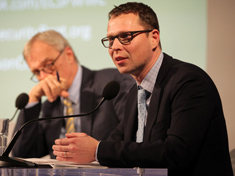 There has been great progress in anticipating famines in recent years, with most predicted six or more months ahead of time, says Richard Choularton, senior associate for food security and climate change at Tetra Tech, in this week’s podcast. But action to address their humanitarian impacts has lagged. Responses need to be more consistent and faster, he says, happening “almost without human intervention.”