-
Paradox of Progress: National Intelligence Council Releases Global Trends Report
›January 11, 2017 // By Schuyler Null
Do you experience information overload? Feel like there’s always another crisis to worry about? Sense a kind of chaos? Well, you may be a citizen of the early 21st century.
-
Joyce Banda on Reaching Girls Before Age 10, Balancing Tradition With Change, and More
›
If you really want to fight the patriarchy, if you want to make a difference in girls’ lives, you have to reach them when they are young, says Joyce Banda.
-
Have China’s Missing Girls Actually Been There All Along?
›For the past two decades, scholars and policymakers have examined the phenomenon of China’s missing females and corresponding numbers of involuntary bachelors to better understand the causes and consequences of the state’s demographic plight. China has both a heavily skewed male to female sex ratio and faces a drastically shrinking population in coming years.
-
President Joyce Banda Talks About Her Time in Office & Sensitizing African Leaders to Maternal Health Challenges
›Joyce Banda, Malawi’s first female vice president, became Malawi’s first female president in 2012 after the sudden death of Bungu wa Mutharika in office. From day one, maternal health and girls’ education were a priority in her administration, she tells the Maternal Health Initiative’s Roger-Mark De Souza in an interview at the Wilson Center.
-
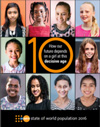
State of the World Population 2016, and Fostering Development Through Family Planning
›The United Nations Population Fund’s 2016 State of the World Population report calls for investment in a very specific demographic: 10-year-old girls. At age 10, young girls are at a “pivotal” stage in their lives, the report says. They face a world of limitless possibilities, yet far too many end up thwarted in their ambitions by sexual violence, forced marriage, female genital mutilation, child labor, and other “systematic disadvantages.” -
Reproductive Health Care in Crises Has Come a Long Way, Says Sandra Krause, But There’s More to Be Done
›There may be more women and girls at risk of maternal health complications in fragile and conflict-affected settings today, but attention to the issue is not new and the international community has made important strides over the last 20 years, says Sandra Krause, program director for reproductive health at Women’s Refugee Commission, in this week’s podcast. -
Beyond the Headlines: Understanding Climate Change, Migration, and Conflict (Report Launch)
›As Syria has collapsed, spasming into civil war over the last five years, the effects have rippled far beyond its borders. Most notably, a surge of refugees added to already swelling ranks of people fleeing instability in Afghanistan, Iraq, Pakistan, and sub-Saharan Africa, leading to the highest number of displaced people since the Second World War. At the same time, scientists have noted record-breaking temperatures, a melting Arctic, extreme droughts, and other signs of climate change. For some, an obvious question is: what does one have to do with the other?
-
‘The Lancet’ on Achieving Maternal Health Goals in the SDG Era: Tackling Diversity and Divergence
›Between 1990 and 2015, there was an incredible 44 percent decrease in global maternal mortality rates. But these impressive gains still fell short of the Millennium Development Goal of reducing the global maternal mortality ratio by three quarters.
Showing posts from category demography.
 There may be