-
Tamil Nadu Leads India’s Historic Turn to the Sun and Wind
›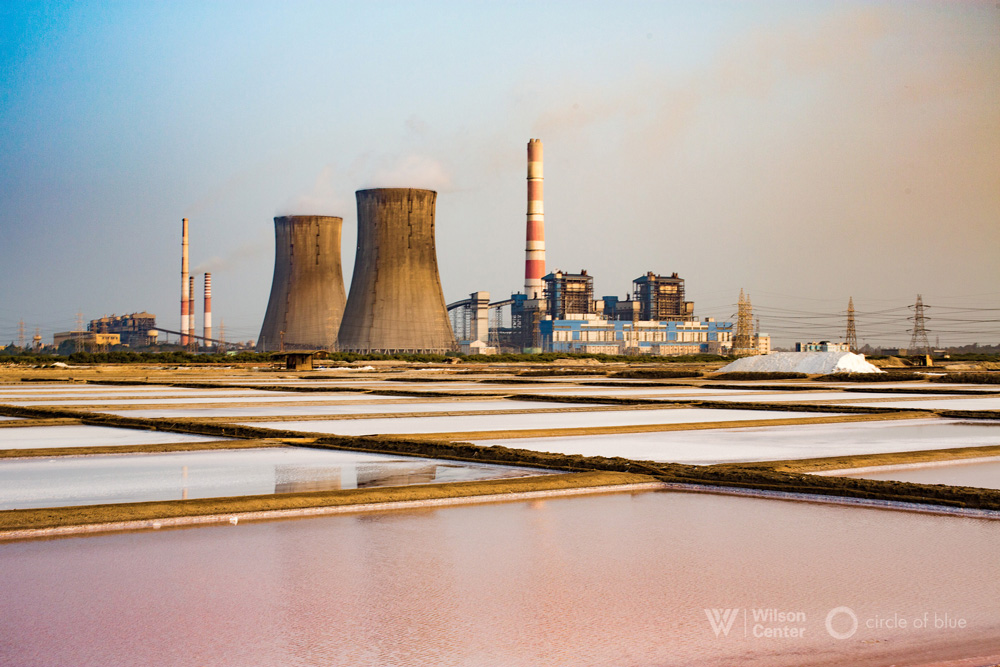
MADURAI, India – Before he agreed to serve as minister of state and take command of his country’s mammoth energy production and distribution sector, Piyush Goyal developed one of India’s most spirited political careers. “A man of ideas and competence,” according to First Post, a prominent news organization, Goyal is an accountant and lawyer who rose to the peak of Indian economic and political culture as an investment banker, member of parliament, and treasurer of the ruling Bharatiya Janata Party.
-
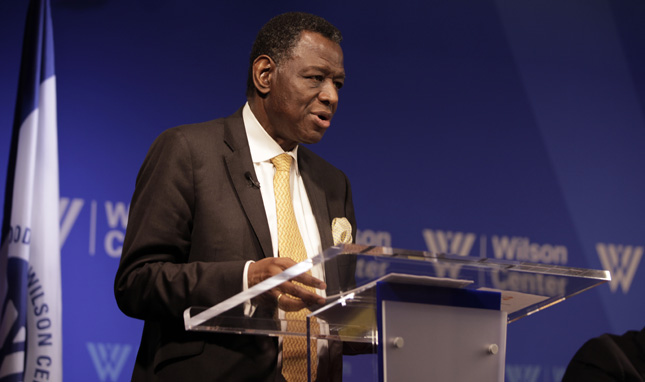
Dr. Babatunde Osotimehin, An Inspirational and Aspirational Leader for Today’s Youth, Has Passed
›June 6, 2017 // By Wilson Center Staff
Dr. Babatunde Osotimehin, the executive director of UNFPA and an inspiring leader in the global health community, passed at his home on June 4 at the age of 68.
-
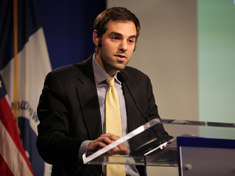
Michael Kugelman on Pakistan’s “Nightmare” Water Scenario
›“Water scarcity is a nightmare scenario that is all too real and all but inevitable in Pakistan,” says Michael Kugelman, deputy director of the Wilson Center’s Asia Program, in this week’s podcast. -
Blair A. Ruble, Urban Sustainability Laboratory
Making Cities Work as Holistic Communities of Promise
›Shortly after the completion of the Empire State Building, the novelist F. Scott Fitzgerald was shattered by a visit to its observation deck. “Full of vaunting pride,” he wrote, “the New Yorker had climbed here, and seen with dismay what he had never suspected. That the city was not the endless succession of canyons that he had supposed, but that it had limits, fading out into the country on all sides into an expanse of green and blue. That alone was limitless. And with the awful realization that New York was a city after all and not a universe, the whole shining edifice that he had reared in his mind came crashing down.”
-
Wilson Center’s Lisa Palmer Launches ‘Hot, Hungry Planet’
›A steadily increasing global population, growing food demand, and changing climate necessitate new kinds of thinking in agriculture but also fields like public health and energy, concludes a new book, Hot, Hungry Planet, by former Wilson Center Public Policy Scholar and current Senior Fellow at the National Socio-Environmental Synthesis Center Lisa Palmer.
-
In City Under Stress, Chennai’s Water Bottlers Build a Thriving Business
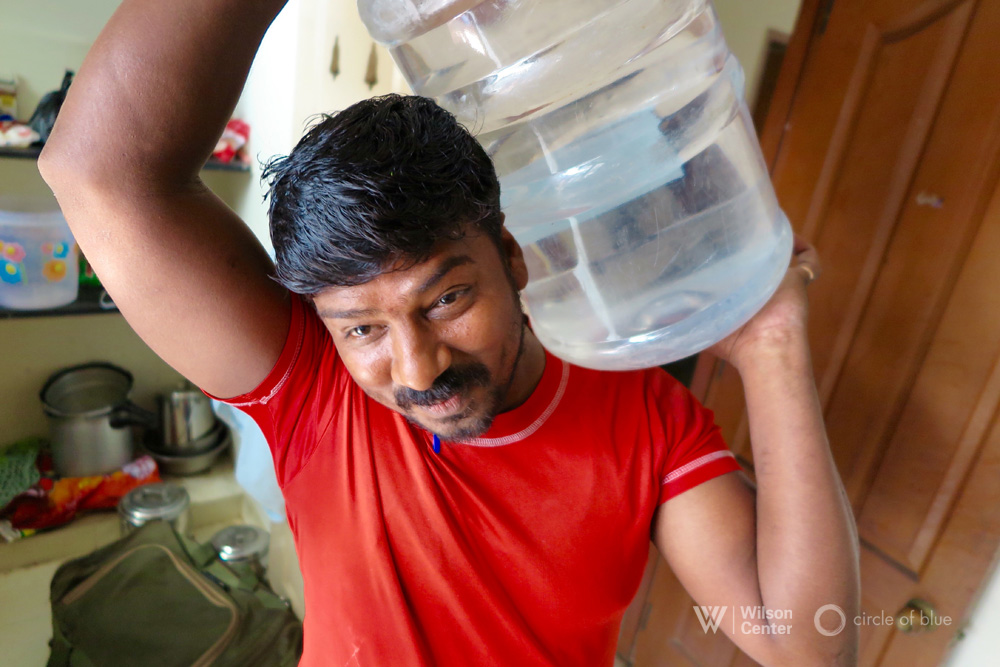
›CHENNAI, India – T. Rajan tried all manner of entrepreneurial enterprises. He sold scrap paper and cardboard to recyclers. He built a street corner chai and cigarette cart, and repaired truck and bus tires. He started an office cleaning service for high-tech companies in the growing IT sector south of the city center. None of these delivered the financial returns and workday flexibility of selling clear, sky blue, 20-liter water “cans” in Chennai’s immense bottled water industry.
-
A Better Model for Future Society, and Analyzing Communal Climate Conflict
›Forecasts of future climate conditions are fairly good, but forecasts of future socioeconomic conditions are another story. To get a sense of how climate change will impact society, many resort to simply layering future climate conditions on top of current socioeconomic conditions. That’s a mistake, write Wolfgang Lutz and Raya Muttarak in Nature Climate Change. “We see little value in the purely hypothetical exercise of assessing potential impacts of the future climate on a society that will not exist in the future.” -
Can Demographic-Environmental Stress Contribute to Mass Atrocities? And the Future of Arctic Cooperation
›In a brief published by the Stanley Foundation, Cullen Hendrix explores how “the degradation and overexploitation of renewable sources…and unequal access to these resources” can make societies more or less susceptible to experiencing mass atrocities. Hendrix proposes that “demographic-environmental stress” is most likely to contribute to mass atrocities (genocide, war crimes, or crimes against humanity) in agricultural societies that have a high level of group identity-driven politics and economics, exclusionary political institutions, political actors that deprive certain groups, or when governments have low legitimacy.
Showing posts from category demography.
 “Water scarcity is a nightmare scenario that is all too real and all but inevitable in Pakistan,” says Michael Kugelman, deputy director of the Wilson Center’s Asia Program, in this week’s podcast.