-
ECSP Weekly Watch | November 12 – 15
›
A window into what we’re reading at the Wilson Center’s Environmental Change and Security Program
Shell Wins Appeal to Overturn Landmark Emissions Ruling (Al Jazeera)
Three years ago, a court in the Netherlands ruled in favor of environmentalists and required energy giant Shell to drastically reduce its greenhouse gas (GHG) emissions. The decision would compel the company to cut the absolute carbon emissions it created in 2019 by 45% by the year 2030—including emissions caused by its products. This ruling was the first of its kind by requiring companies to adhere to the Paris Agreement, and it ignited further attempts by climate activists to take legal measures against other fossil fuel companies.
-
New Tool Offers Key Insights for Tackling Climate and Conflict Challenges
›
When the White House released the US Framework for Climate Resilience and Security in September 2024, it was an important opportunity to highlight the significant impacts of climate change on US national security, economic, and strategic interests. The Framework also emphasized the need for tailored approaches in fragile, conflict-affected, and vulnerable (FCV) contexts, particularly in managing and allocating resources, as well as ensuring that climate finance addresses conflict drivers.
-
China’s First National Park: Managing Access and Benefits
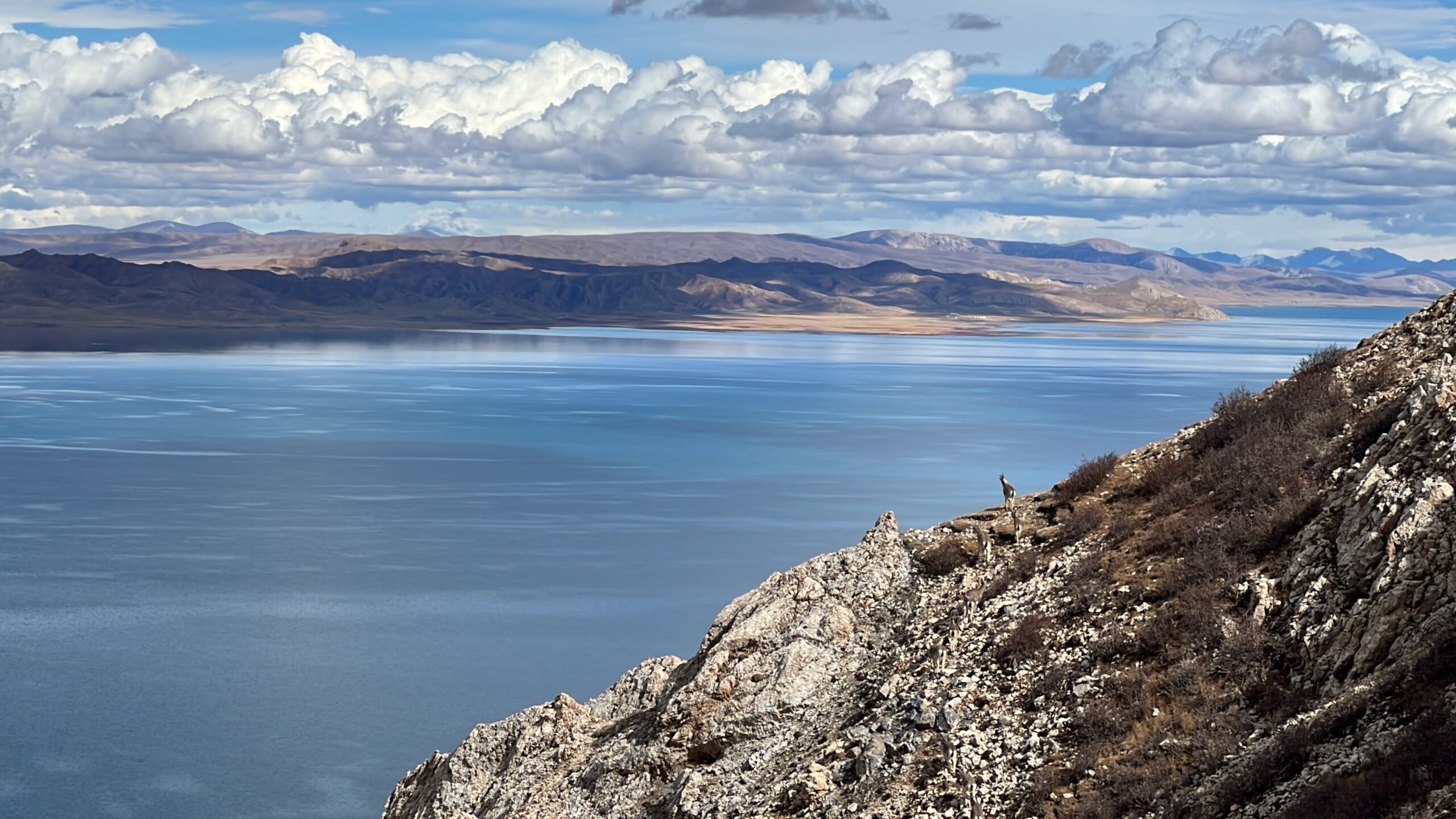
›Bharal (Himalayan blue sheep) near Donggecuona Lake near Madoi are well camouflaged – look closely to find the nine in the photo. As I hiked over the crest of a small hill near Donggecuona Lake in Madoi County, Qinghai Province, I startled a herd of over fifty bharal (Himalayan blue sheep) on the slope ahead of me. Some that were lying down suddenly scrambled to their feet. Others took a brief pause in their grazing to look up at me. I whispered to my guide Sonam Gyurme, “Look!”
-
The Arc | Climate Justice in the Arctic: Part 3
›In today’s episode of The Arc, ECSP’s Claire Doyle and Angus Soderberg interview Eva Maria Fjellheim, a southern Saami researcher at the Arctic University of Norway, for the final episode of our mini-series focused on climate justice in the Arctic. We explore Eva Maria’s research on strengthening Indigenous peoples’ land rights in the face of growing climate and clean energy projects. She shares insights from legal battles in Norway and connects the encroachment on Saami land to similar trends with Indigenous communities in Latin America and elsewhere. Eva Maria also discusses how current climate policies may be missing the mark by failing to truly respect Indigenous rights. Select quotes from the interview are featured below: -
ECSP Weekly Watch | October 7 – 11
›A window into what we’re reading at the Wilson Center’s Environmental Change and Security ProgramEscalations in Middle East Spur Oil Security Concerns (Reuters)
One year on from the brutal reignition of the Israeli-Palestinian Conflict on October 7, 2023, the situation in the Middle East has escalated drastically. Hamas’ attack on Israel has been followed by Israeli strikes across the region, which have killed tens of thousands of civilians, displacing millions in Gaza and in Lebanon. Now, tit for tat attacks between Israel and Iran have made Gulf states, particularly Saudi Arabia, Qatar, and the United Arab Emirates (UAE), worry about oil security in the region.
-
ECSP Weekly Watch | September 16 – 20
›A window into what we’re reading at the Wilson Center’s Environmental Change and Security Program
COP29-Host Azerbaijan Accused of Hypocrisy (The Guardian)
Azerbaijan holds the presidency for the upcoming COP29 in November 2024, and it is using that platform to call for all member states to cease any ongoing conflict they are involved in during the two-week conference. The Central Asian country will also host a “peace day” on November 15, and is putting forth a COP29 Climate and Peace Initiative to support vulnerable countries and advance action in the climate and peace nexus.
-
ECSP Weekly Watch | September 3 – 6
›A window into what we’re reading at the Wilson Center’s Environmental Change and Security Program
Proliferation of Icebreakers in the Arctic (Foreign Policy)
As climate change-induced melting of ice sheets clears new pathways, the fast-melting Arctic now has a new strategic race: icebreakers. Russia covers over half of what is defined as “Arctic” territory, and it has the largest number of icebreakers in the region. Russia’s attempt to consolidate and expand has led the US and its NATO allies to redefine their own Arctic security strategy.
-
ECSP Weekly Watch | August 26 – 30
›A window into what we are reading at the Wilson Center’s Environmental Change and Security ProgramWorld Food Program Faces Scrutiny Over Fraud in Sudan (Reuters)
As Sudan suffers an immense humanitarian crisis due to an ongoing internal conflict between the Army Forces and the paramilitary Rapid Support Forces (RSF), the U.N. World Food Program (WFP) has provided crucial aid to people displaced by the conflict. Yet its ability to continue this crucial work is now under threat because of allegations of illicit activities made against its top officials in that country. These developments have drawn the attention of humanitarian practitioners and diplomats—who also have concerns regarding WFP’s mismanagement and how it might have contributed to the failure to deliver enough aid in Sudan.
Showing posts from category democracy and governance.
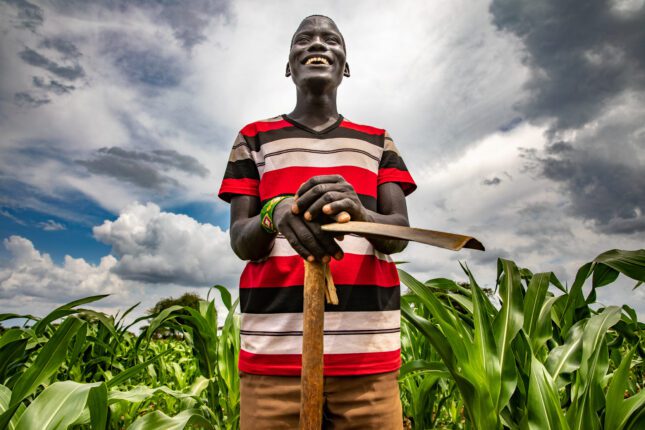
 In today’s episode of The Arc, ECSP’s Claire Doyle and Angus Soderberg interview Eva Maria Fjellheim, a southern Saami researcher at the Arctic University of Norway, for the final episode of our mini-series focused on climate justice in the Arctic. We explore Eva Maria’s research on strengthening Indigenous peoples’ land rights in the face of growing climate and clean energy projects. She shares insights from legal battles in Norway and connects the encroachment on Saami land to similar trends with Indigenous communities in Latin America and elsewhere. Eva Maria also discusses how current climate policies may be missing the mark by failing to truly respect Indigenous rights. Select quotes from the interview are featured below: