

-
How to Think and Work Politically to Reach Biodiversity Conservation Goals
›
“You might know what to do,” said Rachel Kleinfeld, a Senior Fellow for Democracy, Conflict, and Governance Program at the Carnegie Endowment for International Peace. “But if you don’t think about how to do it, your reform isn’t going to move forward.” She spoke at a recent Wilson Center virtual event on how to think and work politically while supporting biodiversity conservation goals. It may sound counterintuitive, she said, but undertaking what’s considered the best intervention may not be the best approach.
-
Why Climate and Conflict Are Shaping the Crises of Our Time (And What To Do About It)
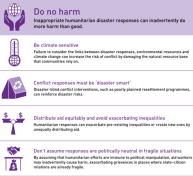
› Humanitarian need is increasing. Crises are becoming more complex through the interactions between climate change, disasters, and conflicts. Not only are humanitarian crises on the rise, but the nature of crises is changing, largely due to climate change-driven extremes such as floods, droughts and typhoons. Over 90 percent of disasters are believed to be related to climate.
 -
Population, Climate, and Politics—A New Phase is Emerging
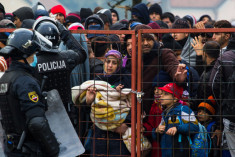
›For some time, it has been clear that a global population imbalance is emerging. High income countries, including nearly all of the Americas, Europe, and most of East and parts of South and Southeast Asia, have seen a dramatic, sustained fall in fertility. Already, this is resulting in shrinking labor forces and the oldest mean age populations seen in history. At the same time, the low income countries and even some lower middle-income countries—mainly in Africa but also in Central America, the Middle East, and parts of South and Southeast Asia—continue to have relatively high fertility. This is now, and even more in the coming decades, producing fast-growing labor forces and relatively young populations. -
Unsung Sheroes, Climate Action, and the Global Peace and Security Agendas
›“We’re fighting for our lands, for our water, for our lives,” said an indigenous woman from Colombia, describing her work as an environmental defender. She spoke at a December 2019 workshop on Gender, Peace and the Environment held in Bogotá, Colombia, that brought together social, environmental, and legal scholars and practitioners—including indigenous women—to discuss women, peace, and security issues.
-
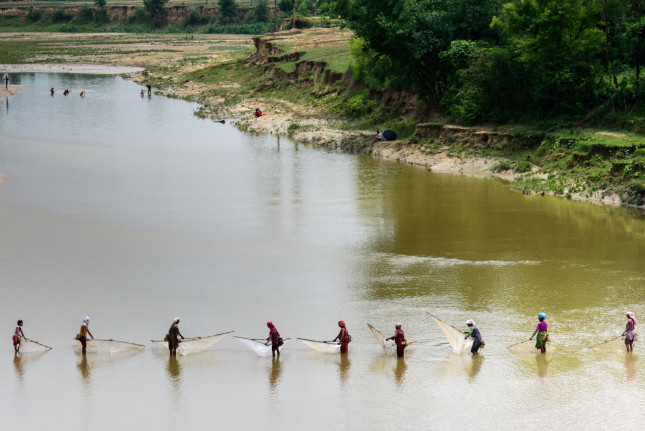
To Reduce Future Conflicts over Water, Reconceptualize “Shared Waters”
›In the years ahead, climate change and the proliferation of new technologies and information availability will require us to reshape our vision of shared waters. Because these megatrends are experienced in concert, the opportunities, challenges, and uncertainties for shared water management will continue to compound over time.While it is impossible to know precisely how shared water will look in the future, we should already be working to expand how we conceptualize shared waters, address inequities embedded within water management, and develop criteria and processes that successfully identify and include non-traditional shared water actors in decision-making. These shifts will strengthen our ability to generate creative and sustainable management strategies and help us avoid water-related conflicts.
-
To Help Save the Planet, Stop Environmental Crime
›Since the dawn of the Industrial Revolution, humans have so vastly altered Earth’s systems that we’re now in the midst of what many are calling the Anthropocene Epoch. Human activity has become the dominant influence on climate and the environment, inflicting changes that may persist for millennia.We are razing the planet’s last intact wild lands, degrading, deforesting, carving up, and destroying huge swathes of habitat. We’re overfishing and poisoning our rivers and oceans. We continue to pump greenhouse gases into the atmosphere, raising CO2 levels and hastening climatic changes that are already affecting all life on Earth.
-
Protecting the Protectors: Environmental Defenders and the Future of Environmental Peacebuilding
›Early scholarship on environmental peacemaking recognized the important role that local civil-society can play in promoting regional cooperation while, at the same time, pressuring governments to protect the environment. For example, in the late 1980s/early 1990s, nongovernmental organizations (NGOs), such as the Union for Defense of the Aral Sea and Amu Darya in Uzbekistan and the Dashowuz Ecological Club in Turkmenistan, were at the forefront of the fight to restore the Aral Sea and protect the region’s biodiversity. -
Which Demographic “End of History”?
›First published 30 years ago in the National Interest, Francis Fukuyama’s landmark essay, “The End of History?,” argued that, with the fall of fascism and communism, no serious blueprint for modern-state development lay open, save for those paths that would ultimately embrace both political and economic liberalism. Over the past two decades, movement toward this ideal end-state has trickled to a halt. Instead, the political elites of Eurasia’s regional powers—Russia, Turkey, Iran, and China—have crafted stable illiberal regimes that borrow whatever they need from free-market economics, electoral politics, nationalism, and religion. Their ascent has produced a form of “non-endpoint stability”—two mutually antagonistic camps: one composed of liberal democracies, the other a mix of illiberal hybrids. As long as these camps remain stable, the international system falls far short of Fukuyama’s theoretical end of history.
Showing posts from category democracy and governance.
 Humanitarian need is increasing. Crises are becoming more complex through the interactions between climate change, disasters, and conflicts. Not only are humanitarian crises on the rise, but the nature of crises is changing, largely due to climate change-driven extremes such as floods, droughts and typhoons. Over
  For some time, it has been clear that a global population imbalance is emerging. High income countries, including nearly all of the Americas, Europe, and most of East and parts of South and Southeast Asia, have seen a dramatic, sustained fall in fertility. Already, this is resulting in shrinking labor forces and the oldest mean age populations seen in history. At the same time, the low income countries and even some lower middle-income countries—mainly in Africa but also in Central America, the Middle East, and parts of South and Southeast Asia—continue to have relatively high fertility. This is now, and even more in the coming decades, producing fast-growing labor forces and relatively young populations.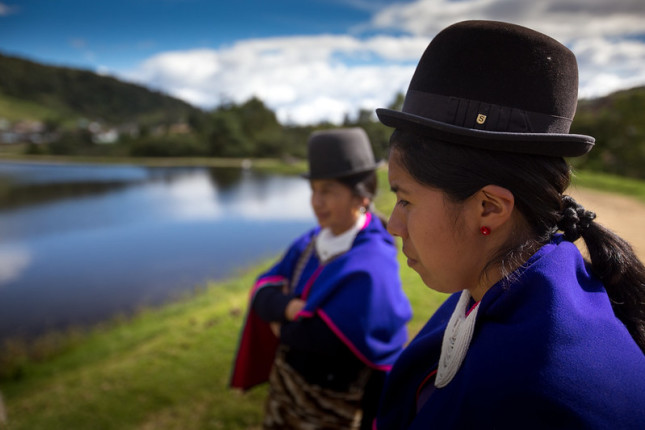
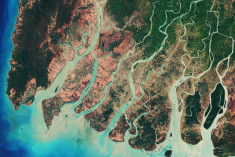 In the years ahead, climate change and the proliferation of new technologies and information availability will require us to reshape our vision of
 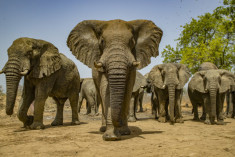 Since the dawn of the Industrial Revolution, humans have so vastly altered Earth’s systems that we’re now in the midst of what many are calling the
 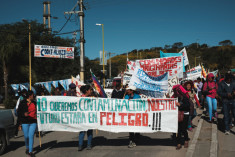 Early scholarship on
  First published 30 years ago in the National Interest, Francis Fukuyama’s landmark essay, “

