-
The Climate and Ocean Risk Vulnerability Index: Measuring Coastal City Resilience to Inform Action
›Guest Contributor // January 26, 2021 // By Jack Stuart, Sally Yozell, Miko Maekawa & Nagisa Yoshioka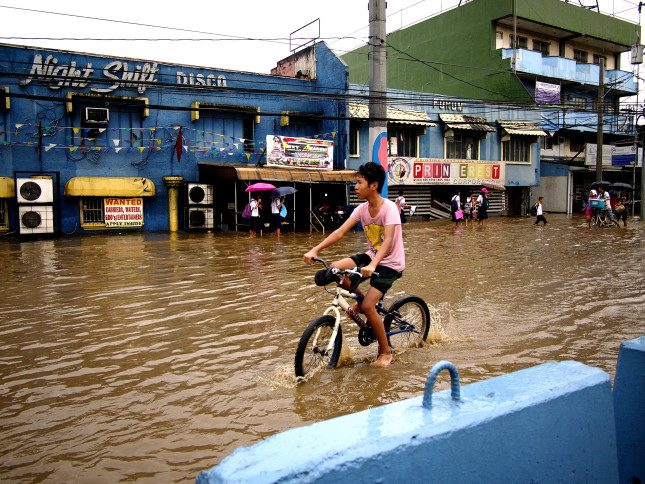
As the climate crisis continues to worsen, climate finance remains a fraction of what is needed. The Climate Policy Initiative estimates that $579 billion was spent on average on climate finance in 2017/18. This includes domestic and international investment from both the public and private sectors towards climate mitigation and adaptation actions. Of this amount, only $30 billion—five percent—was allocated for climate adaptation. This amount stands in stark contrast to $180 billion, which the Global Commission on Adaptation estimates is needed every year to build resilience to current and future climate impacts. This catastrophic funding gap is intensifying climate security threats and elevating the vulnerability of people across the world, particularly in coastal urban centers.
-
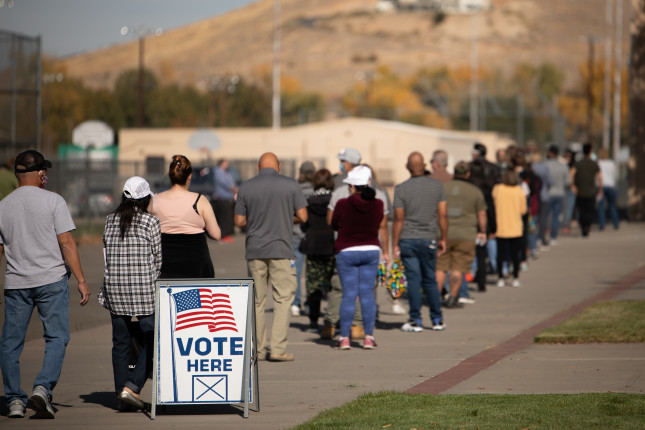
A Tale of Two Transitions: Education, Urbanization, and the U.S. Presidential Election
›
Rather than delve into issue opinion polling, or assess presidential campaign strategies, political demographers assume that political change is the predictable product of a set of mutually reinforcing social, economic, and demographic transitions, which can be tracked using data. But is this true in a country like the United States that has been in the advanced stages of these development transitions for decades? If these transitions are as important as demographers believe, could their variation among the 50 states explain the outcome of the recent U.S. presidential election? If so, what could they tell us about America’s electoral future?
-
A Dangerous Dichotomy: Women’s Paid and Unpaid Work During COVID-19
›“While the global crisis has increased demand for research, such opportunities have created inequalities and distortion in the scientific community,” write the authors of a recent Social Science Research Network (SSRN) study that examines the gendered impact of COVID-19 in academia. The study finds that COVID-19 has disproportionately penalized the scientific productivity of female academics.
-
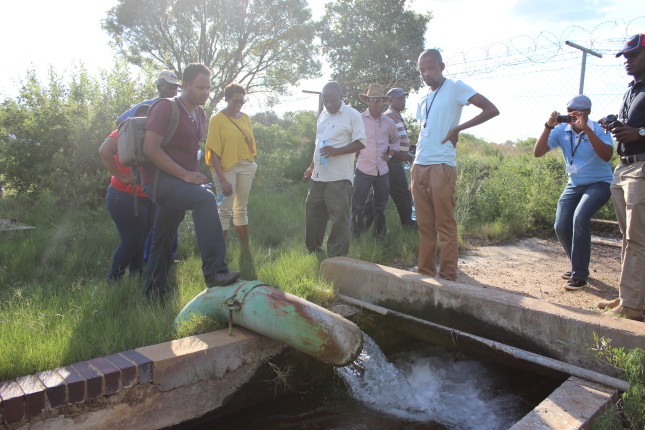
Using Big Data Analytics for Transboundary Water Management
›Guest Contributor // Water Security for a Resilient World // July 28, 2020 // By Clara Bocchino & Knowles AdkissonSouthern Africa has experienced drought-flood cycles for the past decade that strain the ability of any country to properly manage water resources. This dynamic is exacerbated by human drivers such as the heavy reliance of sectors such as mining and agriculture on groundwater and surface water, as well as subsistence agriculture in rural areas along rivers. These factors have progressively depleted natural freshwater systems and contributed to an accumulation of sediment in river systems. In a region where two or more countries share many of the groundwater and surface resources, water security cuts across the socioeconomic divide and is both a rural and urban issue. For example, the City of Cape Town had to heavily ration all water uses in 2017 and 2018, as its dams were drying up.
New technology, however, brings new opportunities for improved water governance. In Southern Africa, university researchers and government agencies are joining with international development groups and the private sector to explore how big data analytics can improve the management of aquifers that are shared by two or more countries.
-
Real-time Data Could Save More People from Covid-19
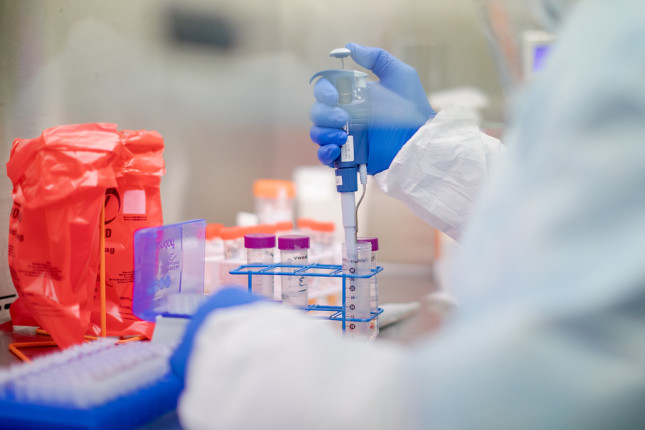
›It’s clear that the virus that causes Covid-19 travels freely. It needs no visa, having breached many points of entry. Experts at Imperial College London estimate that “in the absence of interventions, Covid-19 would have resulted in 7 billion infections and 40 million deaths globally this year.” Now is the time for governments to get ahead of the curve and respond to the emergency. It’s time to take a whole-of-government approach to strengthen testing at points of entry and institute mass testing at various points as South Korea did.
-
A Conversation with Rodolfo Camacho on Using Data for Water Security
›Friday Podcasts // Water Security for a Resilient World // Water Stories (Podcast Series) // March 20, 2020 // By Eliana GutermanWhile there are many uses for global data sets and innovative data analysis technologies, the most important thing, Rodolfo Camacho said in this week’s Water Stories podcast, is not analyzing the data. It’s the collaboration among countries sharing data. Camacho, Project Director at Winrock International and Chief of Party for USAID’s Sustainable Water Partnership (SWP), sat down with Lauren Herzer Risi, Project Director of the Environmental Change & Security Program to discuss the importance of big data and machine learning on improving water security. -
Wim Zwijnenburg on Using Data to Visualize the Impacts of Conflict on the Environment
›Through open source information, remote sensing, and existing data, we can have a better sense of how conflict impacts the environment and how it then impacts people depending on the environment, said Wim Zwijnenburg, a Humanitarian Disarmament Project Leader for the Dutch peace organization, PAX, in this week’s Friday Podcast. Wim sat down for an interview with ECSP’s Amanda King at the first International Conference on Environmental Peacebuilding, hosted at the University of California, Irvine, in October 2019. -
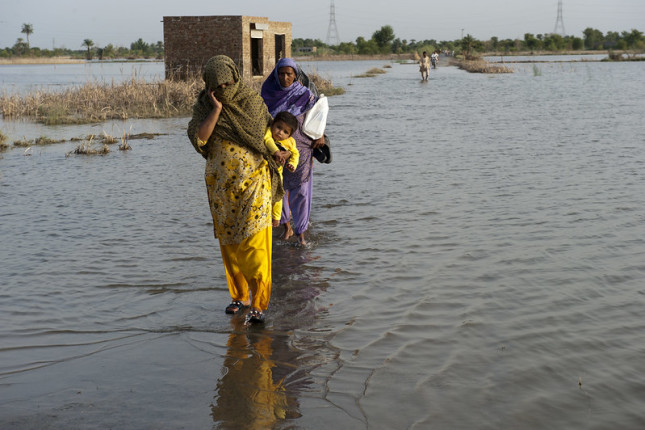
Foresight for Action | Improving Predictive Capabilities for Extreme Weather and Water Events in Pakistan
›Pakistan ranks eighth on the list of countries most affected by extreme weather events (1998–2017 data), according to the 2019 Global Risk Index. With increasing global temperatures, severe weather and water events, like monsoons and droughts, are likely to become even more frequent and extreme in the future. Since the 1960s, Pakistan has observed changes in temperature and precipitation. By the end of the century, Pakistan’s temperatures are expected to be significantly higher than the global average.
Showing posts from category data.

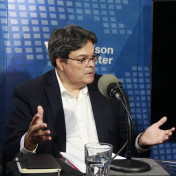 While there are many uses for global data sets and innovative data analysis technologies, the most important thing, Rodolfo Camacho said in this week’s
  Through open source information, remote sensing, and existing data, we can have a better sense of how conflict impacts the environment and how it then impacts people depending on the environment, said Wim Zwijnenburg, a Humanitarian Disarmament Project Leader for the