-
Women Deliver in the Climate Change Debate
›One of the hottest topics at the “Women Deliver” conference earlier this month—where panels ran the gamut from HIV prevention and family planning to gender-based violence and maternal health—was the intersection of women’s reproductive health, global population growth, and climate change.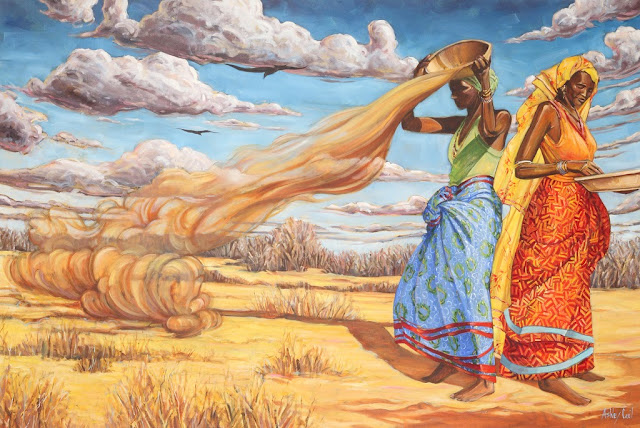
As panelists at three of the conference’s climate-focused events noted, women in poor, rural areas are especially vulnerable to the impacts of climate change. In many developing countries across Africa, Asia, and Latin America, women take on much of the burden of farming, gathering fuel, and supplying fresh water for their communities. As a result, they bear the brunt of hardships when climate change alters seasonal precipitation patterns, or increases scarcity of key natural resources.
In addition, “the more assets, the less vulnerable one person is,” said Lorena Aguilar of the International Union for Conservation of Nature. “Worldwide, compared to men, women tend to have more limited access to resources that would enhance their capacity to adapt to climate change—including land, credit, agricultural inputs, decision-making bodies, technology, and training services.”
Women’s hardship in the face of climate change can also have a negative effect on reproductive health. Aguilar remarked that during the dry season in parts of rural India and Africa, 30 percent or more of women’s daily caloric intake is spent on fetching water alone. The enormous physical strain placed on women’s bodies because of those tasks has resulted in higher miscarriage rates among those populations, she noted.
Educating Girls to Protect the Environment
Organizations like the United Nations and the Global Gender and Climate Alliance have been working in recent years to bridge the gap between women’s rights and climate change, and reframe climate change in terms of human development. But to date, women’s struggles with climate change have not translated into meaningful economic, educational, or healthcare support at the local government level, with women’s welfare “at the very bottom of the priority list” for most developing countries, according to Nickie Imanguli with Advocates for Youth.
The unmet need for family planning tools and services is perhaps the movement’s principal challenge going forward. With an estimated 200 million women having an unmet need for family planning, unintended pregnancies could be exacerbating environmental problems such as depletion of forests, water, and other finite resources. But most panelists expressed optimism that the growing recognition of a connection between climate change and women’s reproductive health might lead to a boost in funding for family planning initiatives in underserved areas of the world.
Speakers at Women Deliver emphasized that reproductive health can be bolstered by improving educational opportunities for girls in poor rural areas. Joy Nayiga with Uganda’s Ministry of Finance Planning Economic Development noted that “girls are more likely than boys to drop out of school to help their mothers gather fuel, wood, and water.” This trend, she said, robs females of an opportunity for educational advancement, and heightens the likelihood they will end up starting families of their own while very young.
Nayiga and other panelists asserted that empowering females through education leads them to take greater control over their own sexual health, making it easier for them to start their families later in life, or perhaps have a smaller number of children.
Encouraging women to take a more active role in family planning in this regard serves as “a win-win situation for women, their communities, and the nations of the world,” by “bending down the overall trajectory of population growth,” asserted the Worldwatch Institute’s Robert Engelman.
Some speakers also argued that enabling women to delay motherhood if they want could yield direct environmental benefits for nations of the Global South that are struggling to adapt to climate change. Since women are often responsible for overseeing agriculture and forest resource management practices in their communities, they help create localized carbon sinks across the developing world.
“Women pull carbon out of the atmosphere and bury it, in farm soils, in trees that they grow,” noted the Worldwatch Institute’s Engelman, who even suggested women’s aggregate impact removing carbon could be more effective than cap-and-trade plans.
Moving Slowly From Talk to Action
Given both their vulnerability to the effects of climate change—and their potential to help offset those same impacts—“women are critical stakeholders in climate change moving forward,” said Population Action International’s Kathleen Mogelgaard. So far, however, while there may be growing discussion about giving women a more prominent seat at the table when developing climate change adaptation and mitigation plans, that has not yet happened.
“We’re not seeing big government investment in empowering women on the issue of climate change,” remarked Leo Bryant, with Marie Stopes International, a U.K.-based NGO specializing in sexual and reproductive health. Instead, Bryant said, it has been NGOs that have been doing much of the heavy lifting of bringing women into the conversation.
But many panelists felt that, in time, governments will recognize it is in their enlightened self-interest to link issues of gender rights and climate change. “By upholding women’s rights,” concluded the IUCN’s Lorena Aguilar, “we are in fact making one of the most crucial preparations associated to climate change that any society can make.”
Click here for additional New Security Beat coverage of reproductive health talks at the Women Deliver conference, or here for more coverage of the interplay between traditional gender roles and family planning.
Sources: International Institute for Sustainable Development, International Union for the Conservation of Nature, Marie Stopes International, Population Action International, Population Reference Bureau, The Times (U.K.), United Nations Development Programme, Women Deliver, Worldwatch Institute.
Photo Credit: “Climate Change Canvas” courtesy of Amnesty International. -
Rare Earth: A New Roadblock for Sustainable Energy?
›June 7, 2010 // By Wilson Center Staff
The 2010 National Security Strategy emphasizes that energy independence is part of a larger strategy for national security, stating, “As long as we are dependent on fossil fuels, we need to ensure the security and free flow of global energy resources.”
However, the alternatives to fossil fuels–such as wind energy, hybrid vehicles, and energy-efficient light bulbs–could also lead to dependence on international resources. They require minerals known as rare earth elements or minerals (REEs). REEs are required for producing the magnets necessary for a variety of goods, including precision-guided munitions, computer hard drives, lasers, communication and radar systems, satellites, and color televisions.
But China has a virtual lock on the production of REEs. In response, U.S. policymakers requested the GAO produce a detailed assessment of REEs in the U.S. defense supply chain as part of the 2010 National Defense Authorization Act. At the same time, the Pentagon is changing its policies regarding acquiring and stockpiling REEs.
Demand for Rare Earth Predicted to Rise
CEO Mark Smith of Molycorp Minerals, a U.S. rare earth mining operation, told HardAssetsInvestor.com:Today the largest use of these magnets is in hard disk drives… We believe that may be changing as hybrid cars become more popular and the use of wind turbines becomes more widespread. Clearly, on a volumetric basis, these two new clean energy technologies could easily overtake hard disk drives in terms of the volume of permanent rare earth magnets required.
Despite their name, REEs are not necessarily rare–known stocks and demand vary widely by element–but supplies of some key elements are short, reports Robin Bromby of The Australian.
China Corners the Rare Earth Market
The growing attention paid to REE supply stems more from the location of mining and production facilities rather than pure scarcity concerns. According to the GAO assessment, China produced 97 percent of rare earth oxides in 2009, and it has established economic protections on rare earth exports. The United States Magnet Material Association has estimated that China’s consumption of rare earth materials will outpace its supply between 2012-2015.
“What we need to be careful of is that we don’t unknowingly change our dependence on foreign oil to a new dependence on Chinese rare earths,” Molycorp’s Smith told HardAssetsInvestor.com. While new technologies may change the type of battery used in hybrids, “the one thing that cannot change in electric vehicles or hybrid vehicles is the use of permanent rare earth magnets in the motors and generators. There is simply no substitute for those magnets,” said Smith.
U.S. Seeks Secure Supplies
Given the lack of substitutes, the United States is attempting to secure access to REEs. Known deposits exist in the United States, Australia, Brazil, India, Canada, South Africa, and Greenland. However, in order for the United States to procure secure access to REEs, they must both acquire mines and processing facilities for the multi-stage production process, which today takes place almost entirely in China.
The GAO estimates it may take up to 15 years for the United States to produce a finished product. In that time, Chinese consumption is expected to have vastly increased and demand for certain REEs may be very high.
Washington is taking this threat seriously. As pointed out by CNAS’ Christine Parthemore, the 180-day turnaround time on the GAO’s rare earth assessment was considerably shorter than for other assessments, including a plan for operational use of biofuels.
The Pentagon is revamping its stockpiling practices, reducing bureaucratic barricades to changing quotas, broadening buying options, and growing the array of stockpiled resources, the Wall Street Journal reported, adding:The rising competition for raw materials has sparked fears in the U.S. military that some materials that once seemed abundant could suddenly become hard to get at any price. In 2008 the military suspended or limited sales of 13 commodities it had previously considered excess. Last year it added 14 materials to its list of resources it considers for stockpiling, including specialty steels, lithium and some rare-earth elements, taking the total to 68. More additions are expected, said Ms. Stead of the Defense National Stockpile Center.
While it seeks secure supplies of REEs, the United States, and the defense community in particular, should take heed of the long history of minerals and conflicts around the world. Global demand for certain minerals has supported combatants in conflict areas; for example, control of coltan mines in the Democratic Republic of Congo, while producing only 1 percent of global supply, played a significant role in that country’s civil war.
The switch to alternative transportation fuels could similarly produce new patterns of global resource demand that spur or support conflict–a phenomena that will be explored in an upcoming ECSP event, “Backdraft: The Conflict Potential of Climate Mitigation and Adaptation.”
On the other hand, done correctly, mineral extraction could be a way to break the “resource curse” and increase cooperation rather than conflict. In Pakistan, “development and maintenance of an extractive mineral industry could revolutionize the Waziristan economy and infrastructure in the long-term,” says Natural Security, which could provide “an incentive for local cooperation.”
Ultimately, the way that the United States seeks to slake its hunger for resources will determine whether it can stockpile its way to security.
Tara Innes is a PhD student at the University of Maryland, studying conflict-environment linkages and an intern with ECSP.
Photo Credit: Adaptation of Periodic Table, courtesy Flickr user Destinys Agent -
Parched and Hoarse, Indus Negotiations Continue to Simmer
›April 30, 2010 // By Julien KatchinoffBrewing conflicts over water in South Asia are not new to the readers of the New Security Beat. Violence due to variations in the monsoon season , high tensions over water and energy diplomacy, and pressures stemming from mismanaged groundwater stocks in the face of burgeoning population growth have all been reported on before.
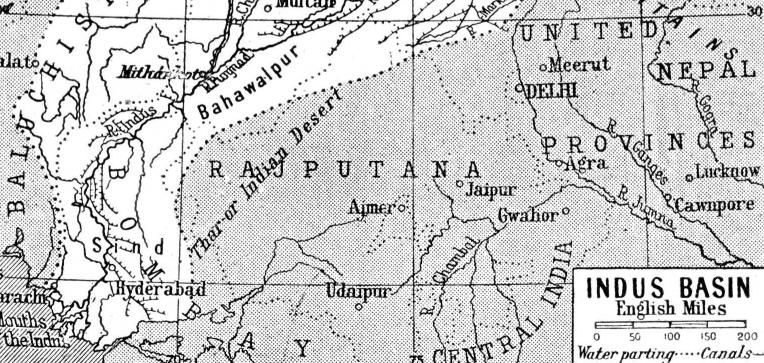
The latest addition to this thread is disappointingly familiar: escalating tensions between Pakistan and India over the Indus river basin. Pakistan views Indian plans to construct the Nimoo-Bazgo, Chutak, and Kishanganga power plants as threatening the crucial water flows of an already parched nation according to objections voiced by the Pakistani Water Commission at the annual meeting of the Indus Water Commission in March. As a result, all efforts to reach an agreement on India’s plans for expanded hydroelectric and storage facilities in the basin’s upstream highlands failed.
In a recent editorial in the Pakistani newspaper The Dawn , former Indus River System Authority Chairman Fateh Gandapur claimed that new construction amounts to a clear violation of the Indus Water Treaty (IWT):“India is building large numbers of dams …on the rivers Indus, Jhelum, Chenab, Ravi, Sutlej and Beas, including on their tributaries in Indian-administered Kashmir. Together, these will have the effect of virtually stopping the perennial flow of water into Pakistan during a period of six to seven months that include the winter season. Not only will this be a blatant violation of the IWT and international laws on water rights of lower riparian areas, it will also amount to making Pakistan dry and, in the future, causing water losses that will deprive this country of its rabi and kharif crops. Our part of Punjab, which has a contiguous canal irrigation system that is amongst the largest in the world, will be turned into a desert.”
Gandapur’s fears, shared by many in Pakistan, are borne out of the desperate situation in which many of their compatriots live. As noted in Running on Empty: Pakistan’s Water Crisis, a report by the Wilson Center’s Asia program, water availability in the country has plummeted from about 5,000 cubic meters (m3) per capita in the early 1950s to less than 1,500 m3 per capita today–making Pakistan the most water stressed country in Asia. With more than 90% of these water flows destined for agricultural use, only 10% remains to meet the daily needs of the region’s booming population. This harmful combination of low supplies and growing demand is untenable and in Karachi results in 30,000 deaths–the majority of which are children–from water-borne illnesses each year.
This harmful combination of low supplies and growing demand is untenable, and may be get worse before it gets better, as Pakistan’s population is projected to almost double by 2050. At an upcoming conference at the Wilson Center, “Defusing the Bomb: Pakistan’s Population Challenge,” demographic experts on Pakistan will address this issue in greater detail.
Recent talk of ‘water wars’ and ‘Indian water jihad’ from Hafiz Muhammad Saeed, the founder of Lashkar-e-Taiba and head of Jamaat-ud-Dawah, have played upon popular sentiments of distrust and risk inflaming volatile emotions, the South Asian News reports.
Harvard’s John Briscoe, an expert with long-time ties to both sides of this dispute, sees such statements as the inevitable result of the media-reinforced mutual mistrust that pervades the relationship of the two nations and plays on continued false rumors of Indian water theft and Pakistani mischief. “If you want to give Lashkar-e-Taiba and other Pakistani militants an issue that really rallies people, give them water,” he told the Associated Press.
The rising tensions have echoed strongly throughout the region. For the first time in its 25-year history, the South Asian Association for Regional Cooperation (SAARC) has raised the water issue (long thought to be a major political impediment and contributor to SAARC’s stagnation) among its members during its meeting this week. “I hope neighbors can find ways to compartmentalize their differences while finding ways to move forward. I am of course referring to India and Pakistan,” said Maldives President Mohammed Nasheed, during his address on Wednesday. “I hope this summit will lead to greater dialogue between (them.)”
Prime ministers Manmohan Singh and Yousuf Raza Gilani heeded the calls and responded with a hastily arranged in-person meeting on the sidelines of the SAARC conference. The emerging agreement targeted a comprehensive set of issues, including water and terrorism, and, while unsurprisingly weak on action, set a path upon which the nations can begin to move forward. Speaking about the agreement’s significance, Indian Foreign Secretary Nirumpama Rao told the Los Angeles Times, “There’s been a lot of soul-searching here. We need to take things forward. This is good for the two countries and good for the region.”
The fragile détente faces great hurdles in the months to come, especially if rainfall remains scarce as forecasters predict. Already, local communities in India and Pakistan are venting frustrations over water shortages. On Thursday, just one day after the agreement between Prime ministers Singh and Gilani, several Bangalore suburbs staged protests at the offices of the local water authorities, complaining loudly about persistent failures of delivery services to produce alternative arrangements for water provision despite regular payments by local citizens. Whether local civil action ultimately helps or hinders bilateral water cooperation between India and Pakistan will be interesting to track in the near future and we at the New Security Beat look forward to continuing to engage with readers on the latest developments.
Photo Credit: Mahe Zehra Husain Transboundary Water Resources Spring 2010 -
VIDEO – A World of Water: Teaching Water Conflict and Cooperation in the Classroom
›April 21, 2010 // By Julien Katchinoff“Water conflict is not just about an international river basin and it’s not just about conflict around a well. There’s a whole spectrum of water conflict that we try to get into,” says Sandy Ruckstuhl, senior social scientist at the Center for Complexity Analysis, LLC. Ruckstuhl also teaches a course on water and conflict at the George Mason University’s Institute for Conflict Analysis and Resolution.
Many students drawn to her course have backgrounds in human rights and approach the topic from a “right to water” framework. Ruckstuhl’s course is designed to expand their views. “This discussion is much broader than a debate around rights. There are all sorts of dimensions to water conflict, to water management, that have to do with different levels of governance, different physical challenges in dealing with the resource, different cultural contexts—there are all sorts of factors that are at play when we talk about an issue like water conflict and water cooperation,” she said.
Ruckstuhl takes her students on an exhaustive journey through 10 case studies, touching on cross-cutting topics, such as environmental security and climate change, and their impacts across a range of critical regions, from deserts in the Middle East and Darfur to the Altiplano in Bolivia. Ruckstuhl’s students also benefit from guest lectures presented by water practitioners and experts in the field, including ECSP Director Geoff Dabelko, Ambassador John McDonald, and the Henry L. Stimson Center’s David Michel. -
Climate Change and Energy in Defense Doctrine: The QDR and UK Defence Green Paper
›March 30, 2010 // By Dan Asin“The Department of Defense is not the U.S. government lead for climate change, but we certainly can show leadership in this area,” Deputy Assistant Secretary of Defense for Strategy Amanda Dory recently told an audience at the Woodrow Wilson Center. “That’s true of energy as well.”
-
Green Objections to the Green Line: A Struggle for a Shared Environment in the Middle East
›March 4, 2010 // By Julien KatchinoffAn emerging coalition in Israel dramatically illustrates how common environmental concerns can create unexpected partnerships across difficult political barriers. Through programs initiated by Friends of the Earth Middle East, the Israeli and Palestinian residents of Wadi Fukin and Tzur Hassadah (see inset map) have joined together to oppose the construction of a planned security barrier between their two communities.
View Good Water Neighbors in a larger map
The barrier, an element of the Israeli Green Line, threatens to disrupt karstic springs that support traditional agriculture in the Fukin valley. One third of the Israeli residents of Tzur Hadassah petitioned to halt construction, reports Israeli newspaper Haaretz.
“The Israeli community understood that instead of providing them with security, the fence would harm the springs and lands of the village, and will rob the Palestinian farmers of their livelihood and arouse hatred toward their Israeli neighbors,” Friends of the Earth Middle East (FoEME) Director Gidon Bromberg told Haaretz.
On February 24th, Israelis and Palestinians from both communities met to organize their response to the construction of the separation barrier, including preparing to petition to the Israeli High Court of Justice.
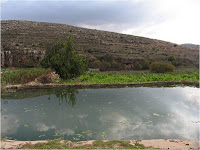
“The case of Wadi Fukin is special, because it is the first time that the resistance of the residents is not based on human rights allegations. Objections here are from an environmental organization,” FoEME attorney Michael Sfard told NRG news.Since 2001, FoEME’s Good Water Neighbors project has helped divided communities come together over shared natural resources. By collaborating with community members to improve their water situation, the organization encourages sustainable water management through information sharing, dialogue, and cooperative ventures. While the majority of the communities share common surface water sources, including the Jordan and Zomar rivers, some, as with Wadi Fukin and Tzur Hassadah, rely on common underground aquifers.
This “natural interdependence,” says Bromberg, helps to create trust and solve problems facing both communities.
Photo: Courtesy Friends of the Earth Middle East -
The Diane Rehm Show Tackles Water Challenges With ECSP Director Geoff Dabelko
›March 3, 2010 // By Michelle NeukirchenHow is water shaping geopolitics in the 21st century? Is it an underlying factor for state failure and social conflict, or can it drive peace and cooperation? How will climate change reshape global water resources?Recently, on WAMU’s “The Diane Rehm Show,” ECSP Director Geoff Dabelko, author Steven Solomon, and the World Bank’s Julia Bucknall came together to discuss the history, politics, economics, and future of water.
“Climate change exacerbates the water crisis in very severe ways because it manifests itself through water —through floods, droughts, and melting glaciers,” said Solomon.
The World Bank’s Julia Bucknell highlighted climate change projections that indicate average precipitation increases are likely, mostly in the global North. “It is the poorer countries that show up red on the maps with a reduction in precipitation,” she said.
By compounding failing states’ limited capacity to secure existing water supplies for agriculture, sanitation, and human consumption, decreasing precipitation will result in further intensification of global public health and food security crises.
“We need to improve the existing productivity of the water we’ve got,” said Solomon. “We need to use it more efficiently and fairly in a way that protects the ecosystems.”
Countries such as Australia, Israel, and China are leading the way: even under arid conditions, they use innovative methods to remain productive. In Australia, a new regime allows water rights to be traded, even over cellphones, while China established a credit-based system for individual farmers by using remote sensing technology based on NASA data.
Governments are under pressure to address climate change directly, while managing vexing local and regional challenges. “Our political institutions and our political leaders must not deal with the short term and pretend things will go back to a state of normalcy, but [should] progressively and proactively shape and reshape the institutions,” said Dabelko.Countries with traditionally contentious relationships have cooperated to solve common water problems. The Financial Times recently reported on an agreement between China and India to jointly assess trends in Himalayan glacier and snow melt.
“There are prospects for tensions,” said Dabelko of the Himalayas, “but quite frankly, water is difficult to [obtain] through war. It’s hard to pick it up and take it home.”
To listen to the full audio recording, click here.
Photo: Just Add Water, Courtesy of Flickr Member MΛЯK
Photo: Melting Glacier at Jokuldalur, Iceland 2, Courtesy of Flickr Member, ChrisGoldNY -
Peace Through Parks on Israel’s Borders – Dream or Reality?
›In areas fraught with conflict, is it possible to advance conflict resolution through environmental discourse? A recent conference hosted by Tel Aviv University’s Porter School of Environmental Studies explored this question through an examination of existing peace parks, as well as possible future preserves.
The wide-ranging discussion sought to apply theories of conflict resolution and environmental peacemaking to local conflict in the Middle East. Touching on conservation, conflict resolution, local history, geography, ecology, and diplomacy, the participants underscored the importance of restoration efforts, local environmental maintenance, and the pursuit of peace through environmental cooperation.
For more, watch these presentations on YouTube (in English; with Timestamps):
Event Part One:
0:15:50
“Conservation to Conflict Resolution: Understanding the Theory and Practice of Peace Parks”
Dr. Saleem Ali, Rubenstein School of Environment and Natural Resources, University of Vermont
1:36:28
“Peace Parks on Israel’s Borders: Lessons from South Sinai”
Dr. Dan Rabinowitz, Department of Sociology and Anthropology, Tel Aviv University
1:55:49
“The Jordan River Peace Park: Post-conflict environmental peacebuilding between Israel and Jordan”
Gidon Bromberg, Israeli Director, Friends of the Earth Middle East
Event Part Two:
0:01:12
“The Golan Heights – A critical habitat with global significance”
Dr. Tamar Ron, Ecologist, biodiversity conservation consultant
2:11:01
Session Response:
Valerie Brachya, Director, Environmental Policy Center Jerusalem Institute for Israel Studies
Photo: Golan Heights Panorama, Courtesy Flickr User Vad_Levin.
Showing posts from category cooperation.

 Since 2001, FoEME’s
 Countries with traditionally contentious relationships have