-
“There Is No Choice:” Climate, Health, Water, Food Security Must Be Integrated, Say Experts
›August 9, 2010 // By Russell SticklorBureaucratic stovepipes plague international development efforts, and aid for pressing environmental and human security concerns—such as climate change, food shortages, fresh water access, and global health threats—rarely matches the reality on the ground in the developing world, where such health and environmental problems are fundamentally interconnected.
Instead, development efforts in the field—whether spearheaded by multilaterals, bilaterals, or NGOs—are commonly devoted to single sectors: e.g., the prevention and treatment of a single disease; the implementation of irrigation infrastructure in a specific area; or the introduction of a new crop in a certain region. The reasons for such a narrow focus can come from multiple sources: finite resources, narrowly constructed funding streams, emphasis on simple and discrete indicators of success, and institutional and professional development penalties for those who conduct integrated work. But some experts argue that integrating problem-solving initiatives across categories would not only improve the efficacy of development efforts, but also better improve lives in target communities.
As part of the USAID Knowledge Management Center‘s 2010 Summer Seminar Series, a recent National Press Club panel on integration featured a frank discussion of both the opportunities and challenges inherent in breaking down barriers within and between development agencies. Panelists from the World Bank’s Environment Department, the White House Council on Environmental Quality, and the Woodrow Wilson Center’s Environment Change and Security Program weighed in on the prospects for cross-sectoral integration.
Addressing the impacts of a global problem like climate change “requires multilevel approaches,” and necessitates that we “think multisectorally along the lines of agriculture, water, transportation, energy, [and] security,” said Loren Labovitch of the White House Council on Environmental Quality. The four topics under discussion—climate change, food security, water, and health—are all Obama administration priorities, as reflected by dedicated programs and special initiatives. Finding ways to practically integrate these interrelated challenges (through efforts like the Feed the Future Initiative or the Global Health Initiative) is getting more attention from policy analysts and policymakers with each passing year.
Integration in Practice: Success Stories
While there may be an emerging willingness to discuss and even experiment with holistic programming, what does it actually look in practice? Panelist Geoff Dabelko, director of the Woodrow Wilson Center’s Environmental Change and Security Program, singled out integrated development programs in the Philippines, the Democratic Republic of Congo, and Asia as examples.
Philippines: The PATH Foundation Philippines’ Integrated Population and Coastal Resource Management (IPOPCORM) initiative uses an integrated approach to address health and environmental concerns in coastal communities. Their “basket of services” includes establishing a locally managed protected marine sanctuary to allow local fish stocks to recover, promoting alternative economic livelihoods outside of the fishing industry, and improving access to local health services and commodities, said Dabelko. To date, IPOPCORM has yielded several notable improvements, among them reduced program costs and improved health and environmental outcomes as compared to side-by-side single sector interventions. A forthcoming peer-reviewed article will appear in Environmental Conservation, and will detail the controlled comparison study of the IPOPCORM project.
Democratic Republic of Congo: Mercy Corps has also successfully pursued cross-sectoral programming as part of a larger effort to be more holistic in its humanitarian and development responses. In war-torn eastern DRC, Mercy Corps brought practitioners with expertise in natural resource management into the fold of what has historically been an emergency relief mission. In particular, the Mercy Corps mission has fused humanitarian assistance with longer-term development efforts such as enhanced environmental stewardship. For example, promoting the use of fuel-efficient cookstoves eases pressure on local forest resources by lowering the need for firewood, and improves respiratory health by lowering air pollution. The project scaled up the effort through resources from further integration, with carbon credits from avoided emissions being sold through a local broker to the European cap and trade market. These resources in turn helped finance more cook stoves, which now total 20,000 for this project.
“The lesson is we have no excuse for not doing this anywhere in the world and saying some place is too unstable,” Dabelko said. “If we can do it [integrated projects] in eastern DRC, we should be able to do it anywhere.”
Asia: Tackling programmatic integration starts with better understanding the interconnections between environmental and health challenges. Dabelko cited a recent effort of the environment and natural resources team within USAID’s Asia Bureau as an example of breaking out of narrow bureaucratic stovepipes.
USAID staff recognized that a wide set of climate, energy, economic, governance, and conflict issues affected their core biodiversity and water portfolios, even if they did not have the time, expertise, or resources to investigate those issues in detail. Trends that appeared to be in the periphery were not viewed as peripheral to planning and designing programs for long-term success.
Working with the Woodrow Wilson Center, the USAID Asia Regional Bureau engaged experts on a diverse set of topics normally considered outside their portfolios. The resulting workshop series and report led to a deeper understanding of the possible impacts of increased Himalayan glacier melt and Chinese hydropower plans on food security and biodiversity programs in the lower reaches of the Mekong River. Bringing analysis from these topically and geographically remote areas into local-level development planning is a process that will require a similar willingness to go outside the typical bounds of one’s brief.
More Integration Ahead?
These case studies provide a glimpse of what integrated programming can look like on the ground. Still, significant hurdles remain standing in the way of regular and effective integration. Cross-sectoral programming demands that old problems be addressed in innovative and perhaps unfamiliar ways, requiring the addition of new capacity in development organizations and better coordination within and between agencies. That can be a complicated process, noted Dabelko, since efforts to pursue greater programming integration can be “hamstrung by earmarks and line items.”
Integration can also prove tricky because it requires a greater willingness to accept multiple indicators of success unfolding over different time frames—health gains may occur quickly, for example, while progress on environmental conservation may unfold less speedily. This means existing programs might need to be reshaped and reoriented to accommodate these divergent time frames, which could prove somewhat difficult. “Integration can be a challenge, both from a programming perspective and from an organizational perspective,” acknowledged moderator Tegan Blaine, climate change advisor for USAID’s Africa Bureau.
Further, the temptation remains strong among appropriators and implementers alike to maintain control over authority and resources in their traditional portfolios. Getting long-time practitioners in particular issue areas to willingly cede some of their turf in the pursuit of greater integration has historically been the “real world” that stands in the way of such integrated work.
But, as shown by the standing-room-only crowd at the seminar, momentum is slowly starting to build in pursuit of breaking down old programming walls and finding new approaches to addressing emerging challenges in human and environmental security.
“There is no choice” but to fuse development agendas with climate change adaptation efforts, asserted Warren Evans, director of the World Bank’s Environment Department. “It can’t be a parallel process anymore.”
Photo Credit: “2010 Summer Seminar Series – July 15th Panel Discussion on Food Security, Climate Change, Water and Health,” used courtesy of USAID and the National Press Club. -
The Conflict Potential of Climate Adaptation and Mitigation
›August 4, 2010 // By Schuyler Null“Climate change and our energy future are issues that are really front and center in our policy debates and public debates,” said ECSP Director Geoff Dabelko in this collection of interviews from New Security Beat’s Backdraft series. “One specific set of questions within this larger debate is about how climate change connects to a broader security set of questions. In that context we have a lot of questions and a lot of concerns – [and] potentially some opportunities.”
-
Ban Ki-moon: Natural Resources Should Be Part of Peacebuilding
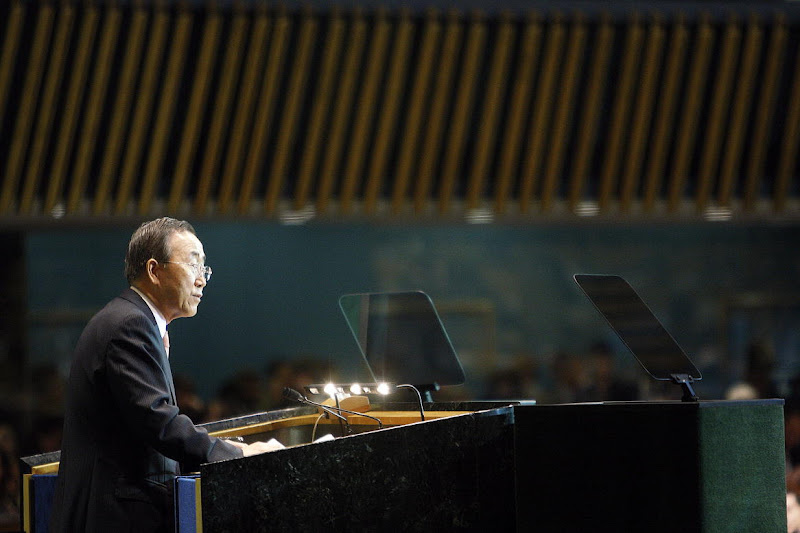
›July 30, 2010 // By Schuyler NullNatural resource management is a critical component of the peacebuilding process according to a new report from UN Secretary-General Ban Ki-moon. The report, presented to the UN Security Council and General Assembly this month, is a follow-up to last year’s presentation by the Secretary-General’s office on peacebuilding in the immediate aftermath of conflict.
The Secretary-General singles out the 2009 UN Environment Programme (UNEP) study “From Conflict to Peacebuilding: The Role of Environment and Natural Resources” for demonstrating the recent links between land use, natural resources, frequency of conflict, and conflict relapse. The Secretary-General writes:44. I wish to highlight two areas of increasing concern where greater efforts will be needed to deliver a more effective United Nations response. First, natural resources: a recent study by the United Nations Environment Programme concluded that 40 per cent of internal conflicts over a 60-year period were associated with land and natural resources, and that this link doubles the risk of conflict relapse in the first five years. Efforts have been made to draw early attention to these risks and to improve inter-agency coordination to address them, including by strengthening national capacity to prevent disputes over land and natural resources, as described in paragraph 31 above. Examples include programmes in Afghanistan, Timor-Leste and the Sudan, where coordination among several United Nations entities addressing land and natural resource management has demonstrated the importance of an inclusive approach. In order to further deliver on the ground I call on Member States and the United Nations system to make questions of natural resource allocation, ownership and access an integral part of peacebuilding strategies.
ECSP Director Geoff Dabelko calls the inclusion of this language “an important step towards integrating environmental issues into broader UN peacebuilding efforts and providing critical top-level political support for this integration effort.”
UNEP’s Post-Conflict and Disaster Management Branch (PCDMB) has been working to support a variety of UN bodies on integrating environment and natural resources into the peacebuilding process. Recent PCDMB efforts have been based in Afghanistan, Iraq, Lebanon, Sierra Leone, the DRC, and Sudan. New Security Beat asked UNEP PCDMB’s Director of Policy and Planning David Jensen to reflect on the new report via email:I’m thrilled to finally see that after over 10 years of work by UNEP and a variety of other organizations and scholars, these issues have finally been recognized at the highest political level. There is no longer any doubt that the mismanagement of natural resources can be a key factor in contributing to violent conflict. At the same time, the very recognition that environmental issues and natural resources can contribute to violent conflict underscores their potential significance as pathways for cooperation, transformation, and the consolidation of peace in war-torn societies.
As Jensen writes in ECSP Report 13, “If people cannot find clean water for drinking, wood for shelter and energy, or land for crops, what are the chances that peace will be successful and durable? Very slim.”
Last fall, Jensen predicted the UN was finally approaching a fundamental tipping point for inclusion of natural resource issues in the broader peacebuilding process, and the Secretary-General appears to have proven him right.
Photo Credit: “Secretary-General Addresses General Assembly,” courtesy of flickr user United Nations Photo.Interview With Wilson Center Scholar Margaret Wamuyu Muthee: Envisioning a New Future for Kenya’s Next Generation
›July 29, 2010 // By Wilson Center StaffYouth in sub-Saharan Africa constitute a large and growing portion of the region’s population, yet remain underserved by family planning and reproductive health programs. New Security Beat recently interviewed Margaret Wamuyu Muthee, an Africa Program Scholar at the Woodrow Wilson Center, about this problem. Muthee is currently working on a project documenting both the opportunities and challenges for young people growing up in Kenya.
New Security Beat: How do you define youth?Margaret Wamuyu Muthee: The African Union has defined youth as every person between the ages of 15 to 35 years, while the United Nations defines youth as persons between the ages of 15 and 24. I will be concentrating on the age group defined by the African Union.
NSB: What are some opportunities and challenges facing youth in Kenya?
However, I will not only be relying on age. There are other aspects that I must take into consideration. Many children assume the roles of an adult or a care-taker when they are at an early age. Children in African nations face different challenges [compared to children in Western countries], as there are fewer opportunities for transition in Africa.MWM: This is a very important stage for exposing youth to the available support and teaching them about the social economy. Some of the difficulties lie in the lack of resources and corruption, such as misuse of funds that are provided to the government by outside sources.
NSB: Which programs are taking actions to empower youth in Kenya?
On a more positive outlook, youth are very resilient. They have a wide range of potential and capacity that can be utilized right away. African nations, just like China, have an enormous population that can be a human resource. All we have to do is positively tap into their potential to make good changes.MWM: The Youth Enterprise Development Fund (YEDF) works to increase economic opportunities for Kenyan youth in nation-building through enterprise development. YEDF also works to lower the unemployment rate and teach certain skills for future employment. One downside of this fund is that even though it provides money, it does not provide mentorship for the youth who execute the programs.
NSB: Are these programs enough to address youth challenges?
Another program is Yes Youth Can! This $45 million initiative was created by the U.S. ambassador to Kenya and USAID. The program is designed to create local and national networks of youth leaders to advocate peaceful economic and governmental reforms. The wonderful thing about this organization is that it is completely youth-driven.MWM: Sometimes these programs are seen as too small and too late. Youth are seen as violent, and these programs are made to keep them busy. Programs need to address all the facts, from start to finish.
NSB: Are there programs specifically targeted at female youth?MWM: We need programs that address pregnancies, HIV/AIDS, and education for young women. These education programs not only need to teach them about pregnancies and HIV/AIDS, but also educate women about their rights: how to say “no” and object to certain actions.
NSB: Are family planning and reproductive health incorporated into youth education?
However, there are complications when it comes to female rights. There are sexual offense laws that females do not even know about. The implementation of these laws can be non-existent. Either the police system is flawed or accessing lawyers is too expensive for females. And even if a lawyer is hired, the rapist can pay off a judge, so the judge will not convict him.MWM: There are already reproductive health campaigns in Kenya. One example is the ABC program: Abstinence, Be faithful, Condom use. Everyone these days, in rural and urban environments, knows about HIV/AIDS. There needs to be more programs regarding family planning and health; there is only a limited amount of knowledge getting passed around about those two issues.
Margaret Wamuyu Muthee is the Programs Manager for Kenya’s University of Nairobi Center for Human Rights and Peace, and a current scholar in the Woodrow Wilson Center’s Africa Program.
There is a new proposed Kenyan constitution that bans abortion unless a doctor permits the abortion due to health reasons, or if the mother’s health is in critical danger. Many females die because they cannot legally get an abortion and try to abort their baby on their own, or accept services from a backstreet clinic.
We also have cultural practices that put up barriers to the spread of family planning and health. One such example is the practice of early female marriages. Girls as young as 10 years old will be forced to marry a much older man. These girls have not had proper education on reproductive health or family planning.
In addition, adults are still too shy to address youth that are having sex, and are embarrassed to talk about their health if they have HIV/AIDS. We need to educate more youth and provide the means for them to live safer lives.
Josephine Kim and Marie Hokenson are cadets at the United States Military Academy at West Point and interns with the Woodrow Wilson Center’s Environmental Change and Security Program.
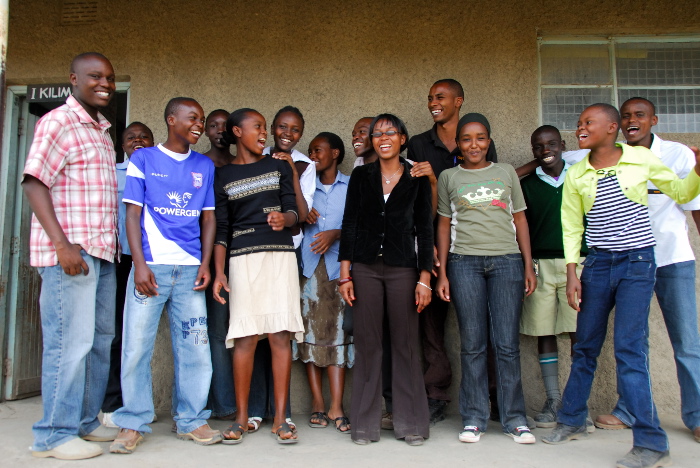
Photo Credit: “The Mentees and their mentors,” used courtesy of flickr user The Advocacy Project.‘Dialogue Television’ Interviews Paul Collier
›Watch below or on MHz Worldview
According to last week’s guest on Dialogue, restoring environmental order and eradicating global poverty have become the two defining challenges of our era. The environmental horror unfolding in the Gulf of Mexico illustrates just how difficult it is to balance economic progress and protection of the planet. It provides an alarming example of how the search for resources and profit can lead to the plunder of nature. Host John Milewski speaks with Oxford University economist Paul Collier on his latest book, The Plundered Planet: Why We Must and How We Can Manage Nature for Global Prosperity. Scheduled for broadcast starting June 30th, 2010 on MHz Worldview channel.
Paul Collier is professor of economics and director of the Center for the Study of African Economies at Oxford University. Formerly, he served as director of development research at the World Bank. He is the author of several books, including the award-winning The Bottom Billion.
Note: A QuickTime plug-in may be required to launch the video.Time to Give a Dam: Alternative Energy as Source of Cooperation or Conflict?
›July 8, 2010 // By Kayly OberMitigation can be a means to peace, not just conflict, said Stacy VanDeveer in the lead up to Backdraft: The Conflict Potential of Climate Mitigation and Adaptation at the Woodrow Wilson Center on June 10. VanDeveer believes that mitigation techniques, particularly alternative energy sources like hydroelectric dams, could stimulate cooperation rather than exacerbate threats.
The United States and China: Clean Energy Friends or Foes?
›July 7, 2010 // By Joshua NickellAs the world moves toward clean energy alternatives, companies in the United States and China are working to develop new, more cost-efficient manufacturing processes and increase their shares of the domestic and export markets for new renewable energy technologies. Controlling production lines and growing market share will certainly have important economic implications for both countries. But over the long term, a broader perspective suggests that cooperative initiatives to increase the capacity and reduce the cost of renewable energy technologies may produce benefits on both sides of the Pacific.
At an event co-hosted by the Wilson Center on the Hill and the China Environment Forum last month, John Romankiewicz, a senior analyst for China Clean Energy and Carbon Markets at Bloomberg New Energy Finance, and Ethan Zindler, head of North American Research at Bloomberg New Energy Finance, considered the big picture implications for U.S.-China clean energy cooperation and development.
Coming from an investment background, Zindler said that he looks at clean energy development “not as a social project, but as an industry.” The end goal, he asserted, is to produce clean energy more cheaply than fossil fuels. Zindler argued that if clean energy remains prohibitively expensive and uncompetitive without subsidies, it will be more difficult to implement and less likely to produce the desired environmental benefits.
Romankiewicz discussed China’s current supply of and growing demand for energy, pointing out that China’s power grid has grown by more than 70 gigawatts per year during each of the past 5 years, and that “at some point next year, the total installed capacity of China’s grid will surpass that of the United States.”
While coal and hydropower continue to play a significant role in meeting this growing demand, Romankiewicz noted that China also has set ambitious investment targets for wind farms, solar farms, biomass power plants, and other renewable energy sources.
China Looks to Go Global With Renewables
China is investing in clean energy not only to serve growing domestic energy demands, but also to become a major force in the international market, Romankiewicz asserted. Already, China has made impressive advances in clean energy industries: Of the top 15 wind turbine producers, four are Chinese and only two are American. Of the top 10 crystalline-silicon solar cell producers, six are Chinese.
But how will the United States impact China’s drive to become a major player in exporting clean energy technologies? Romankiewicz argued that breaking into the American market could prove exceedingly difficult for Chinese companies given the stiff competition from U.S. companies and other foreign firms.
The speakers also emphasized the importance of understanding the complex global economic implications of clean energy development. “If the Chinese are helping to drive down the cost… then they make solar less expensive,” said Zindler, “which means you can create more jobs in California or New Jersey.” Romankiewicz cautioned against reading too much into the “Made in China” label on clean energy technologies, as the supply chain could include parts from all over the world.
Though he maintained that focusing on the long-term benefits of clean energy investment in the United States would prove beneficial, Zindler advocated for a modicum of urgency. “I think a lot of opportunity would be missed potentially because there is innovation that doesn’t just come from a lab but comes from building newer and newer assembly lines,” Zindler remarked. But in the end, he characterized the U.S.-China battle for influence in the world’s renewable energy market as “a marathon, not a sprint,” asserting that “we’ve got a long way to go to determine who the winner will be in the clean energy race here.”
Joshua Nickell is a staff intern with the Program on America & the Global Economy at the Woodrow Wilson Center.
Photo Credit: <Wind Turbine Manufacture (in China),” courtesy of flickr user ANR2008.Is the Third Pole the Next Site for Water Crisis?
›July 1, 2010 // By Tara InnesThe Hindu-Kush Himalaya area may host future water crises as glaciers melt, population rapidly increases, and competition over scarce water resources intensifies, says a recent report from the Humanitarian Futures Programme at King’s College.
Himalayan glaciers – often called the “third pole” because they house the greatest volume of frozen water outside the polar regions – provide the headwaters for 10 major river systems in Asia. Despite clear evidence that the HKH glaciers are receding, recent controversy over the 2007 IPCC report has sidetracked the discussion from the degree of glacial melt and its impacts on the surrounding environment.
Glacial melt sends more water into the rivers in the rainy season, and less water in the dry season. This variability will increase both floods and droughts, which in turn can damage agriculture and create food shortages. Melting glaciers can also create “glacial lakes” that are prone to sudden bursting, causing disastrous flooding downstream (ppt).
According to The Waters of the Third Pole: Sources of Threat, Sources of Survival, climate change is already having significant impacts in the Himalayan region, intensifying natural disasters and the variability of the summer monsoon rains, and increasing the number of displaced people and government attempts to secure water supplies from its neighbors.
Rivers of People: Environmental Migrants
One of the major consequences, the report argues, could be “growing numbers of environmental migrants,” which the authors define as “people moving away from drying or degraded farmland or fisheries, and the millions displaced by ever-larger dams and river-diversion projects”—and including the Chinese government’s forced “‘re-location of people from ecologically fragile regions.”
Today, about 30 million (15 percent) of the world’s migrants are from the Himalayan region, the report says, warning that “in the next decade, should river flows reduce significantly, migration out of irrigated areas could be massive.” But the authors acknowledge that reliable estimates are rare – a problem pointed out in The New Security Beat.
However, it is clear that the region’s population is growing and urbanizing rapidly: By 2025, one-half of all Asians will live in cities, whereas one generation ago, the figure was one in 10. This incredible shift, says the report, places “some of the greatest pressures on water through increased demand and pollution.”
Water War or Water Peace?
The Waters of the Third Pole warns that growing scarcity could “raise the risk of conflict in a region already fraught with cross-border tensions.” While interstate tensions over water have been minimal to date, they could potentially increase in areas where significant percentages of river flow originate outside of a country’s borders – in 2005 Bangladesh relied on trans-boundary water supplies for 91 percent of its river flow, Pakistan for 76 percent, and India for 34 percent. Intra-state conflict is also expected to increase. The report notes, “In China alone, it has been reported that domestic uprisings have continued to increase in protest about water management or water-quality issues.”
However, the water-conflict link remains shaky within the scholarly community. As Dabelko recently told Diane Rehm about the region, “There are prospects for tensions, but quite frankly, water is difficult to [obtain] through war. It’s hard to pick it up and take it home.”
The report points out some areas in which water may actually pose an opportunity for regional cooperation rather than conflict, such as developing knowledge-sharing networks like the International Center for Integrated Mountain Development. The presence of such networks may help establish channels of communication and aid in diffusing other cross-border tensions. But the authors caution that “environmental cooperation generally lags far behind economic cooperation in the HKH region.”
The report concludes that policymakers must move the region higher on the humanitarian agenda; construct a framework for action that includes non-intrusive international support; and more thoroughly address knowledge and communication gaps.
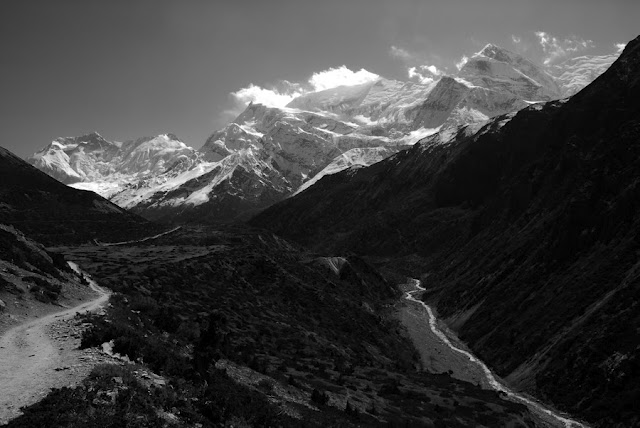
Photo Credit: “Annapurna ways, Nepal,” courtesy of flickr user rakustow.
Showing posts from category cooperation.