

-
How to Create a Successful Cross-Sectoral Collaboration
›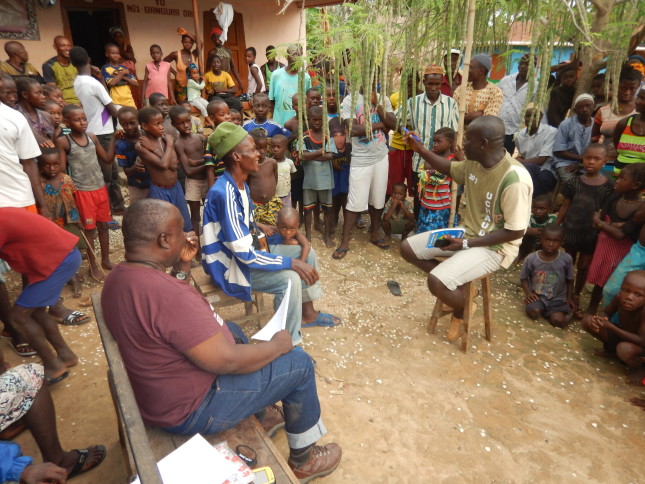
It helps to think of collaboration as a skill to develop, rather than a value to impart, said Francesca Gino, Professor and Unit Head of Negotiation, Organization and Markets at Harvard Business School, at a recent Wilson Center virtual event on the importance of cross-sectoral collaboration. Many organizations make collaboration one of their values, she said. However, this has no substantial effect. “It could be a first step, but on its own it doesn’t create a culture where all of a sudden people are collaborating effectively,” Gino said.
-
How to Think and Work Politically to Reach Biodiversity Conservation Goals
›
“You might know what to do,” said Rachel Kleinfeld, a Senior Fellow for Democracy, Conflict, and Governance Program at the Carnegie Endowment for International Peace. “But if you don’t think about how to do it, your reform isn’t going to move forward.” She spoke at a recent Wilson Center virtual event on how to think and work politically while supporting biodiversity conservation goals. It may sound counterintuitive, she said, but undertaking what’s considered the best intervention may not be the best approach.
-
Improve Biodiversity Conservation, Enhance Public Health and Food Security
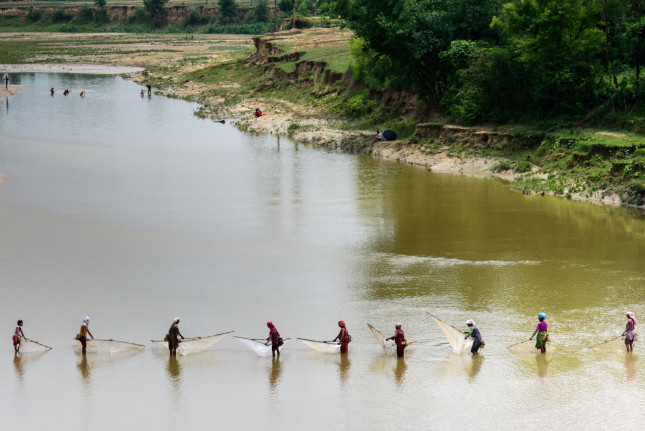
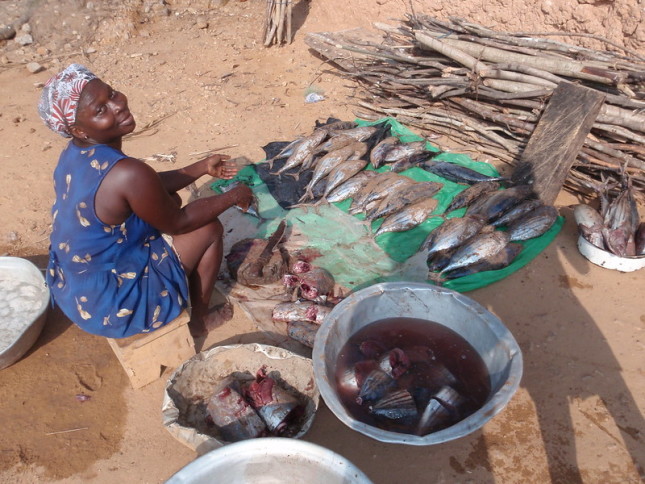
›Our collective development objectives will not be achieved if they come at the expense of biodiversity and natural resource management, said Jeff Haeni, Acting Deputy Assistant Administrator in the Bureau for Economic Growth, Education, and Environment at USAID. He spoke at a recent Wilson Center virtual event, co-hosted with USAID, that explored the links between conservation and public health with examples from USAID’s BRIDGE project, which aims to build the evidence base for integrating biodiversity conservation considerations into policy discussions and decision-making across sectors. “The ability of societies around the world to develop and thrive is dependent on the health of the forests, fisheries, and natural systems around them,” he said.
-
The Greatest Story Never Told
› “If the pope is interested, everyone is interested,” said Alexandre Roulin, accepting the 2019 Environmental Peacebuilding Research Award in Irvine, California. The University of Lausanne professor’s project—on how conserving barn owls in the Middle East brings together people in Israel, Jordan, and Palestine across political divides—is certainly unique and intriguing. (Also, cute owls!)The spiritual leader of the world’s 1 billion Catholics reached out to Roulin because the “Barn Owls Know No Boundaries” project promises a possible way to build peace in one of the world’s most intractable religious conflicts. A tremendous story, right?
But despite having all the hallmarks of a great tale, a quick Google search finds only a handful of stories about it. This lack of media attention is unfortunately an ongoing challenge for what I have long viewed as “the greatest story never told.”
-
How Gum Acacia Trees Could Help Build Peace in the Sahel
›A special type of tree could facilitate peacebuilding in the Sahel. A stretch of semi-arid land south of the Sahara that runs from the Red Sea to the Atlantic Ocean through 10 countries (Eritrea, Sudan, Chad, Niger, Nigeria, Burkina Faso, Mali, Algeria, Mauritania, and Senegal). But the western subregion covering the Lake Chad area (the intersection of Chad, Cameroon, Nigeria, and Niger) and Liptako-Gourma (the tri-border zone of Burkina Faso, Mali, and Niger) in the Sahel has been the scene of a growing humanitarian crisis. Armed groups are terrorizing local populations. Rampant insecurity has forced 1 million people to flee their homes. People have been cut off from their livelihoods. Food insecurity is worsening. Casualties continue to mount. And climate change will likely exacerbate conditions, forcing more people to compete for depleted forest resources and land. More food shortages and instability will surely follow.
-
Destruction of Habitat and Loss of Biodiversity are Creating the Perfect Conditions for Diseases like COVID-19 to Emerge
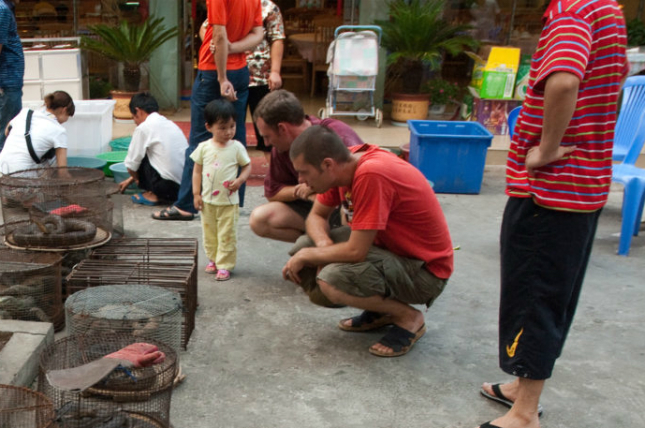
›Mayibout 2 is not a healthy place. The 150 or so people who live in the village, which sits on the south bank of the Ivindo River, deep in the great Minkebe forest in northern Gabon, are used to occasional bouts of diseases such as malaria, dengue, yellow fever and sleeping sickness. Mostly they shrug them off.
-
Can Singapore’s NEWater Spark a Wastewater Revolution in China?
›China is one of the “thirstiest” countries in the world with a per capita water availability a quarter of the United States. With population, pollution, and water shortages growing unabatedly, reclaimed water (e.g., treating wastewater to drinking water standards) could be the answer to China’s water insecurity. In China, extensive research in the 1980s into water reclamation and urban investments supporting infrastructure in the 2000s sparked production capacity in the country to rise from 63 billion gallons a day to 236 billion gallons per day between 2009 to 2015. Today, however, reclaimed water is a mere drop in the bucket meeting less than 1 percent of total urban water use. China could look to the tiny Southeast Asian city-state of Singapore to learn how it tapped reclaimed water to turn its water-scarce tiny island into a high-tech hydrohub.
-
To Fight for a Living Planet, Restore its Biology
› We face the greatest environmental challenges ever relating to climate change, biodiversity, land use, and more. Humans are driving 1 million species to extinction, according to a report by the UN-backed Intergovernmental Science-Policy Platform on Biodiversity and Ecosystem Services. Some $44 trillion of annual global economic product that depend on nature are in jeopardy. Fires have ravaged large swathes of the Amazon—Brazil and Bolivia in particular—and Australia.
Showing posts from category conservation.
 “If the pope is interested, everyone is interested,” said Alexandre Roulin, accepting the 2019 Environmental Peacebuilding Research Award in Irvine, California. The University of Lausanne professor’s project—on how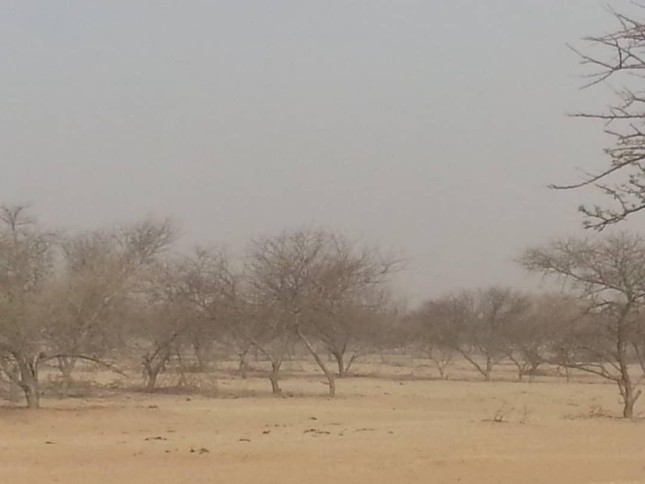

 We face the greatest environmental challenges ever relating to climate change, biodiversity, land use, and more. Humans are driving 1 million species to extinction, according to a


