Showing posts from category conservation.
-
Watch ‘Dialogue’ TV on Integrating Development, Population, Health, and the Environment
›Last week on the Wilson Center’s Dialogue radio and television program, host John Milewski spoke with Geoff Dabelko, director of ECSP, Roger-Mark De Souza, vice president for research and director of the Climate Program for Population Action International, and George Strunden, vice president of Africa programs for the Jane Goodall Institute. They discussed the challenge of integrating population, health, and environmental programs (PHE) to address a broad range of livelihood, development, and stability issues. [Video Below]
“Many times that we tackle development or poverty and human well-being challenges…we do it in an individual sector – the health sector, or agriculture sector, or looking at issues of water scarcity – and it makes sense in many respects to take those individual focuses,” said Dabelko. “But of course people living in these challenges, they’re living in them together…so both in terms of understanding the challenges…and then in responding to those challenges, we have to find ways to meet those challenges together.”
De Souza noted that the drive for integrated development stems from the communities being served, not necessarily from outside aid groups. “We’ve seen that there’s a greater impact because there’s longer sustainability for those efforts that have an integrated approach,” he said. “There’s a greater understanding and a greater appreciation of the value that [PHE] projects bring.”
Strunden said that the Goodall Institute has found similar success in tying health efforts with the environment in places where previously conservation work alone had been unsuccessful.
The panelists also discussed the role of population in broader global challenges, including energy, water, and food scarcities, and women’s rights.
Dialogue is a co-production of the Woodrow Wilson International Center for Scholars and MHz Networks. The show is also available throughout the United States on MHz Networks, via broadcast and cable affiliates, as well as via DirecTV and WorldTV (G19) satellite.
Find out where to watch Dialogue where you live via MHz Networks. You can send questions or comments on the program to dialogue@wilsoncenter.org. -
Madagascar, Past and Future: Lessons From Population, Health, and Environment Programs
›In Madagascar, “today’s challenges are even greater than those faced 25 years ago,” said Lisa Gaylord, director of program development at the Wildlife Conservation Society. At an event at the Woodrow Wilson Center on March 28, Gaylord and her co-panelists, Matthew Erdman, the program coordinator for the Population-Health-Environment Program at Blue Ventures Conservation, and Kristen Patterson, a senior program officer at The Nature Conservancy, discussed the challenges and outcomes of past and future integrated population, health, and environment (PHE) programs in Madagascar. [Video Below]
Nature, Health, Wealth, and Power
Gaylord, who has worked in Madagascar for nearly 30 years, gave a brief history of USAID’s activities on the unique island, which she called a “mini-continent.” She used the “nature, health, wealth, and power” framework to review the organization’s environment, health, and livelihoods programs in Madagascar and their results. Governance, she said, is the centerpiece of this framework, but this piece “maybe didn’t have an adequate foundation” in Madagascar to see the programs through the political crisis.
Though its programs started at the community level, Gaylord said USAID’s objective was to scale up to larger levels. “You can’t always work on that level and have an impact,” she said, and there was “tremendous hope” in 2002 for such scaling up when Madagascar elected a new president, Marc Ravalomanana.
Unfortunately, changes in funding, a lack of economic infrastructure, and poor governance forced development programs to scale down. After President Ravalomanana was overthrown in a military coup in 2009, the situation got worse – the United States and other donors pulled most funding, and only humanitarian programs were allowed to continue.
“What worries me is that I think we have gone back” to working on a village level, Gaylord said. “We want to go up in scale, and I think that we felt that we could in Madagascar, but that’s where you have the political complexities that didn’t allow us to continue in that direction.”
Going forward, Gaylord said that it is important to maintain a field-level foundation, take the time to build good governance, and maintain a balance in the funding levels so that no one area, such as health, dominates development activities.
Living With the Sea
Based in southwestern Madagascar, the Blue Ventures program began as an ecotourism outfit, said Erdman, but has since grown to incorporate marine conservation, family planning, and alternative livelihoods. One of its major accomplishments was the establishment of the largest locally managed marine protection area in the Indian Ocean, called Velondriake, which in Malagasy means “to live with the sea.” This marine area covers 80 kilometers of coastline, incorporates 25 villages, and includes more than 10,000 people. The marine reserves for fish, turtles, and octopus, as well as a permanent mangrove reserve, protect stocks from overfishing.
One of the biggest challenges facing the region is its rapidly growing population, which threatens the residents’ health and their food security, as well as the natural resources on which they depend. More than half the population is under the age of 15 and the infant and maternal mortality rates are very high, Erdman explained. Blue Ventures, therefore, set up a family planning program called Safidy, which means “choice” in Malagasy.
“If you have good health, and family size is based on quality, families can be smaller and [there will be] less demand for natural resources, leading to a healthier environment,” said Erdman.
The region’s isolation and lack of education and health services are a challenge, said Erdman, but over the past three years, the contraceptive prevalence rate has increased dramatically, as has the number of clinic visits. The program uses a combination of clinics, peer educators, theater presentations, and sporting events, such as soccer tournaments, to spread information about health and family planning.
A Champion Community
“There is a long history of collaborative work in Madagascar,” Patterson said. Focusing on the commune (county) level, she worked in conjunction with USAID, Malagasy NGOs, and government ministries to try to scale up PHE programs in Madagascar’s Fianarantsoa province, which has a target population of 250,000 people.
“We essentially worked at two different levels,” said Patterson. At the regional level, a coordinating body for USAID and local partners called the “Eco-Regional Alliance” met monthly. The “Champion Commune” initiative, which worked at local levels, had three main goals, she explained:
Though working in such remote areas is expensive, and all non-humanitarian U.S. foreign aid has been suspended since the coup, Patterson hopes that development programs will return to Madagascar. Pointing to its vast rural areas, she stressed the importance of integrated efforts: “The very nature of multi-sectoral programs is that they have the highest benefit in the areas that are most remote. These are the areas where people are literally left out in the cold.”- Create a strong overlap with neighboring communes;
- Promote activities that benefited more than one sector (such as reforesting with vitamin-rich papaya trees); and
- Capitalize on the prior experiences of Malagasy NGOs in implementing integrated projects to help build up civil society.
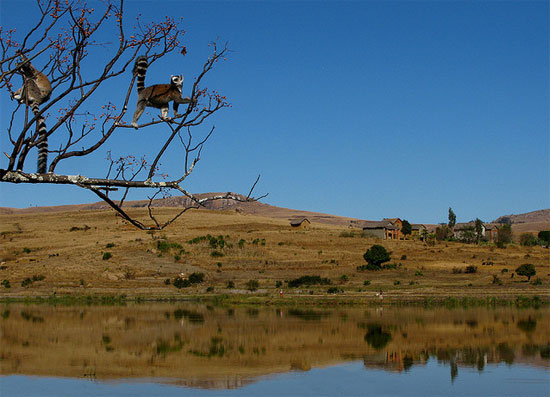
Image credit: “Untitled,” courtesy of flickr user Alex Cameron.
Sources: The New York Times, Velondriake. -
‘The Fence’ on U.S.-Mexico Border: Ineffective, Destructive, Absurd, Say Filmmakers
›April 5, 2011 // By Wilson Center StaffThe documentary The Fence, directed by Rory Kennedy, “shows a strong case against a single-minded approach to securing the border,” said Mexico Institute Program Associate Robert Donnelly at a Wilson Center screening on March 23. Part of the DC Environmental Film Festival, the screening was co-sponsored by the Environmental Change and Security Program and the Mexico Institute.
The film documents the $3 billion dollar construction of a 700-mile-long fence, which runs intermittently along the 2,000-mile-long U.S.-Mexico border. The barrier, a result of the Secure Fence Act of 2006, was intended to keep out terrorists, drug traffickers, and unauthorized border-crossers. Yet, according to the film, it is a solution in search of a problem. No terrorist has ever entered the country by illegally crossing the southern border; the 9-11 hijackers all had visas and arrived in the country by air, the film notes.
Physical barriers also have not reduced the rates of contraband drug smuggling into the United States, in spite of the claims of fence hawks, the film argues. And the numbers of undocumented immigrants in the United States actually rose over 1994-2009, the period covered in the film. At the same time, the construction and maintenance of physical barriers along the southern border have had adverse humanitarian, environmental, and fiscal consequences.
The film’s wry narration pokes fun at the “absurdity” of a fence that stops and starts at different places along the border. But this absurdist tone does not detract from one of the film’s more serious messages: that border fencing has coincided with an increase in migrant deaths from 1994 through 2009.
In a discussion following the screening, Geoff Dabelko, director of the Environment Change and Security Program, said that it is unlikely the fence will be torn down anytime soon given the money spent on its construction. Donnelly pointed out some adverse environmental effects of border fencing, such as the disruption of migration patterns for certain animal species. The film notes that the normal environmental review process for projects of its kind was waived by the Department of Homeland Security, which cited the importance of the border fence to national security.
The discussants acknowledged that the border fence is ill equipped to single-handedly stop the traffic in contraband or to significantly stem unauthorized migration. Instead, immigrant-sending and -receiving countries should work together to develop policy options that better address the root economic causes that prompt unauthorized migration.
Dana Deaton is an intern with the Mexico Institute at the Wilson Center. -
Watch: Stephan Bognar on Integrated Development for Donors and Practitioners
›March 4, 2011 // By Hannah MarquseeIn order to be successful, NGOs must “remove the binoculars and put on a kaleidoscope,” said Stephan Bognar, executive director of the Maddox Jolie-Pitt Foundation (MJP), in an interview with ECSP. “Although we have thousands of NGOs out there, we need to start working as one team, one voice, to implement development programs. Otherwise, we are still going to be in a poverty trap.”
The Maddox Jolie-Pitt Foundation is a Cambodia-based conservation NGO founded by Angelina Jolie in 2003 with the mission of eradicating extreme rural poverty, protecting natural resources, and conserving wildlife. MJP takes an integrated approach to rural development, combining community-based health, education, agriculture, and development projects with park conservation projects to best serve communities and their environment.
“One of the largest problems NGOs face are lack of funds,” said Bognar. This often prevents them from implementing integrated development projects. “They’re so focused on one component that they’re forgetting to link with the other NGOs.” But even if NGOs can’t get the funding to operate in multiple sectors by themselves, he said, it’s their “responsibility” to partner with other NGOS that have the skills and expertise to address other factors of rural development.
Despite best intentions, Bognar said, NGOs often become “so disconnected from the other sectors that within a few years their own program will implode.” NGOs must “reach out and look at the program outside of their lens,” he said. “Breaking down these barriers” is key to successful development work. -
Sam Rugaba, PHE Champion
Encouraging Childhood Education and Birth Spacing as an Approach to Conservation
›
This PHE Champion profile was produced by the BALANCED Project.
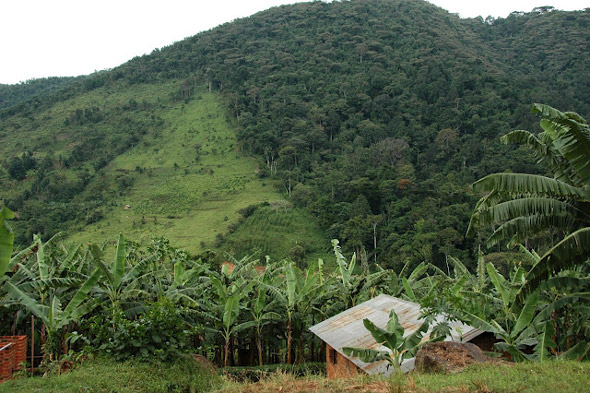
Fifty-one-year-old Sam Rugaba is a dedicated teacher who loves his job at the Bujengwe Community Primary School. The school is the result of a community-based project located in the Bujengwe Parish of the Kayonza subcounty in the Kanungu district of Uganda – just 18 kilometers from the Bwindi Impenetrable National Park (BINP). The biodiversity-rich BINP is home to many rare species including the endangered mountain gorilla. Sam is also a Conservation Through Public Health(CTPH) community volunteer and community conservation health worker. -
Mapping Demographics in WWF Priority Conservation Areas
›February 25, 2011 // By Hannah Marqusee“The developing world is urbanizing at a dizzying pace,” yet rural populations living in developing countries are also rapidly increasing, threatening many of the planet’s most biodiverse regions, says a new study, Mapping Population onto Priority Conservation Areas, by David López-Carr, Matthew Erdman, and Alex Zvoleff.
Using comprehensive data from the USAID-sponsored Demographic Health Surveys (DHS), the researchers analyzed population, mortality, and fertility indicators for 10 of the 19 priority places for conservation identified by the World Wildlife Foundation (WWF). These biological hotspots represent parts of 25 countries throughout South Asia, sub-Saharan Africa, and South America, including the Democratic Republic of the Congo, Colombia, Guatemala, Indonesia, Kenya, Nepal, Madagascar, and Thailand.
Urban vs. Rural
The findings confirmed the researchers’ hypothesis that rural areas within WWF priority regions are at a lower state of demographic transition than their urban counterparts, meaning they have higher fertility and infant mortality rates and a younger age structure due to poor access to primary health care, including family planning. Furthermore, women in these regions desire more children than those in urban, non-priority areas, but experience a greater difference between ideal and actual number of children.
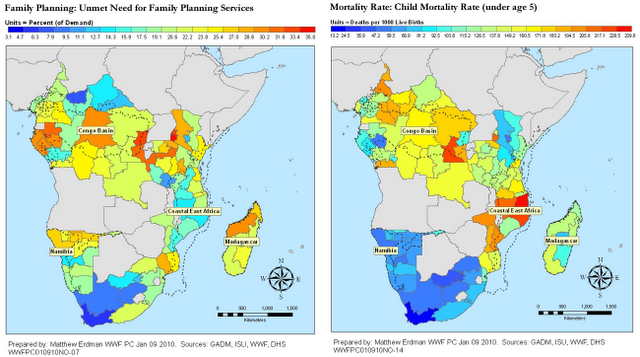
For many of the indicators, the differences between urban and rural, and priority and non-priority, regions of the developing world are striking. In urban Asia, the mean predicted population doubling time is 86.1 years; in rural Africa it is only 24.6 years. Urban Asia and South America also have total fertility rates of 1.8 children per woman, while rural Africa’s is 5.2. Infant mortality also ranged from a low of 20 deaths per every 1,000 births in some developing urban areas, to over 100 in rural parts of Coastal East Africa. In the developed world it is less than 10.
There is also consistently less desire among women in priority areas to limit their childbearing. Worldwide, 49.4 percent of women living within priority areas want to limit childbearing, compared to 56.2 percent outside priority areas.
Rural areas in all regions had the highest unmet need for family planning, with the exception of the Congo Basin, where high infant mortality has persisted and dampened women’s desire to limit childbearing. “If much needed health services were provided in the Congo Basin, along with family planning services, child survival rates would increase, and couples would be more inclined to limit overall births,” the study says.
Lower demand for family planning in priority areas is consistent with Caldwell’s theory of intergenerational wealth flows, the paper noted, which explains how in rural agricultural societies, children are economic assets who move wealth to their parents. As countries develop and people gain access to education, healthcare and female empowerment, wealth flows reverse and children become financial burdens. This transition decreases fertility and increases demand for family planning.
Setting Priorities
As WWF plans to scale up its population, health and environment (PHE) programs, this study will help to prioritize places within priority areas that are most in need of PHE intervention and “are most likely to help alleviate negative environmental and social impacts of rapid population growth.” The results of this study show that many areas are ripe for such intervention:Nearly a quarter of households in Coastal East Africa and the Mesoamerican Reef wish to have access to contraception yet their desire remains unfulfilled. Similarly, households within priority places in Coastal East Africa, the Mesoamerican Reef, Amazon and the Guianas, and the Eastern Himalayas wish to have nearly one child fewer than they currently have.
The findings of this study have already informed the planning of several of WWF’s projects in Madagascar and Namibia.
The limited availability and detail of the DHS data was the primary limitation of the study, the researchers noted. The 25 countries examined did not fully cover all WWF’s priority areas – 17 other countries within the priority areas lacked sufficiently comprehensive data for the study. Furthermore, the district or municipality was the smallest unit of analysis possible with DHS data, making it difficult to exactly pinpoint priority communities.
“Geography matters,” write the authors. “Only with further refined data accompanied by qualitative on-the-ground field research can we credibly answer remaining questions.”
Image Credit:“Family Planning: Unmet Need for Family Planning Services” and “Mortality Rate: Child Mortality Rate (Under Age 5)” courtesy of World Wildlife Fund.
Sources: Population Council, World Wildlife Fund. -
Deforestation, Population, and Development in a Warming World: A Roundtable on Latin America
›“Rural development and MCH [maternal child health] in the most remote, rural areas are going to largely explain the future of Latin American conservation, development, population, and urbanization,” said David Lopez-Carr, associate professor of geography at the University of California, Santa Barbara, at a recent Wilson Center roundtable on “Deforestation, Population, and Development in Latin America.”
Nearly 80 percent of Latin America’s people live in urban areas, yet the continent’s rural populations have a disproportionate effect on its forests. Panelists Liza Grandia, assistant professor of international development and social change at Clark University, and Jason Bremner, director of population, health, and environment at the Population Reference Bureau, argued that meeting the needs of these communities is therefore key to conserving Latin America’s forests. [Video Below]
Rural Populations Have Disproportionate Impact on Deforestation
“There are two Latin Americas,” said Carr. Countries like Argentina, Chile, and Uruguay are 90 percent urban, while countries like Guatemala, Ecuador, and Bolivia are about 50 percent urban. However, despite this rapid urbanization and declining population growth at the national level, rural areas in Latin America are still experiencing high fertility rates and significant forest loss. So how are these trends related?
In his analysis of more than 16,000 municipalities in Latin America, Carr found “no statistical significance between population change at the municipal level and woody vegetation change at the municipal level.” Yet this lack of connection does not mean population growth and deforestation are unrelated, but instead indicates “a problem of place and scale,” he said. Within countries or even within municipalities, there are huge variations in fertility rates. Rural areas, which generally have larger families, more agricultural expansion, higher population growth, and lower population density, account for higher impact per capita on forests.
“Less than one percent of the population of Guatemala moves to any rural frontier at all,” said Carr, “yet that small, tiny fraction of the population has a disproportionate impact on the forests, and that is true throughout Latin America.” Carr also distinguished between the private sector primarily converting secondary forest for corporate agriculture and subsistence farmers clearing old growth forest.
Indigenous Lands Are Key to the Future
There are generally two groups of people on the frontier: indigenous people and “colonists,” who move in to take advantage of undeveloped land. Indigenous people, by and large, act as “stewards of the forests,” exhibiting lower rates of deforestation and forest fragmentation then colonists, Bremner said. “They do have a very protective effect, largely because they are excluding others from those lands.”
Indigenous communities tend to be “common property institutions” with an informal or cultural set of rules and traditions facilitating land use, said Bremner. They are “really good at mobilizing against external threats,” he said, which results in a protective effect over the forest. In the Amazon, for example, “indigenous lands, in the context of all of this colonization and deforestation that is happening, are now seen as key to the future,” he said.
However, as indigenous population growth and growing agricultural and industrial expansion change indigenous communities and livelihoods, more formal rules must be developed to govern land use. If indigenous communities “are the protective factor, then we need to know how to protect them,” said Bremner.
There are few demographic surveys of rural communities, but one of nearly 700 women in the Ecuadorian Amazon found the total fertility rate of indigenous women to be seven to eight children per woman. “Fifty percent of indigenous women didn’t want to have another child…of that 50 percent, 98 percent were not using a modern method of contraception,” Bremner said. “Responding to these women’s needs, I think, would go a long way in terms of changing the future of these communities.”
Guatemala: Reducing Fertility By Thinking Outside the Box
Grandia, with support from Conservation International and ProPeten, conducted a study of population and environment connections as part of the Demographic and Health Survey (DHS) of Peten, a sparsely populated and highly biodiverse municipality of Guatemala. The 90,000 people living in the protected area in this park had “literally no family planning services,” said Grandia, and their population was on track to double within 20 years.
Using the DHS data, Grandia and ProPeten created a “somewhat eclectic population and environment program” that integrated many of the concerns of indigenous Maya communities in Peten, called Remedios. Remedios focused on a diverse set of issues, including agriculture, education, maternal and child health, family planning, and gender issues, and included projects like a “traveling education-mobile” and Between Two Roads, a bilingual radio soap opera in Spanish and Q’eqchi’ Maya, which used the story of a conflict between midwife and cattle rancher in a frontier community “to touch on a whole range of social and environmental issues.”
“As a result of our efforts…the total fertility rate dropped from 6.8 in 1999 to 5.8 in 2002, and in the most recent DHS it had fallen to 4.3,” said Grandia. She credited this success in part to the fact that the programs were “so cross-cutting across many of those schools of thought.” Yet the integration of a diverse range of issues also caused a split between the field-based ProPeten and the DC-based Conservation International, who wanted a more “narrow focus” on family planning and conservation, she said.
“Sometimes working outside the box can have unexpected results,” said Grandia. The population-environment movement could learn from the American environmentalist movement’s evolution from “an elite movement” into a “broader-based socially dynamic movement that involved new constituencies,” she said.
“Population and environment has often begged the articulation of a third field,” said Grandia. “How you fill in that blank often reflects the kind of development interventions you deem appropriate.” Perhaps “justice” should be considered “a new critical third paradigm,” she said.
Sources: Population Reference Bureau, World Bank.
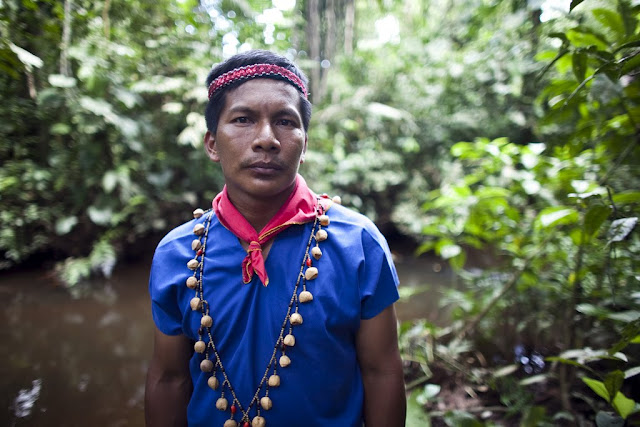
Photo Credit: “Chevron’s Toxic Legacy in Ecuador’s Amazon,” courtesy of flickr user Rainforest Action Network. -
Ruth Siyage, PHE Champion
Promoting Family Planning and Livelihoods for a Healthy Environment in Uganda
›This PHE Champion profile was produced by the BALANCED Project.
Meet 32 year old Ruth Siyage – a wife, mother, peasant farmer, shop owner, and population, health, and environment (PHE) champion. Ruth, her husband, Siyage Benon, and their three healthy daughters – ages 3, 6, and 11 – live about an hour from Bwindi Impenetrable National Park (BINP) in Uganda’s Kanungu District. The 33,000-hectare BINP is a World Heritage Site known for its exceptional biodiversity – with over 200 species of trees, 100 species of ferns, 350 species of birds, 200 species of butterflies, as well as many endangered species, including the mountain gorilla.
In addition to being a peasant farmer who grows potatoes, millet, beans, and groundnuts to feed her family, Ruth also has a small shop in the nearby trading center where she sells groceries and interacts with most of her friends. Ruth first learned of and embraced the PHE approach through a neighbor and local community volunteer, Mrs. Hope Matsiko – one of 29 PHE volunteers trained by the Conservation Through Public Health (CTPH) programs.
Ruth recalls:Hope used to approach us and tell us about family planning. Others refused to listen, but I took it up. Before, I used to refuse to go to Kajubwe Health Center for services and never got information because it was so far away. However, when Hope, the local volunteer, who is also my neighbor, visited me at home, I got more information about family planning. She also counseled me on the methods I could use, which was best for my health and how to use it. I now use family planning.
As a new champion, Ruth uses several ways to teach her community about family planning and PHE activities. One way is through face-to-face discussions with individuals attending village meetings. She focuses on women she sees often and who she knows have closely-spaced pregnancies. Recently, three of these women started using modern contraceptives.Ruth also spreads her PHE messages through her work with the local women’s association, Kishanda Bakyara Twebiseho (Kishanda Women Livelihoods Association), as an active member of a local church, and as a local village council member. In the council, she is in charge of teaching about agriculture and the environment – a perfect opportunity to share her PHE messages about the linkages between population, health, and the environment. Ruth is a great model of the benefits of taking a PHE approach, with her well-spaced pregnancies – which have helped ensure her own reproductive health and that of her three daughters – and her teaching of others, from what she now knows about the need to keep ourselves and our environment healthy to the impacts of each on the other.
Ruth says she believes that through a PHE approach much can be done and has been done:By teaching people about safe water use, I believe that we can stop diarrhea diseases. And by teaching about sanitation, we can help prevent diseases such as malaria, tuberculosis, and worms. Now my neighbors seldom get sick. We have a fairly healthy life. When we are not sick, we do not have to sell our goats and land to buy medicine. And when we plan our families, we are better able to care for and educate our children. Through our community sensitization, people now even understand the importance of gorilla conservation.
Ruth is especially appreciative of the CTPH program, which first taught her about and then turned her into an advocate for the integrated PHE approach.
This PHE Champion profile was produced by the BALANCED Project. A PDF version can be downloaded from the PHE Toolkit. PHE Champion profiles highlight people working on the ground to improve health and conservation in areas where biodiversity is critically endangered.
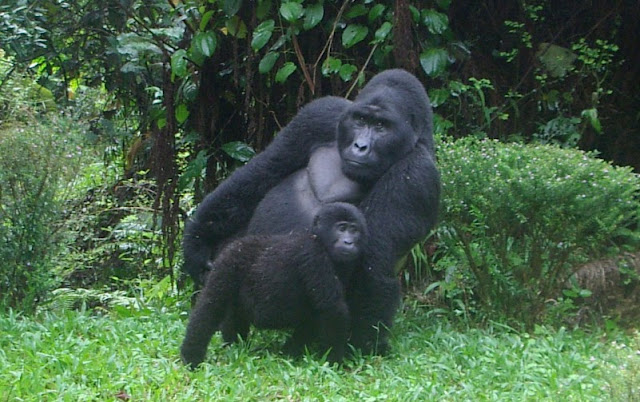
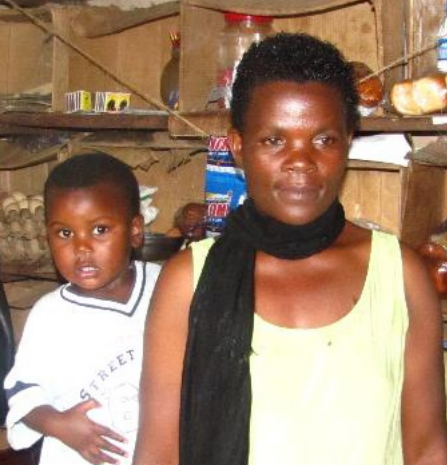
Photo Credit: Silverback mountain gorilla named Mwirima with a juvenille gorilla from the Rusguguar group near Bwindi Impenetrable National Park, and Ruth and her son in their shop in rural Uganda, courtesy of CTPH.