Showing posts from category conservation.
-
IRP and TIME Collaborate on Indonesia’s Palm Oil Dilemma
›“Everything the company does goes against my conscience. But the question remains, who should work from the inside to inform everyone? Who should be pushing that these things are right, these things are acceptable, and these things are not?” says Victor Terran, in this video by Jacob Templin for TIME and the International Reporting Project (IRP). Templin traveled to Indonesia as part of IRP’s Gatekeeper Editor program in May 2011.
Terran is a resident of a village west of Borneo in the Kalimatan province, where he works as a field supervisor for one of the largest palm oil companies in Indonesia. Although the industry has supplied his village with much-needed employment and economic development, he worries that the influx of jobs has come at the expense of the health of the forests, agriculture, and clean rivers that sustain his village. “It’s not just about the money,” he says. “Will they sincerely keep the regulations and be fair to our community?”
An Industry with a Checkered Past
Terran’s skepticism of the industry is justified – palm companies, such as Sinar Mas, have a nasty track record of “abusing local labor and pilfering forests” for what they call “liquid gold,” says Templin.
Greenpeace released a report, “How Sinar Mas is Pulping the Planet,” in 2010 that alleged that Sinar Mas cut down important wildlife preserves, illegally planted on peat lands, and that these actions resulted in the release of considerable amounts of carbon into the atmosphere and loss of critical wildlife habitat.
As a result, the company lost major contracts with Unilever, Kraft, and Nestle. Sinar Mas CEO Franky Widjaya tells Templin that the company is taking definitive steps to prevent such instances from happening again, but that change will not happen overnight.
Akhir bin Man, a manager for another palm oil company, PT Kal, says he does not want to experience a public relations nightmare similar to Sinar Mas, so his company is seeking certification from the internationally recognized Roundtable on Sustainable Palm Oil (RSPO). The RSPO certification requires PT Kal to conserve nearly half of its land, use safer pesticides, and negotiate profit-sharing agreements with villagers.
Global Benefits
“These are not only vast forest landscapes which are home to species such as orangutans, elephants, and rhinos, but they’re also some of the globally most important reservoirs of carbon,” Adam Tomasek, director of the WWF Heart of Borneo Initiative, tells Templin.
Due to the wide-scale implications of disrupting such a substantial carbon sink, Tomasek and his colleagues see the destruction of these habitats as not just a local problem: “Sustainably managing the forest and carbon stocks that they contain here in Indonesia is not only important locally, not only important regionally, but an extremely important critical in the global approach to dealing with climate change,” he says.
Resisting the Juggernaut
Recognizing the inherent value of their natural resources, some villages are fighting to keep palm companies off of their land. Pak Bastarian is the head of such a village: “In my opinion, [palm] plantations are only owned by certain groups of people, and they don’t necessarily bring prosperity,” he tells Templin.
Bastarian is a reformed environmentalist whose hesitance toward the palm industry is a by-product of his own experiences – in the 1990s he worked for years running a timber company that illegally cut down trees. “I don’t know how many trees I cut down…a countless number.” Now, he uses his elected power to preserve trees like the ones he once cut down.
However, keeping the companies out of his village is an uphill battle, Templin explains. Bastarian says he faces mounting pressure from governmental officials, who make threats, and many villagers, who would rather have the jobs. He tells Templin that he even received bribes from PT Kal (an accusation they deny).
Bastarian’s position may cost him though – with elections right around the corner, he said does not know how much longer he can keep the palm companies out.
“My worry is that if our forests are cleared, our children will not be able to see what protected wood looks like, or what protected animals look like,” he tells Templin. When the palm oil companies first came, he chose to wait and see how the other villages fared before allowing them to come in. “To this day,” he says, “I’ve never changed my mind.”
Video Credit: “Indonesia’s Palm Oil Dilemma: To Cash In or Fight for the Forests?,” courtesy of the International Reporting Project. -
Zo Zatovonirina, PHE Champion
Improving Human Health and Conservation in Madagascar’s Forest Communities
›This PHE Champion profile was produced by the BALANCED Project.
Madagascar is one of the world’s most unique ecosystems, with a total of eight plant families, five bird families, and five primate families that live nowhere else on Earth. Madagascar’s tropical forests and marine environments are home to endemic species of flora and fauna, although tragically 15 species are now extinct. At the same time, Madagascar is rich in freshwater resources, yet more than 60 percent of the island’s 19.7 million people do not have access to safe drinking water.Since 2003, Zo Zatovonirina has worked for Conservation International (CI) in Madagascar, and he has seen up-close the challenges of reaching remote forest communities, often requiring one- or two-day hikes over treacherous roads. As coordinator for USAID’s Healthy Families, Healthy Forests Program, Zo worked with two Malagasy nongovernmental organizations (NGOs), MATEZA, and the Association for Health Action and Security, to implement integrated population, health, and environment (PHE) approaches in response to community needs in the Ankeniheny Zahamena forest corridor in eastern Madagascar.
From 2003-2008, CI and partners reached more than 25,000 village residents with PHE messages; increased contraceptive prevalence in target zones from 17 percent in 2005 to 30 percent in 2008; constructed 3,000 latrines; and improved environmental health in all priority sites.
Today, biodiversity in Madagascar is under increased pressure, in light of political instability since 2009 and continued population pressures. Recognizing CI and partner experience and investments in conservation efforts to improve human well-being, USAID Madagascar and World Learning recently awarded a new 15-month grant to CI Madagascar and two Malagasy NGO partners – Voahary Salama and Ny Tanintsika – to implement an integrated PHE project in the southeastern Ambositra Vondrozo forest corridor. All three organizations have implemented PHE projects in Madagascar, and they have established trusting relationships with the people living in these fragile ecosystems.
Madagascar has a rich history of implementing successful PHE projects, and this project represents a new PHE pilot phase in the midst of political uncertainty. According to Zo, PHE approaches remain constant – simultaneously addressing several complex and linked problems such as poverty, child survival, and unsustainable dependency on natural resources. In Zo’s experience, CI’s PHE approach touches on all these aspects and delivers a pragmatic, integrated package of interventions designed to increase community capacity to better manage their health and environment. Utilizing PHE approaches, CI, Voahary Salama, and Ny Tanintsika will strive to reach communities for the first time ever with family planning, water, sanitation, and hygiene services while helping them conserve their biological heritage.
This PHE Champion profile was produced by the BALANCED Project. A PDF version can be downloaded from the PHE Toolkit. PHE Champion profiles highlight people working on the ground to improve health and conservation in areas where biodiversity is critically endangered.
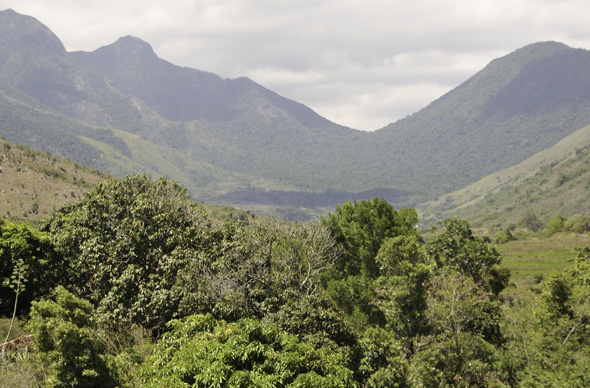
Photo Credit: The forests of Madagascar, courtesy of Conservation International/Russ Mittermeier, and Zo Zatovonirina, courtesy of Conservation International. -
Robert Engelman, Yale Environment 360
The World at 7 Billion: Can We Stop Growing Now?
›August 11, 2011 // By Wilson Center StaffThe original version of this article, by Robert Engelman, appeared on Yale Environment 360.
Demographers aren’t known for their sense of humor, but the ones who work for the United Nations recently announced that the world’s human population will hit seven billion on Halloween this year. Since censuses and other surveys can scarcely justify such a precise calculation, it’s tempting to imagine that the UN Population Division, the data shop that pinpointed the Day of 7 Billion, is hinting that we should all be afraid, be very afraid.
We have reason to be. The 21st century is not yet a dozen years old, and there are already one billion more people than in October 1999 – with the outlook for future energy and food supplies looking bleaker than it has for decades. It took humanity until the early 19th century to gain its first billion people; then another 1.5 billion followed over the next century and a half. In just the last 60 years the world’s population has gained yet another 4.5 billion. Never before have so many animals of one species anything like our size inhabited the planet.
And this species interacts with its surroundings far more intensely than any other ever has. Planet Earth has become Planet Humanity, as we co-opt its carbon, water, and nitrogen cycles so completely that no other force can compare. For the first time in life’s 3-billion-plus-year history, one form of life – ours – condemns to extinction significant proportions of the plants and animals that are our only known companions in the universe.
Did someone just remark that these impacts don’t stem from our population, but from our consumption? Probably, as this assertion emerges often from journals, books, and the blogosphere. It’s as though a geometry text were to propound the axiom that it is not length that determines the area of a rectangle, but width. Would we worry about our individual consumption of energy and natural resources if humanity still had the stable population of roughly 300 million people – less than today’s U.S. number – that the species maintained throughout the first millennium of the current era?
Continue reading on Yale Environment 360.
Robert Engelman is executive director of the Worldwatch Institute, an environmental research organization based in Washington, D.C.
Photo Credit: “Daybreak,” courtesy of flickr user Undertow851. Dawn breaks over California in the United States April 17, 2011 in this photo by NASA astronaut Ron Garan from the International Space Station. The lights of Los Angeles appear in the foreground while San Francisco appears in the back near the horizon. -
Population, Health, and Environment Approaches in Tanzania
›“Quality of life, human health, food security, and biodiversity are all connected,” said Elin Torell, research associate for the BALANCED Project and the University of Rhode Island Coastal Resource Center. Torell was joined at the Wilson Center on July 19 by Patrick Kajubili from the Tanzania Coastal Management Partnership, and Alice Macharia, director of the East Africa Program at the Jane Goodall Institute to discuss the importance of integrated population, health, and environment (PHE) initiatives that work to simultaneously improve health and livelihoods, manage natural resources, and conserve ecosystems in Tanzania.
Building Resilient Coastal Communities
The Coastal Resources Center’s work in Tanzania’s Saadani National Park provides an example of an integrated PHE approach that sustains the flows of environmental goods and services, maintains biological diversity, and empowers and improves the wellbeing of local residents, said Torell. Since 1996, the CRC has focused on protecting sea turtles, promoting energy-saving stoves, and tracking elephants, while at the same time improving livelihoods through savings and credit associations, eco-tourism, and beekeeping.
“Adding family planning makes a whole lot of sense,” said Torell. There is a high unmet need for family planning in Tanzania and the population is growing rapidly with an average number of 5.6 children per woman. Family planning not only helps families limit and space births but indirectly works to improve food security and human health, reduce demand for scarce natural resources, and empower women, she said.
“Integration is key,” concluded Torell: A coordinated and synergistic approach that meets the varied needs of local communities will be more effective and sustainable than if interventions were delivered independently.
Effective Integration in the Field
“Conceptual linking is not enough,” said Kajubili. “Integration also needs to happen at the organizational and field levels.”
On the ground, the Tanzania Coastal Management Partnership integrates family planning education and services into conservation work, said Kajubili. Peer educators deliver information about family planning, health, and coastal resources management; and community-based distributors deliver family planning services and supplies.
“Now people easily access reproductive health services,” said Kajubili. To date, the program has increased referrals to health centers, promoted contraceptive use, and reduced the distance that women need to travel to receive family planning services.
“Integration makes sense and cents,” said Kajubili. By combining resources, health and natural resource management organizations can potentially reach a broader population while sharing costs.
But “reinforcing the linkages between PHE of course takes time and education,” said Kajubili, highlighting a major challenge to implementing integrated approaches. “Advocacy is needed to overcome cultural and institutional barriers.”
“What About Our Needs?”
“Socio-economic development; family planning and AIDS education; sustainable forestry and agriculture practices; and water and sanitation all underpin and support sustainable natural resource management,” said Macharia.
The Lake Tanganyika Catchment Reforestation and Education Project (TACARE) led by the Jane Goodall Institute was initiated in 1994 to arrest the rapid degradation of land through tree planting and forest degradation, said Macharia. “But at some point, the communities raised the question: What about our own needs?” she said.
Community members prioritized the need for health services, education, clean water, and financial capital. But environmental degradation was not seen as a major issue, suggesting a need for a more integrated approach to TACARE’s conservation efforts.
“Integrated programs including population, health, and environment activities are cost-efficient and add value to conservation goals,” said Macharia. By responding to the needs of the community, the integrated approach adopted by TACARE has gained more credibility among local people, while a strong focus on building local capacity has helped to ensure sustainability of the program.
While there are many challenges to implementing and maintaining integrated PHE programs, “partnerships at the local, district, and national level are key to making this a success,” concluded Macharia.
Sources: Population Reference Bureau.
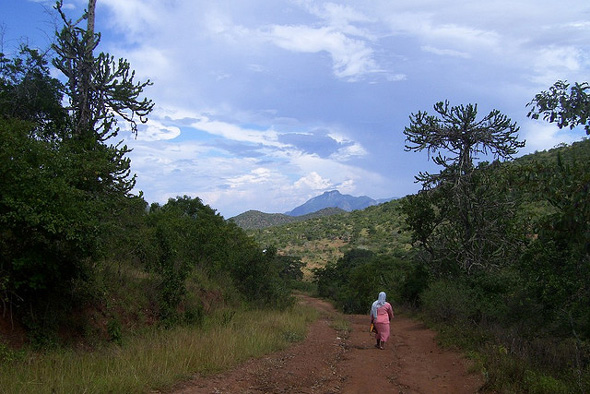
Photo Credit: “Environment near Vumari Village,” courtesy of flickr user treesftf. -
Leona D’Agnes on Evaluating PHE Service Delivery in the Philippines
›“By reducing population growth, we are going to have a better chance of sustaining the gains of an environmental conservation project,” said Leona D’Agnes in this interview with ECSP. D’Agnes, a technical advisor to PATH Foundation Philippines, served as lead author on a research article published late last year in Environmental Conservation titled, “Integrated Management of Coastal Resources and Human Health Yields Added Value: A Comparative Study in Palawan (Philippines).” The study provided concrete statistical evidence that integrated development programming incorporating population, health, and the environment (PHE) can be more effective in lowering population growth rates and preserving critical coastal ecosystems than single-sector development interventions.
“What set this research apart from earlier work on integrated programming was the rigorous evaluation design that was applied,” said D’Agnes. “What this design aimed to do is to evaluate the integrated approach itself. Most of the previous evaluations that have been done on integrated programming were impact evaluations — they set out to evaluate the impact of the project.” This most recent research project, on the other hand, sought to evaluate the effectiveness of cross-sectoral interventions based on “whether or not synergies were produced,” said D’Agnes.Although it took her team six years to generate statistically significant findings in Palawan, D’Agnes reports that the synergies of PATH Foundation Philippines’ PHE intervention took the form of reduced income poverty, a decreased average number of children born to women of reproductive age, and the preservation of coastal resources, which helped bolster the region’s food security.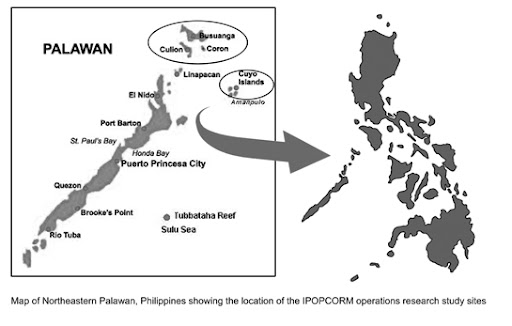
Going forward, D’Agnes said, an integrated approach to environmental conservation should also prove appealing because of its cost effectiveness. “This has huge implications for local governments in the Philippines, where they are struggling to meet the basic needs of their constituents in the face of very small internal revenue allotments that they get from the central government,” she said. “They can really pick up on this example to see that at the local level, if somehow they can do this integrated service delivery that was done in the Integrated Population and Coastal Resource Management (IPOPCORM) model, that they’ll be able to achieve the objectives of both their conservation and their health programs in a much more cost-effective way, and, in the process, generate some other [positive] outcomes that perhaps they didn’t anticipate.”
D’Agnes expects the study’s results will prompt a fresh look at cross-sectoral PHE programming. “I hope that this evidence from this study will help to change the thinking in the conservation community about integrated approaches to conservation and development,” she said.
The “Pop Audio” series is also available as podcasts on iTunes. -
Life on the Edge: Climate Change and Reproductive Health in the Philippines
›July 18, 2011 // By Hannah MarquseeHigh population growth and population density have placed serious stress on natural resources in the Philippines. No one lives far from the coast in the 7,150-island archipelago, making the population extremely dependent on marine resources and vulnerable to sea-level rise, flooding, and other effects of climate change. The coastal megacity of Manila – one of the most densely populated in the world – is beset by poor urban planning, lack of infrastructure, and a large population living in lowland slums, making it particularly vulnerable to increased flooding and natural disasters. [Video Below]
The Philippines is now home to 93 million people and by 2050 is expected to reach 155 million, according to the UN’s medium fertility variant projections. Development programs in the country have made great strides towards increasing access to family planning and reproductive health services as well as improving management of marine resources, but the underlying trends remain troubling.
The Battle Over Reproductive Health
Since 1970, the government’s Commission on Population has been addressing population growth, reproductive health, and family planning. “The impact of the high rate of population growth is intricately linked to the welfare and sustainable development for a country like the Philippines, where poverty drives millions of people to overexploit their resource base,” wrote the commission. As a result of these efforts and others, total fertility rate has dropped from 6.0 children per woman in 1970, to the present 3.2.
The Philippines has also made great gains towards achieving Millennium Development Goal targets, “particularly in the alleviation of extreme poverty; child mortality; incidences of HIV/AIDS, tuberculosis, and malaria; gender equality in education; household dietary intake; and access to safe drinking water,” according to the United Nations Development Program (UNDP). Yet, “glaring disparities across regions persist,” UNDP states.
One of the poorest regions in the country, the Autonomous Region of Muslim Mindanao, is also home to a violent separatist movement. With limited access to health services, fertility and population growth rates are the highest in the country. Women in Mindanao average 4.2 children per woman; one in four married women has an unmet need for contraception; and 45 percent of households live in poverty (compared to 24 percent nationally).
Nationally, “serious challenges and threats remain with regard to targets on maternal health, access to reproductive health services, nutrition, primary education, and environmental sustainability,” according to UNDP–in particular, indicators on maternal health are “disturbing” and of all the MDGs, are labeled “least likely to be achieved.”
Out of three million pregnancies that occur every year, half were unplanned and one-third of these end in abortions, according to a 2006 report of the Allan Guttmacher Institute conducted in the Philippines. Induced abortion was the fourth leading cause of maternal deaths, and young women accounted for 17 percent of induced abortions. Over half of births occurred at home and one-third of them were assisted by traditional birth attendants. Around 75 percent of the poorest quintile did not have access to skilled birth attendants compared to only 20 percent of the richest quintile.
The politically influential Catholic Church recently blocked passage of a reproductive health bill, despite support by President Benigno Aquino and a majority of Filipinos. The bill seeks to provide universal access to contraception and would make sex education required from fifth grade onwards, a provision that has angered Church officials.
Manila Under Water
The Philippines’ combination of high population growth and limited land area (nearly all of which is near the coast) makes the country extremely vulnerable to the effects of climate change. Sixty-five percent of Filipinos live in coastal areas and 49 percent live in urban areas. Paul Hutchcroft, in Climate Change and Natural Security, writes that “even in the best of times, the frequency of typhoons, floods, earthquakes, and volcanic eruptions makes the Philippines one of the most disaster-prone countries in the world” (p. 45).
Population growth, climate change, and deforestation will only increase the severity of these disasters, he concludes. Hutchcroft points out that by 2080, projected temperature increases of between 1.2 to 3.9 degrees Celsius could raise sea levels by an estimated 0.19 to 1.04 meters – a scary thought for the 15 million living within a one-meter elevation zone (p. 46).
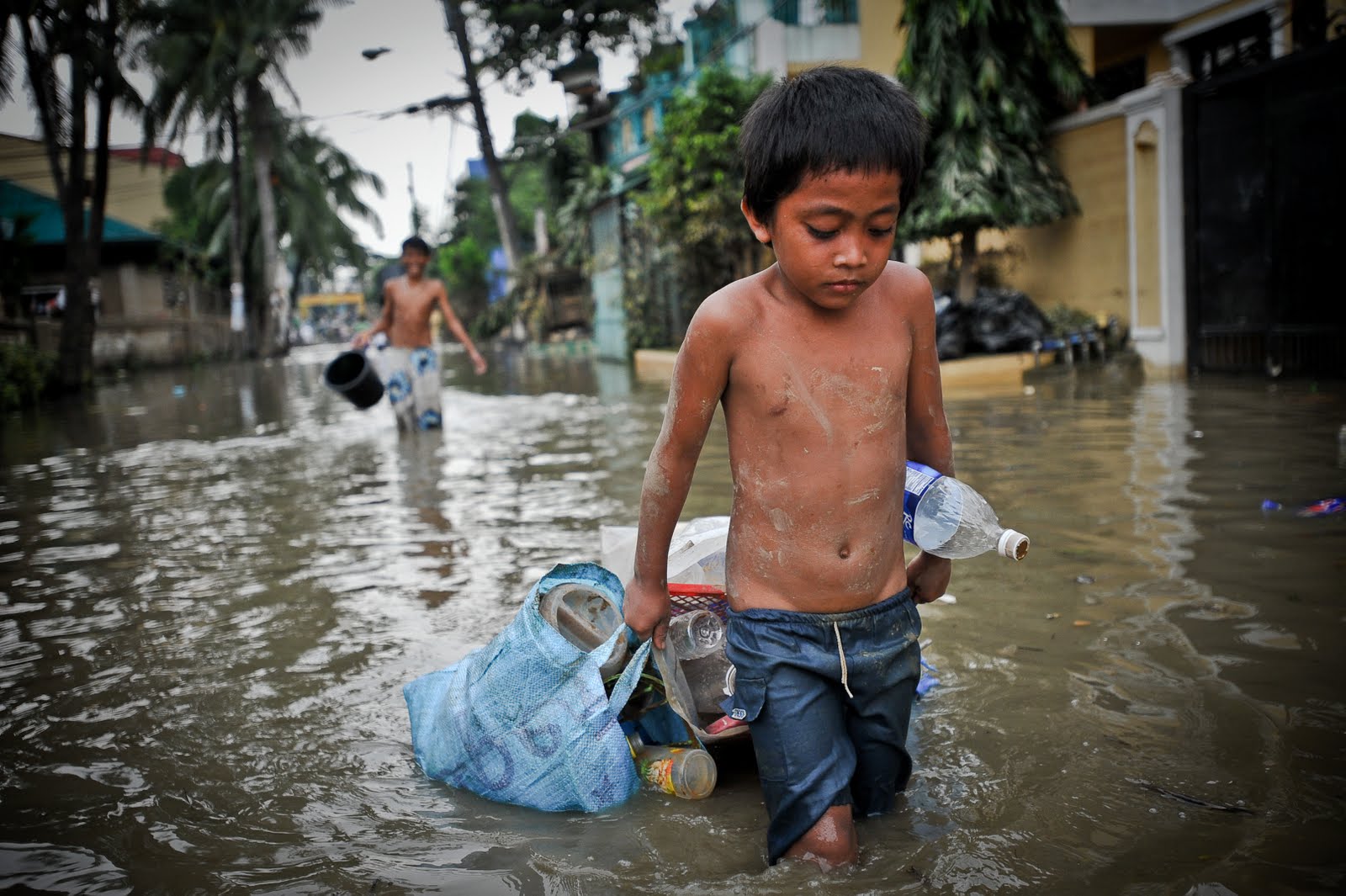
In 2009, metropolitan Manila, currently home to 11 million people (18,650 per square kilometer) and projected to grow to 19 million by 2050, was hit by tropical storms that caused devastating flooding – at their peak, waters reached nearly seven meters, according to a World Bank report. “More than 80 percent of the city was underwater,” write the authors, “causing immense damage to housing and infrastructure and displacing around 280,000-300,000 people.”
“Even if current flood infrastructure plans are implemented, the area flooded in 2050 will increase by 42 percent in the event of a 1-in-100-year flood,” says the World Bank report. Climate change could also increase the cost of flooding as much as $650 million, or 6 percent of GDP. Only by considering climate-related risks in urban planning can the Philippines hope to mitigate the effects of climate change, the report concludes.
Integrated Development: One Piece of the Puzzle?
Population, health, and environment (PHE) programs that integrate family planning and natural resource management are one way to help the majority of Filipinos that live in densely populated and resource-stressed coastal areas.
In ECSP’s FOCUS Issue 15, “Fishing for Families: Reproductive Health and Integrated Coastal Management in the Philippines,” Joan Castro and Leona D’Agnes explain how Path Foundation Philippines, Inc.’s IPOPCORM project – which ran from 2000 to 2006 – helped “improve reproductive health and coastal resource management more than programs that focused exclusively on reproductive health or the environment – and at a lower total cost.” A recent peer-reviewed study, co-authored by Castro and D’Agnes and published in Environmental Conservation, proved the same point with rigorous analysis.
“When we started IPOPCORM, there was really nothing about integrating population, health, and environment,” said Castro in an interview with ECSP. IPOPCORM provided some of the first evidenced-based results showing there is value added to implementing coastal resource management and family planning in tandem rather than separately. In part due to the success of the IPOPCORM, the Philippines have become one of the major PHE development implementers in the world.
Creating sustainably managed marine sanctuaries while improving access to family planning provides a way forward for many coastal communities. However, the Philippines’ urban woes – 44 percent of urban dwellers live in slums, according to the Population Reference Bureau – internal divisions, and natural vulnerability will likely make it difficult to dodge considerable climate-related effects in the near future. Already the archipelago’s vast biodiversity is in crisis, according to studies over two thirds of native plant and animal species are endemic to the islands and nearly half of them are threatened; only seven percent of its original old-growth less than 10 percent of the islands’ original vegetation remains; and 70 percent of nearly 27,000 square kilometers of coral reefs are in poor condition.
Sources: CIA, Conservation International, Field Museum, The Guardian, The Huffington Post, Philippines National Statistics Office, Population Reference Bureau, United Nations, U.S. Census Bureau, World Bank, World Wildlife Fund.
Photo Credit: “Climate Risk and Resilience: Securing the Region’s Future” courtesy of Flickr user Asian Development Bank. -
Ecological Tourism and Development in Chi Phat, Cambodia
›Chi Phat is a single-dirt-road town nestled in the Cardamom Mountains of Southwestern Cambodia, one of the largest intact forests in Southeast Asia. The town is only accessible by two routes: a three-hour river boat trip up the Phipot River or, if the road isn’t flooded by the rainy season, an exhilarating 30-minute motorbike ride from Andoung Tuek, a blip on the one paved road that runs along Cambodia’s southwestern border. Since 2007, Wildlife Alliance has been running an ecotourism project in Chi Phat (full disclosure: I used to work for Wildlife Alliance in Washington, DC).
The project has been featured in The New York Times and since its inclusion in the Lonely Planet travel guide, has become a destination for backpackers looking to leave the beaten path. I recently visited the project after spending time in neighboring Vietnam and was struck by the contrast between the densely populated and urbanized Mekong Delta and the visibility of rural poverty in Cambodia.
“Cambodia’s contemporary poverty is largely a legacy of over twenty years of political conflict,” reads a 2006 World Bank Poverty Assessment. The Pol Pot regime’s agrarian collectivization forced millions into the countryside and as a result, even in today’s predominantly-urban world, Cambodia remains 78 percent rural. Today 93 percent of Cambodia’s poor live in rural areas, two thirds of rural people face food shortages, and maternal and reproductive health outcomes in the country lag far behind those in the cities. Chi Phat and the sparsely populated northeast have over ten or twenty times the rate of maternal deaths of Phnom Penh.
A Town Transformed
Before Wildlife Alliance began the Community-Based Ecotourism (CBET) project in Chi Phat, most villagers made a living by slash-and-burn farming, illegal logging, and poaching endangered wildlife. Wildlife Alliance Founder and CEO Suwanna Gauntlett described the ecological zone around the town as “a circle of death,” in an audio interview with New Security Beat last year.Now, Chi Phat is a rapidly growing tourism destination offering treks and bike tours. In 2010 they brought in 1,228 tourists – not huge by any means, but over twice the number from 2009. The town now boasts a micro-credit association, a school, and a health clinic that offers maternal and reproductive health services. The village is also visited by the Kouprey Express, an environmental education-mobile that provides children and teachers with lessons, trainings, and materials on habitat and wildlife protection, pollution prevention, sustainable livelihoods, water quality, waste and sanitation, energy use, climate change, and adaptation.
One villager, Moa Sarun, described to me how he went from poacher and slash-and-burn farmer, to tour guide, and finally, chief accountant:Since I have started working with CBET, I realize that the wildlife and forest can attract a lot of tourists and bring a lot of income to villagers in Chi Phat commune. I feel very regretful for what I have done in the past as the poacher…I know clearly the aim of CBET is to alleviate the poverty of local people in Chi Phat, so I am very happy to see people in Chi Phat have jobs and better livelihoods since the project has established.
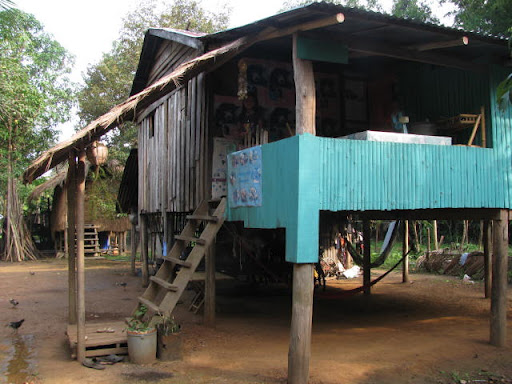
It’s hard to imagine what the town would have looked like before Wildlife Alliance arrived. The visitor center, restaurant, and “pub” (really, a concrete patio with plastic chairs and a cooler filled with beer), together make up nearly half of the town’s establishments. For two dollars a night, I stayed in a homestay and lived as the locals do on a thin mattress under mosquito netting, with a bucket of cold water by the outhouse for a shower, and a car battery if I wanted to use the fan or light (but not both). These amenities place Chi Phat above average for rural Cambodia. According to 2008 World Bank data, only 18 percent of rural areas had access to improved sanitation and only 56 percent had access to an improved water source.
Poaching Persists
Real change has certainly hit Chi Phat, but illegal activities persist, as a Wall Street Journal review of the project noted. In one Wildlife Alliance survey, 95 percent of members participating in the project made less than 80 percent of their previous income and 12 percent of people made less than 50 percent. “That, to me, is a red flag,” Director of U.S. Operations Michael Zwirn acknowledged to me. Nevertheless, he said “it is well documented that it’s the most lucrative community-based ecotourism project in Cambodia. That doesn’t mean that everyone is making money, or that they’re making enough money, but the community is clearly benefiting.”
Harold de Martimprey, Wildlife Alliance’s community-based ecotourism project manager, told me in an email interview:We monitor closely the impact of the CBET project on the diminution of poaching and deforestation. We estimate that since the beginning of the project, the illegal activities have decreased by almost 70 percent.
As Chi Phat ecotourism continues to scale up, de Martimprey expressed hope that more and more villagers would participate in the project and stop destructive livelihoods.
After four years, Chi Phat has already developed enough to operate financially on its own. Wildlife Alliance will stop funding the project later this year and transition it towards total self-sustainability. The plan is to then ramp up efforts at a neighboring project in Trapeang Ruong, due to open to the public next month.
A Land of Opportunity
So far Chi Phat lacks much of what do-gooder tourists are hoping to find when they come in search of ecotourism. There is little to no information about the work of Wildlife Alliance and how ecotourism benefits the town, or the health, education, and economic benefits the villagers have received. A little more obvious justification for ecotourism’s inflated prices might appease the average backpacker used to exploitatively lower prices elsewhere in the country. The guides, staff, and host families for the most part speak little English, which does not bode well for its tourism potential. “This is a work in progress,” said de Martimprey.
Most of my time in Chi Phat, I felt like the only foreigner to ever set foot in the town – refreshing after witnessing much of the rest of Southeast Asia’s crowded backpacker scene. As Chi Phat continues to grow, hopefully it will “bring in enough people to support the community without the adverse effects of tourism,” said Zwirn. “They don’t want it to turn into the Galapagos.” Thankfully, de Martimprey told me, “Chi Phat is far from reaching this limit and can be scaled up to much bigger operation,” without negatively impacting the environment.
Luckily, plans to build a highly destructive titanium mine near the town were recently nixed by Prime Minister Hun Sen in what was an unexpected victory over industrial interests. However, soon after, the town was again under threat – this time by a proposed banana plantation nearby.
“The Cardamom Mountains are still seen as a land of opportunity for economic land concessions for some not-so-green investors looking at buying land for different purposes, and often disregarding the interest of the local people,” said de Martimprey.
Eventually Zwirn hopes that as more tourists come to the Cardamoms, they will become “a constituency for conservation,” he said. “We need to build a worldwide awareness of the Cardamoms as a destination, and as a place worth saving.”
Sources: BBC, IFAD, Phnom Penh Post, New York Times, United Nations, Wall Street Journal, Wildlife Alliance, World Bank, World Wildlife Fund.
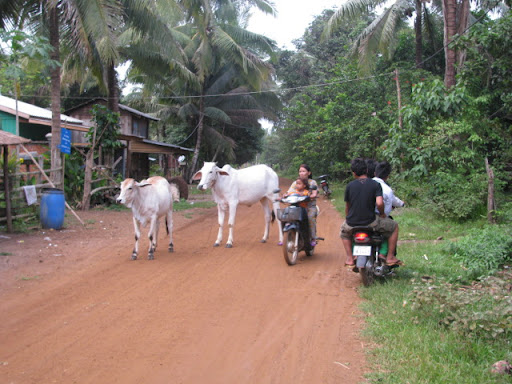
Photo Credit: Hannah Marqusee. -
Managing Our Forests: Carbon, Climate Change, and Fire
›“We cannot manage our planet if we cannot manage our forests,” said William Sommers, a research professor with the Center for Climate and Society at George Mason University, during a recent event at the Woodrow Wilson Center. The event, which coincided with the International Year of Forests, was the fourth in a series co-sponsored by George Mason University and the Environmental Change and Security Program on “Managing the Planet.” Sandra Brown, director and chief scientist of the Ecosystems Services Unit at Winrock International and David Cleaves, climate change advisor to the chief of the U.S. Forest Service, joined Sommers and moderator Thomas Lovejoy, professor at George Mason, to discuss the impact of climate change, carbon, and fire on the world’s forests. [Video Below]
Fire: A “Critical Element”
“Forests have evolved over Earth’s history,” said Sommers, with fire being a “constant shaper” of this evolution. Humans first used fire as a tool about 400,000 years ago, and around 10,000 years ago, we began using fire for agricultural purposes, which, Sommers said, can be considered the beginning of forest management.
The resulting carbon dioxide (CO2) emissions have been an important consequence of this human intervention, Sommers said. CO2 emissions have an “exceptional persistence” in the atmosphere, which, explained Sommers, “commits us to irreversible warming over the next 1,000 years.”
In order to counteract these warming effects, a replacement for the “business-as-usual” approach is needed, Sommers said. If not, he warned, CO2 concentrations could reach a thousand parts per million by the end of the century: “It has been 30 to 100 million years since Earth experienced that level of atmospheric CO2 concentration, and Earth was extremely warm at that time.”
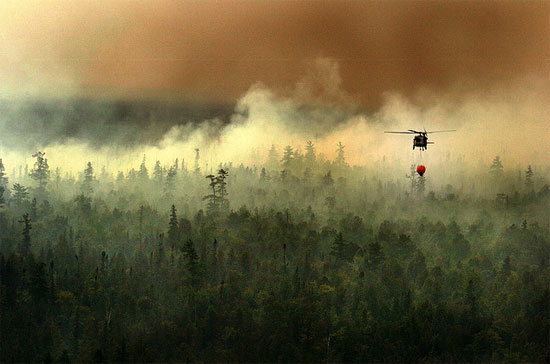
“Fire remains a critical element of the earth’s system and is highly sensitive to climate change,” said Sommers. The potential feedback relationship between fire and climate change was illustrated in dramatic fashion in the summer of 2010 with the outbreak of wildfires in Russia after the hottest summer temperatures on record.
Time is running short, Sommers warned, to answer the question of whether humans can anticipate and respond to climate change and manage forests in a sustainable manner.
Reducing Emissions & Improving Management
“Logging can be well-planned and well-designed or maybe not so well-planned,” said Brown as she spoke about her research on the logging industry in the tropics. Sustainable forest management in the tropics is still “a bit of the wild west” in some countries, though the situation is improving slightly, she said.
One way to improve management and reduce greenhouse gas emissions would be through the REDD+ (Reducing Emissions from Deforestation and Degradation) program of the United Nations. REDD+ can provide incentives, Brown said, for people to come up with useful innovations and improvements to forest management. But, she warned, “the longer we keep waiting, [the more] forests are diminishing.”
When a tree is felled, Brown said, there is a lot of collateral damage. An estimated one billion metric tons of CO2 are released every year from logging in the tropics of Africa and Latin America, she explained. One-half of these emissions are from the harvesting itself and the other half is from incidental damage and infrastructure, such as from the skid trails and haul roads needed to transport the logs out of the forest.
Therefore, it is important for all possible reduction steps to be taken, Brown said: “Where we have opportunities to produce goods with reducing emissions, we need to take those opportunities. We just can’t keep thinking, ‘That’s too small to worry about.’ If there’s what we call ‘low-hanging fruit,’ why not go for it?”
In order to reduce emissions and improve management, Brown suggested reducing avoidable waste by trimming more off of felled logs to increase volume, creating a management plan wherein felled logs are accurately mapped and skid trails are better planned, and using silvicultural treatments to speed the forest’s recovery.
Integrating Climate Change Into Risk Management
The job of the U.S. Forest Service has always been that of a “stress manager,” said Cleaves. Climate change is likely to ramp up existing stressors, such as drought and wildfires, which is why it is necessary for the Forest Service to integrate climate change adaptation techniques into the existing stress manager role. “We feel that there is no such thing as a separate climate change program,” he said.
Many difficult choices will have to be made to address climate change, Cleaves said: “We can’t afford the scale of the problem; we can’t afford to solve it all. We need to be able to prioritize.” These choices will have to be based on economic, social, and ecological values in order to “manage risks around the full sweep of the elements of sustainability,” he said.
The country’s forests are changing and we have already seen whole system change, Cleaves explained. For example, climate change has altered snow cover patterns leading to the decline of over half a million acres of yellow-cedar forest in Alaska.
Other threats facing U.S. forests include disease (such as white pine blister rust), increased variability of fires, increased housing growth near forested areas, and the possibility of forests turning from carbon sinks into carbon sources. That is to say, as forests are destroyed through fires, clearing, or disease, they release back into the environment the carbon they have absorbed.
Risk must be integrated into the decision-making process of the agency, and to this end the Forest Service has created the National Roadmap for Responding to Climate Change. But in order to meet these climate change challenges, Cleaves said, “we have to get moving.”
Sources: U.S. Fish and Wildlife Service, USA Today.
Photo Credit: “Michigan,” courtesy of flickr user The U.S. Army.