-
Education as a Conservation Strategy – Really?
›
The original version of this article appeared in The Nature Conservancy’s October issue of their Science Chronicles newsletter.
It seems like everywhere you turn recently, you hear how the planet’s population is headed to 10 billion. And obvious questions follow: How can we balance far more people with the natural resources needed for their survival? How will we get more food? How will we get more energy?
-
Population and Environment in Saadani National Park, and Repositioning Family Planning in Sub-Saharan Africa
›
Tanzania’s Saadani National Park is a hotbed of biodiversity and, like other national parks in the region, it’s surrounded by human activity. A report by the BALANCED Project, “Population, Health, Environment Situational Analysis for the Saadani National Park Area, Tanzania,” provides a snapshot of the population, health, and environment situation inside the park to serve as a baseline for future activities of the Tanzania Coastal Management Partnership (TCMP) – a joint initiative of the government of Tanzania, USAID, and the University of Rhode Island’s Coastal Resources Center. A behavioral monitoring system implemented in June 2009 used surveys that reached a total of 437 respondents (54 percent women) from eight villages to analyze the “behaviors that positively and negatively influence the utilization and condition of natural resources.” The surveys found that arable land is scarce, fisheries are being depleted, and people have inadequate access to healthcare, water, sanitation, fuel, and family planning resources. The results suggest a strong case for expanding TCMP’s existing integrated approach – combining HIV/AIDS, conservation, and livelihoods goals – to include promotion of positive behavior changes, particularly as they relate to family planning and the effects of population growth on biodiversity loss and resource depletion.
-
Who Are the Most Vulnerable to Ocean Acidification and Warming?
›In 2011, a record 34 billion cubic tons of carbon dioxide were emitted from man-made sources. Half the emitted CO2 stays in the atmosphere, about a quarter is absorbed on land (as trees grow, for example), and the remainder is absorbed by the ocean. Unsurprisingly, this incredible amount of carbon dioxide significantly changes the ocean environment. Over time, increased absorption of carbon dioxide in the oceans has led to ocean acidification, and overall warming has also led to warming of ocean waters – both changes impact marine ecosystems and the people who rely on them.
-
Manipadma Jena, Inter Press Service
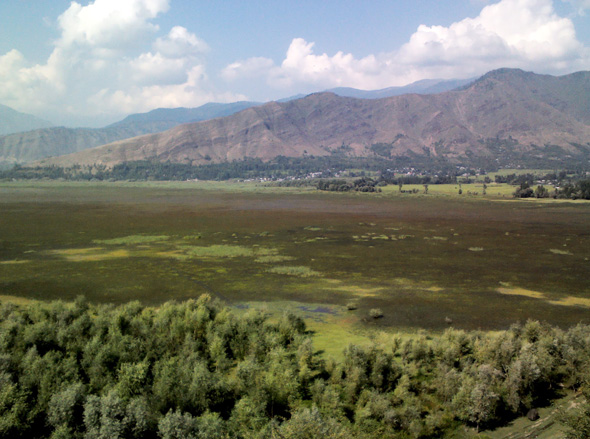
A Lake of Hope and Conflict
›October 4, 2012 // By Wilson Center StaffThe original version of this article, by Manipadma Jena, appeared on Inter Press Service.
Parvez Ahmad Dar climbs three hours to reach the hilltop, generator-equipped tourist center in Ajaf village, 35 kilometers from Srinagar, to recharge his mobile phone.
The 46-year-old president of the Wular Valley People’s Welfare Forum is in high demand as an activist and organizer – he cannot allow the long power outages in northern India’s Kashmir Valley to cut off communication with his constituency.
-
Geoff Dabelko on the Evolution of Integrated Development and PHE
›August 27, 2012 // By Schuyler Null“Population-health-environment [PHE] connections have really been a focus of ours here at the Wilson Center for the last 15 years,” said outgoing ECSP Director Geoff Dabelko in an interview at the Wilson Center. The goal of ECSP’s project – HELPS (health, environment, livelihoods, population, and security) – is “really trying to understand these issues together.”
-
Artisanal Gold Mining Threatens Riverine Communities in Guyana
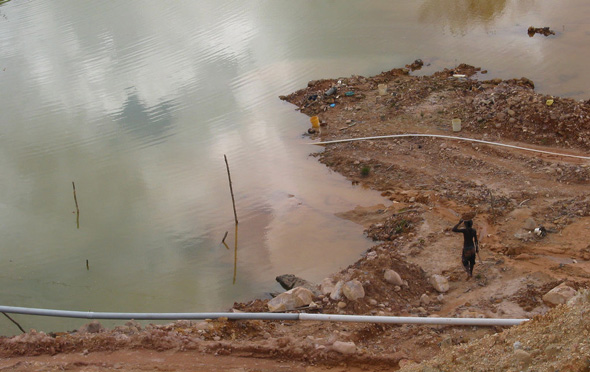
›August 14, 2012 // By Keenan Dillard“Sometimes we make sure that we catch enough rainwater to use or we would have to search out the creeks to for water clean enough to drink,” said Guyanese villager Fabian George in a June interview with the United Nations University. The negative effects of a mining boom fueled by surging gold prices have become so widespread in the small South American country, which is about the size of Idaho, that the government has temporarily stopped issuing new gold and diamond mining permits.
The ban, which was announced on July 6 and is still in effect, will last until officials are able to complete a review “of the current management/oversight arrangement of river and tributary mining.” A statement released by the Guyanese Ministry of Natural Resources and Environment explained that “damage caused by increasingly irresponsible mining in Guyana’s rivers and tributaries,” has been a cause of major concern for citizens who depend on them to survive.
Guyana, a former colony of both the Netherlands and the United Kingdom, has a population that is predominantly split between people of African and East Indian descent who were recruited as indentured servants for the tea industry during the 19th century. Amerindians – indigenous Guyanese people – made up just nine percent of the population, as of the most recent census in 2002. A vast majority of Guyanese (71.5 percent) live in rural villages, most of which are located near the coastline. The remaining population resides in the capital, Georgetown, or one of four other urban centers.
While mining is responsible for just nine percent of the country’s GDP, it accounts for almost 60 percent of exports. Gold, bauxite (the precursor to aluminum), and diamonds are extracted and exported to countries including the United States, Canada, and the United Kingdom. In 2011 Guyana produced 363,000 ounces of gold, which represents a 23 percent increase since 2009 and can be attributed “to consistently active mining by small- and medium-scale miners that benefited from the continued increase in gold prices on the international market,” according to the U.S. Geological Survey. The Communities and Small Mining Initiative reports that more than 15 percent of Guyanese citizens economically depend on small-scale mining to support themselves.
Dredging the Jungle
These small-scale operations, also known as artisanal mines, generally employ rudimentary methods to extract and process minerals, as opposed to large scale industrial operations. As of 2011 there were less than 10 industrial-scale companies with any sort of presence in Guyana, while the number of licensed artisanal miners is more than 14,000, according to the government. Although the latter usually consists of just a few workers, they are also incredibly environmentally destructive.
The methods used most by artisanal miners in Guyana begin in one of two ways, according to the Blacksmith Institute: either large water hoses are used to quickly erode a plot of land or barges are used to dredge up sediment from the bottom of a river. Then, they “combine mercury with gold-laden silt to form a hardened amalgam that has picked up most of the gold metal from the silt. The amalgam is later heated with blow torches or over an open flame to evaporate the mercury, leaving small gold pieces.”
The environmental impacts of artisanal mining in Guyana are well-documented and include “drastic increases in the sediment content of river water, increased levels of mercury in river water, creation of artificial sandbars in rivers, deforestation and degradation of land fertility, and mosquito infestation and malaria,” according to a Harvard Human Rights Program study.
A report issued by the Guyanese Ministry of Natural Resources and the Environment last month noted that current environmental problems associated with mining operations include, “widening of the river channel[s] and weakening of soil at river banks resulting in toppling of trees into the river course, blockages and changes to the main river channels resulting in un-navigable channels in the dry seasons.” High levels of turbidity, which is a measure of water clarity, have resulted in the deaths of some fish species that serve as a primary food source for riverine Guyanese communities.
The health of Guyanese rivers and streams is of particular concern to the Amerindians who make up the majority of the population in Guyana’s hinterlands where most artisanal mining occurs. The Harvard Human Rights Program report points out that indigenous people, most of whom survive on subsistence agriculture, are disproportionately affected due to their dependence on waterways for food, transportation, communication, and sanitation.
Adapting to a “Changing World”
Over the past few months the environmental, social, and health effects caused by gold mining in Guyana has become serious enough to warrant a temporary governmental halt to the issuance of any new licenses. In the meantime, scientists employed by the Guyana Geology and Mines Commission are attempting to find a viable alternative to using mercury – the most damaging practice of artisanal miners – amid increasing pressure from the international community. In addition to polluting waterways and contaminating fish, mercury releases highly toxic vapors when it is burned away from gold, which can damage both internal organs and unborn children.
Damages from the run-away mining sector aren’t limited to the environment. The Amerindian Peoples’ Association in Guyana blames increases in prostitution, drug trafficking, and human trafficking on the country’s gold rush. According to the UN, “interior police investigated nearly 50 bush murders last year, about 40 more than normal, many from fights over gold and women or from drunken rum sprees by miners on time off.” Unlicensed mines and illegal aliens who cross the border from Brazil, compounded with a large smuggling operation that bypasses Guyanese gold taxes via Suriname, have left the government struggling to “enforce regulations, hire enough trained jungle mines inspectors, qualified geologists and other personnel to keep pace, and generally maintain order,” according to the UN.
On July 28, the Guyana Geology and Mines Commission issued a statement regarding the future of mining, and stressed the need to create a “holistic plan to have the industry adapt to a changing world.” For now it seems that complaints from Amerindian groups and other Guyanese citizens are the driving force in affecting change within the country, but opposition from interest groups such as the Guyana Gold and Diamond Miners Association is intense. The government has acknowledged international pressure too as a factor in its decision to suspend new permits and recently began a partnership with the United Nations Development Programme to develop a natural resource management plan. It remains to be seen exactly what measures will be taken to address the serious problems facing the Guyanese people as a result of gold mining, but given the strong economic imperative for artisanal miners and the severity of environmental and human health effects, action must be taken soon.
Keenan Dillard is a cadet at the United States Military Academy at West Point and an intern with the Woodrow Wilson Center’s Environmental Change and Security Program.
Sources: Amerindian Peoples Association, Blacksmith Institute, Bureau of Statistics (Guyana), Center for International Forestry Research, Central Intelligence Agency, Communities and Small-Scale Mining, The Daily Herald, Demerara Waves, Environmental Protection Agency, Guyana News and Information, Harvard Law School, Inter Press Service, Ministry of Natural Resources and the Environment (Guyana), National Communications Network (Guyana), Stabroek News, United Nations, U.S. Geological Survey, USAID.
Photo Credit: “Gold Mine (Mahdia, Guyana),” courtesy of flickr user caribbeanfreephoto (Georgia Popplewell). -
PBS ‘NewsHour’ Reports on Reasons for Optimism Amid Niger’s Cyclical Food Crises
›Set in the middle of the arid region between the Sahara desert and the equatorial savannas of Africa known as the Sahel, Niger is no stranger to drought. In recent years, however, droughts have hit more often, started earlier in the season, and lasted longer, creating a cycle of food insecurity that is becoming more difficult to break.
-
Linking Water, Sanitation, and Biodiversity Conservation in Sub-Saharan Africa
›July 25, 2012 // By Kate DiamondWater, poverty, and the environment are “intrinsically connected,” and the development programs targeting them should be as well, writes David Bonnardeaux in Linking Biodiversity Conservation and Water, Sanitation, and Hygiene: Experiences From sub-Saharan Africa, a new Africa Biodiversity Collaborative Group briefing. In a review of 43 programs across sub-Saharan Africa, including four in-depth case studies, Bonnardeaux finds that natural synergies between water, sanitation, and hygiene (WASH) programming and conservation work provide opportunities for greater effectiveness in addressing both.
Integrating WASH and Conservation: A Natural Match
“WASH interventions are generally reliant on natural resources and processes, whether indirectly or directly,” he writes, and “WASH services produce outputs that are potentially detrimental to the environment if not managed properly.” At the same time, poor ecosystem management can “threaten biodiversity and jeopardize the vital services that these ecosystems in turn provide to humanity, in the form of regulation of stream flow, erosion prevention, water filtration, aquifer recharge, carbon sequestration, wildlife habitat, outdoor recreation, and flood abatement.”
Given the connections between the two, WASH and conservation efforts would benefit from programmatic integration, according to Bonnardeaux. To bring the two closer together, he recommends three tools for policymakers and development programmers: integrated river basin management and basin planning; payments for watershed services (also known as payments for environmental services); and population, health, and environment (PHE) programming.
A Whole-of-Basin Perspective
“The causal link between WASH and ecosystem health and integrity is most accentuated when
dealing with freshwater ecosystems,” writes Bonnardeaux.
In Tanzania’s Pangani River Basin, one of his in-depth case studies, a growing reliance on hydropower, urbanization, and increased agricultural demand is altering a valuable ecosystem marked by endemism and iconic landscapes, including Mount Kilimanjaro.
In response, the government and international organizations are partnering through the Pangani River Basin Management Project to developing a greater understanding of the basin’s hydrology and ecosystem, how local populations interact with that ecosystem, and how potential development scenarios could impact the basin in the future. That knowledge, paired with an intensive training program for local water officials, is enabling stronger integrated resource management, which in turn could lay the groundwork for integrating WASH and conservation interventions, writes Bonnardeaux.
Economic incentives – in this case, payments for watershed services – offer another valuable tool for building support for conservation efforts, especially when upstream communities bear a disproportionate burden of safeguarding watersheds.
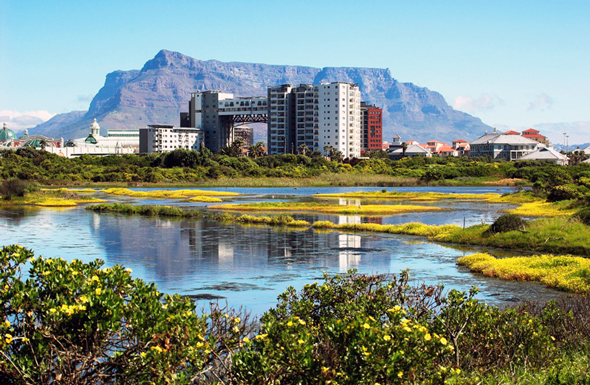
In South Africa, another case study country, “increased economic development and urbanization have taken its toll on” the country’s wetlands, while unemployment and poverty have remained a persistent problem in slum areas, writes Bonnardeaux. Through the government-run Working for Wetlands program, both the environmental and socioeconomic problems of development are being targeted for improvement. The program hires “the most marginalized from society” to clear wetlands of invasive plants in order to improve its natural filtration capabilities and, in turn, improves the quality of water feeding the burgeoning urban areas.
Although Working for Wetlands, now 17 years old, has been “hugely successful,” Bonnardeaux warns that such economic incentive programs are, more often than not, extremely difficult to carry out effectively. “While there is great potential for this incentive-based conservation approach,” Bonnardeaux notes, “the reality is there are many barriers to its effective implementation.”
Building Long-Term Support for Conservation With Near-Term PHE Successes
Building support for conservation can be a difficult task. The impacts of conservation programming are “often undervalued,” Bonnardeaux writes, in part because results tend to become apparent only over the longer term. By pairing conservation efforts with nearer-term programming, like PHE efforts targeting immediate health needs, development workers can foster the kind of local support that is essential for pursuing long term goals.
The Jane Goodall Institute’s Lake Tanganyika Catchment Reforestation and Education Project (TACARE), in northwest Tanzania, offers a case in point. Established in 1994, TACARE began as a conservation program meant to protect the areas around Gombe National Park, where Goodall first began her chimpanzee research in the 1960s. Local communities, however, were more interested in better health, “with an emphasis on clear water and reduction in water-borne diseases like cholera,” writes Bonnardeaux.
By adopting local health and poverty priorities, he writes, TACARE was able to establish trust and goodwill with the communities it served, which in turn enabled it to pursue longer-term conservation goals aimed at protecting the region’s natural biodiversity.
Bonnardeaux’s work shows that regardless of how policymakers choose to combine WASH and conservation goals, well-implemented integration can yield immense benefits for practitioners, funders, and local communities.
“Linking various sectors such as WASH, forestry, agriculture, population, and community development,” he writes, “can result in cost and effort sharing which in turn can increase the effectiveness of the project including improved conservation and improved livelihoods and health.”
Sources: Bonnardeaux 2012.
Photo Credit: “Intaka Island towards Table Mountain,” courtesy of flickr user Ian Junor.
Showing posts from category conservation.