• woodrow wilson center
  • ecsp

New Security Beat

Subscribe:
  • rss
  • mail-to
  • Who We Are
  • Topics
    • Population
    • Environment
    • Security
    • Health
    • Development
  • Columns
    • China Environment Forum
    • Choke Point
    • Dot-Mom
    • Friday Podcasts
    • Navigating the Poles
    • Reading Radar
  • Multimedia
    • Water Stories (Podcast Series)
    • Backdraft (Podcast Series)
    • Tracking the Energy Titans (Interactive)
  • Films
    • Water, Conflict, and Peacebuilding (Animated Short)
    • Paving the Way (Ethiopia)
    • Broken Landscape (India)
    • Scaling the Mountain (Nepal)
    • Healthy People, Healthy Environment (Tanzania)
  • Publications
  • Events
  • Contact Us

NewSecurityBeat

The blog of the Wilson Center's Environmental Change and Security Program
Showing posts from category conservation.
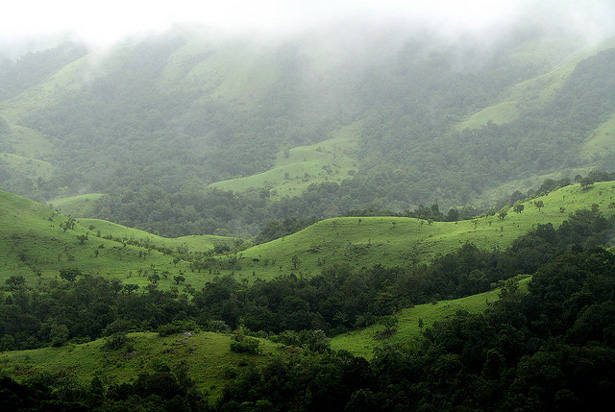
  • Avoiding Adding Insult to Injury in Climate Adaptation Efforts

    ›
    Reading Radar  //  May 3, 2012  //  By Stuart Kent
    Climate change is expected to produce winners and losers – for example, melting ice-caps may open up new economic opportunities for Greenland at the same time as sea-level rise threatens Asia’s bourgeoning coastal mega-cities. The same can be said about plans to address climate change, from both the mitigation and adaptation perspectives. A special issue of Global Environmental Change, “Adding Insult to Injury: Climate Change, Social Stratification, and the Inequalities of Intervention,” takes on this topic, with two case studies providing particularly compelling evidence.

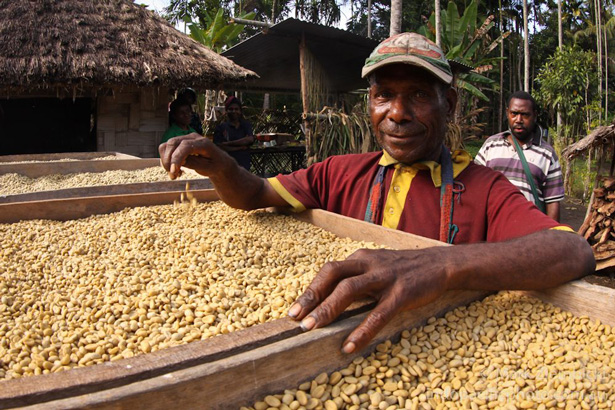
    Betsy Beymer-Farris and Thomas Bassett argue in their contribution, “The REDD Menace: Resurgent Protectionism in Tanzania’s Mangrove Forests,” that efforts to ensure REDD readiness in Tanzania have placed local communities at risk of forced evictions, shattered livelihoods, and persecution by both the state and conservation community. Contrary to dominant narratives that “portray local resources users, the Warufiji, in negative terms as recent migrants who are destroying the mangrove forests,” the authors say that they in fact depend upon “allow[ing] the mangroves to regenerate naturally while preparing new rice fields.” “To carbon traders, however, an uninhabited forest greatly simplifies the logistical tasks of monitoring and paying for ecosystem services,” assert the authors. This has resulted in declaration of local communities as squatters, illegally invading the forest. Government officials have repeatedly voiced threats of eviction. As well as increasing the potential for social tension, the study concludes that, “it is difficult to reconcile Tanzania REDD’s participatory and benefit sharing goals with the rhetoric, practices, and plans of the Tanzanian state.”

    In “Accessing Adaptation: Multiple Stressors on Livelihoods in the Bolivian Highlands Under a Changing Climate,” Julia McDowell and Jeremy Hess present evidence about how specifically-tailored adaptations to climate change risk increasing vulnerability to a complex web of other, less obvious stressors. The study draws evidence from the livelihoods of historically marginalized indigenous farmers in highland Bolivia. The authors, who see “adaptation as part of ongoing livelihoods strategies,” use the case to “explore the tradeoffs that households make when adjustments to one stressor compromise the ability to adjust to another.” For instance, socio-economic stressors have forced many farmers to more closely couple their livelihoods with the market economy by growing more cash crops, intensifying land use, participating in off-farm laboring, and relying on irrigated agriculture. However, the shift to more market-orientated livelihoods has also increased their sensitivity to climatic stress. “As stressors compounded, the ability to mobilize assets became constrained, making adaptation choices highly interdependent, and sometimes contradictory,” the authors write. Avoiding these sorts of lose-lose situations, requires “ensuring sustained access to assets, rather than designing interventions solely to protect against a specific stressor.”
    MORE
  • Uganda’s Demographic and Health Challenges Put Into Perspective With Newfound Oil Discoveries [Part Two]

    ›
    April 26, 2012  //  By Kate Diamond

    Read part one, on Uganda’s demographic and health challenges, here.

    “We never thought we would end up having the same problems here as the people in the Niger Delta. But now I’m worried,” Henry Ford Mirima, a spokesman for Uganda’s Bunyoro kingdom, said last fall in Le Monde Diplomatique. The kingdom – which calls itself East Africa’s oldest – sits along Lake Albert, where over the past seven years British oil company Tullow Oil has discovered oil reserves big enough to produce an estimated 2.5 billion barrels.

    MORE
  • Karen Newman: Rio+20 Should Re-Identify Family Planning As a Core Development Priority

    ›
    April 25, 2012  //  By Kate Diamond
    Energizing people around family planning can be difficult, “because donors, like everyone else, like something that’s new,” said Karen Newman, coordinator for the UK-based Population and Sustainability Network. “There’s nothing new about family planning. The technology is safe, effective, it’s acceptable, and it works. We just need a lot more of it out there to be accessible to a lot more people.”

    Newman spoke to ECSP at the 2012 Planet Under Pressure conference about her hopes for the upcoming Rio+20 sustainable development conference, which marks the 20-year anniversary of the UN Earth Summit.

    “What we want is increased investment in voluntary family planning services that respect and protect rights,” Newman said, “and I think that Rio represents a fabulous opportunity for us to re-identify family planning as a core development priority.”

    Newman also hopes the Rio conference will lead to “an integrated look at sustainable development, so that… it isn’t just about the green economy and institutional framework, it’s looking at sustainable development in the round.”

    Government development programs and policymakers need to adapt their bureaucratic processes to the kinds of integrated programming being carried out on the ground, she said. In Madagascar, for example, conservation group Blue Ventures leads an integrated PHE program that cuts across marine conservation, family planning, and healthcare sectors. “Now I defy you to find an EU budget line that would be broad enough to embrace marine conservation and family planning in the same project line,” said Newman.

    “The first thing we need is that level of integrated thinking – not just in Rio, but also in the way that we conceptualize the work that needs to be done and we facilitate the availability of funding streams that can fund that kind of integrated program.”

    Lastly, Newman hopes that the summit in and of itself is successful because of its implications for future development work. As the world gears up to create the next big framework for global development to follow the Millennium Development Goals, Rio is uniquely positioned to set a baseline for what matters and for what the development community is capable of accomplishing.

    “What I want to see is a really sophisticated look at sustainable development, coming up with sustainable development goals in a world that makes sense of seven billion, where there are still millions of women without access to the family planning services that we take for granted,” said Newman, “and taking that concept to the job of developing the post-MDG framework that will frame development for the next 20 years.”
    MORE
  • Karen Newman: Population and Sustainable Development Links Are Complex, Controversial, and Critical

    ›
    April 23, 2012  //  By Kate Diamond
    “The one child family norm in China has fixed the global imagination around population to be around doing something which constricts people’s and women’s choices, rather than expands women’s possibilities to take control of their lives,” said Karen Newman, the coordinator for the UK-based Population and Sustainability Network. But contemporary population programs are about educating people on and providing access to voluntary reproductive, sexual, and maternal health services.

    Newman spoke to ECSP, during the Planet Under Pressure conference this year, about family planning efforts and the connection between population dynamics and the environment.

    “You have what I would describe as a sort of kaleidoscope of complexity” between climate change and population dynamics – not just growth, said Newman, but urbanization and migration.

    For example, China recently overtook the United States as the world’s largest emitter of carbon, and although China has 1.3 billion people compared to the United States’ 310 million, population can hardly be credited as the most important driver for the country’s emissions. “How fair is it [to credit population growth] without in the same nanosecond saying, ‘but most of the carbon that was emitted in China was to manufacture the goods that will of course be consumed in the West?” said Newman.

    “It makes it more difficult to say in a sound bite that ‘OK, population and sustainable development, it’s the same conversation,’ which I believe it to be.”

    The Population and Sustainability Network, working through the Population and Climate Change Alliance, collaborates with international organizations from North America, Europe, Ethiopia, and Madagascar to support on-the-ground groups working on integrated population, health, and environment programming. These programs address environmental issues, like marine conservation and deforestation, while also providing reproductive health services, including different methods of contraception, diagnosis and treatment of sexually-transmitted diseases, antenatal and postnatal care, and emergency obstetric care.

    “As a result of people wanting to place a distance between those coercive family planning programs in the ‘60s and the way that we do reproductive health now…because it’s such a large package, there is a sense that…this reproductive health thing is too much, we can’t really get ahold of this,” said Newman.

    “What I think we need to do is keep people focused on the fact that these are women’s rights,” she said. “But we at the same time have to say ‘this is relevant if you care about sustainable development and the world’s non-renewable resources.’”

    Sources: United Nations Population Division.
    MORE
  • Georgina Mace on Planetary Stewardship in a Globalized Age: Risks, Obstacles, and Opportunities

    ›
    April 18, 2012  //  By Stuart Kent
    “The goal, ultimately, is just to manage our world better,” to have an “integrated system for the environment that is driven by what local communities want and need,” said Professor Georgina Mace, director of the NERC Centre for Population Biology at Imperial College London. Mace spoke to ECSP on the sidelines of the 2012 Planet Under Pressure conference.

    The environmental challenges of humanity are “really twofold,” she said. First, “human societies have grown up at what we now call the local scale…traditionally using the area in which they live.” Communities have always exerted pressures on their local environment but population growth “means those pressures on local landscapes are much greater than they use to be,” said Mace. “We can’t do everything all in the same place,” without the needs of different groups sometimes conflicting.

    Second, “there are connections between societies that are sometimes good but quite often they’re damaging.” For example, the increasingly globalized nature of how we utilize natural resources means that “overuse by one community may affect local people in ways that they have no way of responding to.”

    Taking apart the first of these challenges, Mace explained that “the population growth issue is really a population growth and demographic change [issue].” In places with mature age structures, such as North America, Europe, Russia, South Korea, and Japan, “the concern is about the number of old people dependent on a reducing number of producers in their society,” while in many poorer regions of the globe the concern is about the “many young people who still have to go through their reproductive years.”

    This latter case “looks a horrible problem from the environment point of view,” said Mace, because the areas growing fastest are areas that are “already overused in many ways.” If countries “don’t worry too much about international migration [and] we’re able to accommodate that,” this “demographic divide” could actually be helpful, as countries with growing populations could provide a young, energetic workforce to those that are aging.

    Mace made policy recommendations on different scales, from the local to the planetary. At the local level she encouraged making sure that climate interventions “are actually in concert with what’s going on in the environment.” “Let’s take advantage of ecological resilience, biological adaptation – all the things that nature has provided us with that give us mechanisms for coping,” she said.

    On a broader scale, she recommended intervening to counteract the “damaging drivers of environmental change,” by using geoengineering and better land use planning, “which is essentially gardening the planet.”

    “Both of those offer solutions that are actually incredibly efficient. They also have costs, risks, and obstacles to do with governance, to do with different people being winners and losers, and to do with the fact that we tend to organize our world around nation states and these solutions mostly transcend international boundaries.”

    “That’s a major obstacle,” Mace said, but in the end we need “to have a fully integrated planning system that is not top down but has an overall strategy that seeks to optimize all the things that people want and allows a way for local communities to connect.”

    “I think that’s the big challenge for us – how to get there.”
    MORE
  • Peacemakers or Exclusion Zones? Saleem Ali on Transboundary Peace Parks

    ›
    Eye On  //  April 10, 2012  //  By Stuart Kent
    “Traditionally, natural resources have been thought of as a source of conflict…but what we’ve been trying to do is look at the other side of the story, which is that natural resources, in terms of their quality, can create that impulse for conservation and cooperation,” said Saleem Ali, professor of environmental studies and director of the Institute for Environmental Diplomacy and Security at the University of Vermont, while speaking at the Wilson Center.

    This narrative around peace parks or transboundary conservation areas that are used for peacebuilding is a relatively recent field of research, said Ali. “It’s one thing to have a protected area on a border and have cooperation between friendly parties – like the U.S. and Canada,” he said, “and it’s a totally different thing to explore this in areas where there’s a history of protracted violent conflict.”

    Yet, Ali said, we have “a good institutional framework for understanding what kind of parks could potentially be developed.” Cooperation between Ecuador and Peru in the Cordillera del Condor protected area, for example, is an incidence where transboundary conservation was actually written into the peace process between two warring states. Recent tragedies on the Siachen glaciers highlight another case where calls have been made to use peace parks as a way to demilitarize a contentious border over which India and Pakistan have long argued.

    Questions remain though about the capacity of conservation processes to sustain peace, and “whether micro-conflicts that might arise through any conservation being practiced can be managed effectively.” Peace parks established in South Africa after apartheid, for example, produced “micro-conflicts between the haves and the have-nots – the classic conflict between conservation as an exclusionary arena versus a more inclusionary vision.”

    “A lot of those organizations have learned from those past mistakes and we’re moving in the right direction,” Ali said, “but that’s still an area that requires far more research, and also more applied work, to find the right mix of conservation and economic development.”
    MORE
  • Hotspots: Population Growth in Areas of High Biodiversity

    ›
    From the Wilson Center  //  March 21, 2012  //  By Kate Diamond
    More than one-fifth of the world’s population lives in biodiversity hotspots – “areas that are particularly rich in biodiversity and endemic species,” said John Williams of the University of California, Davis, at the Wilson Center on February 29. And those populations are growing faster than the global average. Add to that the fact that “biodiversity continues to decline globally, despite increasing investments in conservation,” said David Lopez-Carr of the University of California, Santa Barbara, and the need for new approaches to conservation becomes evident. [Video Below]

    Williams and Lopez-Carr were joined by Dr. Vik Mohan, director of the sexual and reproductive health program for Blue Ventures, a London-based conservation nongovernment organization that works with communities on the remote western coast of Madagascar.


    To respond to the demands of the communities and to better protect biodiversity hotspots, the speakers argued that conservation efforts need to incorporate health and livelihood services directed at the growing populations living nearby.

    A Complex Relationship

    “The relationship between population and biodiversity loss or conservation is a pretty complex relationship,” said Williams.

    John Williams on helping people and preserving biodiversity
    He offered Latin America and the Caribbean as an example of the multiple factors that can affect how population and biodiversity interact. Population growth in the region has slowed, and agricultural expansion is driving habitat loss as the population ages and urbanizes and as increasing per capita GDP contributes to higher levels of consumption.

    In the Indo-Pacific region, stretching from East Asia to Australia, high population growth coupled with economic growth has coincided with an increase in the exploitation of rare species for illegal trade, according to Williams. And in Africa, where the population is growing quickly but without comparable economic growth and amid high levels of instability, subsistence drives ecological exploitation.

    Biodiversity and Family Planning in Madagascar

    “People who live in the biodiversity hotspots are typically poorer, typically have poorer access to healthcare than their counterparts in the cities or in the world at large, and typically have poorer health than those counterparts,” said Mohan.

    Blue Ventures has been working in Madagascar since 2003. The island is one of the most biodiverse areas in the world; 80 percent of its plant and animal life is endemic, meaning it exists there and nowhere else, said Mohan. At the same time, Madagascar is one of sub-Saharan Africa’s fastest growing countries, with a population growth rate of 2.9 percent and an average total fertility rate of 4.6 children per woman.

    Blue Ventures initially came to the country to improve conservation in the island’s coastal villages, where residents survive largely on subsistence fishing. But once there, the group quickly found that the population was “growing so rapidly that in spite of our best conservation efforts, the demand for those finite coastal resources [was] outstripping supply,” said Mohan.

    “The number of people who are going out to catch fish to feed their to feed their families is going up exponentially, and those fisherman are having to work harder and harder to catch smaller fish that are farther and farther down the food web.”

    Vik Mohan on Blue Ventures’ work in Madagascar
    Realizing that trend, Mohan said that “just by asking a few very basic questions, we unearthed a huge unmet need for healthcare and a huge unmet need for family planning in particular.”

    In response, Mohan and his colleagues opened up a family planning clinic in Andavadoaka, one of the villages Blue Ventures serves. On the clinic’s first day, Mohan said, “20 percent of all women of reproductive age came asking for contraception.” Following that opening, they “rapidly found [that] this unmet need was mirrored in every single village along the coast that we worked in,” he said. Since then, modern contraceptive prevalence, initially about seven percent, has increased four-fold, while birth rates have fallen by about one-third. All in all, Mohan said, the population of the Velondriake region, where Blue Ventures operates, is five percent smaller now than it would have been without the group’s family planning services.

    Rural Areas Driving Population Growth

    Across the developing world, Lopez-Carr said that unmet need for family planning “remains significantly higher” in biodiversity hotspots. Given that high unmet need, especially in Africa, it is easy to infer that “conservation may be less sustainable…if it does not consider health,” he said.

    In his ongoing research on population and biodiversity, Lopez-Carr looks at how fertility rates compare in and out of hotspot areas and between regional and local levels. At the country and province level, “high-value conservation areas do not have unusually high total fertility rates (TFRs),” he said. But at more localized levels, “in the most remote rural areas, TFRs remain high, and in many cases, in the most remote rural areas, the demand for family planning is still very low,” indicating that these areas are still in the early stages of their demographic transitions.

    The fact that the sub-state picture can look so different from the state-level picture means that there is more work for researchers to do, said Lopez-Carr. “Where the fertility rates are highest is where we have the least data,” he said, and that has significant implications for understanding future population growth.

    Looking at UN population projections, the world’s net population gains will be in its poorest cities, he said, but “virtually all this growth is going to be from migration, fueled by remaining high fertility in rural areas.” And “virtually all of that growth will be predicated upon the timing, magnitude, [and] pace of the fertility transition in rural areas.”

    Better understanding the demographic picture in rural areas is therefore critical – not just to improving health and preserving biodiversity in the world’s hotspots, but to honing down more accurate global population projections as well.

    Event Resources
    • David Lopez-Carr Presentation
    • Vik Mohan Presentation
    • John Williams Presentation
    • Photo Gallery
    • Video
    Photo Credit: “Fisherman Carries Day’s Catch,” courtesy of United Nations Photo.
    MORE
  • John Williams: Helping People and Preserving Biodiversity Hotspots

    ›
    March 16, 2012  //  By Schuyler Null
    “Both humans and the number of species in the world are not evenly distributed across the globe,” said John Williams of the University of California, Davis, who recently spoke at the Wilson Center about his contribution to Biodiversity Hotspots: Distribution and Protection of Conservation Priority Areas. “In particular we find that species diversity is concentrated in what’s called the biodiversity ‘hotspots.’”

    Largely in the tropics, Mediterranean climates, and along mountain chains, biodiversity hotspots are “where there’s a real concentration in number of species and also unique species – plants and animals that exist nowhere else on Earth,” he said.

    “It’s a very complex relationship between biodiversity and human population, because it’s not necessarily [true] that places of high human population are a threat to biodiversity,” said Williams. Many different factors play a role, “like education, like consumption, like economic development, different cultures – how people interface with the natural world – all these things create nuances as far as what that relationship is between biodiversity and where people live.”

    “There are some basic things we can do that are going to be good for human welfare, as well as biodiversity,” he continued. A few are addressing lack of education, especially among girls, in areas of high biodiversity; providing basic health services, including family planning, where rural growth rates are highest; and improving physical access to rural areas to promote economic development.

    “We see there’s a direct correlation between each additional year of schooling a girl has and their fertility during their lifetime,” Williams said. “As people climb out of poverty, they also choose to have smaller, healthier families.”
    MORE
Newer Posts   Older Posts
View full site

Join the Conversation

  • RSS
  • subscribe
  • facebook
  • G+
  • twitter
  • iTunes
  • podomatic
  • youtube
Tweets by NewSecurityBeat

Trending Stories

  • unfccclogo1
  • Pop at COP: Population and Family Planning at the UN Climate Negotiations

Featured Media

Backdraft Podcast

play Backdraft
Podcasts

More »

What You're Saying

  • Volunteers,At,The,Lagos,Food,Bank,Initiative,Outreach,To,Ikotun, Pan-African Response to COVID-19: New Forms of Environmental Peacebuilding Emerge
    Rashida Salifu: Great piece 👍🏾 Africa as a continent has suffered this unfortunate pandemic.But it has also...
  • A desert road near Kuqa An Unholy Trinity: Xinjiang’s Unhealthy Relationship With Coal, Water, and the Quest for Development
    Ismail: It is more historically accurate to refer to Xinjiang as East Turkistan.
  • shutterstock_1779654803 Leverage COVID-19 Data Collection Networks for Environmental Peacebuilding
    Carsten Pran: Thanks for reading! It will be interesting to see how society adapts to droves of new information in...

What We’re Reading

  • Rising rates of food instability in Latin America threaten women and Venezuelan migrants
  • Treetop sensors help Indonesia eavesdrop on forests to cut logging
  • 'Seat at the table': Women's land rights seen as key to climate fight
  • A Surprise in Africa: Air Pollution Falls as Economies Rise
  • Himalayan glacier disaster highlights climate change risks
More »
  • woodrow
  • ecsp
  • RSS Feed
  • YouTube
  • Twitter
  • Facebook
  • Home
  • Who We Are
  • Publications
  • Events
  • Wilson Center
  • Contact Us
  • Print Friendly Page

© Copyright 2007-2021. Environmental Change and Security Program.

Woodrow Wilson International Center for Scholars. All rights reserved.

Developed by Vico Rock Media

Environmental Change and Security Program

Woodrow Wilson International Center for Scholars

Ronald Reagan Building and International Trade Center

  • One Woodrow Wilson Plaza
  • 1300 Pennsylvania Ave., NW
  • Washington, DC 20004-3027

T 202-691-4000