

-
In $800 Billion Economic Stimulus Package, Not a Penny for Family Planning
›February 11, 2009 // By Rachel WeisshaarA House-Senate conference committee, with significant input from the White House, is currently striving to produce a compromise stimulus bill that will satisfy all three players. One item that won’t be in the bill is funding for family planning, which was nixed from the House version late last month. The proposal to include money for contraception—which would have been part of a bundle of funds to help states with Medicaid costs—faced high-profile opposition from conservatives, who argued that it would not stimulate the economy. House Speaker Nancy Pelosi, responding to the criticism, countered, “The states are in terrible fiscal budget crises now…one of the initiatives you mentioned, the contraception—will reduce costs to the states and to the federal government.”
It turns out that the debate over whether population growth is a net gain or loss for the economy has been going on for decades. According to Population Matters: Demographic Change, Economic Growth, and Poverty in the Developing World (see ECSP event), edited by Nancy Birdsall, Allen Kelly, and Steven Sinding, in developing countries, rapid population growth slows economic growth, and rapid fertility decline reduces poverty. Furthermore, as described in “Poor Health, Poor Women: How Reproductive Health Affects Poverty,” research by Margaret Greene and Thomas Merrick found that poor reproductive health—which includes unmet need for family planning—negatively impacts certain measures of poverty, including health and educational attainment.
Academics aren’t the only ones exploring these concepts; the popular press has also taken on the question of how population growth affects economic growth. The Christian Science Monitor published “Can Obama’s family-planning policies help the economy?,” which Population Connection’s Marian Starkey criticized for failing to adequately answer the question in its headline. MarketWatch published an op-ed contending that population growth is the world’s biggest economic problem. On the other side of the debate, the Wall Street Journal argued, “A smaller workforce can result in less overall economic output. Without enough younger workers to replace retirees, health and pension costs can become debilitating. And when domestic markets shrink, so does capital investment.”
Population-poverty links are incredibly complex, and it’s worth paying attention to the different dynamics between—and among—developing and developed countries, as well as the distinction between the larger goal of economic growth and the more targeted aim of jumpstarting an economy out of a recession. Nevertheless, policymakers don’t have to be flying blind when it comes to the question of whether access to contraceptives affects economic growth. Demographers and economists have been studying these relationships for a long time, and although they may never have complete answers, they have already come up with some valuable insights. -
Global Public Health: An Agenda for the 111th Congress
›February 11, 2009 // By Gib Clarke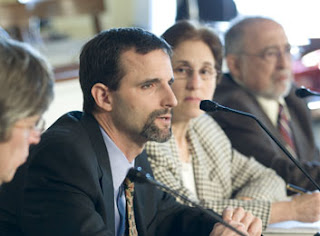 This is an exciting time to be working global public health, with more attention and money going to the field in the last decade than perhaps ever before. In the past, the struggle has been to direct more money and attention to these issues, but recent efforts have focused more on maximizing funds’ impact—by strengthening health systems, focusing on prevention, and finishing so-called “unfinished agendas” in maternal health, child mortality, and family planning. In my remarks at a recent panel on foreign policy challenges facing the 111th Congress, I focused on four issues: infectious diseases, neglected health issues, funding, and capacity building.
 -
Deeper Pockets or Smarter Spending? Reforming U.S. Foreign Assistance
›November 16, 2008 // By Karen Bencala There are two things we know for sure in Washington these days: First, the incoming Obama administration is likely to bring change on a wide variety of topics; and second, U.S. foreign assistance is in dire need of a change. You are probably already aware of the plethora of policy papers on how the U.S. Agency for International Development (USAID) and the Department of State should be reorganized to increase their effectiveness. There are also multiple initiatives striving to boost the prominence of neglected issues like water. What is lacking is an integrated strategy addressing both our domestic and international goals that would in turn suggest organizational reforms for the federal government.
As you read this, the Obama transition team is planning how to tackle major international challenges, including the financial crisis, energy supply, climate change, food security, global health threats, institution-building and governance, and global poverty. International development, as part of an integrated strategic plan, is an important part of the solution to all of these issues. Unfortunately, the current system is dysfunctional. Existing development capacities are spread throughout the executive branch—across 12 government departments, 25 government agencies, and almost 60 government offices—and, in some cases, are outsourced to the private sector. No one person or office is charged with priority-setting, planning, budgeting, implementation, or evaluation.
Wilson Center Senior Scholar John Sewell and I spent this past spring meeting with a group of experts with a wide range of expertise to develop a memo that sets out how such a strategy should be developed and implemented. In A Memo to the Next President: Promoting American Interests Through Smarter, More Strategic Global Policies, we recommend the appointment of a high-level individual on the president’s staff to develop, implement, and monitor—in consultation with key members of Congress—a government-wide strategy to promote U.S. interests abroad. At some point, larger organizational questions will need to be addressed, but the first step toward effectively tackling these challenges is creating an overall strategy to meet the country’s goals and priorities.
Clearly, the sort of integrated planning we are recommending has great relevance for many of the topics discussed here on the New Security Beat. Whether we are talking about climate change as a national security threat or the relationship between conservation efforts and population, there is a need for a broader understanding of how these issues—and their potential solutions—affect one another. With dramatic changes in the White House and Congress and with a broad consensus that U.S. foreign policy efforts are insufficient, the time is ripe for an overhaul in our strategies.
To read more about reforming U.S. foreign assistance, check out these blogs: -
A Roadmap for Future U.S. International Water Policy
›When I tell people I have been working on a report about U.S. international water policy, they usually respond with the same sardonic question: “The United States has an international water policy?” The answer, of course, is complicated. Yes, we have localized approaches to water challenges in parts of the developing world, and we have more than 15 government agencies with capacities to address water and sanitation issues abroad. And yes, the State Department and the U.S. Agency for International Development published a joint strategic framework this year for action on water issues in the developing world.
However, the U.S. government (USG) does not yet have an overarching strategy to guide our water programs abroad and maximize synergies among (and within) agencies. Furthermore, the 2005 Senator Paul Simon Water for the Poor Act—which calls for increased water and sanitation assistance to developing countries—has yet to be funded and implemented in a fashion that satisfies lawmakers. In fact, just last week, legislation was introduced in both the House and the Senate to enhance the capacity of the USG to fully implement the Water for the Poor Act.
Why has implementation been so slow? An underlying problem is that water still has no institutional home in the USG, unlike other resources like agriculture and energy, which have entire departments devoted to them. In the current system, interagency water coordination falls on a small, under-resourced (yet incredibly talented and dedicated) team in the State Department comprised of individuals who must juggle competing priorities under the broad portfolio of Oceans, Environment, and Science. In part, it is water’s institutional homelessness that hinders interagency collaboration, as mandates and funding for addressing water issues are not always clearly delineated.
So, what should be done? For the last year and a half, the Center for Strategic and InternationalStudies’ (CSIS) Global Strategy Institute has consulted with policy experts, advocates, scientists, and practitioners to answer this million-dollar question. In our report, Global Water Futures: A Roadmap for Future U.S. Policy, we conclude that if we are serious about achieving a range of our strategic national interests, water must be elevated as a priority in U.S. foreign policy. Water is paramount to human health, agricultural and energy production, education, economic development, post-conflict stabilization, and more—therefore, our government’s organizational structure and the resources it commits to water should reflect the strategic importance of this resource.
We propose the creation of a new bureau or “one-stop shop” for water policy in the State Department to lead in strategic planning, implementation, and evaluation of international water programs; mobilize resources in support of water programming overseas; provide outreach to Congress and important stakeholders; and serve as a research and information clearinghouse. This would require significant support from the highest levels of government, increased funding, and greater collaboration with the private and independent sectors.
The current economic crisis means we are likely to face even greater competition for scarce foreign aid resources. But I would argue—paraphrasing Congressman Earl Blumenauer at our report rollout—that relatively little funding toward water and sanitation can have a significant impact around the world. As we tighten our belts during this period of financial instability, it is even more important that we invest in cross-cutting issues that yield the highest returns across defense, development, and diplomacy. Water is an excellent place to start.
Rachel Posner is a research associate at the Center for Strategic and International Studies’ Global Strategy Institute.
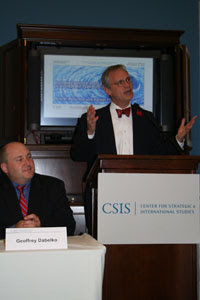
Photo: Environmental Change and Security Program Director Geoff Dabelko and Congressman Earl Blumenauer (D-OR) at the launch of Global Water Futures: A Roadmap for Future U.S. Policy. Courtesy of CSIS. -
PEPFAR Boon to U.S. National Security, Says Senator Richard Lugar
›July 17, 2008 // By Jackson DroneyIn a rare display of bipartisan unity, the U.S. Senate voted 80-16 Wednesday to reauthorize the President’s Emergency Plan for AIDS Relief (PEPFAR). Originally passed in 2003 and set to expire this September, the White House credits PEPFAR with delivering antiretroviral drug treatment to 1.7 million people worldwide.
Reflecting the bipartisan support of the program, the top two members of the Senate Foreign Relations Committee heaped praise on the program and the president. Senator Joseph Biden (D-DE), chairman of the committee, said the program is “the single most significant thing the president has done.” Senator Richard Lugar (R-IN), the committee’s ranking member, argued eloquently that PEPFAR benefits U.S. national security and foreign policy. During the floor debate, he made the following statement:We should understand that our investments in disease prevention programs have yielded enormous foreign policy benefits during the last five years. PEPFAR has helped to prevent instability and societal collapse in a number of at-risk countries; it has stimulated contributions from other wealthy nations to fight AIDS; it has facilitated deep partnerships with a new generation of African leaders; and it has improved attitudes toward the United States in Africa and other regions.
The Senate legislation extends the program five years and triples its funding to $48 billion. The bill met with initial opposition from several conservatives, and the Democratic-controlled Senate defeated several Republican amendments earlier this week. The House passed a slightly different version of the legislation in April; differences between the two bills will be resolved in a conference committee.
In my judgment, the dollars spent on this program can be justified purely on the basis of the humanitarian results that we have achieved. But the value of this investment clearly extends to our national security and to our national reputation. -
House Energy Subcommittee Debates Economic, Human, Security Costs of Climate Change
›June 30, 2008 // By Rachel WeisshaarThe cost of taking no action to reduce greenhouse gas emissions would be “equivalent to a 3.6% loss of the U.S. GDP in 2100,” said Sir Nicholas Stern in his written testimony to the Energy and Commerce Subcommittee on Energy and Air Quality last week (archived webcast). “We should emphasize, however, that there are many likely, larger, and deeply damaging, effects which will occur after 2100 and these calculations take no account of the effects on the USA of the damages and devastation which occur outside the USA.”
Stern, who authored the 2006 Stern Review on the Economics of Climate Change, discussed the non-economic costs of climate change, as well. Extreme climate change scenarios “involve movements of population, and we know that movement of population means not only the hardship around the movements themselves, but also conflict,” he said at the hearing.
Sherri Goodman, general counsel of the Center for Naval Analysis (CNA) Corporation, asserted the interdependence of climate change, national security, and energy dependence. “Numerous DoD studies have concluded that high fuel demand by combat forces detracts from combat capability, makes our forces more vulnerable, diverts combat assets from offense to supply line protection, and increases operating costs,” said Goodman’s testimony.
Energy is also a security issue at home. “The Defense Department is almost completely dependent on electricity from the national grid to power critical missions at fixed installations,” explained Goodman. “The national electric grid is fragile and can be easily disrupted, as happened in the Northeast Blackout of 2003, caused by trees falling onto power lines in Ohio. It affected 50 million people in eight states and Canada, took days to restore and caused a financial loss in the U.S. estimated to be between $4 billion and $10 billion. As extreme weather events become more common [due to climate change], so do the threats to our national electricity supply.”
A day earlier, two other House committees discussed the newly completed—and still classified—National Intelligence Assessment on the U.S. national security implications of climate change. -
Sparks Fly at Joint Hearing on National Intelligence Assessment of Climate Change’s National Security Implications
›June 26, 2008 // By Rachel Weisshaar“Climate change alone is unlikely to trigger state failure in any state out to 2030, but the impacts will worsen existing problems—such as poverty, social tensions, environmental degradation, ineffectual leadership, and weak political institutions,” said National Intelligence Council Chairman Thomas Fingar at yesterday’s joint hearing of the House Select Committee on Energy Independence and Global Warming and the House Subcommittee on Intelligence Community Management.
The hearing allowed Democrats and Republicans alike to question Fingar and other witnesses on the newly completed, classified National Intelligence Assessment (NIA) on the national security implications of global climate change through 2030. The NIA relies on the mid-range projections in the Intergovernmental Panel on Climate Change’s Fourth Assessment Report, as well as the expert opinions of scientists from the U.S. government and U.S. universities.
“Climate change could threaten domestic stability in some states, potentially contributing to intra- or, less likely, interstate conflict, particularly over access to increasingly scarce water resources. We judge that economic migrants will perceive additional reasons to migrate because of harsh climates, both within nations and from disadvantaged to richer countries,” said Fingar, adding that the United States should be prepared to assist people fleeing flooded coastal areas in the Caribbean.
Domestically, Fingar warned the representatives to expect severe water scarcity in the Southwest, increasingly frequent wildfires, and powerful storms on the East and Gulf Coasts, which could threaten nuclear power plants, oil refineries, and U.S. military installations. The military could also find its capacity overstretched abroad: AFRICOM will be tasked with responding to more frequent disease outbreaks, food scarcity, and land clashes in sub-Saharan Africa, and the U.S. military in general will be called upon to alleviate increasingly common humanitarian emergencies around the world.
According to Fingar, the NIC plans to analyze three subtopics in greater detail: climate change’s security implications for individual countries; its implications for cooperation and competition among the world’s great powers, including the United States, Russia, China, and India; and the security implications of possible climate change mitigation strategies.
Democrats and Republicans butted heads over whether the NIA was a commendable achievement or a distraction from more important security issues, such as terrorism. At one point, Representative Edward Markey (D-MA), chairman of the House Select Committee on Energy Independence and Global Warming, asked Fingar whether he thought climate change could worsen the drivers of terrorism, and Fingar responded that yes, he thought climate change would probably increase the pool of recruits for terrorist activity, which was cause for concern.
Virtually the only issue on which Democrats and Republicans could agree—although for differing reasons—was that the NIA should be declassified. Democrats believed declassification was important so that government agencies and private businesses could begin to prepare for climate change’s impacts, while Republicans argued the NIA should be declassified because they believed the NIC’s analysts, having based their analysis entirely on open-source information, hadn’t contributed anything new to the existing body of knowledge on climate change. Fingar disagreed that secret intelligence is more valuable than open-source information: “Information is information; knowledge is knowledge.”
For her part, Representative Anna Eshoo (D-CA), chairwoman of the Subcommittee on Intelligence Community Management, seemed content to ignore the misgivings of some of her colleagues regarding the NIA. “From this day forward, the words ‘climate change’ and ‘international security’ will be forever linked,” she proclaimed.
Selected news coverage:
Wall Street Journal: Global Warming as Security Issue: Intelligence Report Sees Threat
Reuters: Climate change may strain U.S. forces
MSNBC: Climate change could threaten U.S. security
CNN: Global warming could increase terrorism, official says -
Water for the Poor Act Report to Congress Moves Toward Strategic Planning
›June 26, 2008 // By Karen BencalaThe June 2008 Senator Paul Simon Water for the Poor Act (WfP Act) Report to Congress from the U.S. Department of State demonstrates a deeper and more nuanced understanding of the role the U.S. government (USG) can play in addressing the global water crisis. Signed into law in 2005, the WfP Act calls for the development and implementation of a strategy by the Department of State and the U.S. Agency for International Development “to provide affordable and equitable access to safe water and sanitation in developing countries.”
Starting in 2006, the annual report to Congress has outlined the activities and funding levels of USG water-related projects. While this year’s report does the same—and indicates an increase in spending, to a total of $900 million for water-related projects in developing countries in FY2007—it also develops an overarching framework for addressing the global water crisis (see Annex A). Many of the framework’s components have been mentioned in the previous reports, but this report does a better job of tying them together and setting out goals for a U.S. strategic response. The framework is centered on:- Improving water resources management among competing needs;
- Improving access to water supply and sanitation and promoting better hygiene; and
- Improving water productivity in agriculture and industry.
Key parts of the framework that illustrate a better understanding of the issue are mentions of:- Regional planning and country-specific development plans for the water sector;
- The crisis-to-development response continuum;
- The need for good governance and management, not just infrastructure improvements;
- The integration of water goals with other development and sectoral goals;
- The need for a participatory and democratic management process; and
- The importance of leveraging activities through partnerships with multilaterals, the private sector, foundations, and international NGOs.
Showing posts from category Congress.
 There are two things we know for sure in Washington these days: First, the incoming Obama administration is likely to bring change on a wide variety of topics; and second, U.S. foreign assistance is in dire need of a change. You are probably already aware of the plethora of policy papers on how the U.S. Agency for International Development (USAID) and the Department of State should be reorganized to increase their effectiveness. There are also multiple initiatives striving to
  When I tell people I have been working on a report about U.S. international water policy, they usually respond with the same sardonic question: “The United States has an international water policy?” The answer, of course, is complicated. Yes, we have localized approaches to water challenges in parts of the developing world, and we have
  Studies’ (CSIS)

