-
Youth Bulge, Demography-Security Dialogue, and NATO
PRB Discussion on Population and National Security
›April 14, 2011 // By Schuyler NullThe Population Reference Bureau (PRB) held an online discussion this week with demographer Jennifer Dabbs Sciubba of Rhodes College on the topic of “Population and National Security.” On tap were questions on sex ratios, youth bulge, the definition of “national security,” whether the United States should be giving population and health-related advice, and other demographic security topics. Click through to PRB for the full transcript, or check out some select questions from ECSPers Richard Cincotta, Geoff Dabelko, and Schuyler Null below:
Richard Cincotta: Jennifer, my concern is with the lack of specificity that seems inherent in the youth bulge model in terms of civil and ethnic conflict. In other words, the highest probability of civil conflict (often protracted) is associated with very young populations – the Afghanistan, Iraq, sub-Saharan African situations. But, there is also a situation that arises among populations that are demographically somewhat older that is associated with democratization (i.e., the North African situation). These seem to have been conflated by the press and political scientists, yet they are demographically and politically very different cases. Any thoughts on how to recognize these and separate them?Jennifer Dabbs Sciubba: Rich, I think that until we have a stronger theoretical foundation for understanding the conditions under which a “youthful” population leads to civil conflict (very young pop) or democracy (slightly older pop) it will be hard to relay the difference in these two structures to non-experts. The democratization connection, in particular, needs to be refined to move firmly away from correlation and into causation. Right now, it seems to me that we give the same theoretical reasoning to both conflict and democratization (motive, cohort crowding). Do you agree?
Geoff Dabelko: Is the security community, so accustomed to framing issues as threats, internalize your messages about opportunity? Is there a recognition that low cost interventions such as provision of voluntary family planning services could be part of a holistic sustainable security approach? What are the steps that would need to happen to gain more adherents to this perspective?
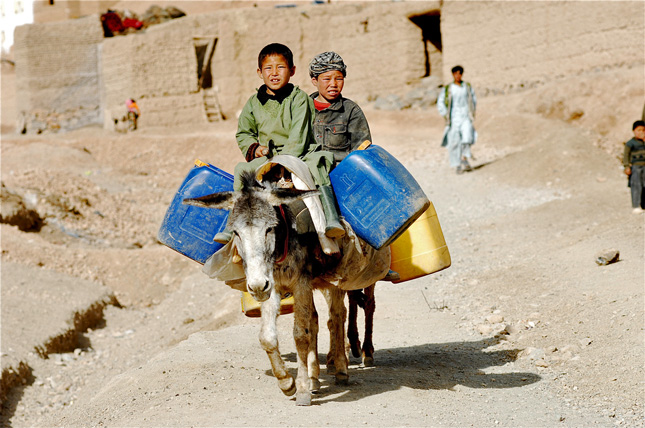
(Editor: Read more discussion between Cincotta and Sciubba here and here)Sciubba: I’m sorry to say, but no, not really. The positive perspective does not resonate much because most in defense and intelligence are tasked with imagining the worst-case scenario. Opportunities and happy stories just do not fit in this paradigm (or even most of their job descriptions). I’ve tried to figure out what needs to happen to get them to pay attention to prevention, and the only place I see some chance of breaking through is in discussing Afghanistan. Many realize the challenges posed by Afghanistan’s young and growing population and there is some recognition that family planning may be relevant there. I think that for a paradigmatic shift to occur, it would have to be top-down – the vision of the President, Secretary of Defense, etc.
Dabelko: What would be the benefits of demographers and population experts taking more seriously a dialogue with the security community? Your book shows why security sector actors should pay attention to demography. Why should demographers pay attention to security?Sciubba: Some in the security community don’t necessarily understand the assumptions behind demographic projections or other aspects of the data, which means they sometimes misuse the info or distrust it and discard it all together. I also think that scholars of any discipline have a responsibility to understand how their work is being used.
Dabelko: What will be the subject of your next book?Sciubba: I’ll be returning to the politics of population aging. I’m particularly interested in comparing how different regime types have dealt with these issues, including not just Western European states, but also states like Singapore and Russia.
Schuyler Null: There’s been a lot of talk about how aging populations in Europe will affect defense sectors there, in terms of shifting budget priorities. But there’s also the aspect of how aging might affect European decision-making processes when it comes to foreign intervention (perhaps less willing put boots on the ground, stay for long, etc.).
Can you speak to how aging might affect the decision-making process and behavior of European countries when it comes to conflict in the future? How might aging affect the operation of NATO or the UN?Sciubba: Isn’t France a puzzle right now given your question? France, a low fertility country with an aging population and HUGE challenges ahead in terms of paying for entitlements to seniors, has recently shown a greater willingness to contribute to military missions. There is no doubt that aging states in Europe will be under strain trying to meet their promises to seniors and also maintain defense. But, European states still feel that there are sufficient threats in the world to warrant maintaining a military. They are trying to reduce redundancies among themselves and increase their efficiency – great cost-saving measures. Technology can compensate a bit as well. I think European states are willing to use their militaries when the threat is sufficient. Aging, however, may raise the threshold for what qualifies as “sufficient” and US-European opinions on what qualifies may increasingly diverge.
See the full transcript of questions and Sciubba’s responses at the Population Reference Bureau. -
Watch: Elizabeth Leahy Madsen Explains the Demography-Civil Conflict Interface in Less Than Two Minutes
›April 12, 2011 // By Schuyler Null“We know that historically, as well as in the present, countries that have very young age structures – those that have youthful and rapidly growing populations – have been the most vulnerable to outbreaks in civil conflict,” said Elizabeth Leahy Madsen, senior research associate at Population Action International, in an interview with ECSP. “It’s not a simple cause and effect relationship, but we think that demographic trends and pressures can exacerbate underlying conditions.”
-
Book Review: Envisioning a Broader Context to Security With ‘The Ultimate Weapon is No Weapon’
›The Ultimate Weapon is No Weapon: Human Security and the New Rules of War and Peace, by a career U.S. Army officer, Lieutenant Colonel Shannon Beebe, and Professor Mary Kaldor, director of the Centre for the Study of Global Governance at the London School for Economics, is the product of an intriguing partnership. Despite the fact that their respective professions have often displayed distrust and hostility toward one another, the coauthors’ combined perspectives have created a particularly prescient and non-partisan challenge to the security status quo.
Beebe and Kaldor add to the growing call to re-evaluate existing constructs of “national security” and to reconsider the roles of Western militaries and international aid agencies in the globalized 21st century world. In particular, they emphasize the urgent need for a more nuanced understanding of security that includes humanitarian considerations as an integral component in these institutions’ agendas. This “human security” is the right of all people to livelihoods, clean drinking water, nourishing food, and education and proper health care, in addition to a safe and secure place to live, free from the fear of personal crime and violence.
Such insecurity affects us all even if it does not directly result in open warfare. According to Misha Glenny in his 2009 book, McMafia, it is estimated that 20 percent of the global GDP is generated through criminal activities, which exploit the weak and the vulnerable on a global scale. It is difficult to say what role the traditional Western military can play under situations in which vast networks of tyranny through corruption are rapidly growing.
Historical and General Context
The Ultimate Weapon is No Weapon is a persuasive argument in favor of deconstructing the conventional credo of war that has dominated U.S. military theory since World War II. Beebe and Kaldor argue that the political and financial capital mined from the Greatest Generation significantly influenced the “state-against-state” model of the American military machine, and then helped perpetuate and sustain it. The United States’ Cold War experience reinforced the notion that the goal of security is to defeat a great enemy, preferably in open battle using the best available military hardware.
But, the authors ask, did such displays of military superiority and readiness actually accomplish the strategic goal of maintaining our security in today’s world? Did we perhaps narrow the definition of security too much, and in using the wrong tools, did we worsen the very problems we set out to solve?
Beebe and Kaldor provide ample evidence to suggest we have taken the narrow approach, from NATO’s involvement in Yugoslavia, to the debacle in Somalia, and the current conflicts in Afghanistan and Iraq. The authors are not simply out to criticize the military, but instead suggest that the lines that define nation-states today no longer hold the same power that they once did. Other forces at work, from economic globalization to climate change, must be recognized.
Definitions and Prescriptions for a Changing World
When civilians become targets of violence, their resilience is weakened, write Beebe and Kaldor, for a variety of reasons that are often difficult to ascertain without on-the-ground intelligence. For instance, is violence against civilians intended to provide opportunities for political gain by certain groups, or just cover up criminal behavior intended for monetary gain? In this kind of environment, where does the modern Western military machine fit, and how can international humanitarian institutions be more effective?
Beebe and Kaldor contend that instead of developing strategic operations focused on killing the enemy, the military should be focused instead on creating safe spaces for civilians:A human-security approach would emphasize bottom-up reconstruction of governance and justice systems, local security capabilities, and, of course, addressing poverty, education, and health. It would, as well, have to be part of a more global strategy for dealing with the transnational criminal networks, especially drug networks, that are nourished by and that nourish conflicts (p. 196).
Even if it is not the sole responsibility of the military to provide such resources, the authors argue, failure to recognize the importance of human security or to protect resources will ultimately increase our security risks.
An Unobtainable Utopia or Early Warning?
Undoubtedly, the problems that the authors describe are real; it is time to re-evaluate what kind of world we want to live in and how this might be achieved. What should we do if there is no legitimate state government to negotiate with, and yet there is clearly a violent and deadly situation, such as the 1994 genocide in Rwanda? Would the American people tolerate spending money on a military operation without there being any direct sign of imminent threat or danger to them, and without the ability to declare some sort of traditional military victory? Or would their reaction be the same as Neville Chamberlain’s to Czechoslovakia in 1938, that human security merely describes “a quarrel in a faraway country between people of whom we know nothing?”
The recent intervention in Libya is a case in point. Speaking on Meet the Press recently, Secretary of Defense Gates admitted that the country was of no vital interest to the United States, and instead defended spending money on military air strikes based upon humanitarian grounds. Despite the clear mandate from the UN, NATO, and the Arab League to respond to this human security crisis, there has clearly been little appetite in the United States to lead military interventions in Libya without an obviously defined motive of self-interest.
The difficulty lies in explaining that basic security and instability have grave consequences, even across great distances, and that addressing potential conflicts early prevents the need for making harder choices later on. The U.S. Department of State has tackled that difficult task in the recent Quadrennial Diplomacy and Development Review, which calls for greater focus on human security interventions as a way to avoid or mitigate future military conflicts.
Though a few of the solutions postulated in this book may seem overly idealistic to some, I would argue that Beebe and Kaldor’s ideas represent less a utopian vision than an early warning and plea for change in the years to come. Rather than succumbing to the easy temptation to fear globalization and the world outside our borders, we must learn to engage with and help create a thriving global civil community.
A must-read for a broad range of audiences, The Ultimate Weapon is No Weapon offers a historical and contemporary basis for envisioning a broader context to security and understanding that the “ultimate weapons of the twenty-first century are, in fact, not weapons in the military sense at all” (p. 202).
Tracy Walstrom Briggs is currently the Minerva Associate Chair for Energy and Environmental Security (USAF). She has worked with the Swedish Defense Forces (FOI) and the UN Environment Programme to facilitate more sustainable peacekeeping installations using rapid impact assessment tools. She was also a professor and associate chair for the Graduate Environmental Studies Program at California State University Fullerton.
Sources: HistoryVideos101, McMafia (Glenny), NBC, U.S. Department of Defense.
Photo Credit: “3-6 Soldiers Provide Medical Aid,” courtesy of flickr user expertinfantry. -
Watch: Dan Smith on How International Alert Builds Peace
›April 6, 2011 // By Schuyler NullAddressing violent conflict is complex and difficult, but one universally important aspect of any peacebuilding operation is to understand the unique context of each situation, said Dan Smith, secretary general of International Alert, in this interview with ECSP. International Alert is a London-based NGO that works in 23 countries and territories in West and Central Africa, the Southern Caucasus, Central Asia, Nepal, Sri Lanka, and the Philippines.
The goal of International Alert, said Smith, is to help people “move from situations of danger and vulnerability…towards positions of greater safety.” In addition, the NGO tackles broader international policy questions, he said, such as how to manage and minimize the risks of conflict and hasten recovery from it.
Peacebuilding defies simplification, said Smith, but there are two broad recommendations to keep in mind. First, “going in with a preset form of analysis or of the action you will undertake, or the problems you will look at,” is the most significant mistake international actors can make. “If you’re a hammer, every problem for you is going to be a nail,” he said. “But there are many countries where you need screwdrivers or monkey wrenches… you’ve got to be open-minded about that.”
Second, “realize that the outsider, like us, is not going to make peace or build peace in a country – it’s the people there who are going to do it,” said Smith. The international community’s job is to assist.
“Sometimes it’s as simple as experience from other places,” he said, which can be provided by an NGO and transferred from one context to another. “As long as you don’t shove it down anybody’s throats – it’s always an assisting and a helping role.” -
Tunisia Predicted: Demography and the Probability of Liberal Democracy in the Greater Middle East
›
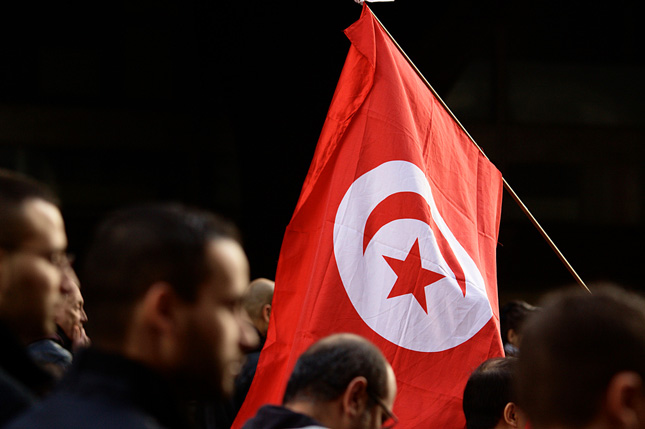
In 2008, demographer Richard Cincotta predicted that between 2010 and 2020 the states along the northern rim of Africa – Morocco, Algeria, Tunisia, Libya, and Egypt – would each reach a demographically measurable point where the presence of at least one liberal democracy (and perhaps two), among the five, would not only be possible, but probable. Recent months have brought possible first steps to validate that prediction. [Video Below]
-
The Impact of Environmental Change and Geography on Conflict
›“Environmental Change, Strategic Foresight, and Impacts on Military Power,” published in Parameters by Chad M. Briggs, the Minerva Chair of Energy and Environmental Security at the Air University, USAF, tackles the changing definition of “environmental security” and how the concept can help planners better prepare for the effects of climate change and an elevated focus on energy security. New potentially destabilizing issues like glacial melt, sea-level rise, and Arctic ice melt are on the horizon, writes Briggs. China and others are already planning for these events, and it’s important that the United States does the same, starting with a greater appreciation for the impact of environmental security on vulnerability and risk. “Due to past practices and bureaucratic stovepipes, implementation is limited more by initiative and imagination than actual resources,” he writes.
Clionadh Raleigh of Trinity College Dublin and the International Peace Research Institute finds in “Seeing the Forest for the Trees: Does Physical Geography Affect a State’s Conflict Risk?” that a region’s geography does not have a uniform effect on its likelihood of experiencing conflict. Raleigh’s conclusions, published in International Interactions, run counter to traditional histories which often emphasize the importance of physical geography, specifically with regard to civil war and insurgencies. Focusing on the Great Lakes region of Africa, Raleigh finds that other factors – like how populated an area is and its proximity to valuable natural resources – correlate higher with an area’s propensity for violence than any other factor. -
Eric Zuehlke, Behind the Numbers
Building a Gender Strategy for the Afghanistan Ministry of Public Health
›March 25, 2011 // By Wilson Center StaffThe original version of this article, by Eric Zuehlke, appeared on the Population Reference Bureau’s Behind the Numbers blog.
Recent media reports have focused on the stalled progress for women in Afghanistan and the shift in the international community’s focus as they take steps towards an eventual military withdrawl. Although there’s much work to be done, it’s important to note that there has been tangible improvement for women in Afghanistan. A decade ago, women weren’t allowed to go out in public alone. Girls weren’t allowed to attend school – now 57 percent of girls are in school. And gender issues are now being integrated into government policy.
At an Interagency Gender Working Group (IGWG) Plenary in honor of 2011 International Women’s Day hosted by PATH in Washington DC, Karen Hardee, a senior fellow at PRB and president of Hardee Associates, presented her involvement towards developing the National Gender Strategy for the Afghanistan Ministry of Public Health for 2011-2015. Much international development program and policy advocacy calls for attention to “gender,” but what does the term mean? “Gender isn’t just about women,” said Hardee, but is defined as the social roles that men and women play because of the way society is organized. But these roles aren’t set in stone; they can change over time.
Funded by USAID, the Health Services Support Project worked with the Afghan government to create a plan to integrate gender considerations into all public health programs and policies, focusing mostly on mental health and gender-based violence. Interestingly, the impetus of the process stemmed the initiative of a male official in the Ministry of Public Health who requested assistance to write a plan to integrate gender into the Ministry’s policies and programs. Having participated in WHO-sponsored gender training workshops in the past, he understood the importance of mainstreaming gender awareness for both men and women. It’s a great example of the tangible effects of the work being done on gender by NGOs and international donors.
Continue reading on Behind the Numbers.
Sources: The Guardian.
Photo Credit: “PRT, ADT women help celebrate Women’s Day in Kunar,” courtesy of flickr user DVIDSHUB. -
The Youth of North Africa
Surging on a Knife’s Edge
›March 23, 2011 // By Christina DaggettThe Middle East/North Africa region is experiencing a “youth surge,” said Jack Goldstone, director of the George Mason University’s Center for Global Policy, at a recent GMU event. “In the last two decades the number of people in their late teens and twenties has increased… It’s doubled in Egypt; it’s grown by half in Tunisia; and nearly doubled in Libya,” he told Warren Olney on KCRW’s To the Point.
Such youth surges are problematic because, Goldstone wrote in ECSP Report 13, “population distortions – in which populations grow too young, or too fast, or too urbanized – make it difficult for prevailing economic and administrative institutions to maintain stable socialization and labor-force absorption.”
In the case of Egypt, the youth surge put enormous pressure on a government system that could no longer guarantee jobs to every college graduate, said Goldstone. When government guarantees dried up, graduates found that their poor-quality degrees were of little use, especially in a system that prioritized connections and bribery. The result was an unemployment rate of 25 percent among Egyptian youth and a mounting sense of frustration with the economic system and the government.
This frustration found a symbol when Mohammed Bouazizi, a 26-year-old Tunisian, set himself – and an entire region – on fire after his third run-in with the police cut off his only source of income. Youth across North Africa and the Middle East, Goldstone said, could identify with Bouazizi’s desperation and frustration after years of dealing with a closed economic system and a corrupt government.
While overall economic growth has been strong in the region – a fact which had misled many observers (including himself, Goldstone admits) into thinking the region was more stable – these economic gains were apparently being captured by the ruling elite to a far greater degree than previously thought, said Goldstone. For example, it is estimated that ousted Egyptian president Hosni Mubarak and his family are worth between $40 and $70 billion.
Meanwhile, a burgeoning surge of young people were struggling to get by. Goldstone pointed to a Gallup poll conducted in 2010 in which only 12 percent of Egyptians and 14 percent of Tunisians would classify themselves as “thriving” – down from 25 and 24 percent, respectively, in 2007 and 2008.
While the Ben Ali and Mubarak regimes have fallen, these revolutions do not ensure the youth in these countries will have a prosperous future. They need not only access to capital, said Goldstone, but also access to information and social networks so that they can identify market opportunities and stay connected.
Immigration to more developed countries could also be an important avenue for economic growth and education. In a Foreign Affairs article, “The New Population Bomb,” Goldstone writes, “Given the dangers of young, underemployed, and unstable populations in developing countries, immigration to developed countries can provide economic opportunities for the ambitious and serve as a safety valve for all.”
The future of Middle Eastern youth, and that of the region at large, depends on the quality of their education and their ability to be productive, said Goldstone. They stand on “a knife edge,” he said, and the transition to democracy will not be smooth or easy.
Image Credit: “Protest Face Paint,” courtesy of flickr user Ahmad Hammoud.
Sources: The Economist, ECSP Report 13, Foreign Affairs, Gallup, International Monetary Fund, KCRW, Voice of America.
Showing posts from category conflict.