• woodrow wilson center
  • ecsp

New Security Beat

Subscribe:
  • rss
  • mail-to
  • Who We Are
  • Topics
    • Population
    • Environment
    • Security
    • Health
    • Development
  • Columns
    • China Environment Forum
    • Choke Point
    • Dot-Mom
    • Friday Podcasts
    • Navigating the Poles
    • Reading Radar
  • Multimedia
    • Water Stories (Podcast Series)
    • Backdraft (Podcast Series)
    • Tracking the Energy Titans (Interactive)
  • Films
    • Water, Conflict, and Peacebuilding (Animated Short)
    • Paving the Way (Ethiopia)
    • Broken Landscape (India)
    • Scaling the Mountain (Nepal)
    • Healthy People, Healthy Environment (Tanzania)
  • Publications
  • Events
  • Contact Us

NewSecurityBeat

The blog of the Wilson Center's Environmental Change and Security Program
Showing posts from category conflict.
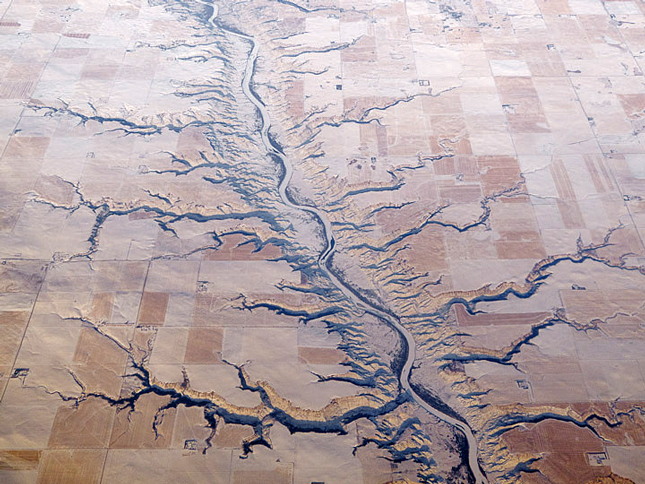
  • Watch: Dennis Taenzler on Four Key Steps for REDD+ to Avoid Becoming a Source of Conflict

    ›
    Eye On  //  October 6, 2011  //  By Theresa Polk

    The UN Program on Reducing Emissions from Deforestation and Forest Degradation (REDD) provides financial incentives to developing countries to conserve their forests and invest in low-carbon pathways to sustainable development. However, it may also be a potential new source of conflict, says Dennis Taenzler, a senior project manager at adelphi in Berlin, who works on climate and energy policies as well as peace and conflict issues.

    MORE
  • El Niño, Conflict, and Environmental Determinism: Assessing Climate’s Links to Instability

    ›
    October 5, 2011  //  By Schuyler Null

    A recent Nature article on climate’s impact on conflict has generated controversy in the environmental security community for its bold conclusions about links between the global El Niño/La Niña cycle and the probability of intrastate conflict.

    MORE
  • Digging Deeper: Water, Women, and Conflict

    ›
    From the Wilson Center  //  September 27, 2011  //  By Theresa Polk

    It’s not just “carrying water from a water point, but it’s discharging responsibilities that a woman has for using and managing water which may make her vulnerable to violence and bring her into risky areas,” said Dennis Warner, senior technical advisor for water and sanitation at Catholic Relief Services (CRS), at the Wilson Center on August 29. [Video Below]

    MORE
  • Remembrance: Wangari Maathai, Nobel Peace Prize Winner, Linked Environment and Conflict

    ›
    September 26, 2011  //  By Schuyler Null
    Sad news today as Wangari Maathai, the first African woman and the first environmentalist to win the Nobel Peace Prize, has passed away in Nairobi. The Green Belt Movement, which Maathai founded in 1977, has planted over 30 million trees and advocates for what Maathai called the three essential components of a stable society: sustainable environmental management, democratic governance, and a culture of peace. [Video Below]

    “Almost every conflict in Africa you can point at has something to do with competition over resources in an environment,” said Maathai during her visit to the Wilson Center in 2009:
    Unless you deal with the cause, you are wasting your time. You can use all the money you want for all the years you want; you will not solve the problem, because you are dealing with a symptom. So we need to go outside that box and deal with development in a holistic way.
    Maathai’s message was molded from her experiences in Kenya and across sub-Saharan Africa in general. She was not shy about condemning African leaders and advocating for women in the political space. In ECSP Report 12, she wrote, “I come from a continent that has known many conflicts for a long time. Many of them are glaringly due to bad governance, unwillingness to share resources more equitably, selfishness, and a failure to promote cultures of peace.”

    Importantly, though, Maathai advocated for addressing these issues in concert, not separately. She said at the Wilson Center:
    I can’t say, ‘Let us deal with governance this time, and don’t worry about the resources.’ Or, ‘Don’t worry about peace today, or conflicts that are going on; let us worry about management of resources.’ I saw that it was very, very important to use the tree-planting as an entry point.
    A Message to the World

    Some raised questions when Maathai won the Nobel Peace Prize in 2004 – the first awarded to someone from the environmental field – but the recognition was more than deserved, wrote Environmental Change and Security Program (ECSP) Director Geoff Dabelko on Grist:
    Maathai is on the front lines of the struggle over natural resources that fuels conflicts across the world. While there is no dramatic footage of tanks rumbling across borders or airplanes flying into buildings, the everyday fight for survival of those who depend directly on natural resources – forests, water, minerals – for their livelihoods is at the heart of the battle for peace and human security.
    …
    Elevating such a strong Southern voice – and one whose elephant’s skin bears the scars of the fight for peace – is a noble choice.
    Maathai explained in Report 12 that she thought her winning of the prize was intended as a message to the world to “rethink peace and security.”

    The Nobel Committee “wanted to challenge the world to discover the close linkage between good governance, sustainable management of resources, and peace,” she wrote. “In managing our resources, we need to realize that they are limited and need to be managed more sustainably, responsibly, and accountably.”

    Sources: Grist, The New York Times.

    Photo Credit: David Hawxhurst/Wilson Center.
    MORE
  • Edward Carr, Open the Echo Chamber

    Food Security and Conflict Done Badly…

    ›
    On the Beat  //  September 16, 2011  //  By Wilson Center Staff
    The original version of this article, by Edward Carr, appeared on Open the Echo Chamber.

    Over at the Guardian, Damian Carrington has a blog post arguing that “Food is the ultimate security need.” He bases this argument on a map produced by risk analysts Maplecroft, which sounds quite rigorous:
    The Maplecroft index [represented on the map], reviewed last year by the World Food Programme, uses 12 types of data to derive a measure of food risk that is based on the UN FAO’s concept. That covers the availability, access and stability of food supplies, as well as the nutritional and health status of populations.
    I’m going to leave aside the question of whether we can or should be linking food security to conflict – Marc Bellemare is covering this issue in his research and has a nice short post up that you should be reading. He also has a link to a longer technical paper where he interrogates this relationship…I am still wading through it, as it involves a somewhat frightening amount of math, but if you are statistically inclined, check it out.

    Instead, I would like to quickly raise some questions about this index and the map that results. First, the construction of the index itself is opaque (I assume because it is seen as a proprietary product), so I have no idea what is actually in there. Given the character of the map, though, it looks like it was constructed from national-level data. If it was, it is not particularly useful – food insecurity is not only about the amount of food, but access to that food and entitlement to get access to the food, and these are things that tend to be determined locally. You cannot aggregate entitlement at the national level and get a meaningful understanding of food insecurity – and certainly not actionable information.

    Continue reading on Open the Echo Chamber.

    Image Credit: “Estimated food security conditions, 3rd Quarter 2011 (August-September 2011),” courtesy of the Famine Early Warning Systems Network (FEWS NET) and USAID.
    MORE
  • International River Basins: Mapping Institutional Resilience to Climate Change

    ›
    From the Wilson Center  //  August 15, 2011  //  By Kellie Furr
    Institutions that manage river basins must assess their ability to deal with variable water supplies now, said Professor Aaron Wolf of Oregon State University at the July 28 ECSP event, “International River Basins: Mapping Institutional Resilience to Change.” “A lot of the world currently can’t deal with the variability that they have today, and we see climate change as an exacerbation to an already bad situation.”

    Wolf and his colleagues, Jim Duncan of the World Bank and Matt Zentner of the U.S. Department of Defense, discussed their efforts to map basins at risk for future tensions over water, as identified in their coauthored World Bank report, “Mapping the Resilience of International River Basins to Future Climate Change-Induced Water Variability.” [Video Below]

    Floating Past the Rhetoric of “Water Wars”

    Currently, there are 276 transnational water basins that cross the boundaries of two or more countries, said Wolf. “Forty percent of the world’s population lives within these waters, and interestingly, 80 percent of the world’s fresh water originates in basins that go through more than one country,” he said. Some of these boundaries are not particularly friendly – those along the Jordan and Indus Rivers, for example – but “to manage the water efficiently, we need to do it cooperatively,” he said.

    Wolf and his colleagues found that most of the rhetoric about “water wars” was merely anecdotal, so they systematically documented how countries sharing river basins actually interact in their Basins at Risk project. The findings were surprising and counterintuitive: “Regularly we see that at any scale, two-thirds of the time we do anything over water, it is cooperative,” and actual violent conflict is extremely rare, said Wolf.

    Additionally, the regions where they expected to see the most conflict – such as arid areas – were surprisingly the most cooperative. “Aridity leads to institutions to help manage aridity,” Wolf said. “You don’t need cooperation in a humid climate.”


    “It’s not just about change in a basin, it’s about the relationship between change and the institutions that are developed to mitigate the impacts of change,” said Wolf. “The likelihood of conflict goes up when the rate of change in a basin exceeds the institutional capacity to absorb the change.”

    Expanding the Database for Risk Assessment

    Oregon State University’s Transboundary Freshwater Dispute Database (TFDD) tracks tabular and spatial information on more than 680 freshwater treaties along 276 transboundary river basins, said Jim Duncan. The team expanded the database to include recent findings on variability, as well as the impacts of climate change on the future variability of those basins. “We have a lot more information that we are able to work with now,” Duncan said.

    Analyzing the institutional vulnerability of treaties along with hydrological hazards, they found the risk of tension concentrated in African basins: The Niger, Congo, and Lake Chad basins “popped out,” said Duncan. When predicting future challenges, they found that basins in other areas, such as Southeastern Asia and Central Europe, would also be at risk.


    Duncan and his colleagues were able to identify very nuanced deficiencies in institutional resilience. “Over half of the treaties that have ever been signed deal with variability only in terms of flood control, and we’re only seeing about 15 percent that deal with dry season control,” said Duncan. “It’s not the actual variability, but the magnitude of departure from what they’re experiencing now that is going to be really critical.”

    Beyond Scarcity

    “Generally speaking, it’s not really the water so much that people are willing to fight over, but it’s the issues associated with water that cause people to have disagreements,” said Matt Zentner. Water issues are not high on the national security agendas of most governments; they only link water to national security when it actively affects other sectors of society, such as economic growth, food availability, and electric power, he said. Agricultural production – the world’s largest consumer of water – will be a major concern for governments in the future, he said, especially in developing countries economically dependent on farming.

    Some experts think that current international treaties are not enough, said Zentner. Peter Gleick of the Pacific Institute has said that “the existing agreements and international principles for sharing water will not adequately handle the strain of future pressures, particularly those caused by climate change.”

    How transboundary water treaties fare as the climate and consumption rates change is not as simple as measuring flow; the strength of governing institutions, the parties involved, and other variables all play major roles as well, said Zentner. “When you have flexibility built within [a treaty], it allows it to be a living, breathing, and important part of solving those [water] problems.”

    Download the full event transcript here.

    Sources: Oregon State University, Pacific Institute.


    Photo Credit: “Confluence of the Zanskar and Indus,” courtesy of Flickr user Sanish Suresh.
    MORE
  • Deirdre LaPin, Niger Delta Working Group

    Next Step, Clean Up the Niger Delta: The UNEP Ogoni Environmental Report

    ›
    August 12, 2011  //  By Wilson Center Staff
    The original version of this article, by Deirdre LaPin, appeared on the Niger Delta Working Group and AllAfrica.

    The long-awaited report from the United National Environmental Program (UNEP) on oil damage in the Ogoni area was presented to President Goodluck Jonathan on August 4 in Abuja. This important study, the first of its kind in the Niger Delta, was conceived well before 2006 by the Federal Government as part of the Ogoni reconciliation and peace process led by Father Matthew Kukah (recently named Bishop of Sokoto). Intended as a major assessment of the impacts of oil production in the Ogoni region, UNEP in an early statement described the aim as to “clarify and de-mystify concerns expressed by local communities.” [Audio Below]

    Shell Petroleum Development Company (SPDC) suspended active production in Ogoniland in late 1993 as a response to growing resistance to industry presence led by the martyred freedom fighter and writer Ken Saro-Wiwa. However, the company remained responsible during its withdrawal for monitoring and maintaining its installations, and especially the critical Trans-Niger pipeline serving Bonny Terminal. It also left behind a number of spill sites.

    Deirdre LaPin on the History of Inequality in the Niger Delta [Excerpted Version] by ECSP WWC

    Over the years the company had mixed success in negotiating with local communities access to spills sites or achieving their complete remediation. The impoverished local population also pursued informal oil production that centered on bunkering (oil pipeline tapping) and bush refining – increasing opportunities for further spills and pollution. In keeping with the “polluter pays” principle, the operator SPDC joint venture funded the U.S. $9.5 million UNEP study.

    Last week the press had a field day with the freshly unveiled report.

    Journalists whisked together highlights and added spice from the region’s contested history. Some articles cooked in the press kitchen missed key ingredients or simply got them mixed up. The best among them focused on the findings from the study’s careful scientific analysis, which led UNEP to the conclusion that “pollution has perhaps gone further and penetrated deeper than many may have previously supposed.”

    This forceful opinion stated in the foreword by UNEP’s executive director Achim Steiner represents a long step beyond the study’s original technical terms of reference or the limited policy aims supporting reconciliation and “de-mystification.”

    Now in 2011, UNEP’s thoughtful recommendations, while not assigning blame, point clearly to the need for a genuine shift in the priorities and practices of the oil industry and governmental regulatory agencies operating throughout the Niger Delta. The muscular sub-text rippling throughout the report makes clear that nothing less than ending pollution and full remediation of Ogoniland (and indeed the whole Niger Delta region) should be accepted as an end point.

    Continue reading on the Niger Delta Working Group.

    For more on the Niger Delta, be sure to also read “Nigeria’s Future Clouded by Oil, Climate Change, and Scarcity,” which includes the full audio interview with Deidre LaPin (excerpted above) on the history of the Niger Delta.

    Sources: UNEP.

    Photo Credit: NASA Space Shuttle Overflight photo of the Niger Delta, courtesy of NASA.
    MORE
  • Conflict Minerals in the DRC: Still Fighting Over the Dodd-Frank Act, One Year Later

    ›
    August 11, 2011  //  By Schuyler Null

    One year after the Dodd-Frank Act passed Congress with a provision that was aimed at preventing the sourcing of “conflict minerals” by SEC-registered companies, backlash seems to be growing over the impact of the measure, particularly on artisanal miners in the Democratic Republic of the Congo (DRC).

    MORE
Newer Posts   Older Posts
View full site

Join the Conversation

  • RSS
  • subscribe
  • facebook
  • G+
  • twitter
  • iTunes
  • podomatic
  • youtube
Tweets by NewSecurityBeat

Trending Stories

  • unfccclogo1
  • Pop at COP: Population and Family Planning at the UN Climate Negotiations

Featured Media

Backdraft Podcast

play Backdraft
Podcasts

More »

What You're Saying

  • Volunteers,At,The,Lagos,Food,Bank,Initiative,Outreach,To,Ikotun, Pan-African Response to COVID-19: New Forms of Environmental Peacebuilding Emerge
    Rashida Salifu: Great piece 👍🏾 Africa as a continent has suffered this unfortunate pandemic.But it has also...
  • A desert road near Kuqa An Unholy Trinity: Xinjiang’s Unhealthy Relationship With Coal, Water, and the Quest for Development
    Ismail: It is more historically accurate to refer to Xinjiang as East Turkistan.
  • shutterstock_1779654803 Leverage COVID-19 Data Collection Networks for Environmental Peacebuilding
    Carsten Pran: Thanks for reading! It will be interesting to see how society adapts to droves of new information in...

What We’re Reading

  • Rising rates of food instability in Latin America threaten women and Venezuelan migrants
  • Treetop sensors help Indonesia eavesdrop on forests to cut logging
  • 'Seat at the table': Women's land rights seen as key to climate fight
  • A Surprise in Africa: Air Pollution Falls as Economies Rise
  • Himalayan glacier disaster highlights climate change risks
More »
  • woodrow
  • ecsp
  • RSS Feed
  • YouTube
  • Twitter
  • Facebook
  • Home
  • Who We Are
  • Publications
  • Events
  • Wilson Center
  • Contact Us
  • Print Friendly Page

© Copyright 2007-2021. Environmental Change and Security Program.

Woodrow Wilson International Center for Scholars. All rights reserved.

Developed by Vico Rock Media

Environmental Change and Security Program

Woodrow Wilson International Center for Scholars

Ronald Reagan Building and International Trade Center

  • One Woodrow Wilson Plaza
  • 1300 Pennsylvania Ave., NW
  • Washington, DC 20004-3027

T 202-691-4000