-
Turning the Climate-Security Problem on Its Head: Geoff Dabelko Talks G7 ‘Climate for Peace’ Report
› Conversations around climate change often take place at the “30,000-foot level,” said Ohio University Professor and ECSP Senior Advisor Geoff Dabelko in a recent radio interview with WOUB Public Media, based out of Athens, Ohio. Emission reductions, carbon concentrations, global temperatures. But a certain amount of change is already baked into the system and impacts are playing at in different ways around the world already.
 -
How Successful Were the Millennium Development Goals? A Final Report
›July 28, 2015 // By Josh Feng
Earlier this month, the United Nations released a final report on the Millennium Development Goals (MDGs), the framework that has guided global development efforts for the last 15 years. The document examines each of the eight MDGs and finds that “despite many successes, the poorest and most vulnerable people are being left behind.” As one of the first global poverty reduction movements nears its end, the report calls for better data collection practices to create a post-2015 development agenda that can overcome the MDG’s shortcomings.
-
“People Need Nature to Thrive”: Recovering From Conflict Through Conservation in Timor-Leste
›In my tiny, half-an-island country of Timor-Leste, cemeteries smell of jasmine and come to life on All Saints’ Day. Families have picnics and kids roam wild over the tombstones. Here, stepping on somebody else’s family tombstones is not seen as an offense but as the norm; after all, since there isn’t enough land to hold so many graves, not stepping on one is impossible unless you have mastered levitation.
-
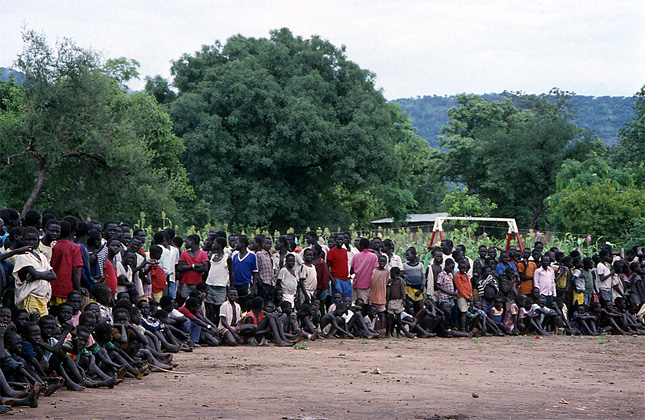
A Case for Refugee Resilience: Reflection on the Lost Boys’ Story of Perseverance
›Fifteen years ago last month, I was brought to America through the U.S. Refugee Resettlement Program after having lived in refugee camps in Ethiopia and Kenya for more than a decade. As I reflect on my experience, it is my hope that it will inspire others and help inform dialogue on forced migration so that refugees are perceived not just as victims, but models of resilience.
-
Alice Hill on Mainstreaming Climate Risks Into U.S. Government Planning: “We Should Care Deeply”
›“Perhaps I’m a case study for what happens in the federal government when we start on a tough problem,” says Alice Hill, the senior director for resilience policy at the National Security Council and former senior counselor to the secretary of homeland security, in this week’s podcast. -
Bixby Report Explains Cross-Cutting Effect of Family Planning on Food Security, Climate Change
›July 16, 2015 // By Linnea Bennett“With current neglect of family planning, the UN’s recent projection of a 2100 world population of up to 12.3 billion is a possibility,” says a report from the University of California, San Francisco’s Bixby Center for Global Reproductive Health. Increased voluntary family planning efforts are needed, the authors contend, to meet existing demand for contraceptives, stabilize the threat of global food insecurity, and reduce carbon emissions that contribute to climate change.
-
The Hillary Doctrine: Sex and American Foreign Policy (Book Launch)
›When Valerie Hudson evaluates the strength of a nation, whether food security, wealth, peacefulness, or quality of governance, she finds one important thread that underlies it all. “One of the most important factors in the determination of these things is in fact the situation, and security, and status of women,” said Hudson at the Wilson Center on June 24. [Video Below]
-
Peter Schwartzstein, National Geographic
After Spark of Hope, Iraq’s Marshes Are Again Disappearing
›July 13, 2015 // By Wilson Center StaffAs Saddam Hussein drained Iraq’s famed marshes to punish the rebellious tribesmen who lived in them, Amjad Mohamed packed his few possessions, grabbed his fishing rod, and fled south to Basra with his extended family.
Showing posts from category conflict.
 Conversations around climate change often take place at the “30,000-foot level,” said Ohio University Professor and ECSP Senior Advisor Geoff Dabelko in a recent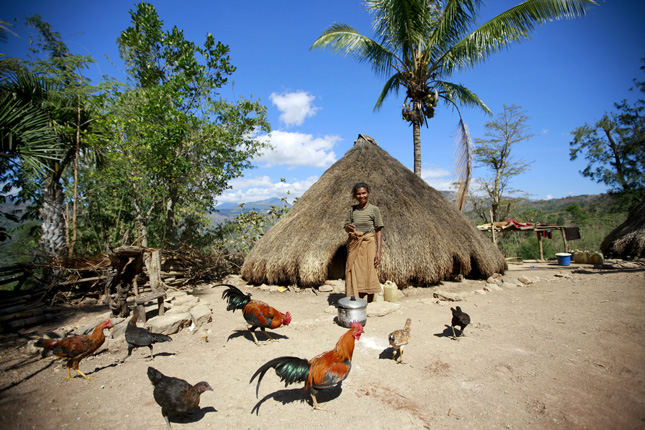
 “Perhaps I’m a case study for what happens in the federal government when we start on a tough problem,” says Alice Hill, the senior director for resilience policy at the National Security Council and former senior counselor to the secretary of homeland security, in this week’s podcast.