-
Backdraft Episode #3: Kimberly Marion Suiseeya on Voice, Justice, and Representation
› “If we think sustainable development is the goal we want to achieve, we have to be radical in elevating those who have been traditionally excluded,” says Northwestern University’s Kimberly Marion Suiseeya in this week’s “Backdraft” episode. “We have to approach conservation and global environmental governance from the perspective of the invisible and the marginalized people.”
 -
Taking Stock of Africa’s Political and Security Developments in 2016
›2016 was an eventful year for the continent of Africa, with important implications for U.S.-Africa relations. The Wilson Center’s Africa Program asked experts, scholars, and policymakers to weigh in on the most important and impactful events. This collection of essays reflects on those developments and their impact going forward.
-
Insights on Ending Famine and Creating Food Security in a Changing World
›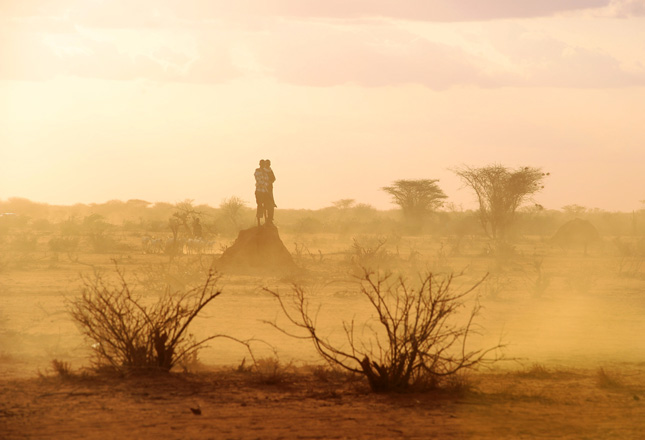
The effects of climate change combined with breakdowns in governance are leading to food insecurity “on a scale that we’ve rarely seen,” said Alex de Sherbinin, associate director of Columbia University’s Center for International Earth Science Information Network, at the Wilson Center on January 26.
-
Backdraft Episode #2: Stacy VanDeveer on the New Energy Economy and the Fate of Petro States
›A “green economy,” an energy sector composed entirely of renewables, is the goal of many. But we haven’t thought out the full implications of that change, says Stacy VanDeveer, professor at the University of Massachusetts Boston, in this week’s “Backdraft” podcast. -
Reaching Accord on Land Grabs, and Household Perceptions of Climate-Conflict Vulnerability
›Large-scale land acquisitions, otherwise known as “land grabbing,” are often believed to lead to resistance from affected local communities. According to an article by Ruth Hall et al. in The Journal of Peasant Studies, however, “political reactions ‘from below’ to global land grabbing have been vastly more varied and complex than is usually assumed.” -
Torn Social Fabric: Water, Violence, and Migration in Central America
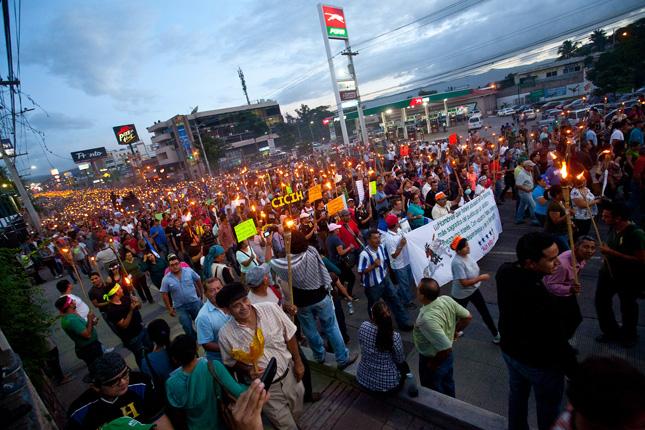
›In the first half of last year, 26,000 unaccompanied children were apprehended by U.S. law enforcement trying to cross the southern border. Most came from Central American states like El Salvador, Guatemala, and Honduras. Such displacement is just the tip of the iceberg in terms of migration in the region. Many more are moving from rural to urban areas and into neighboring countries seeking opportunity and fleeing violence.
-
Vice-President Eduardo Stein on Water Conflict in Guatemala: Origins and Solutions
›Since 2014, Central America has experienced a dramatic lack of rainfall, destroying grain crops and killing cattle. As of last summer, 2.8 million people were impacted by drought and 900,000 were at risk of malnutrition in Guatemala alone. The effects of environmental change have been especially acute in Guatemala because they are layering on top of existing dysfunction and instability, says Former Vice-President of Guatemala (2004-2008) Eduardo Stein in this week’s podcast. -
Wartime Public Health Crises Cause More Deaths Than Weapons, So Why Don’t We Pay More Attention?
›In 2004 I was honored to be interviewed for The Lancet medical journal’s “Lifeline” series. I had just come away from a disastrous short tenure as the interim minister of health in Iraq following the 2003 war. I had support from former Secretary of State Colin Powell to rapidly mitigate and recover the war-related destruction of essential public health infrastructure and protections required as occupiers under Articles 55 and 56 of the Geneva Conventions that follow every war.
Showing posts from category conflict.
 “If we think sustainable development is the goal we want to achieve, we have to be radical in elevating those who have been traditionally excluded,” says Northwestern University’s Kimberly Marion Suiseeya in this week’s “Backdraft” episode. “We have to approach conservation and global environmental governance from the perspective of the invisible and the marginalized people.”
 A “green economy,” an energy sector composed entirely of renewables, is the goal of many. But we haven’t thought out the full implications of that change, says Stacy VanDeveer, professor at the University of Massachusetts Boston, in this week’s “Backdraft” podcast.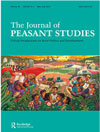
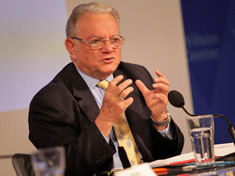 Since 2014, Central America has experienced a dramatic lack of rainfall,