-
Pan-African Response to COVID-19: New Forms of Environmental Peacebuilding Emerge
›Guest Contributor // February 8, 2021 // By Elaine (Lan Yin) Hsiao, Fakunle Aremu & Ousseyni Kalilou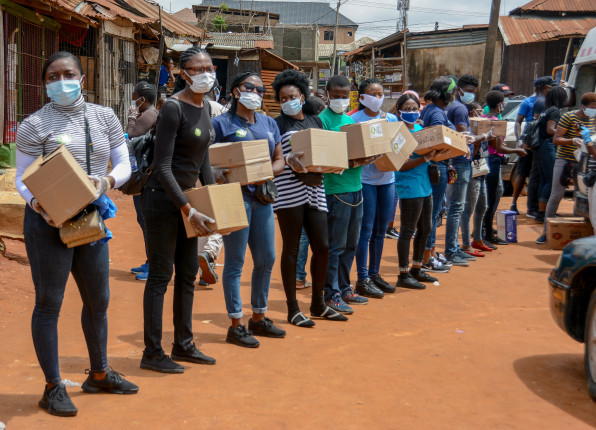
Early predictions about COVID-19’s impacts on Africa suggested that the continent would be a disaster zone marked by weak medical systems collapsing under strain and undemocratic states failing to provide social services to destitute populations. These predictions did not come to pass. Instead, many countries across the continent stepped up early on to join the world in curtailing the spread of COVID-19. The second order effects of the virus have been significant, however. Despite the low numbers of infections and deaths, lockdowns and the decline of a large percentage of informal trade and commerce in Sub-Saharan Africa have sent the region’s economy into recession, with increased inflation rates, widespread unemployment, and increased food insecurity. It’s within this context that collaboration (internationally and within the continent, between governments, the private sector, and local communities) to protect the environment—and by extension enhance livelihoods, promote sustainable development, and achieve enduring peace—has taken new forms.
-
In Humanitarian Settings, Addressing Gender-Based Violence is Paramount
›
“One hundred thirty-seven women are killed by a family member every day,” said Beth Schlachter, Executive Director of Family Planning 2020. “That’s a staggering statistic.” She spoke at a recent Wilson Center event about gender-based violence (GBV) in conflict and humanitarian settings in partnership with CARE, the International Rescue Committee (IRC), Save the Children, and the Women’s Refugee Commission. The event was a part of a Wilson Center series recognizing the United Nation’s “16 Days of Activism Against Gender-Based Violence” and commemorated our friend and colleague, Jennifer Schlecht.
-
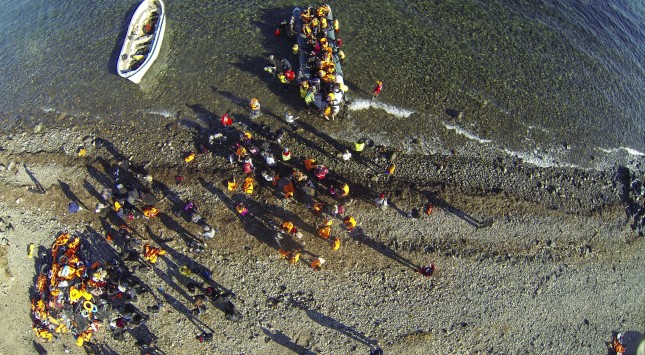
The Third Wave of Environmental Peacebuilding
›For most of 2020, news, politics, policy, and research in the United States and abroad were dominated by the challenges posed by COVID-19, a rapidly unfolding global pandemic unprecedented in scale and cost. For much of the world, however, COVID-19 in fact competed with many other highly destructive events including a cascade of environmental disasters. Swarms of locusts pushed much of the Horn of Africa into or close to famine; 30 severe storms including Hurricanes Iota and Eta battered the Atlantic coasts; some 4 million acres of forest burned to the ground in California, doubling the previous high reached in 2018; typhoons ravaged the Philippines; floods overwhelmed parts of Indonesia; and many regions around the world experienced devastating heat waves. In addition to disaster patterns, the trends in violent state conflict were equally alarming, reaching their highest level since the end of World War II, according to a 2020 report on conflict trends from PRIO. In the most violent conflicts, in Syria and Yemen, the impacts of war have been amplified and complicated by the impacts of drought and years of environmental mismanagement.
-
New U.S. Global Fragility Strategy Recognizes Environmental Issues as Key to Stability
›A new Global Fragility Strategy, released late last year by the U.S. Department of State, signals a growing awareness of the role that environmental issues play in fragility, conflict, and peace. According to the State Department’s Office of Foreign Assistance, in the last five years alone, “the U.S. government has spent $30 billion in 15 of the most fragile countries in the world.” These “large-scale U.S. stabilization efforts after 9/11 have cost billions of dollars but failed to produce intended results,” writes Devex’s Teresa Welsh. As a result, Congress passed into law in 2019 the Global Fragility Act, legislation that directed the Department of State to lead the development of a new 10-year Global Fragility Strategy that sets out a new U.S approach to conflict prevention and stabilization in fragile contexts.
-
How We Misunderstand the Magnitude of Climate Risks – and Why That Contributes to Controversy
›For years, analysts have disputed the extent of climate change’s role in conflict. But the nature of climate risks can stifle those looking to define them.
The Syrian civil war has raged for almost a decade now, and in the climate security community it can feel as if we’ve spent at least that long arguing about its causes. For every claim about the impact of extreme drought in the lead up to 2011, there’s been blowback, with some scholars arguing that the climate angle has been exaggerated at the expense of other causes of the conflict. And for every argument about rural-to-urban migration, there have been suggestions that its impact in precipitating protests has been overstated. Amid some overly forceful media assertion about the significance of climate change—and valid fears that invoking the environment might be seen as absolving guilty parties, despite efforts to highlight the regime’s ultimate culpability—climate security analysts have struggled to fully pinpoint climate’s precise contribution to the conflict. Cue uncertainty, controversy, and sometimes fierce academic polemics.
-
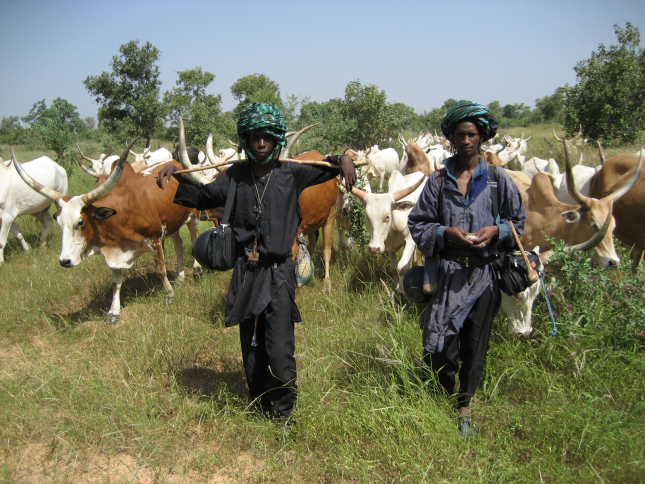
Climate War in the Sahel? Pastoral Insecurity in West Africa Is Not What It Seems
›As violence in Mali and Burkina Faso reached a ten-year high this year, the West African Sahel appears to be experiencing the perfect storm of climate stress, resource degradation, and violent extremism. At the center of that storm, one finds livestock herders—pastoralists—who are both vulnerable to environmental changes in the region, and historically marginalized from politics. Conflict in the region looks like a harbinger of the climate wars to come—but is it really? In research produced for Search for Common Ground, Andrew McDonnell and I found that while competition for land and water resources has increased dramatically across the region, violence associated with pastoralism emerges from a much more complex set of factors. Not surprisingly, the decisive conflict variable is governance.
-
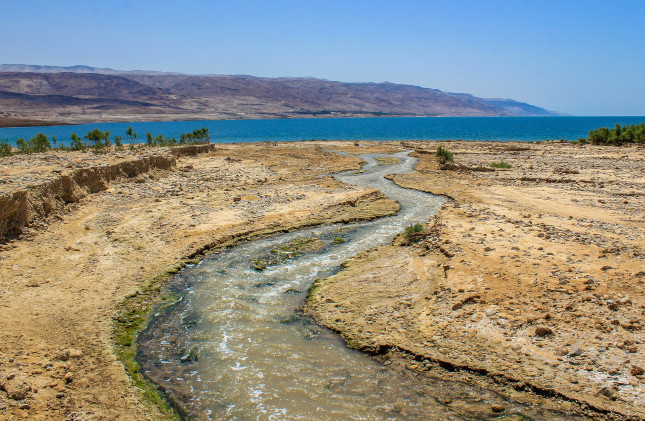
Collaborating Across Borders: Young Professionals in the Middle East Tackle Region’s Water Issues
›November 3, 2020 // By Leah EmanuelHer triangular computer mouse finds the blue circular logo with the white camera on the bottom of her screen. She hovers over it for a second, taking a deep breath before clicking on the icon. Remembering the last program meeting, Marina Lubanov commits herself to listening more to the other participants, prepping herself to take a step back and really absorb what everyone is saying. With nervous excitement, she clicks on her zoom app and is launched into a meeting with other young professionals from her home country of Israel, and neighboring Jordan and Palestine.
-
Climate Change is a Security Issue: An Interview with Geoff Dabelko
›Climate change is a threat multiplier; it is an underlying and exacerbating factor that makes things worse at a level that all actors, including security actors, need to pay attention to, said Geoff Dabelko, Professor and Associate Dean at the George V. Voinovich School of Leadership and Public Affairs at Ohio University and Senior Advisor to the Wilson Center’s Environmental Change and Security Program. He spoke in a recent interview about climate change and security as part of CimpaticoTV’s Climate Adaptation Channel.
Showing posts from category conflict.