• woodrow wilson center
  • ecsp

New Security Beat

Subscribe:
  • rss
  • mail-to
  • Who We Are
  • Topics
    • Population
    • Environment
    • Security
    • Health
    • Development
  • Columns
    • China Environment Forum
    • Choke Point
    • Dot-Mom
    • Friday Podcasts
    • Navigating the Poles
    • Reading Radar
  • Multimedia
    • Water Stories (Podcast Series)
    • Backdraft (Podcast Series)
    • Tracking the Energy Titans (Interactive)
  • Films
    • Water, Conflict, and Peacebuilding (Animated Short)
    • Paving the Way (Ethiopia)
    • Broken Landscape (India)
    • Scaling the Mountain (Nepal)
    • Healthy People, Healthy Environment (Tanzania)
  • Publications
  • Events
  • Contact Us

NewSecurityBeat

The blog of the Wilson Center's Environmental Change and Security Program
Showing posts from category conflict.
  • Lessons From International Water Sharing Agreements for Dealing With Climate Change

    ›
    Guest Contributor  //  June 19, 2017  //  By Shlomi Dinar & Ariel Dinar
    Dead-Sea

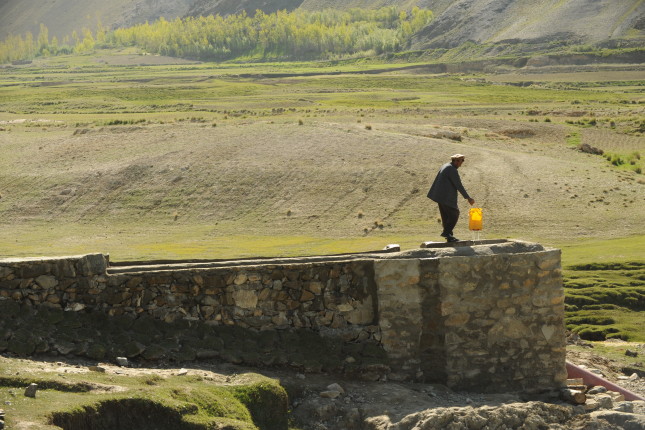
    Scientists agree that many countries in tropical, subtropical, and arid regions should expect changes to water availability and supply from climate change. The U.S. intelligence community has likewise warned of water-driven challenges not only for countries directly affected by water changes, but indirectly to various U.S. national security interests. Perhaps not surprisingly then, the popular literature has been quite clear about prophesizing wars over water.

    MORE
  • Water Security and U.S. Foreign Policy in India, Pakistan, and the Philippines

    ›
    From the Wilson Center  //  June 16, 2017  //  By Namita Rao
    Pakistan-floods

    In 2012, the U.S. National Intelligence Council judged that within the next 10 years, water problems would be a major contributor to instability in “many” countries that are of interest to the United States. South and Southeast Asia, with its many transboundary river basins, large populations, and geopolitical flashpoints, is one among a number of hotspots where such instability could occur.

    MORE
  • The Melting Arctic Could Spur Even More Migration in the Sahel, But There Are Some Surprising Solutions

    ›
    Behind the Headlines  //  June 15, 2017  //  By Meaghan Parker
    6909394361_c160a091ec_b

    A new study published in the Proceedings of the National Academy of Sciences says that melting in Greenland could change ocean currents and cause unprecedented drought in Africa’s Sahel region, the Washington Post reported last week: “The consequence could be devastating agricultural losses as the area’s climate shifts. And in the most severe scenarios, tens of millions of people could be forced to migrate from the area.”

    MORE
  • Women’s Leadership for Stability and Security

    ›
    From the Wilson Center  //  June 13, 2017  //  By Amelie Petitdemange
    Women-Meeting

    Why is Malawi, one of the poorest countries in the world, so peaceful? According to the country’s first female president, Joyce Banda, women get the credit: “When women are in charge, when women control the land, when the children belong to the women, when domestic violence is minimum, then you find more tranquility and peace,” said Banda, now a Wilson Center Distinguished Fellow, at an April 25th event co-sponsored by the Wilson Center’s Women in Public Service Project and Plan International USA.

    MORE
  • 8 Rules of Political Demography That Help Forecast Tomorrow’s World

    ›
    Guest Contributor  //  June 12, 2017  //  By Richard Cincotta
    Venezuela-Protest

    In a world rapidly churning out unpredictable political shocks, intelligence analysts occasionally need to clear their heads of the daily barrage of newsworthy events and instead work with simple theories that discern the direction and speed of trends and help predict their outcomes. Political demography, the study of population age structures and their relationships to political trends and events, has helped some analysts predict geopolitical changes in a world that, from time to time, appears utterly chaotic.

    MORE
  • ND-GAIN Updates Climate Adaptation Index: Good News for Myanmar, Bad News for Brazil

    ›
    Eye On  //  June 2, 2017  //  By Azua (Zizhan) Luo
    Myanmar

    As climate change leads to more weather variability and natural disasters, the need for adaptation is more urgent than ever. The Notre Dame Global Adaptation Initiative (ND-GAIN) aims to enhance understanding of adaptation and inform the public and private sectors on actions and investments.

    MORE
  • Food Violence Shows Need for Both Development and Climate Resilience

    ›
    Guest Contributor  //  May 31, 2017  //  By Benjamin T. Jones, Eleonora Mattiaci & Bear F. Braumoeller
    Kenya-tea

    In March, the Trump Administration released a new budget proposal that would cut funding to the Department of State and U.S. Agency for International Development by 28 percent. The proposal also reduces funding to the United Nations for ongoing climate change efforts. At the same time, the White House is publicly considered withdrawing from the Paris Climate Accords, with a final decision anticipated any day. Critics both outside the administration and within have pointed to the drawbacks of these moves, but the sum of the policy changes could have an even greater impact than the individual parts.

    MORE
  • The Deadly “Humanitarian Ping-Pong” of Refugee Rescue at Sea

    ›
    Guest Contributor  //  May 29, 2017  //  By Chris Psarra
    Lesvos_rescue

    In 2013, a boat capsized 61 miles from the Italian island of Lampedusa killing 268 refugees including 60 children. It was another horrific example of the risks taken by so many families fleeing violence in the Middle East and Africa. But recently released tapes of conversations with coast guard authorities reveal a deeper tragedy.

    MORE
Newer Posts   Older Posts
View full site

Join the Conversation

  • RSS
  • subscribe
  • facebook
  • G+
  • twitter
  • iTunes
  • podomatic
  • youtube
Tweets by NewSecurityBeat

Trending Stories

  • unfccclogo1
  • Pop at COP: Population and Family Planning at the UN Climate Negotiations

Featured Media

Backdraft Podcast

play Backdraft
Podcasts

More »

What You're Saying

  • Volunteers,At,The,Lagos,Food,Bank,Initiative,Outreach,To,Ikotun, Pan-African Response to COVID-19: New Forms of Environmental Peacebuilding Emerge
    Rashida Salifu: Great piece 👍🏾 Africa as a continent has suffered this unfortunate pandemic.But it has also...
  • A desert road near Kuqa An Unholy Trinity: Xinjiang’s Unhealthy Relationship With Coal, Water, and the Quest for Development
    Ismail: It is more historically accurate to refer to Xinjiang as East Turkistan.
  • shutterstock_1779654803 Leverage COVID-19 Data Collection Networks for Environmental Peacebuilding
    Carsten Pran: Thanks for reading! It will be interesting to see how society adapts to droves of new information in...

What We’re Reading

  • Rising rates of food instability in Latin America threaten women and Venezuelan migrants
  • Treetop sensors help Indonesia eavesdrop on forests to cut logging
  • 'Seat at the table': Women's land rights seen as key to climate fight
  • A Surprise in Africa: Air Pollution Falls as Economies Rise
  • Himalayan glacier disaster highlights climate change risks
More »
  • woodrow
  • ecsp
  • RSS Feed
  • YouTube
  • Twitter
  • Facebook
  • Home
  • Who We Are
  • Publications
  • Events
  • Wilson Center
  • Contact Us
  • Print Friendly Page

© Copyright 2007-2021. Environmental Change and Security Program.

Woodrow Wilson International Center for Scholars. All rights reserved.

Developed by Vico Rock Media

Environmental Change and Security Program

Woodrow Wilson International Center for Scholars

Ronald Reagan Building and International Trade Center

  • One Woodrow Wilson Plaza
  • 1300 Pennsylvania Ave., NW
  • Washington, DC 20004-3027

T 202-691-4000