-
Women, Water and Conflict as Development Priorities Plus Some Geoengineering Context
›September 24, 2010 // By Geoffrey D. DabelkoHere are some useful links to environment, population, and security work that recently crossed my desk.
• NYU’s Richard Gowan dissects UK development minister Andrew Mitchell’s encouraging speech identifying conflict-affected states as special DFID priorities. Gowan pulls out highlights from the speech and parses NGO reaction to it on Global Dashboard.
• Council on Foreign Relations’ Isobel Coleman provides five practical suggestions for tapping into women as the “new global growth engine,” on Forbes.
• The Aspen Institute announced its Global Leaders Council for Reproductive Health this week. Their goal: meeting unmet demand for family planning services by 2015 on the MDG schedule. That is over 200,000,000 women who want services but do not have access.
• I’m heartened to see the U.S. Senate pass the Senator Paul Simon Water for the World Act. Hoping the House will follow suit. Last time Congress passed legislation on water, sanitation, and health priorities, the 2005 Senator Paul Simon Water for the Poor Act enjoyed overwhelming bipartisan support.
• Colby historian Jim Fleming, writing in Slate, puts the increasing fascination with geoengineering as a climate response “option” in some sobering historical context. “Weather as a Weapon: The Troubling History of Geoengineering” is the short read. Tune in to hear Jim present the book length version, Fixing the Sky, at the Wilson Center, October 6th at 10:30 am EST.
Follow Geoff Dabelko (@geoffdabelko) and The New Security Beat (@NewSecurityBeat) on Twitter for more population, health, environment, and security updates. -
U.S. v. China: The Global Battle for Hearts, Minds, and Resources
›September 22, 2010 // By Schuyler Null
This summer, Secretary Clinton gave a speech at the Association of Southeast Asian Nations (ASEAN) summit in Hanoi that Chinese Foreign Minister Yang Jiechi called “in effect an attack on China.” What did Clinton say that prompted such a direct response? She called for negotiations over the rights to resource extraction in the South China Sea to be multilateral rather than bilateral:
-
Environmental Disaster or Impetus for Cooperation?
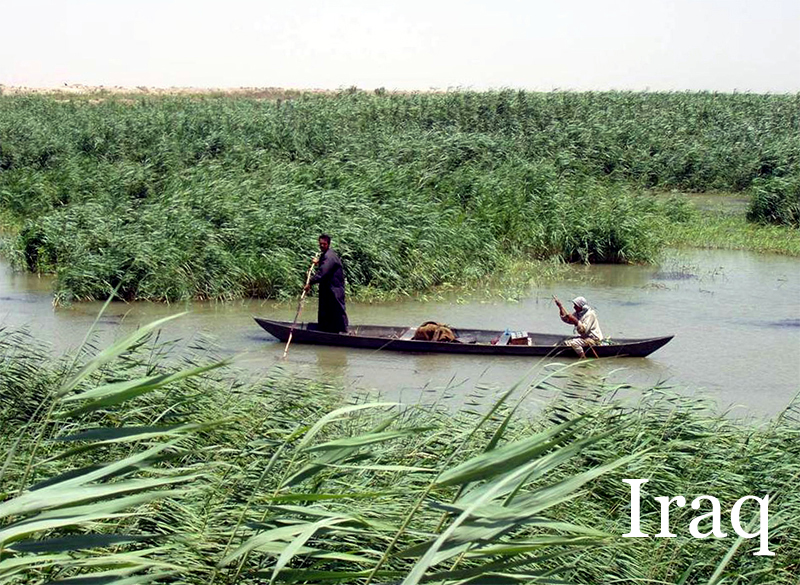
Iraq: Steve Lonergan on the Southern Marshes
›September 21, 2010 // By Schuyler NullIraq’s Southern Marshes, once the Middle East’s largest and most ecologically diverse wetlands, have survived the Iran-Iraq war, systematic drainage by Saddam Hussein, American invasion, and record-breaking drought. Today, however, the prospects for survival are dimming, as water consumption across the region continues to increase and security remains unsettled. Despite these challenges, the marshes’ location along the Iranian border and their reliance on flow from Turkey upstream offers unique potential for environmental peacemaking in this troubled region.
-
Climate Science, Military and Gender Roles, and the Tibetan Plateau
›September 14, 2010 // By Geoffrey D. DabelkoHere are some useful links to environment, population, and security work that recently crossed my desk.
• Need a break from the raging debate set off by Halvard Buhaug’s Proceedings of the National Academy of Sciences quantitative-based critique of climate and African civil war linkages (or lack thereof)? Check out some of the correlations Cullen Hendrix and Idean Salehyan of University of North Texas find in their piece “After the Rain: Rainfall Variability, Hydro-Meteorological Disasters, and Social Conflict in Africa.”
• A German military think tank report worries about the economic and political implications of peak oil over a relatively short time frame.
• Militaries’ humanitarian responses to extreme weather events rather than actual shooting wars are the focus of “The Coming Conflicts of Climate Change,” by U.S. Navy Foreign Area Officer Michael Baker. Baker is writing for the Council on Foreign Relations as one of their International Affairs Fellows.
• Oxfam America and IUCN staff experts call for greater consideration of different gender roles in addressing climate change. UN climate institutions are targeted in the IPS story.
• Journalist Steve Solomon highlights the high politics of transboundary water in Asia with a piece in Forbes. China’s control of the Tibetan water tower with massive dam building amps up the pressure in South and Southeast Asia.
• Canadian scholar Eric Kaufmann’s book, Shall the Religious Inherit the Earth? breaks down relative population growth rates between the religious and the secular. One is high, one is below replacement level. So far the book is only published in Europe but you can get it from Amazon UK.
• The highly respected science journal Nature editorializes against the rising tide of loud anti-science demagoguery. Strong words on the U.S. political context.
Follow Geoff Dabelko (@geoffdabelko) and The New Security Beat (@NewSecurityBeat) on Twitter for more population, health, environment, and security updates. -
Yemen: Population, Environment, and Security Collide
›September 14, 2010 // By Schuyler NullThe Middle East is home to some of the fastest growing, most resource-scarce, and conflict-affected countries in the world. New Security Beat’s “Middle East at the Crossroads” series takes a look at the most challenging population, health, environment, and security issues facing the region.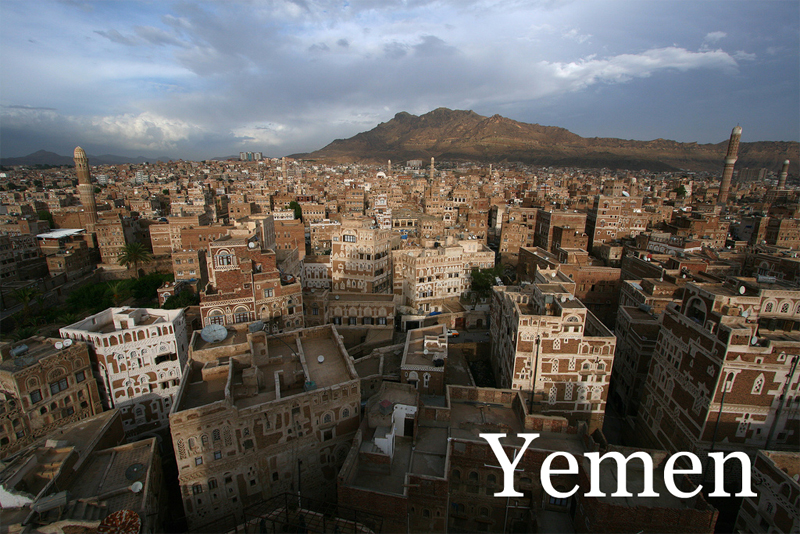
Yemen is one of the most kinetic intersections of human and environmental security in the world. At the tip of the Arabian Peninsula, it is a natural gateway for those fleeing hardship in the conflict-wracked Horn of Africa, but observers are concerned it may soon resemble something much less than a haven.
Increased local resistance to a corrupt regime in Sanaa and an influx of Al Qaeda influence recently caused the CIA to reassess the franchise in Yemen as a more urgent threat to national security than the core Al Qaeda elements in Pakistan and Afghanistan.
In addition to these traditional security challenges, Yemen faces a bevy of population and environment-related problems. With its 22.8 million people, Yemen is growing faster than any other country in the Middle East – by 2050, it will rival Spain in total population. It is home to nearly a million impoverished migrants from East Africa, is almost totally reliant on groundwater that is being drained faster than can naturally be replenished, has an unemployment rate approaching 40 percent, the lowest rating in the world for gender equity, and almost no source of income besides oil exports, which have declined 56 percent since 2001 and are expected to continue sliding, barring any major new discoveries.
Beyond its more covert commitments, the United States has pledged over $210 million to Yemen for military, economic, and development assistance for this year alone. Is it enough to stave off collapse in one of the Middle East’s most troubled states?
For more see The New Security Beat’s full feature, “Demographics, Depleted Resources, and Al Qaeda Inflame Tensions in Yemen,” published earlier this summer.
Sources: Associated Press, Association for the Study of Peak Oil – USA, Central Intelligence Agency, Washington Post.
Photo Credit: Adapted from “Old Town Sanaa – Yemen 53,” courtesy of flickr user Richard Messenger. -
Climate-Security Linkages Lost in Translation
›A recent news story summarizing some interesting research by Halvard Buhaug carried the headline “Civil war in Africa has no link to climate change.” This is unfortunate because there’s nothing in Buhaug’s results, which were published in the Proceedings of the National Academy of Sciences, to support that conclusion.
In fact, the possibility that climate change might trigger conflict remains very real. Understanding why the headline writers got it wrong will help us better meet the growing demand for usable information about climate-conflict linkages.
First, the headline writer made a simple mistake by translating Buhaug’s modest model results — that under certain specifications climate variables were not statistically significant — into a much stronger causal conclusion: that climate is unrelated to conflict. A more responsible summary is that the historical relationship between climate and conflict depends on how the model is specified. But this is harder to squeeze into a headline — and much less likely to lure distracted online readers.
Buhaug tests 11 different models, but none of the 11 corresponds to what I would consider the emerging view on how climate shapes conflict. Using Miguel et al. (2004) as a reasonable representation of this view, and supported by other studies, there seems to be a strong likelihood that climatic shocks — due to their negative impacts on livelihoods — increase the likelihood that high-intensity civil wars will break out. None of Buhaug’s 11 models tested that view precisely.
If we are going to make progress as a community, we need to be specific about theoretically informed causal mechanisms. Our case studies and statistical tests should promote comparable results, around a discrete number of relevant mechanisms.
Second, a more profound confusion reflected in the headline concerns the term “climate change.” Buhaug’s research did not look at climate change at all, but rather historical climate variability. Variability of past climate is surely relevant to understanding the possible impacts of climate change, but there’s no way that, by itself, it can answer the question headline writers and policymakers want answered: Will climate change spark more conflict? For that we need to engage in a much richer combination of scenario analysis and model testing than we have done so far.
We are in a period in which climate change assessments have become highly politicized and climate politics are enormously contentious. The post-Copenhagen agenda for coming to grips with mitigation and adaptation remains primitive and unclear. Under these circumstances, we need to work extra hard to make sure that our research adds clarity and does not fan the flames of confusion. Buhaug’s paper is a good model in this regard, but the media coverage does not reflect its complexity. (Editor’s note: A few outlets – Nature, and TIME’s Ecocentric blog – did compare the clashing conclusions of Buhaug’s work and an earlier PNAS paper by Marshall Burke.)
The stakes are high. This isn’t a “normal” case of having trouble translating nuanced science into accessible news coverage. There is a gigantic disinformation machine with a well-funded cadre of “confusionistas” actively distorting and misrepresenting climate science. Scientists need to make it harder for them to succeed, not easier.
Here’s how I would characterize what we know and we are trying to learn:1) Economic deprivation almost certainly heightens the risk of internal war.
To understand how climate change might affect future conflict, we need to know much more. We need to understand how changing climate patterns interact with year-to-year variability to affect deprivation and shocks. We need to construct plausible socioeconomic scenarios of change to enable us to explore how the dynamics of climate, economics, demography, and politics will interact and unfold to shape conflict risk.
2) Economic shocks, as a form of deprivation, almost certainly heighten the risk of internal war.
3) Sharp declines in rainfall, compared to average, almost certainly generate economic shocks and deprivation.
4) Therefore, we are almost certain that sharp declines in rainfall raise the risk of internal war.
The same scenarios that generate future climate change also typically assume high levels of economic growth in Africa and other developing regions. If development is consistent with these projections, the risk of conflict will lessen over time as economies develop and democratic institutions spread.
To say something credible about climate change and conflict, we need to be able to articulate future pathways of economics and politics, because we know these will have a major impact on conflict in addition to climate change. Since we currently lack this ability, we must build it.Marc Levy is deputy director of the Center for International Earth Science Information Network (CIESIN), a research and data center of the Earth Institute of Columbia University.
Photo Credit: “KE139S11 World Bank” courtesy of flickr user World Bank Photo Collection.
-
Saleem Ali at TEDxUVM on Environmental Peacemaking
›“The use of the term ‘peace’ is in many circles still considered taboo, because immediately people think you are talking about something that is utopian,” said University of Vermont Professor Saleem Ali at a recent TEDx event on sustainability. “But I’m here to tell you that peace is pragmatic. Peace is possible.”
Ali points out the value of peace to every sector of society and, using an example from Ecuador and Peru, argues for the utility of the environment as a peacemaker. Other longstanding conflict areas like Cyprus, Iraq, Israel, and Korea are also ripe for environmental peacebuilding efforts, he says.
Professor Ali has written for The New Security Beat before on the strengths and weaknesses of viewing conservation and sustainability efforts through a strictly security lens. He points out that environmentalists must tread a fine line when assigning causality between the environment and conflict, but even when natural resources or climate are not central to a conflict, environmental peacebuilding can still play a role in creating shared ground (sometimes literally) between combatants.
“Treasures of the Earth,” Ali’s latest book, examines the thorny subject of how best to balance resource extraction in developing countries with long-term sustainability. Recent examples, such as Angola and Liberia’s blood diamonds, the DRC’s conflict minerals, and concerns over Afghanistan’s potential reserves have shown the difficulty in striking that balance.
“Ultimately, conflict trumps everything else” in terms of what we ought to be concerned with, Ali argues, and therefore, anyone, no matter their profession or capacity, should keep the pursuit of peace in mind – and all options on the table – when making decisions that affect others. -
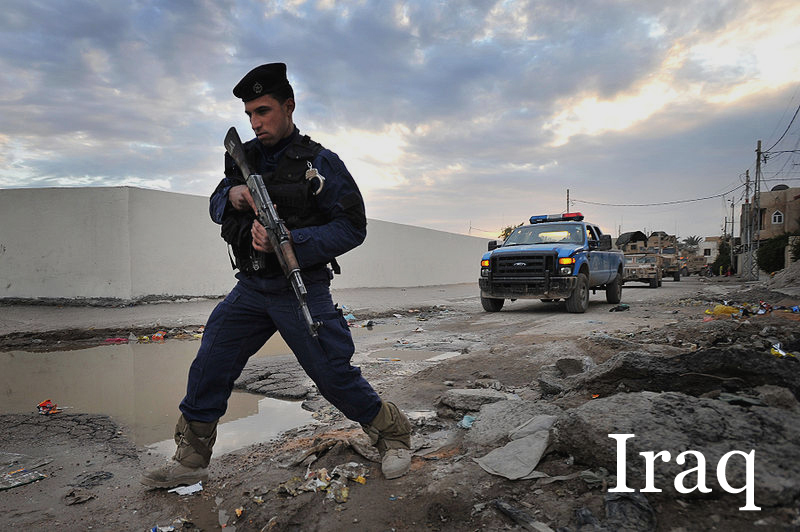
Water, Power, Trash, and Security: Interview with Mishkat Al Moumin, First Iraqi Minister of the Environment
›August 31, 2010 // By Schuyler NullAs the final American combat brigade pulls out of the country, the prevailing opinion in the United States about Iraq at the moment seems to be one of “bad politics are better than no politics,” and that despite continued violence (albeit significantly lessened from 2006-2007 levels), the American mission is largely finished. However, serious challenges remain, one of the most significant being the government’s continued inability to supply basic services to a growing population.
Showing posts from category conflict.