Showing posts from category conflict.
-
Fixing the Sky: The Checkered History of Weather and Climate Control
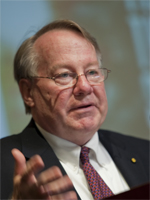
›As geoengineering becomes a more politically and technologically appealing approach to addressing climate change, it is critical to heed the lessons of history and understand the limits of our control over nature, said James Fleming of Colby College. Speaking at the launch of his new book, Fixing the Sky: The Checkered History of Weather and Climate Control, at the Wilson Center on October 6, Fleming brought what he called a “historically informed view of the humanities” to a growing policy discussion: the possibility of using geoengineering as a “quick fix” for the problem of climate change.
Not So Ancient History
“When facing unprecedented challenges, it’s good to take a look at the precedents,” said Fleming. He pointed to recent weather management projects conducted in China, U.S. experiments in the 1940s, and older historical discussions about geoengineering as evidence of humanity’s long fascination with “fixing of the sky.”In 2008, “they had 30,000 Chinese artillerists shooting chemicals at the clouds to keep either the venues clear or get the rain down on the weekend before the Olympics started,” Fleming said. “And they’re still doing this kind of stuff. So now there’s inter-regional tensions in China, because imagine rains comes across the country, some places get hit some places get missed, there’s intermittent showers, but now every intermittent shower is seen as a managed event where ‘you took my rain away from my farmland.’ So as soon as you start managing the sky, you start fighting about it.”
In 1839, the United States’ first meteorologist, James Espy, proposed lighting regular fires along the Appalachians to induce rainfall on the eastern seaboard. “What if Espy’s idea actually worked?” asked Fleming. “It’d very much like that Chinese story today, where there’s internecine struggles between keeping and taking the rain away from others,” he said.
The Threat of Militarization
Fleming highlighted a number of fundamental ethical concerns raised by atmospheric scientist Alan Robock:
In 1947 Nobel Laureate Irving Langmuir, in conjunction with GE and the U.S. military, experimented with controlling Hurricane King by seeding it with dry ice. They expected the storm to continue its course off the coast of Florida into the Atlantic, but instead it veered west and hit Savannah, Georgia, causing considerable damage. The lesson, said Fleming, is that “you can intervene in a cloud, but you can’t point it downwind – you can’t tell it what to do.”- Who has the moral right to change the climate?
- Where would be the “global thermostat” be?
- Will it reduce incentives for mitigation?
- Could it be commercialized and/or militarized?
Other U.S. military research into geoengineering included researching the possibility of inducing west-to-east moving rain storms in Europe to help neutralize a Soviet invasion and using the magnetosphere to create selective blackouts over Moscow.
“Shall we fix the sky – is it broken?” asked Fleming. “And if it is broken should we have people with military hardware shooting at it?”
One possible institutional counter could be strengthening the UN Environmental Modification Convention (ENMOD), which Fleming said “has been revisited again twice, and could be revisited again if large-scale environmental modification were to get more serious – if there’s deployment of geoengineering techniques.” The treaty prohibits environmental modification “through the deliberate manipulation of natural processes – the dynamics, composition or structure of the Earth, including its biota, lithosphere, hydrosphere and atmosphere, or of outer space.”
The Once and Future Earth
The Greek myth of Phaeton illustrates how old, but also flawed, the human desire to control climate really is, said Fleming. In the myth, Phaeton convinces his father, Helios, to let him drive the sun’s chariot for a day. However, Phaeton falters, lacking the strength and experience to control the reins, and Zeus intervenes to save the world from immolation. “Take up Phaeton’s reins,” said Fleming, should be interpreted as “control your carbon emissions,” rather than trying to control the sky.
We should consider geoengineering to be only an “interesting hypothetical exercise,” said Fleming, until the consequences and results of such colossal tinkering can be better assessed. “Even perfect climate prediction would lead to climate chaos, because the country that could do that could trump its competitors” in various markets, he said. However, such predictions might never be possible, considering the difficulty in modeling cultural and ethical norms, as well as the geostrategic implications – in short, the human element.
Fleming cautioned against the fundamental belief that you can accurately model the impact of geoengineering projects, reminding would-be geoengineers that “you can only have one Earth to experiment on, you don’t have a lot drosophila Earths or laboratory rat-Earths – you only have one.”
Event Resources
Sources: NASA, Toronto Star, U.S. State Department.
Image Credit: Adapted from original by Craig Phillips for The Wilson Quarterly, reproduced with permission. -
Watch: Alex Evans on Natural Resource Supply and Demand, Scarcity, and Resilience
›October 27, 2010 // By Schuyler Null“The backdrop to the whole issue of scarcity is that demand is rising, but on the supply side, we’re increasingly hitting restraints,” said Alex Evans of NYU’s Center for International Cooperation in this interview with ECSP.
“Global population is growing, a kind of new global middle class is expanding, especially in emerging economies, and that means demand is rising across the board – particularly for energy, for food, water, and air space for our carbon emissions.”
Evans joined Mathew Burrows of the National Intelligence Council this September at the Wilson Center to talk about scarcity, natural resources, and conflict. He argued that building resilience and improving governance of natural resources is key to addressing growing demand, particularly in developing countries.
“With the Millennium Development Goals there’s been tremendous emphasis on increasing access to services, like health and education, which is important,” he said. “But we haven’t always brought the risk management aspect to the fore, and I think the emphasis we’re starting to see now on areas like social protection, climate adaptation, disaster risk reduction – these are areas that are much more concerned with resilience and it’s very welcome that they’re moving to the front of the development agenda.”
Poor governance in some developing countries has resulted in cases like in Nigeria and the Democratic Republic of the Congo, where natural resources are seen as more of a curse to the local people than a blessing. The intersection between supply and demand will continue to make these problems more acute.
“Over the last 10 years when international aid agencies have thought about governance, it’s usually been in terms of capacity building in the executive branch – areas like public financial management,” said Evans. “I think increasingly we’ll see more of the very, very political issues surrounding who owns natural resources like land, or water, or fisheries, or forests.”
Evans also highlighted other international governance issues like transboundary agreements (or lack thereof), the resiliency of the international trade system (or lack thereof), and existing legal infrastructure that will be challenged by a changing climate and growing demand.
“We haven’t really begun to think these issues through,” he said, “but these are potential conflict flashpoints for the future.” -
Christian Leuprecht on Demography, Conflict, and Sub-National Security
›“Demographics are going to be to the 21st century what class cleavages were to the 19th century,” said Christian Leuprecht in this conversation with the Environmental Change and Security Program. Leuprecht is an assistant professor at the Royal Military College of Canada and was one of the authors featured in ECSP Report 13.
“Specifically with regards to demography and security, the challenge that I see is at the sub-national level. That is to say that most of the conflict, if you look around the world – the intractable conflicts, the violent conflicts, the conflicts that have been dragging on for decades – tend to be at the sub-national level,” he said. “Yet much of the academic work and the way data are gathered are at the national level.”
The “Pop Audio” series offers brief clips from ECSP’s conversations with experts around the world, sharing analysis and promoting dialogue on population-related issues. Also available on iTunes. -
Rape, Resource Management, and the UN in Congo: What Can Be Done?
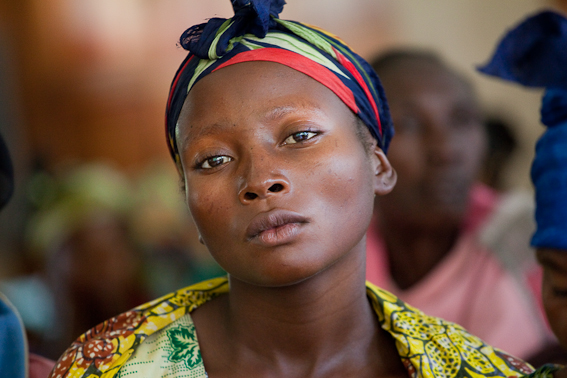
›Rape as a weapon of war is not unique to the Democratic Republic of Congo (DRC), but the scope and degree to which it occurs in this part of the world, especially in the resource-rich eastern provinces – an epicenter of violence during the war – is alarming and unprecedented.
Walikale, the site of a recent scourge of rapes and violence is not unlike several other cities and villages in the Kivus and in the DRC in general. Rich in both tin and gold, Walikale is beset by a convergence of several opposing military factions: the rebel Congrès National pour la Défense du Peuple, (CNDP), whose members have supposedly been reintegrated into the official Congolese army; the FARDC, who have been accused of crimes as egregious as those committed by rebel armies; the Rwandan FDLR; Tutsi rebel factions; and numerous other smaller rebel groups and non-Congolese military groups.
The raping of more than 300 women, children, and men that occurred between July 31 and August 2 in the area of Walikale and the village of Ruvungi has made international news headlines and caused an uproar about the role and responsibilities of the United Nation mission in the DRC – MONUSCO (formerly MONUC) – and their capacity to actually keep the peace. UN peacekeepers, stationed about 30 kilometers away from the attacks, were reportedly aware of rebel activity in the area, but were not aware of the mass raping until after the crimes had been committed. Officials went on a fact-finding mission several days later once the rapes were reported by the International Medical Corps. Some, however, argue that officials should have acted differently, dispatching peacekeepers to the Walikale area as soon as they were made aware of rebel activity.
UN workers and other international organizations may have known about the rapes while they were occurring, and in retrospect the international community can criticize their inaction during the perpetration of this massive atrocity, but there are larger questions that loom: Why has the DRC become the “rape capital of the world?” And what can we do to enable UN peacekeeping forces to actually keep the peace?
More than two months after these crimes were perpetrated, rapes are no doubt still occurring across the region. The UN has declared that militias will be charged for the crimes in Walikale, arrests have already been made, and there are people doing good work to help the victims of sexual crimes after the fact. But despite these efforts and the ongoing presence of MONUSCO and efforts to integrate and train the FARDC as a legitimate army that protects the citizens of the country, sexual violence against civilians, and especially against women, has continued at an outrageous level.
The mandate of MONUSCO, carried over in part from its predecessor, MONUC, is to both protect civilians and backstop the efforts of the FARDC – a sometimes conflicting mandate. Designed to keep the peace and monitor the implementation of the ceasefire agreement, to “facilitate humanitarian assistance and human rights monitoring, with particular attention to vulnerable groups including women, children and demobilized child soldiers” (emphasis added), the UN mission has clearly not been able to successfully fulfill this mandate, even after almost 12 years on the ground. While the UN charter does not explicitly include the word “peacekeeping,” and there are those who argue that it is not properly structured to act as a peacekeeping body, the UN has more than 60 peacekeeping missions under its belt since its first mission in 1948 and the DRC is its largest ever. Still, the weak record of success of MONUC and of its successor MONUSCO together with the unreliability of the FARDC does not inspire confidence for the safety or security of civilians in the DRC.
Why the rapes continue and why neither MONUSCO nor the Congolese authorities are unable to stop them are complicated questions. Explanations range from political complications preventing peacekeepers from becoming involved in day-to-day human security to a simple lack of mission resources. The rapes in Walikale occurred in an area with abundant tin deposits and some of the largest gold mines in the country. The DRC, and the east in particular, is ripe with resources, and historically, underdeveloped regions characterized by such a heavy concentration of natural resources are often more cursed than they are blessed. The competition over resources and violence spurred by an unequal distribution of rents is perhaps part of the reason for such intense violence; it does not, however, explain why rape has become a weapon of choice, why women have become a target of war crimes in general, or why the level of violence against women in the DRC in particular has risen to such a horrifying level.
Justine Lindemann is program assistant with the Africa Program at the Woodrow Wilson Center.
Sources: AFP, AFRICOM, AllAfrica, BBC, Congo Siasa, IPS News, The New York Times, Panzi Hospital of Bukavu, UN, UN Office of the High Commissioner for Human Rights, VII Photo Agency.
Photo Credit: “Congo kivu,” courtesy of flickr user andré thiel. -
UNFPA State of World Population 2010
›Today marks the release of the United Nations Population Fund (UNFPA) annual State of the World Population Report. But the 2010 edition, “From Conflict and Crisis to Renewal: Generations of Change,” is unlike those that have come before. In lieu of the traditional statistic-driven report, this year’s edition has enlisted another tool to document living conditions across the world — storytelling. In addition to demographers, the UNFPA looked to journalists to fan out across the world to gather stories on the ground and paint a portrait of the challenges and opportunities facing today’s global population that goes beyond the numbers, with particular focus on gender issues and human insecurity.
For more on the UNFPA report, be sure to listen to The New Security Beat’s interview with one of its authors, Barbara Crossette, who talks about her experiences dealing with family planning around the world, as part of our ongoing Pop Audio series.
Video Credit: UNFPA. -
Barbara Crossette on UNFPA State of the World Population 2010 Report
›“Particularly when you go into a society that’s been broken by war or conflict or is so impoverished that is has nowhere to start climbing up, there have to be integrated programs and they have to work with people in mind,” said former New York Times foreign correspondent Barbara Crossette in an interview with The New Security Beat. “The people themselves will solve a lot of the problems around them if they’re just given the tools to do so.”
Crossette is one of the lead authors of the UN Population Fund’s latest State of the World Population Report, “From Conflict and Crisis to Renewal: Generations of Change,” set to launch this Wednesday, October 20th. She spoke to us particularly about the challenges of women around the world and the unique storytelling aspect of this year’s report.
The “Pop Audio” series offers brief clips from ECSP’s conversations with experts around the world, sharing analysis and promoting dialogue on population-related issues. Also available on iTunes. -
Admiral Mullen and the “Strategic Imperative” of Energy Security
›October 13, 2010 // By Geoffrey D. DabelkoTop American military brass weighed in this morning on energy security with an emphasis on conservation, efficiency, and alternatives. A little climate change even crept into the discussion as well.
The occasion was a Department of Defense conference titled “Empowering Defense Through Energy Security” sponsored by the Office of the Under Secretary of Defense for Acquisition, Technology & Logistics and the United States Air Force, Army, Navy and Marine Corps leadership. The new Office of Operational Energy Plans and Programs was on point.
Starting at the top, Chairman of the Joint Chiefs of Staff Admiral Mike Mullen set the tone:My friend and columnist Tom Friedman has spoken eloquently of the growing need – and awareness – to rethink our views on energy – and minimize our dependence on overseas energy sources that fuel regimes that do not always share our interests and values, while not further damaging a world that is already becoming overheated, overpolluted, and overstretched.
The wider context of climate change and its security implications also found a place in Admiral Mullen’s remarks:
We in the Defense Department have a role to play here – not solely because we should be good stewards of our environment and our scarce resources but also because there is a strategic imperative for us to reduce risk, improve efficiencies, and preserve our freedom of action whenever we can. …
So, to start with, let’s agree that our concept of energy must change. Rather than look at energy as a commodity or a means to an end, we need to see it as an integral part of a system … a system that recognizes the linkages between consumption and our ability to pursue enduring interests.
When we find reliable and renewable sources of energy, we will see benefit to our infrastructure, our environment, our bottom line … and I believe most of all … our people. And the benefits from “sustainability” won’t just apply to the military.Beyond these immediate benefits, we may even be able to help stem the tide of strategic security issues related to climate change.
Admiral Mullen then gave way to General Norton A. Schwartz, chief of staff of the U.S. Air Force; General Peter W. Chiarelli, vice chief of the U.S. Army; Aneesh Chopra, the federal chief technology officer; and Secretary of the Navy Ray Mabus, with Sharon Burke, director of operational energy plans and programs, running the show.
This is no small matter. In addition to the newly developing waterways near the polar icecaps, in 2008, the National Intelligence Council identified twenty of our bases that are physically at risk as a result of the rising level of the ocean.
And regardless of what the cause of these changes is – the impacts around the world could be sobering – and far-reaching.
As glaciers melt and shrink at a faster rate, water supplies have been diminishing in parts of Asia.
Rising sea levels could lead to mass migration and displacement similar to what we have seen in Pakistan’s flood … and climate shifts could drastically reduce the arable land needed to feed a burgeoning population as we have seen in Africa.
This scarcity of – and potential competition for – resources like water, food, and space – compounded by an influx of refugees if coastal lands are lost … could not only create a humanitarian crisis, but create conditions of hopelessness that could lead to failed states … and make populations vulnerable to radicalization.
These challenges highlight the systemic implications – and multiple-order effects – inherent in energy security and climate change.
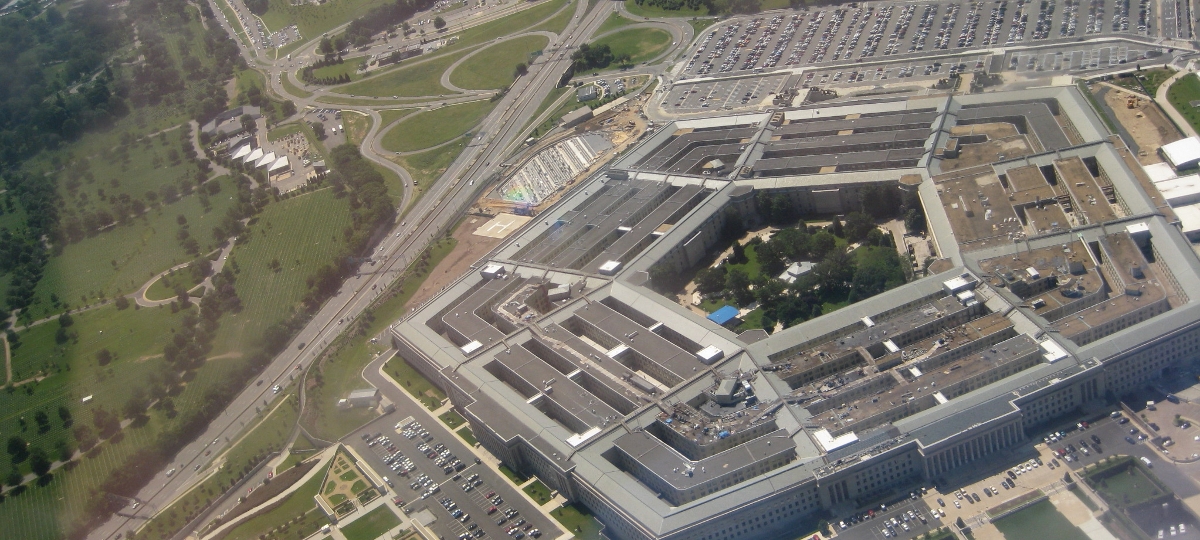
And while the brass met inside, clean energy companies exhibited their wares in the Pentagon’s inside courtyard.
Photo Credit: “the Pentagon from above,” courtesy of flickr user susansimon. -
Tracking the End Game: Sudan’s Comprehensive Peace Agreement
›The next nine months are critical for Sudan. The 2005 Comprehensive Peace Agreement (CPA) sets January 9, 2011, as the date when southern Sudanese will vote on secession or unity, and the people of disputed Abeyei will vote on whether to be part of North or South Sudan. Between now and July 2011, when the provisions of the CPA come to an end, we could see the birth of the new country of South Sudan—or a return to a North-South war if the referendum is stalled, botched, or disputed. (Few currently expect that a unity vote will create the “New Sudan” envisioned by the late John Garang.)