-
First Steps on Human Security and Emerging Risks
›
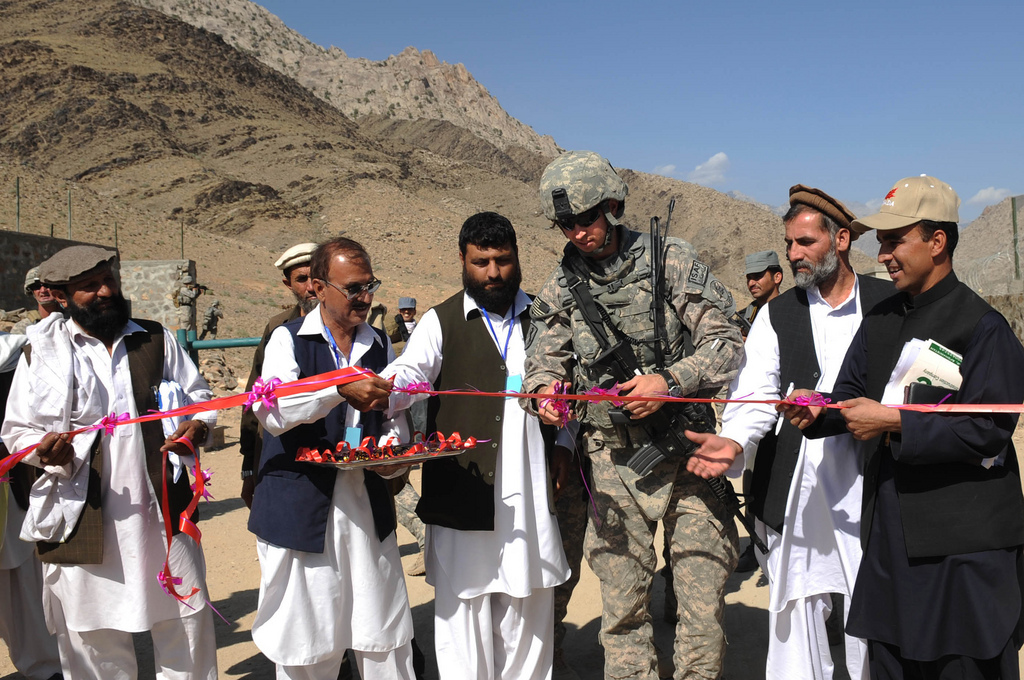
The 2010 Quadrennial Development and Diplomacy Review (QDDR), the first of its kind, was recently released by the State Department and USAID in an attempt to redefine the scope and mission of U.S. foreign policy in the 21st century. Breaking away from the Cold War structures of hard international security and an exclusive focus on state-level diplomacy, the QDDR recognizes that U.S. interests are best served by a more comprehensive approach to international relations. The men and women who already work with the U.S. government possess valuable expertise that should be leveraged to tackle emerging threats and opportunities.
-
‘Blood in the Mobile’ Documents the Conflict Minerals of Eastern Congo
›With Blood in the Mobile, Danish director Frank Poulsen dives into the eastern Democratic Republic of Congo (DRC) to document a vicious cycle of conflict that has claimed millions of lives, produced rampant humanitarian abuses, and is driven in part (though not entirely, it should be noted) by the area’s rich mineral resources – all under the noses of the world’s largest peacekeeping operation.
The minerals extracted in the eastern DRC – tin, tantalum, tungsten, and gold, mainly from North and South Kivu provinces – are used in cell phones around the world. The trailer shows Poulsen gaining access to an enormous tin mine in the area – the biggest illegal mine in the Congo, he says – capturing powerful footage of the squalid and dangerous conditions that thousands of often-teenage workers labor under for days at a time.
“Four years ago this place was nothing but jungle,” narrates Poulsen. “Today, 15,000-20,000 people are working here [and] different armed groups are fighting to gain control over the mine.”
Though Poulsen is pictured making dramatic phone calls to Nokia (the largest cell phone manufacturer in the world), the issue of conflict minerals from the DRC and places like it is in fact more than just a blip on the radar screens of most leading technology companies. The NGO the Enough Project in particular has been championing the cause and bringing it to tech companies’ doorsteps for quite some time. Their efforts have helped produce an action plan for certifying conflict-free supply chains (complete with company rankings) and also helped lead to passage of the United States’ first law addressing conflict minerals this fall.
However, Poulsen’s message of the developed world taking responsibility for sourcing is commendable. Efforts like this that have led to the adoption of corporate responsibility initiatives like the Cardin-Lugar amendment, a similar measure in the works for the European Union, the Extractive Industries Transparency Initiative, and the Kimberley Process for diamonds.
Blood in the Mobile premiered this fall at the International Documentary Film Festival and the producers are “in dialogue with different U.S. distributors,” according to their Facebook page, where those interested are advised to stay tuned.
Sources: BloodintheMobile.org, Enough Project, EurActiv.
Video Credit: Blood in the Mobile Official Trailer. -
Book Preview: ‘The Future Faces of War: Population and National Security’
›February 3, 2011 // By Christina DaggettThe word “population” doesn’t come up too often in national security debates, yet, a shift may be coming, as global population reaches the seven billion mark this year, youth-led unrest rocks the Middle East, and questions of aging enter the lexicon of policymakers from Japan and South Korea to Europe and the United States. What does a population of nine billion (the UN medium-variant projection for 2050) mean for global security? How will shrinking populations in Europe affect Western military alliances and operations? Is demography destiny? The latter question has plagued demographers, policymakers, and academics for centuries, resulting in heated debate and dire warnings. Jennifer Dabbs Sciubba continues this debate in her new book, The Future Faces of War: Population and National Security, but with a decidedly more measured and optimistic tone (full disclosure: Sciubba was one of my professors). The book is targeted at policymakers but is accessible to anyone with an interest in the field of demography and national security. She will launch her book at an event hosted by the Wilson Center on March 14.
Turning Challenge Into Opportunity
The main themes of The Future Faces of War are challenge and opportunity. Yes, national security will be tested by a series of evolving demographic trends in the decades ahead, but with proper insight and preparation, states can turn these challenges into opportunities for growth and betterment. Sciubba writes, “How a state deals with its demographic situation – or any other situation for that matter – is more important than the trends themselves” (p.125).
Part of turning these population challenges into opportunity is understanding long-term trends – a daunting task given the range and number of trends to consider. Drawing on her own experiences in the defense community, Sciubba writes how policymakers were “receptive” to the idea of population influencing national security, but that the “overwhelming number of ways demography seemed to matter” made them hesitant to act (p.3). With the publication of this book, which clearly and concisely outlines the basics of each population trend with demonstrative examples, hopefully that hesitation will be turned into action.
Youth and Conflict
The first population trend Sciubba highlights is perhaps the one of most immediate concern to national security policymakers given recent world events. In the chapter “Youth and Youthful Age Structures,” Sciubba discusses the security implications of those countries (in particular those in Africa, the Middle East, and Central Asia) with a majority of their population under the age of 29. She writes, “Most important for national security, countries with youthful age structures are generally the least developed and least democratic in the world, and tend to have the highest risk of civil conflict” (p. 18). In fact, between 1970 and 1999 countries with very young and youthful age structures were two to four times more likely to experience civil conflict than countries with more mature age structures.
The risks of very young and youthful populations are well documented (Sciubba cites the examples of Somali piracy, religious extremism, and child soldiers in Africa), but what has not been as widely discussed are the opportunities. Youthful states have a large pool of potential recruits for their armies, plenty of workers to drive economic development, and even an opportunity to grow democratically through social protest. Sciubba writes, “Youth can also be a force for positive political change as they demand representation and inclusion in the political process… social protest is not always a bad thing, even if it does threaten a country’s stability, because it may lead to more representative governance or other benefits” (p. 23). (For more on youth and the transition to democracy, see “Half a Chance: Youth Bulges and Transition to Democracy,” by Richard Cincotta, and his recent blog post about the Jasmine Revolution in Tunisia).
Graying of the Great Powers
At the other end of the demographic transition is population aging. Sciubba points out that the countries with the highest proportions of people aged 60 and older are also “some of the world’s most powerful and economically or politically strategic states” (p. 42). Europe, Japan, and the United States are all getting older (though the United States to a slightly lesser extent), and Sciubba states that the “graying” of these countries has the potential to greatly limit military preparedness, size, and funding. She points out that the number of recruits available will be much smaller and more money will have to be spent on pensions and health care for the growing number of elderly persons.
To counteract these challenges, Sciubba recommends that aging states seek out alliances with each other and countries with younger populations. She writes, “As part of strong alliances, states have strength in numbers, even if they are individually weakened by aging” (p. 47). Another alternative would be to improve military technology and efficiency to compensate for the drop in personnel.
Migration and Security: A “Unique” Relationship
Migration, the third pillar of demographic change after fertility and mortality, has what Sciubba calls a “unique relationship to national security” (p.83). Migration “is the only population driver that can change the composition of a state or a community within months, weeks, or even days” (p. 83). Mass migrations (such as those caused by a natural disaster or violent conflict) are the best examples of this trend. Some of the security challenges Sciubba highlights about migration are refugee militarization, competition for resources, and identity struggles among the native and migrant populations.
However, Sciubba also argues that both migrants and receiving countries can benefit. Origin states release pressure on their crowded labor markets and earn income from remittances, while receiving countries increase their labor market and mitigate population decline (a key component of U.S. growth).
Much of this has been studied before, but two new developments in migration trends that Sciubba calls to our attention are what she calls the “feminization of migration” (the increasing number of women who are likely to move for economic reasons) and migration as a result of climate change. Both are intriguing new areas of inquiry that deserve further study, but only get a passing mention in the book.
Making Her Case
The basic trends outlined above are only a small sampling of the wealth of information to be found in The Future Faces of War. Other noteworthy topics include a discussion on transitional age structures, urbanization, gender imbalances, HIV/AIDS, differential growth among ethnic groups, and many more. The topics are varied and wide-ranging and yet, Sciubba manages to connect them and makes her case convincingly for their inclusion in the broader national security dialogue. Sciubba has briefly written about many of these topics before, but this is the first time she (or anyone else, for that matter) has brought them together in one comprehensive book with such a focus on national security.
Christina Daggett is an intern with ECSP and a former student of Jennifer Dabbs Sciubba’s at Rhodes College.
Sources: Population Action International.
Photo Credits: “Children at IDP Camp Playful During UNAMID Patrol,” courtesy of flickr user United Nations Photo. Book cover image provided by, and used with the permission of, Jennifer Dabbs Sciubba and ABC-CLIO. -
Shannon O’Lear, University of Kansas
Book Preview: ‘Environmental Politics: Scale and Power’
›February 1, 2011 // By Shannon O’LearThe cover of my book, Environmental Politics: Scale and Power, shows two cows casually rummaging through piles of garbage on the streets of a city somewhere in India. It’s a colorful, but disturbing, image. Why not show cows in their “natural” setting, say, in a Kansas pasture? Who let them into the street? Why are they eating garbage? The image is symbolic of what the book aims to achieve: to get us out of our comfort zones in thinking about environmental issues and challenge us to reconsider how we think about issues like climate change, energy, food security, garbage, toxins, and resource conflicts.
The book draws from my experience teaching environmental policy, environmental geopolitics, international conflict, and human geography. It starts by asking some fundamental questions: What exactly is “the environment” anyway? Is there any part of the world that is completely untouched by human actions? How do different forms of power selectively shape our understanding of particular environmental issues (while obscuring other issues from our view)?
The book draws on the idea of the “Anthropocene” – a new geologic era characterized by irreversible, human-induced changes to the planet. Because these changes (which in large part have already occurred) are irreversible, Anthropocene-subscribers argue we should focus our efforts on mitigation, adaptation, and coming to terms with the realities of the environment as it is, rather than something that must be returned to some previous or “normal” state.
Our understanding of environmental issues is shaped by various types of power – economic, political, ideological, and military – and therefore tends to be limited in terms of spatial scale. Why do we tend to think of climate change as a global phenomenon instead of something we might experience (and contend with) locally? Is food security something we should be mindful of when we make individual choices about food? We tend not to discuss what happens to our garbage, but everyone knows about recycling, right?
Environmental Politics: Scale and Power offers non-geographers an appreciation of how and why geographers think spatially to solve problems. Commonly accepted views of environmental issues tend to get trapped at particular spatial scales, creating a few dominant narratives. When we combine a spatial perspective with an inquiry into the dynamics of power that have influenced our understanding of environmental issues, we can more clearly appreciate the complexity of human-environment relations and come to terms with adapting to and living in the Anthropocene era.
Today’s environmental challenges can sometimes appear distant and immense, but this book aims to show how decisions we make in our day-to-day lives – from buying bottled water and microwave popcorn to diamond jewelry – have already had an effect on a grand scale.
Shannon O’Lear is a professor of geography at the University of Kansas and the author of Environmental Politics: Scale and Power. She has recently completed a research project examining why we do not see widespread or sustained environmental resource-related conflict in Azerbaijan, as literature on resource conflict would suggest.
Image Credit: Environmental Politics: Scale and Power, courtesy of Justin Riley and Cambridge University Press. -
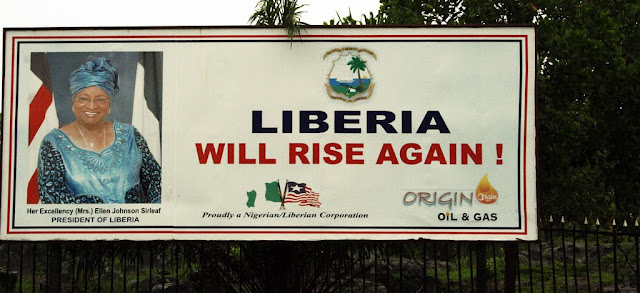
A Lens Into Liberia: Experiences from IRP Gatekeepers
›The International Reporting Project (IRP) gives “editors – the ‘gatekeepers’ – a chance to get out of the newsrooms and to see for themselves the importance of international affairs,” said John Schidlovsky, director of IRP, at a Wilson Center event about the independent journalism organization’s recent two-week trip to Liberia with 11 U.S. news editors. [Video Below]
Schidlovsky stressed the importance of providing international opportunities for journalists in the face of news industry budget cuts. IRP fills the gap by sending gatekeepers, who help determine what news items will be selected for publication or broadcast, to countries that are often underrepresented and neglected in mainstream media.
Three of the gatekeepers, Sunni Khalid, managing news editor at WYPR Baltimore; Ed Robbins, a video journalist; and Teresa Wiltza, senior editor for The Root, shared their observations from their Liberia trip, as well as their insights into the challenges of international reporting.
Economic Challenges and Opportunities
Liberia is slowly beginning to rebuild its economy after a 14-year civil war with more than 200,000 casualties, but there are still “tremendous challenges,” said Khalid. “How do people survive? What kind of jobs do they have? How do they feed their families?”
According to World Bank figures, 84 percent of Liberians earn less than $1 a day, and more than 94 percent earn less than $2 a day. The government’s annual budget is only $369 million, the official unemployment rate is 85 percent, and corruption and lack of infrastructure remain major concerns.
Despite these problems, “Liberia has a lot of good points going for it,” said Khalid. Investment in the country’s raw materials is growing; most recently, the country signed a $7 billion deal with China and a European consortium to continue iron-ore mining.
Initially expecting to “write an obituary for Liberia,” Khalid said he “came out of this trip fairly optimistic about Liberia’s future.” With its “small population, great location, and mineral wealth,” as well as “competent political leadership,” Liberia can take advantage of its potential, he said.
“Capturing the Flavor” of Liberia
Robbins hopes to paint a multidimensional picture of Liberia and “capture the flavor of the country beyond Monrovia,” with his series of short films, which will be available on the websites of both Time and the International Reporting Project,
Robbins previewed one of these films, a profile of the chair of the Liberian Women’s Initiative, Etweda “Sugars” Cooper, who he says “embodies a certain power of a lot of Liberian women in her dedication and also her love for the country.”
At the local level, “the problems of recovery and development are all there in miniature,” said Robbins. But with dedicated leadership from people like Cooper, communities are slowly beginning to rebuild the schools, roads, hospitals, and other infrastructure that was destroyed in the civil wars.
“When you read books and articles, it tends to be really focused on the war and the devastation,” said Robbins. But there is also a sense of optimism among Liberians: “you can see hope in these people, a sense there is something there,” he said.
Empowering Women and Ending Rape
Wiltz pointed out that, “there is a prevailing sense of hope,” particularly among the older generation of women. After years of violence, these female “peace warriors” led the movement that ended Liberia’s civil war. But seven year later, “for women there, the biggest issue is that of economic empowerment,” said Wiltz. “They’re feeling empowered, but they’re broke.”
Sexual violence has become “part of the national psyche,” Wiltz said. During the civil war in Liberia, it has been estimated that more than 60 percent of the female population was raped. Today, “everyone seems sensitized to the issue, and yet it’s still a huge problem,” she said. Sexual violence is still common despite the prevention efforts of radio campaigns, NGOs, and Liberian President Ellen Johnson-Sirleaf.
“You’re in a country where families were destroyed by war,” Wiltz said. In the process of rebuilding Liberia, the new challenge is to engage and empower a new generation of young women and girls. “Underneath the surface there is all this pain and this legacy of extreme cruelty, but they very much want to overcome this.”
Much of the gatekeepers’ coverage is available online: Sunni Khalid produced a week-long series of radio pieces for WYPR, an NPR affiliate; Ed Robbins produced a series of short films for Time; and Teresa Wiltz published several articles on The Root.
Sources: CIA World Factbook, U.S. State Department, World Bank, World Health Organization, WYPR.
Photo Credit: “Liberia Will Rise Again,” courtesy of flickr user Jason Judy. -
Water Security, Nonproliferation, and Aid Shocks in the Middle East
›In a report sponsored by the Stanley Foundation and the Stimson Center, authors Brian Finlay, Johan Bergenas, and Veronica Tessler discuss the implications of what a growing population and dwindling water supply will have on the people and governments of the Middle East. In the report, titled “Beyond Boundaries in the Middle East: Leveraging Nonproliferation Assistance to Address Security/Development Needs with Resolution 1540,” the authors point out that while the Middle East has six percent of the world’s population, it has only 0.7 percent of the world’s fresh water resources. This supply is expected to be halved in the coming decades due to “rapid population growth and increased standards of living in urban areas.” To make up for this shortfall, governments are turning to nuclear-powered desalination technology, which poses risks to the nonproliferation movement and the safety and stability of the region. (Editor’s note: for more on water as a strategic resource in the Middle East, see CSIS’ latest report.)A recent study by Richard Nielsen, Michael Findley, Zachary Davis, Tara Candland, and Daniel Nielson from Bringham Young University examines the relationship of severe decreases in foreign aid to inciting violence among rebels in recipient countries. The study, “Foreign Aid Shocks as a Cause of Violent Armed Conflict”, examines aid shocks in 139 countries from 1981-2005. The authors find that when a donor country cuts off or suddenly limits aid due to economic or political reasons, this volatility upsets the status quo and gives strength to rebel groups who play upon the government’s inability to deliver adequate resources to the population. Instead of a sudden or sharp withdrawal in aid, Nielsen et al conclude that “if donors decide to remove aid, they should do so gradually over time because sudden large decreases in aid could be deadly.” -
Watch: Cynthia Brady on Natural Resources, Climate Change, and Conflict at USAID
›“While we know that natural resources alone are neither necessary nor sufficient to drive conflict, we do know that competition over resources and their revenues often helps to drive conflict and to sustain it over time,” said Cynthia Brady, a senior conflict advisor at USAID’s Office of Conflict Management and Mitigation. “We also know that climate change impacts are going to interact with those dynamics, so we need to better understand how, in order to really program effectively against it in the future.”
Brady spoke to an audience of peacebuilding professionals at the 2010 Alliance for Peacebuliding Conference in Annapolis, Maryland, this fall. She noted that the issue of climate security is a relatively new one and when talking about the risks of climate-related conflict, it’s important to avoid hyperbole.
“The science of analyzing both the risks of climate impacts and the risks of conflict is pretty uncertain – they’re both still evolving,” Brady said. “There’s a very limited evidence base of real-world analysis from which we draw about this intersection.”
“I think it’s really important that we avoid over-simplification and we really focus, as peacebuilding and conflict practitioners, on the reality that conflict is such a complex phenomenon, and that opens a lot of opportunities for various points of intervention,” said Brady. -
Civil-Military Interface Still Lacks Operational Clarity
›The Quadrennial Diplomacy and Development Review (QDDR) is an important first step in redefining civilian roles and capacities in crises, conflict, and instability. After the expensive failures of both the military and USAID in Vietnam during the 1960s and 70s, Congress set new guidelines governing military interventions and assistance to foreign governments. Foreign assistance staff was cut from 15,000 to 2,000 people. When modern-day conflicts arose and USAID found itself understaffed and under-funded, the military was called upon to fill a gap and became overnight, in essence, our primary development agency.
Showing posts from category conflict.