-
Redesigning Health Systems for Global Health Security
›Africa in Transition // Covid-19 // Guest Contributor // February 22, 2021 // By Uzma Alam, Juliet Nabyonga-Orem, Mohammed Abdulaziz, Ambassador (ret.) Deborah R. Malac, John N. Nkengasong & Dr. Matshidiso R. Moeti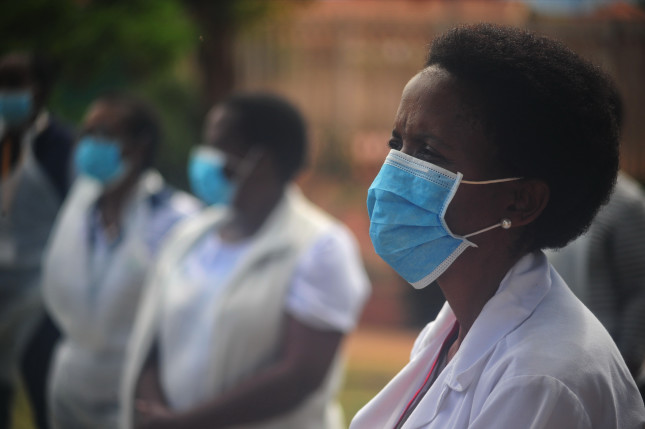
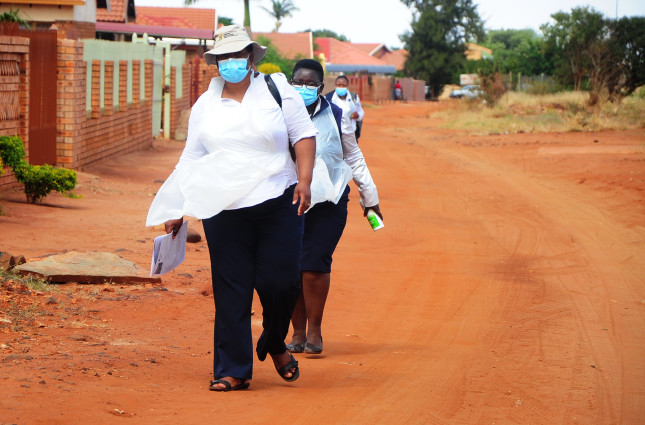
Africa was predicted to be hardest hit by the COVID-19 pandemic, given its poor health systems. However, this outcome has not been the case. Despite the U.S. being the highest spender on health care globally, COVID-19 has shown that its primary care infrastructure is in much need of strengthening. But we should not mistake COVID-19 as the biggest pandemic of our time. If anything, it is only a dry run, with other epidemics brewing on the horizon. Therefore, if the global community is serious about epidemic preparedness, global health security, and protecting the most vulnerable, we need to redesign health systems for resilience. Africa’s lessons from the COVID-19 pandemic, as well as from concurrent outbreaks of cholera, Ebola virus disease, yellow fever, and chikungunya, could provide a roadmap.
-
Native American Midwives Help Navajo Families Thrive
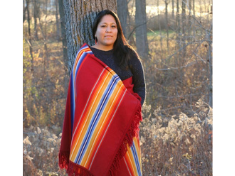
› When Navajo Midwife Nicolle Gonzales talks with Native American women about birth, there’s a sense something is missing, she said in this week’s Friday Podcast. “But,” she said, “we don’t know what it is.” Gonzales grew up and remains on a Navajo Reservation in New Mexico. She became a midwife and founded the Changing Woman Initiative (CWI) to address unmet maternal health care needs in her community. She is of the Tl’aashchi’I, Red Bottom clan, born for Tachii’nii, Red Running into the Water clan, Hashk’aa hadzohi, Yucca fruit-strung-out-in-a line clan, and Naasht’ezhi dine’e, Zuni clan.
 -
Experts Spotlight Bottom-Up Approaches and the Impacts of Conflict on Infrastructure in the Next Wave of Environmental Peacebuilding
›“For 30 years, a community of researchers, practitioners, and policymakers have been working to untangle the complex relationships between environmental change and human and national security, and find entry points for policies and programs that build on these connections to create a more resilient and sustainable peace,” said Lauren Risi, Project Director of the Wilson Center’s Environmental Change & Security Program at a recent event that featured contributors to a new special issue of International Affairs on environmental peacebuilding.
-
“Climate is the Multilateral Challenge of the Moment”: Highlights from a Conversation on Climate Change, Multilateralism, and Equity
›“After a period of populist nationalism…multilateralism is back, and climate is the multilateral challenge of the moment,” said David Lammy, a member of Parliament for Tottenham in the United Kingdom and Shadow Secretary of State for Justice, in a recent 21st Century Diplomacy event, co-hosted by the Wilson Center and adelphi. The election of Joe Biden and Kamala Harris is not a “reset,” but rather a catalytic moment for the international community precisely because of the pandemic and consequences for the global economy, he said. When you look at who has been left behind in countries like the United States and United Kingdom, and globally, who is at risk climate impacts, it is “black and brown people suffering all over the planet, and that is a call to arms,” said Lammy. -
New Constitution Could Help Chile Avert the Lithium Curse
›December 3, 2020 // By Matthew GallagherChile is on the cusp of a new era. Just as its lithium—a common element of energy storage technology, which is itself a critical component of the clean energy transition—is experiencing a rise in global market demand, Chilean citizens have called for a new constitution.
-
Interdisciplinary Solutions Will Improve Alaska Native Maternal Health (Part 2 of 2)
›Dot-Mom // Navigating the Poles // November 18, 2020 // By Deekshita Ramanarayanan, Michaela Stith, Marisol Maddox & Bethany JohnsonThe United States is in the midst of a maternal health crisis. Indigenous and Alaska Native peoples are 2.3 times more likely to die from pregnancy-related complications than their white counterparts. In Alaska, unequal socio-economic status, lack of access to hospitals and quality health services, systemic racism, and a history of colonization drive these disparities in maternal health outcomes. “Weathering”—the deterioration of communal health outcomes caused by persistent socio-economic disadvantages—contributes to many poor maternal health outcomes for Alaska Native women. On top of these systemic problems, climate change impacts threaten to widen the existing disparities for Alaskan Native women.
-
Dr. Raj Panjabi on the Importance of Community-Based Health Systems in Pandemic Response
›If there’s anything about responding to an epidemic, it’s that speed matters, and so does investing in people closest to the problem, said Dr. Raj Panjabi, Assistant Professor of medicine at Harvard Medical School and CEO of Last Mile Health, in this week’s Friday Podcast. The latter, he said, is the root of resilience. -
In Sub-Saharan Africa, Community Health Workers Support Sustainable Health Systems and COVID-19 Response
›“If there’s one message, it’s health systems need to be resilient, agile, and equitable,” said Uzma Alam, a researcher at the Africa Institute for Health Policy Foundation and Senior Program Officer of the Africa Academy of Sciences. “No one person, no one community, no one minority can be left behind. After all, your health system is as agile, as resilient as your weakest link.” She spoke at a recent Wilson Center event co-sponsored with the Population Institute, “Lessons from Africa: Building Resilience through Community-Based Health Systems.” The event focused on how locally led interventions improved the resilience and responsiveness of health systems in sub-Saharan Africa.
Showing posts from category community-based.
 When Navajo Midwife Nicolle Gonzales talks with Native American women about birth, there’s a sense something is missing, she said in this week’s Friday Podcast. “But,” she said, “we don’t know what it is.” Gonzales grew up and remains on a Navajo Reservation in New Mexico. She became a midwife and founded the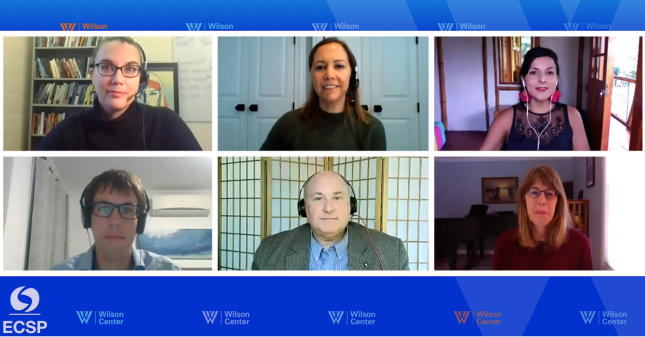
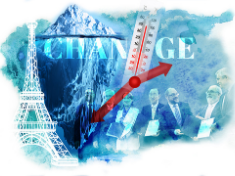 “After a period of populist nationalism…multilateralism is back, and climate is the multilateral challenge of the moment,” said David Lammy, a member of Parliament for Tottenham in the United Kingdom and Shadow Secretary of State for Justice, in a recent
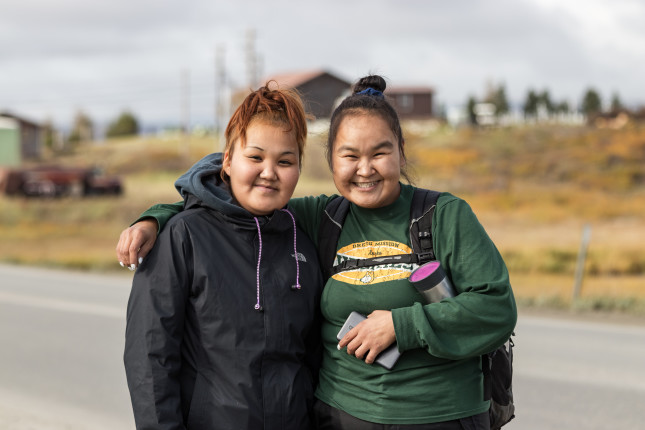
 If there’s anything about responding to an epidemic, it’s that speed matters, and so does investing in people closest to the problem, said Dr. Raj Panjabi, Assistant Professor of medicine at Harvard Medical School and CEO of Last Mile Health, in this week’s Friday Podcast. The latter, he said, is the root of resilience.