• woodrow wilson center
  • ecsp

New Security Beat

Subscribe:
  • rss
  • mail-to
  • Who We Are
  • Topics
    • Population
    • Environment
    • Security
    • Health
    • Development
  • Columns
    • China Environment Forum
    • Choke Point
    • Dot-Mom
    • Friday Podcasts
    • Navigating the Poles
    • Reading Radar
  • Multimedia
    • Water Stories (Podcast Series)
    • Backdraft (Podcast Series)
    • Tracking the Energy Titans (Interactive)
  • Films
    • Water, Conflict, and Peacebuilding (Animated Short)
    • Paving the Way (Ethiopia)
    • Broken Landscape (India)
    • Scaling the Mountain (Nepal)
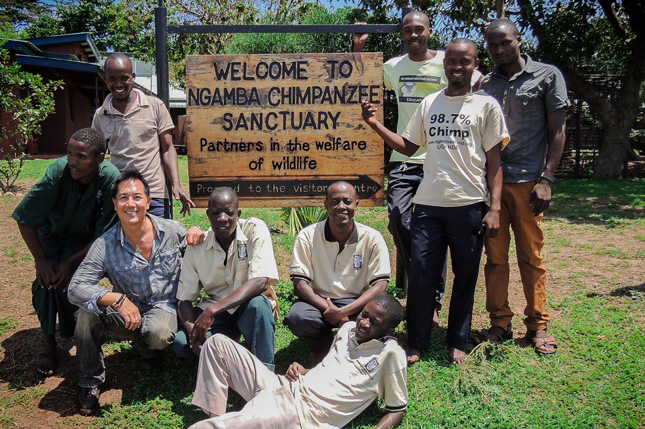
    • Healthy People, Healthy Environment (Tanzania)
  • Publications
  • Events
  • Contact Us

NewSecurityBeat

The blog of the Wilson Center's Environmental Change and Security Program
Showing posts from category community-based.
  • Accounting for 1 in 3 Maternal Deaths, Health Disparities Persist in South Asia

    ›
    Dot-Mom  //  From the Wilson Center  //  April 29, 2015  //  By Linnea Bennett
    bangladesh midwives

    The state of maternal health in South Asia is difficult to assess. Although rates of maternal mortality are declining between 2 and 2.5 percent a year overall, the region’s massive population – one fifth of the world and over 1 billion people in India alone – means it still accounts for one out of three maternal deaths. [Video Below]

    MORE
  • Wilson Center and USAID Launch “Resilience for Peace Project”

    ›
    From the Wilson Center  //  April 21, 2015  //  By Linnea Bennett
    pastoralists

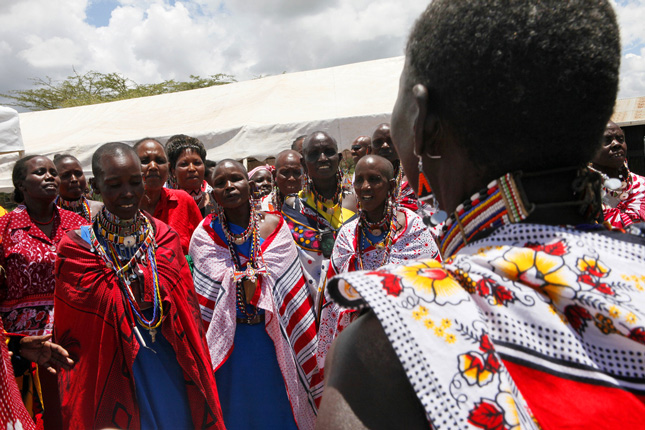
    As “resilience” builds as a theme for the development community, a few key concepts are rising to the top of the conversation. [Video Below]

    MORE
  • As Glacial Floods Threaten Mountain Communities, a Global Exchange Is Fostering Adaptation

    ›
    Guest Contributor  //  April 14, 2015  //  By Alton Byers & Jorge Recharte
    Huaraz

    In 1941, glacial Lake Palcacocha in the Peruvian Andes burst its moraine dam of earth and stones, sending a torrent of water through the city of Huaraz and killing an estimated 5,000 people. Between 1941 and 1950, two more glacial lake outburst floods, or GLOFs, which can occur after enough water fills in behind a glacier’s end moraine, killed another 5,000 people in the Cordillera Blanca. In response, the government set up one of the most effective glaciological units in the world with the goal of preventing future outburst floods. Using drain pipes, reinforced terminal moraine dams, sophisticated tunnels, and valve systems, they drained or contained 34 lakes in the region. As a result, thousands of lives were saved.

    MORE
  • Eduard Niesten, Conservation International

    Conservation Agreements Reduce People-Park Conflict in Liberia

    ›
    March 6, 2015  //  By Wilson Center Staff
    CI_Liberia

    The original version of this article, by Eduard Niesten, appeared on Conservation International’s Human Nature blog.

    When I began working in Liberia right after the Accra settlement ended Liberia’s civil war in 2003, I could not help worrying about whether the peace would last. Burnt-out cars lined the streets of Monrovia, bullet holes scarred many of its buildings and the wary U.N. peacekeepers manning checkpoints behind sandbags and barbed wire reinforced the sense that violence could flare up again at any time.

    MORE
  • Efforts to Build Resilience in Sahel Focus on Food, Climate, Population Dynamics

    ›
    Eye On  //  March 6, 2015  //  By Theo Wilson

    The Sahel – spreading from the Red Sea to the Atlantic as the Sahara Desert transitions to Sudanian savanna – is drought prone and suffers from chronic food insecurity. Yet, the region also boasts the highest fertility rates in the world, and the highest rates of marriage for young girls. This creates unique vulnerabilities that are being compounded by climate change, says ECSP’s Roger-Mark De Souza in an episode of Wilson Center NOW.

    MORE
  • Eric Chu on Translating Climate Adaptation Theory to Action on the Local Level

    ›
    Friday Podcasts  //  February 13, 2015  //  By Sarah Meyerhoff
    Eric-Chu

    “Adaptation is very theoretical. When you talk about ‘resilience,’ you draw these Venn diagrams and you draw these really complex issues, but at least at the IPCC level, we didn’t spend a lot of time thinking about what people were actually doing,” says Eric Chu in this week’s podcast.

    MORE
  • New Markets Meet Old Grievances: The Fight Over Biofuels in Kenya’s Tana River Delta

    ›
    Guest Contributor  //  February 9, 2015  //  By Kate Neville
    Orma-cattle

    Stepping away from herds of cattle, subsistence farms, and other responsibilities at home, roughly a hundred Kenyan villagers traveled overnight by bus from the Tana River Delta to Nairobi in February 2011 for a hearing at the national high court. The claimants declared that the lack of a “comprehensive land use master plan” infringed on the rights of the region’s people, and called for the prohibition of further land and resource development until such a plan was negotiated.

    MORE
  • Integrated Development, Focus on Empowerment Builds Resilience in Nepal

    ›
    From the Wilson Center  //  February 5, 2015  //  By Sarah Meyerhoff
    Nepal-woman

    From the mountains and foothills of the Himalayas to the Terai plains, climate change is rapidly changing life in Nepal. Many communities however, are not strangers to environmental stress; for decades, rapid population growth alongside agriculture and fuelwood collection have degraded land and diminished forests. [Video Below]

    MORE
Newer Posts   Older Posts
View full site

Join the Conversation

  • RSS
  • subscribe
  • facebook
  • G+
  • twitter
  • iTunes
  • podomatic
  • youtube
Tweets by NewSecurityBeat

Trending Stories

  • unfccclogo1
  • Pop at COP: Population and Family Planning at the UN Climate Negotiations

Featured Media

Backdraft Podcast

play Backdraft
Podcasts

More »

What You're Saying

  • Volunteers,At,The,Lagos,Food,Bank,Initiative,Outreach,To,Ikotun, Pan-African Response to COVID-19: New Forms of Environmental Peacebuilding Emerge
    Rashida Salifu: Great piece 👍🏾 Africa as a continent has suffered this unfortunate pandemic.But it has also...
  • A desert road near Kuqa An Unholy Trinity: Xinjiang’s Unhealthy Relationship With Coal, Water, and the Quest for Development
    Ismail: It is more historically accurate to refer to Xinjiang as East Turkistan.
  • shutterstock_1779654803 Leverage COVID-19 Data Collection Networks for Environmental Peacebuilding
    Carsten Pran: Thanks for reading! It will be interesting to see how society adapts to droves of new information in...

What We’re Reading

  • Rising rates of food instability in Latin America threaten women and Venezuelan migrants
  • Treetop sensors help Indonesia eavesdrop on forests to cut logging
  • 'Seat at the table': Women's land rights seen as key to climate fight
  • A Surprise in Africa: Air Pollution Falls as Economies Rise
  • Himalayan glacier disaster highlights climate change risks
More »
  • woodrow
  • ecsp
  • RSS Feed
  • YouTube
  • Twitter
  • Facebook
  • Home
  • Who We Are
  • Publications
  • Events
  • Wilson Center
  • Contact Us
  • Print Friendly Page

© Copyright 2007-2021. Environmental Change and Security Program.

Woodrow Wilson International Center for Scholars. All rights reserved.

Developed by Vico Rock Media

Environmental Change and Security Program

Woodrow Wilson International Center for Scholars

Ronald Reagan Building and International Trade Center

  • One Woodrow Wilson Plaza
  • 1300 Pennsylvania Ave., NW
  • Washington, DC 20004-3027

T 202-691-4000