-
Gaming Your Way to Disaster Risk Insurance
›
Fear fends off disaster, but does fear give us the tools to manage risk? Do we need to spend precious time learning complex risk management techniques? Perhaps not: learning disaster reduction techniques could be as easy as playing a game. “Well-designed games, like risk management measures, involve decisions with consequences. While games can never fully capture the complexity of climate risk management decisions, through gameplay these complexities can be revealed, discussed, and processed,” writes Pablo Suarez, the Climate Centre’s associate director for research and innovation.
-
Flooding in Bangladesh: Calling Out Climate Change From the High Ground
›
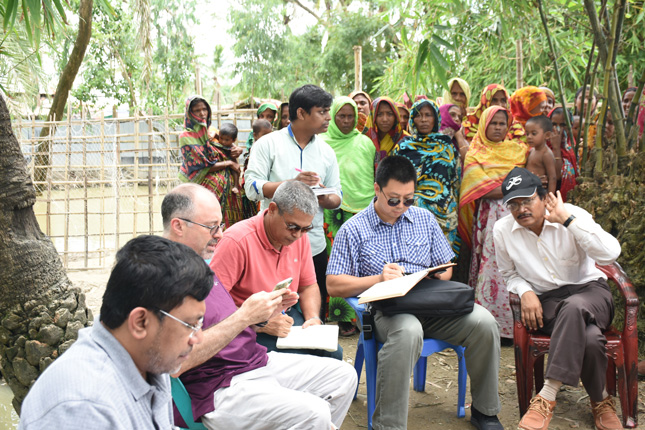
Floods have taken the lives of more than 100 people in northern Bangladesh over the last two weeks. Fully one third of the country has been flooded and some 600,000 people have been displaced in the riverine nation as a result of monsoons in India and Nepal. At international climate forums, Bangladeshi diplomats consistently decry such disasters as part of their urgent calls for action to mitigate changing weather patterns worldwide. But here in the country’s Rangpur-Kurigam region, both authorities and citizens have been reluctant to attribute these deadly disasters to the effects of climate change.
-
From Trash to Treasure: How Effective Sorting Helps China Utilize Food Waste
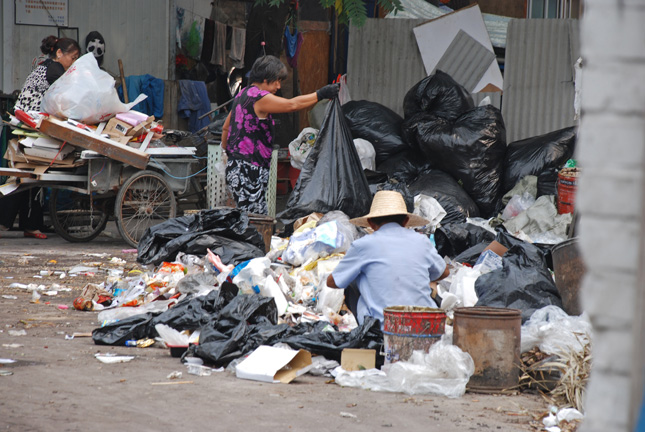
›Launched in Beijing in 2013, the highly successful grassroots “Empty Your Plate” campaign encourages Chinese consumers to eliminate food waste from their meals. Starting with blog posts on Weibo (China’s equivalent of Twitter), this campaign rapidly swept the entire country and attracted support from the central government, which later issued a series of policies urging restaurants to use smaller dishes and remove minimum charges. However, the volume of food waste in China is still astonishing.
-
The Perils of Denial: Challenges for a Water-Secure Pakistan
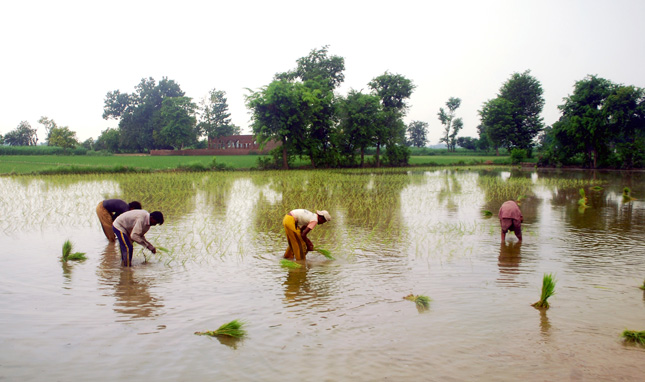
›Pakistan is South Asia’s fifth most vulnerable country in terms of water availability, and Karachi is the sixth most water-stressed city in the world. Predictions indicate that the country will face absolute water scarcity (insufficient water supply to meet demand) as soon as 2025. While population and demand for water steadily increase, freshwater quantity and quality are decreasing.
-
Water-Energy Nexus in the Himalayas
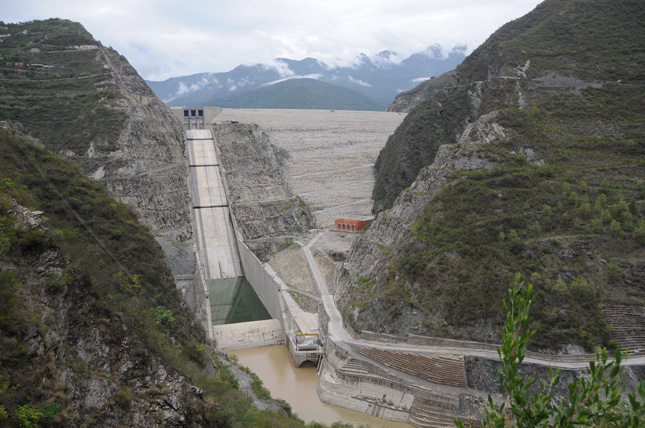
›The region at the base of the Himalayas faces difficult tradeoffs when allocating freshwater resources for energy production versus agricultural, industrial, and domestic uses. This is one of the most ecologically unstable areas on Earth, and weather patterns are becoming increasingly irregular. On one end of the spectrum, water shortages frequently disrupt energy production, which depends largely on water-intensive coal and hydropower plants. The opposite extreme is also a factor: Dozens of hydropower plants in the Himalayas have been damaged or destroyed by severe floods caused by unusually heavy rainfall in recent years. Construction of new power plants faces increasing resistance from local communities, resulting in social disruptions and instability. In order to ensure both energy security and water security for their countries, governments must look beyond hydropower and coal.
-
From Basket Case to Test Case: Bangladesh as a “Weak Power” Climate Leader
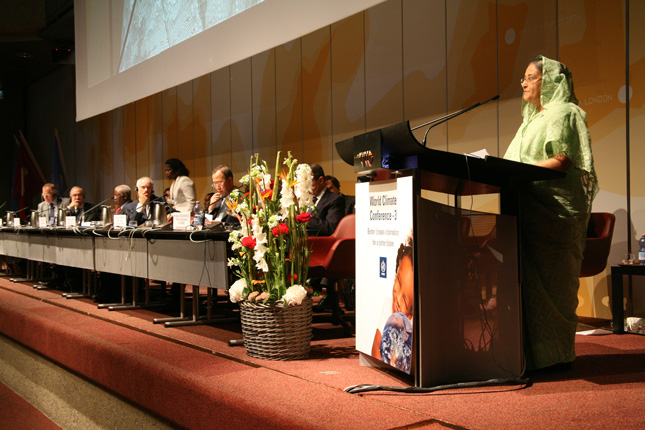
›In 2015, Bangladesh’s Prime Minister Sheikh Hasina received the United Nations Champion of the Earth award for her “outstanding leadership on the frontline of climate change.” One of the world’s most populated countries, Bangladesh is also one of the least developed and most vulnerable to climate change. While Bangladesh is well-known for the natural calamities that regularly leave millions of people homeless and displaced, far fewer know that it is also one of the most proactive countries in the fields of disaster risk reduction (DRR) and climate adaptation, as well as a leading voice among the poorest countries in climate negotiations.
-
Observing Earth: Using Satellite Data for International Development
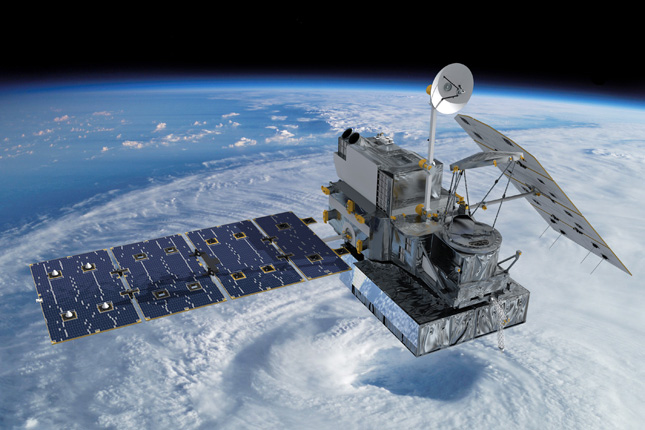
›“Interest in earth observation—and in particular, the value to what we do in development internationally—has never been higher,” said Jenny Frankel-Reed, adaptation team lead at the U.S. Agency for International Development (USAID). Frankel-Reed spoke at the Wilson Center’s recent panel discussion of the earth observation data program known as SERVIR, which included insights from USAID’s soon-to-be-released evaluation of the program.
-
Building Resilience for Peace: Water, Security, and Strategic Interests in Mindanao, Philippines
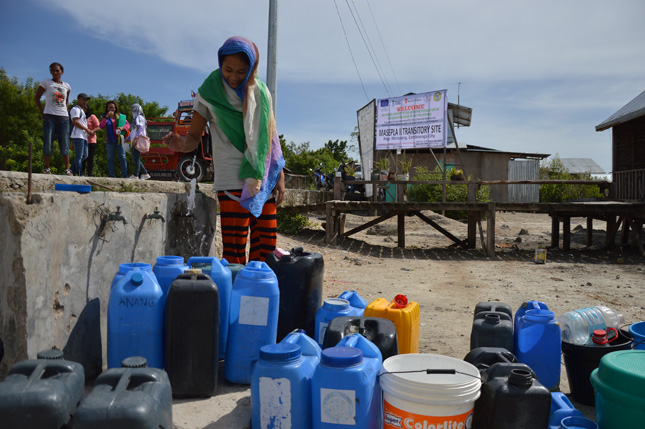
›The Philippines faces a breadth of social and environmental challenges that threaten its economic and political stability. A long history of violent conflict stemming from ethnic, religious, and political tensions is further complicated by changing weather patterns that cause severe drought and damaging storms. Millions of people in Mindanao have been displaced by violence and extreme weather events, and their migration from rural areas leaves room for the expansion of terrorist groups that threaten regional stability. The United States currently has strong trade and cultural ties to the Philippines, and U.S. Pacific Command operates military facilities on the islands. This chapter examines the stakes for U.S. interests in Mindanao, and recommends a security approach that combines defense, diplomacy, and development efforts to promote improved governance, social stability, and climate resilience.
Showing posts from category climate change.