-
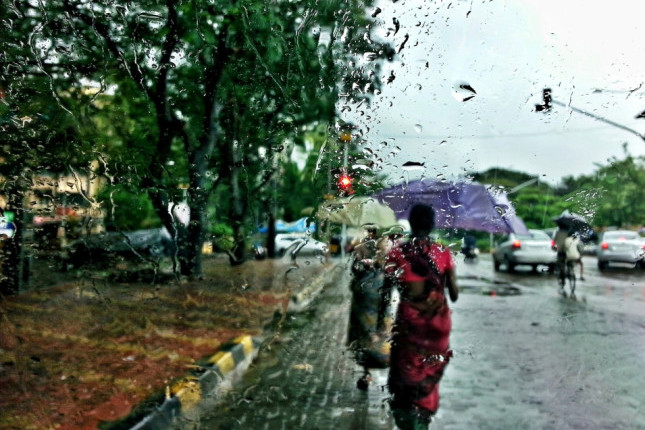
Snow and Ice Melt Patterns Help Predict Water Supply for Major Asian River Basins
›
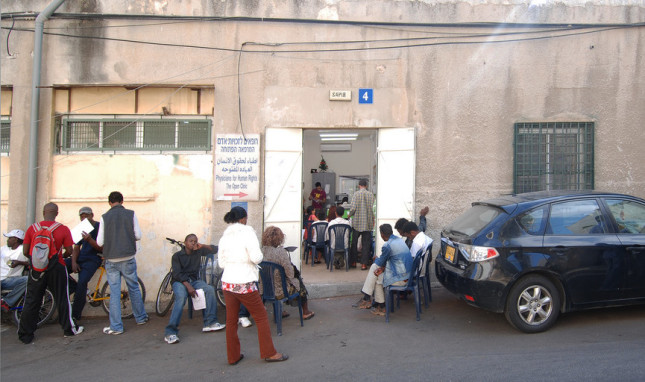
“For the longest time we thought that water was forever renewable and that it would always be there,” said Gloria Steele, Acting Assistant Administrator for Asia with USAID, at a recent Wilson Center event on water security in High Asia. “We now know that is not the case, and we need to protect it and manage it effectively.”
-
50 Years of Water at Wilson: Water, Conflict, and Cooperation (Part 1 of 2)
›
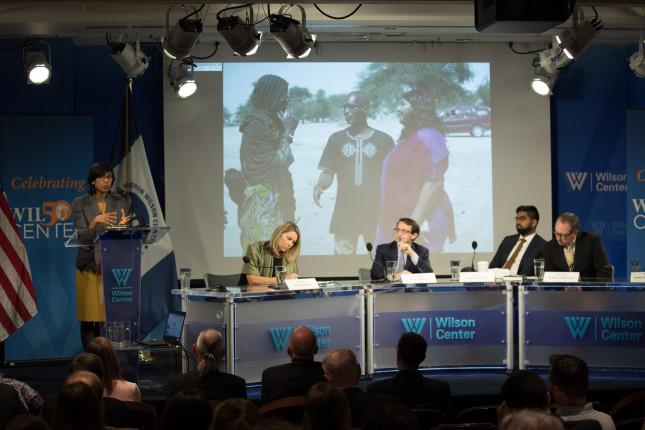
A number of countries across North Africa, the Middle East, into Central and South Asia are “at risk of failure if they can’t get the water equation right,” said Aaron Salzberg of the U.S. Department of State, at a recent Wilson Center event celebrating 50 years of working on water’s connection to conflict and cooperation. The event brought together experts from government, NGOs, and academia for a comprehensive look at the first year of the U.S. Global Water Strategy and new research and practice on water, peace, and conflict. Either now or sometime in the near future, said Salzberg, if fundamentally water insecure countries lacking access to sustainable supplies of safe drinking water and basic sanitation do not address their water problems, they will face increased risk of failure and greater fragility.
-
How Gender and Climate Change Can Be Integrated Into Military Operations (Book Preview)
›As the United States develops a strategy to guide all military services on how to promote the participation of women in conflict prevention, management, and resolution, and to better protect women and girls in situations involving armed conflict, it could supplement the work already being done in the Department of Defense by studying the examples of other countries and international organizations. When shaping its framework, it should also consider the links between conflict, women, and climate change in developing best practices. -
Planning for the Public Health Effects of Climate Migration
›In Alaska’s arctic communities, Inuit contemplating the need to relocate have reported that the loss of sea ice would make them feel like they are lost or going crazy. Zika and other vector-borne diseases have been a concern primarily for people in the southeastern United States. Recent research on the long-range internal migration of people from the coasts to the interior suggests a broader national concern regarding “climate augmentation” of disease. These are just two examples of the many public health effects we can expect as climate change forces people to uproot themselves.
-
More than Just a BRI Greenwash: Green Bonds Pushing Climate-Friendly Investment
›From the cultural hub of Lahore down to the bustling ports of Karachi, smog is king in Pakistan, with citizens enduring unhealthy air quality for much of the year. The smog, generated mostly by crop and garbage burning and diesel emissions from furnaces and cars, could get worse by the end of this year when Pakistan opens five new Chinese-built coal power plants, funded by a $6.8 billion venture under the China-Pakistan Economic Corridor (CPEC) initiative. These five plants are just the beginning of the Pakistan government’s planned 7,560 MW expansion in coal power, which are CPEC-energy priority projects. “It’s a perfect storm for a pollution crisis,” said Michael Kugelman of the Wilson Center’s Asia Program. “The poor will continue to burn a variety of polluting materials to produce fuel, and now you’re also going to be introducing dirty coal into the mix. Combine that with crop burning in the countrywide and car exhaust fumes in rapidly growing cities, and you’ve got a really smoggy mess on your hands—and in your lungs.”
-
Panelists Call for Creation of World Commission to Handle Solar Radiation Management
›“Right now, it’s the Wild West in regard to governance with geoengineering,” said Paul Wapner, a professor at the School of International Service at American University at a recent panel about solar radiation management (SRM) at the Arizona State University’s Washington Center. According to the Governing Solar Radiation Management report which was the focus of the event, SRM, which theoretically would cool the planet by reflecting sunlight back into space, may be a viable last-resort option if climate change mitigation and adaptation efforts fail. Wapner said that “there’s a danger in SRM, there’s a danger in climate change. And, balancing those risks is part of the exercise and will continue to be part of the exercise.”
-
Not Practicing What It Preaches: China Invests Heavily in Renewable Energy While Exporting Low-Efficiency Coal Power Plants to Developing Countries
›“China can simultaneously be the world’s biggest polluter and the leading developer and employer of clean energy technologies,” said Joanna Lewis, an associate professor of science, technology, and international affairs at Georgetown University’s Edmund A. Walsh School of Foreign Service at a recent event at The Brookings Institute on China’s local and global environmental agenda. “It’s not just megawatts being added, it’s actual investment in the innovation of these [renewable energy] technologies.”
-
Stormy Weather: Human Security Should Include Freedom from Hazard Impacts
›It is imperative that countries adopt a human security approach to achieve “freedom from hazard impacts”—nationally through a scientific disaster risk reduction strategy and internationally through climate diplomacy.
Showing posts from category climate change.
 As the United States develops a strategy to guide all military services on how to promote the participation of women in conflict prevention, management, and resolution, and to better protect women and girls in situations involving armed conflict, it could supplement the work already being done in the Department of Defense by studying the examples of other countries and international organizations. When shaping its framework, it should also consider the links between conflict, women, and climate change in developing best practices.