

-
Reports Highlight the Need for Further Consideration of Gender, Climate, and Security Linkages
› In a recent Stockholm International Peace Research Institute (SIPRI) paper, Elizabeth Seymour Smith, a Research Assistant with SIPRI’s Climate Change and Risk Programme, explores the intersection of climate change, gender, and security in Women, Peace and Security (WPS) national action plans (NAPs) of 80 countries. Using qualitative content analysis, the article finds that states frame and respond to climate change and gender-based security in differing ways.
 -
How to Think and Work Politically to Reach Biodiversity Conservation Goals
›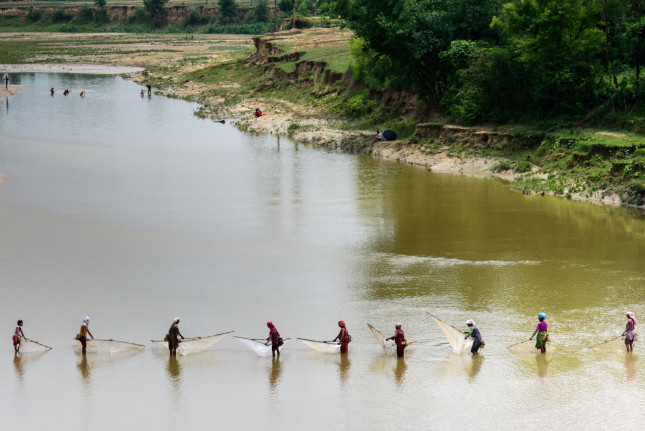
“You might know what to do,” said Rachel Kleinfeld, a Senior Fellow for Democracy, Conflict, and Governance Program at the Carnegie Endowment for International Peace. “But if you don’t think about how to do it, your reform isn’t going to move forward.” She spoke at a recent Wilson Center virtual event on how to think and work politically while supporting biodiversity conservation goals. It may sound counterintuitive, she said, but undertaking what’s considered the best intervention may not be the best approach.
-
Navigating Land and Security When Climate Change Forces People to Relocate
›At an event organized by the Coalition of Atoll Nations on Climate Change in December 2019, Tabitha Awerika, 21, from Kiribati, urged world leaders to listen to the climate science and to the pleas of those living in the South Pacific. “I will not leave the lands of my ancestors,” she said. “I will not abandon my motherland. I refuse to leave the only place I call home.”
-
Local Solutions Needed to Stem Humanitarian Crisis in Central America’s Dry Zone
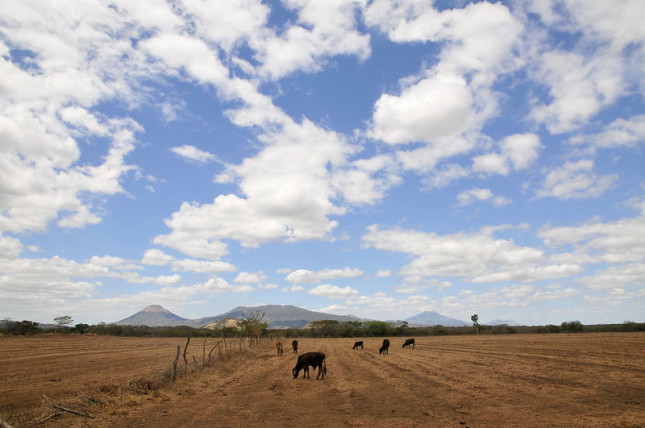
›As the humanitarian community responds to the Covid-19 pandemic, other long-term pressing priorities persist and require innovative solutions. The dry zone which extends across Central America encompassing parts of Guatemala, Honduras, El Salvador, and Nicaragua and a 10-year drought has left 1.4 million people in urgent need of food assistance. The impact of climate change, which includes extreme drought, poses an ever-increasing risk across Central America and contributes not only to food insecurity but also to migration issues that have plagued the continent in recent years.
-
The Greatest Story Never Told
› “If the pope is interested, everyone is interested,” said Alexandre Roulin, accepting the 2019 Environmental Peacebuilding Research Award in Irvine, California. The University of Lausanne professor’s project—on how conserving barn owls in the Middle East brings together people in Israel, Jordan, and Palestine across political divides—is certainly unique and intriguing. (Also, cute owls!)The spiritual leader of the world’s 1 billion Catholics reached out to Roulin because the “Barn Owls Know No Boundaries” project promises a possible way to build peace in one of the world’s most intractable religious conflicts. A tremendous story, right?
But despite having all the hallmarks of a great tale, a quick Google search finds only a handful of stories about it. This lack of media attention is unfortunately an ongoing challenge for what I have long viewed as “the greatest story never told.”
-
Toward a New Regional Approach to Water Security and Governance in the Horn of Africa
›Guest Contributor // April 7, 2020 // By Anniek Barnhoorn, Florian Krampe, Luc van de Goor, Elizabeth Smith & Dan SmithAs the global climate changes, climate-related security risks are making the existing political, social, and economic challenges even more complicated. The 230 million people who live in the Horn of Africa are highly vulnerable to the impacts of climate change such as droughts and floods. Political fragility and transnational complexities make water governance a matter of regional high-level politics as well as geopolitical tensions. In short, sustainable water governance is critical for achieving resilient peace.
-
Chitra Nagarajan on What’s Changed for Women in Lake Chad Region
›“Women and men face very different risks and challenges,” said Chitra Nagarajan, a writer and journalist who covers climate change, conflict, and gender. She spoke in this week’s podcast about what’s changed in the Lake Chad region. In the last few years the combination of profound climate change and high levels of insecurity have made life harder for the local population. To get a sense of how recent changes have affected Lake Chad’s residents, Nagarajan interviewed more than 250 people. These are some of her findings. -
The Future of Climate Change and Peace
›As fires rage in Australia and in the Amazon, hurricanes ravage the Caribbean year after year, and glacial melt threatens entire communities in the high mountains of Asia and Europe, peace and climate activists might be forgiven for experiencing a growing sense of dread. Environmental events of this magnitude have the potential to simultaneously trigger new ecological disasters and strain social and political systems. The unprecedented challenges borne of the climate crisis will be far-reaching, from large-scale involuntary migration and food and water shortages, to biodiversity and ecosystem loss. These challenges require responses that build social cohesion rather than fuel conflict—responses that are collaborative, just, and climate-resilient.
Showing posts from category climate change.
 In a
In a 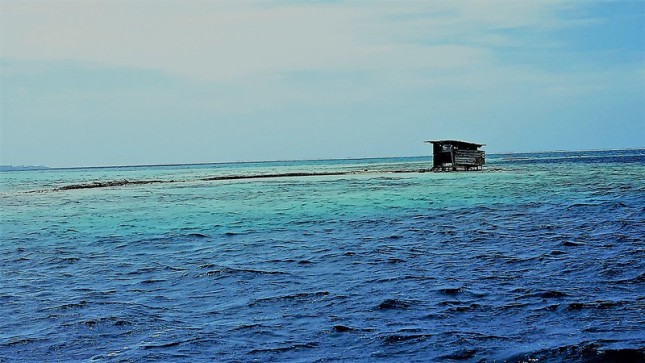
 “If the pope is interested, everyone is interested,” said Alexandre Roulin, accepting the 2019 Environmental Peacebuilding Research Award in Irvine, California. The University of Lausanne professor’s project—on how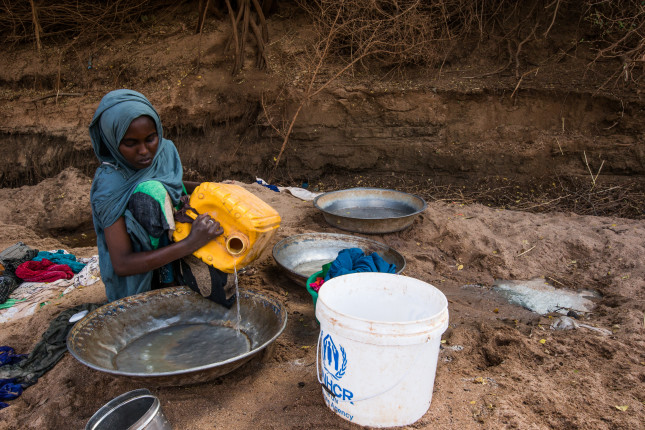
 “Women and men face very different risks and challenges,” said
  As fires rage in Australia and in the Amazon, hurricanes ravage the Caribbean year after year, and glacial melt threatens entire communities in the high mountains of Asia and Europe, peace and climate activists might be forgiven for experiencing a growing sense of dread. Environmental events of this magnitude have the potential to simultaneously trigger new ecological disasters and strain social and political systems. The unprecedented challenges borne of the climate crisis will be far-reaching, from large-scale involuntary migration and food and water shortages, to biodiversity and ecosystem loss. These challenges require responses that build social cohesion rather than fuel conflict—responses that are collaborative, just, and climate-resilient.


