

Showing posts from category climate change.
-
Weekly Reading
›How Do Recent Population Trends Matter To Climate Change?, from Population Action International, offers the latest research from this constantly changing area of inquiry.
U.S. Global Health and National Security Policy, a timely report by the Center for Strategic and International Studies, examines major threats to human health and international stability, including HIV/AIDS, SARS, pandemic influenza, and bioterrorism.
In the coming decades, Russia will confront “accelerated population decrease; a dwindling of the working-age population; the general ageing of the population; the drop in number of potential mothers; a large immigrant influx; and a possible rise in emigration rates,” warns a new report from the UN Development Programme.
In The National Interest and the Law of the Sea, the Council on Foreign Relations’ Scott Borgerson argues that ratifying the Law of the Sea Convention is vital to protecting the United States’ national security, economic, and environmental interests.
David Sullivan of Enough debates Harrison Mitchell and Nicolas Garrett of Resource Consulting Services (RCS) on the links between conflict and mining in the Democratic Republic of the Congo (DRC). RCS recently published a report arguing that mineral extraction is key to DRC’s development and not the primary cause of conflict in North Kivu.
Responding to the ubiquitous Monsanto ads that ask, “9 billion people to feed. A changing climate. Now what?,” Tod Preston of Population Action International responds, “family planning and empowering women, that’s what!”
Water and War, a publication of the International Committee of the Red Cross (ICRC), outlines how the ICRC provides access to clean water during conflict and humanitarian disasters. -
Environmental Cooperation Could Boost U.S.-Chinese Military Engagement, Says ECSP Director Dabelko
›April 23, 2009 // By Wilson Center Staff“Recently, the Defense Department warned that lack of Chinese transparency and dialogue between the Chinese and US militaries could lead to dangerous miscalculations on both sides. The tense confrontation between a US Naval survey vessel and five Chinese ships in the South China Sea in March echoed the rather serious 2001 Hainan Island incident, which was characterized by mutual suspicion and public acrimony. That event affected US-China relations for years.
To avoid further incidents, the Defense Department desires ‘deeper, broader, more high-level contacts with the Chinese,’ said Pentagon Press Secretary Geoff Morrell. The White House issued a statement stressing the ‘importance of raising the level and frequency of the US-China military-to-military dialogue,’ and President Obama quickly laid the groundwork by meeting with Chinese President Hu Jintao in London and agreeing to work to improve military-to-military relations.
One such way to begin military dialogue between the United States and China is by using environmental issues.
Environmental collaboration is unlikely to hit politically sensitive buttons, and thus offers great potential to deepen dialogue and cooperation. Military-to-military dialogue can facilitate the sharing of best practices on a range of environmental security issues.”
To read the rest of this op-ed, co-authored by ECSP Director Geoff Dabelko and Kent Hughes Butts, director of the National Security Issues Branch of the Center for Strategic Leadership at the U.S. Army War College, please visit the Christian Science Monitor. -
Weekly Reading
›“The Arctic could slide into a new era featuring jurisdictional conflicts, increasingly severe clashes over the extraction of natural resources, and the emergence of a new ‘great game’ among the global powers,” argue Paul Berkman and Oran Young, two researchers at the University of California, Santa Barbara, in Science. “However, the environment provides a physical and a conceptual framework to link government interests in the Arctic Ocean, as well as a template for addressing transboundary security risks cooperatively.” In the Washington Times, Paula Dobriansky, former U.S. undersecretary of state for democracy and global affairs, argues that the Antarctic Treaty offers lessons for dealing with competing territorial claims in the Arctic.
An article by Fred Pearce in Yale Environment 360, “Consumption Dwarfs Population As Main Environmental Threat,” has re-energized the debate over population’s contribution to climate change. For more, see Suzanne Petroni’s article “An Ethical Approach to Population and Climate Change” in ECSP Report 13.
Time interviews Laurel Neme, author of Animal Investigators: How the World’s First Wildlife Forensics Lab Is Solving Crimes and Saving Endangered Species, about the illegal wildlife trade. Neme will speak at the Wilson Center on May 20.
Slate’s William Saletan discusses the skewed sex ratio in China. For more on this topic, see Richard Cincotta’s review of Bare Branches: The Security Implications of Asia’s Surplus Male Population.
According to Rose George, author of The Big Necessity: The Unmentionable World of Human Waste and Why It Matters, “If you invest a dollar in sanitation, you save seven dollars in health-care costs.” Audio is available of a recent talk featuring George and ECSP Director Geoff Dabelko.
Time reports on Mexico’s water crisis. (See “Water Stories” for more on water and sanitation in Mexico.) It also features photo slideshows on the politics of water in Central Asia and the global water crisis.
In a paper published in Ecology (subscription required), Kevin Lafferty, a research ecologist for the United States Geological Survey at the University of California Santa Barbara, argues that climate change may not necessarily expand the range of disease vectors, as many scientists have argued. -
Climate Change and “Developed-Country Complacency Syndrome”
› While it is now widely acknowledged that environmental change, including climate change, could severely undermine security in the developing world, the implications for the developed world are just starting to be discussed. A sort of “developed-country complacency syndrome” has led many to assume that the main security problems for a country like the United States, such as waves of refugees or the need to intervene when other nations face disasters or conflicts, would be imported from abroad. Unfortunately, the United States is likely to face some fairly severe “Made in the USA” problems, as well.
For instance, as the economic stimulus package is rolled out, the United States is entering a historic period of new infrastructure construction. From a security perspective, this could help maintain stability, or it could be a disaster. What might make the difference is assessing how potential sites could be affected by environmental change. Transportation systems, defensive capabilities, agriculture, power generation, water supply, and more are all designed for the specific parameters of their physical environments—or, more often, the physical environments of the Victorian, Depression-era, or post-WWII periods in which they were originally built. That is why unplanned environmental change almost always has negative impacts.
In the case of a change in precipitation patterns, for example, drainage systems, reservoirs, and hydrological installations can all fail not because they were poorly engineered, but because they were engineered for different conditions. We are literally not designed for environmental change.
Current environmental impact assessments look almost exclusively at a structure’s impact on the environment. These assessments must now be expanded to include the other half of the equation: the impact of a changing environment on the structure. These sorts of “dual” assessments are essential. To put it bluntly, there is no point in building a zero-emissions house in a current or soon-to-be flood zone. However, this is exactly the sort of thing that is being proposed in areas of the U.S. Gulf Coast. We can avoid this by requiring these “dual” assessments when applying for insurance, planning permission, and/or government support.
Just as physical infrastructure is poorly prepared to deal with environmental change, so, too, is legal infrastructure. Very few regulations, international laws, and subsidies incorporate the effects of environmental change. At best, this renders them inadequate; at worst, it can create new vulnerabilities.
For instance, the U.S. government’s National Flood Insurance Program (NFIP) can inadvertently contribute to putting people and infrastructure in harm’s way. When private insurers deem areas too risky to be eligible for coverage, the NFIP can step in and insure them, making it possible to build in areas that are current flood zones, as well as areas that may become ones as climate change causes sea levels to rise and storm surges to increase. Already in some areas the same homes have had to be rebuilt multiple times, in part with cash infusions from the NFIP.
There are other examples of developed-world agreements that may cause more damage than they prevent:- Water-sharing agreements, especially those based on a set amount of water, rather than percentage of actual flow, will become problematic as water levels alter dramatically.
- Fisheries-sharing agreements will be thrown into chaos as fish shift to other regions due to climate change and overfishing.
- Hydropower-sharing agreements will be a major problem, both for precipitation-fed systems and glacier regions, where there will be above-average flows as the glaciers melt, followed by droughts once the glaciers disappear.
Two of the things the developed world prides itself on—its physical and legal infrastructures—are both highly vulnerable to environmental change. However, the stimulus packages and the reassessment of global, regional, and national agreements caused by the financial crisis offer a valuable opportunity to ensure that the structures and mechanisms we are counting on to maintain our security do not end up undermining it.
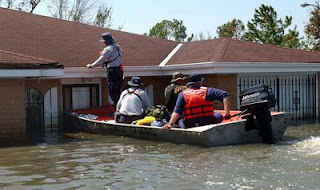
Photo: Members of the Coast Guard Sector Ohio Valley Disaster Response Team and the Miami-Dade Urban Search and Rescue Team mark a house to show it has been searched for survivors of Hurricane Katrina. Hurricane Katrina, which devastated the U.S. Gulf Coast in 2005, revealed the vulnerability of U.S. infrastructure to natural disasters. Climate change could make hurricanes and other natural disasters more frequent and severe. Photo courtesy of Flickr user Tidewater Muse and Petty Officer Robert M. Reed.
Cleo Paskal is an associate fellow in Chatham House’s Energy, Environment, and Development Programme. She is the author of UK National Security and Environmental Change. -
China Eyes Expansion of Electric Cars, With Global Implications for Energy, Climate, Health
›April 16, 2009 // By Linden EllisLast Friday, China announced plans to become the world’s largest producer of electric cars. The Chinese government will invest $1.46 billion in consumer subsidies for electric cars, just as Washington is plowing $25 billion into flagging Detroit automakers. With doubts looming about China’s enthusiasm for the tough upcoming Copenhagen climate negotiations, and with China set to displace the United States as the country with the largest auto fleet by 2025, this commitment to electric cars has vast implications for climate change, energy, and global geopolitics.
China is already the third-largest car producer and the second-largest car market in the world. If China could electrify its entire auto fleet by 2020, it could cut annual oil consumption by 130 million tons, reducing dependence on foreign oil by 20-30 percent more than if it were to adopt high-efficiency combustion vehicles. This would go a long way toward easing global competition for oil. It would also effectively eliminate the number-one source of air pollution in major Chinese cities, relieving a huge environmental health burden. Reports indicate that residents of at least 400 Chinese cities will face significant health hazards—including brain damage, respiratory problems and infections, lung cancer, and emphysema—from airborne sulfur by 2010 if auto pollution is not brought under control.
As these subsidies and other policies (including next year’s nation-wide adoption of EURO IV emissions standards) demonstrate, the Chinese government is committed to reducing cars’ impact in China, and the country is poised to be a global leader in electric cars. China’s battery-company-turned-automaker BYD (which Warren Buffet is apparently investing in) will release the first zero-emission vehicle, the F3e, in late 2009. The plug-in, dual-fuel F3 was the top-selling car in China last year, selling for $22,000. In a report released last month, McKinsey & Company found electric vehicles the best option for reducing greenhouse gas emissions from China’s transportation sector. China’s low labor costs, fast-growing auto market, and successful battery manufacturers make it a candidate for world leadership in electric-vehicle production, especially as no clear leader already exists.
The greatest obstacles to electric vehicles taking off in China are the costs—both to the government and the consumer—and the current lack of support infrastructure, including battery-charging and replacement stations. Installing support infrastructure could cost 5–10 billion RMB by 2020, not to mention the costs of further research and development to improve the safety and speed of batteries and cars, as well as the cost of consumer subsidies.
However, the China Environment Forum reports that many new car owners in China display a surprising indifference to the price of a prospective vehicle, preferring to save longer in order to afford a better car rather than settling for the first car they can afford or buying a used car. An interesting cost-effective alternative is the electric bike, which China vehicle emissions expert Vance Wagner notes “should be given high priority as an urban sustainable transportation solution [as they] provide much greater urban mobility than buses, with comparable environmental impact.”
Further research on the health and environmental impacts of electric vehicles is needed before large-scale adoption. There are many concerns, for example, about how to safely recycle car batteries without causing lead pollution. Additionally, having cars run on electricity will reduce air pollution, but will also place a huge burden on China’s already-strained power sector, which experiences energy shortfalls every year. Making the entire vehicle fleet dependent on the power sector would require a major expansion of regulatory and generating capacity. It could also raise questions of environmental justice, as rural communities with little access to health care—but in close proximity to coal-fired power plants, from which China derives 80 percent of its electricity—would bear the pollution burden of city driving. Although most experts and officials agree that electrifying China’s vehicle fleet is the best option in terms of environmental health, energy security, and climate change, additional research into the cumulative impacts of electric vehicles is necessary.
Photo: Smog blankets the eastern Chinese city of Jinan. Courtesy of Flickr user Sam_BB.
By China Environment Forum Program Assistant Linden Ellis. -
In Dealing with Climate Change, A Role for Global Governance
›April 14, 2009 // By Will Rogers“The idea of being a citizen of the world is still controversial,” said Strobe Talbott at a March 12, 2009, event examining the “great experiment” of global governance. Nevertheless, Talbott, president of The Brookings Institution, argued that global governance will be key to solving three of the greatest challenges the world faces: nuclear proliferation, climate change, and the financial crisis. This event was co-sponsored by the Wilson Center’s Environmental Change and Security Program and the Environmental Film Festival in the Nation’s Capital.
From Imperialism to Internationalism: The “Great Experiment” of Global Governance
“Bad news has often been the mother of good news” in the long history of global governance, Talbott said. Imperialism “brought fractious tribes and cultures together under a single authority—an attempt at global governance that ultimately failed.”
In the wake of World War I’s destruction came the League of Nations, a stab at global governance that lacked American support and “failed abysmally at preventing the Second World War,” Talbott noted. World War II spawned the United Nations, which was more successful due to the United States’ participation and influence.
From the ashes of the Cold War rose a more interconnected Europe, which Talbott affectionately referred to as the “Euro-mess”—a “system in which multiple countries make common cause in the face of common challenges,” he said. “Part of what we must hope for in the years ahead is the emergence of a more robust ‘globo-mess’—the creation and strengthening of regional and global organizations.”
Global Governance for Global Challenges
According to Talbott, the nuclear arms control treaties exemplify effective global governance in the pursuit of the ultimate common goal: the survival of the human race. “We need to build on past experiences and existing institutions to address challenges like climate change and financial regulation,” he said.
Talbott suggested that we use the existing nuclear nonproliferation regime to build an effective climate control system that ensures that “civilian nuclear power—which we are going to be seeing a lot more of—will be safe and confined to peaceful purposes.”
Similarly, a global financial regime could help bolster the effectiveness of a climate regime by stabilizing the world’s credit markets, enabling them to help “finance commercially viable technologies to end our dependence on fossil fuel,” Talbott said. “If we’re going to have efficient, equitable markets in which to trade in carbon allotments,” we will need a robust global economic regime, as well, he said.
With global governance, “progress has almost always been reactive. But in dealing with climate change, progress needs to be proactive,” as when the world has come together to prevent nuclear war, Talbott said. “If we fail to recognize our own obligations as citizens of the world,” he warned, “we risk, if not our own lives, then the lives of our children and their children.”Photo: Strobe Talbott. Courtesy of Dave Hawxhurst and the Woodrow Wilson Center.
-
Reading Radar– A Weekly Roundup
›April 10, 2009 // By Wilson Center StaffUncharted Waters: The U.S. Navy and Navigating Climate Change, a working paper by the Center for a New American Security, examines climate change’s implications for the U.S. Navy.
Defense Secretary Robert Gates recently chose Admiral James Stavridis, the former head of U.S. Southern Command known for his “smart power”/“sustainable security” approach, to lead U.S. European Command.
An Economist article highlights some of the linkages between water and political instability, energy, food, demography, and climate change.
The Governance of Nature and the Nature of Governance: Policy That Works for Biodiversity and Livelihoods, a report by the International Institute for Environment and Development, explores the success of local-level conservation. It features case studies from India, Tanzania, and Peru.
Sheila Herrling of the Center for Global Development argues that the USAID Administrator should become a permanent member of the National Security Council.
The Nation wonders whether nations go to war over water; Nature (subscription required) and Slate say “no.” ECSP has weighed in on this issue in the past.
Lisa Friedman of ClimateWire reports on Bangladesh’s attempts to prepare for the impacts of climate change. -
From Assessment to Intervention: Redefining UNEP’s Role in Conflict Resolution
›April 9, 2009 // By Will Rogers“Can we get beyond the point where environment and conflict always has to be a story of tragedy with no happy ending?” asked Achim Steiner at the March 24, 2009, launch of From Conflict to Peacebuilding: The Role of Natural Resources and the Environment, a new report from the UN Environment Programme (UNEP).
“I think we actually can provide a critical set of building blocks that would allow us to be not just lamenters on the sidelines,” but active problem-solvers, said Steiner, UNEP’s executive director. UNEP would like to put “green advisers, so to speak, with blue helmets” to examine peacebuilding “from an environmental, natural resource restoration point of view” and “minimize the potential for conflicts to escalate again,” said Steiner, who recently met with Alain Le Roy, UN undersecretary-general for peacekeeping operations, to discuss plans for embedding environmental advisers with UN peacekeeping troops.
Steiner was joined by Daniel Reifsnyder, deputy assistant secretary for environment at the U.S. State Department, and Andrew Morton, manager of UNEP’s Disasters and Conflicts Programme, to discuss the report’s findings.
Natural Resources and the Conflict Continuum
According to From Conflict to Peacebuilding:- Forty percent of intrastate conflicts within the past 60 years have been strongly linked to natural resources.
- Such conflicts are twice as likely to relapse within the first five years of peace.
- Less than a quarter of peace agreements for these conflicts address natural-resource issues.
Environmental factors can contribute to conflict and subvert peace in three main ways:
- The inequitable distribution of resource wealth, competition for scarce or valuable resources, and environmental degradation can contribute to the outbreak of conflict.
- Natural resources can used as “a financing vehicle for conflict—sustaining conflict well beyond the point where conflict has its origin, to actually having become part of an at-war economy, a conflict economy,” Steiner said.
- Unresolved environmental issues can subvert peace negotiations, especially when warring parties have a stake in lucrative resources. If we do not understand “how environment and natural resources can undermine very volatile peace agreements,” Steiner warned, we can “find ourselves back where we started off from.”
Lessons Learned and the Way Forward
Natural-resource conflicts have direct impacts—like deforestation and desertification—and indirect impacts—like the disruption of livelihoods—that are devastating to communities, Morton said. They also weaken a government’s capacity to manage its industry and infrastructure, like waste management and water purification, creating new environmental problems—and thus possible future conflict.
But the environment also offers opportunities, Morton emphasized. In Rwanda, for instance, “we have gorilla tourism going on within a few kilometers of what, essentially, was a war zone.”
UNEP recommends that peacekeepers:- Assess the natural-resource and environmental issues underlying conflicts.
- Monitor and address natural-resource use in conflict areas.
- Incorporate resource-sharing agreements into peace deals.
- When cooperation is not possible, use punitive measures to end resource exploitation.
U.S.-UNEP Cooperation on Environment, PeacebuildingAccording to Reifsnyder, the U.S. government frequently supports UNEP initiatives, such as the $1.8 million in U.S. funding for a UNEP reforestation and energy-efficiency program in an internally displaced persons camp in Darfur. This project grew out of the post-conflict environmental assessment that UNEP recently conducted in Sudan.
Reifsnyder praised UNEP’s focus: “UNEP is uniquely positioned to play a real catalytic role within the UN system, bringing together various parts of the UN system to try to focus on the importance of natural resources and the importance of the environment in peacebuilding initiatives,” he said.
Photos: From top to bottom, Achim Steiner, Andrew Morton, and Daniel Reifsnyder. Courtesy of Dave Hawxhurst and the Woodrow Wilson Center.
 While it is now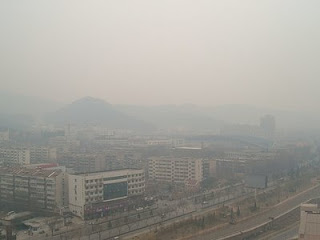
 “The idea of being a citizen of the world is still controversial,” said Strobe Talbott at a March 12, 2009, event examining the “great experiment” of global governance. Nevertheless, Talbott, president of The Brookings Institution, argued that global governance will be key to solving three of the greatest challenges the world faces: nuclear proliferation, climate change, and the financial crisis. This event was co-sponsored by the Wilson Center’s Environmental Change and Security Program and the
  “Can we get beyond the point where environment and conflict always has to be a story of tragedy with no happy ending?” asked Achim Steiner at the March 24, 2009,
 According to Reifsnyder, the U.S. government frequently supports UNEP initiatives, such as the $1.8 million in U.S. funding for a UNEP reforestation and energy-efficiency program in an internally displaced persons camp in Darfur. This project grew out of the

