Showing posts from category climate change.
-
The Impact of Environmental Change and Geography on Conflict
›“Environmental Change, Strategic Foresight, and Impacts on Military Power,” published in Parameters by Chad M. Briggs, the Minerva Chair of Energy and Environmental Security at the Air University, USAF, tackles the changing definition of “environmental security” and how the concept can help planners better prepare for the effects of climate change and an elevated focus on energy security. New potentially destabilizing issues like glacial melt, sea-level rise, and Arctic ice melt are on the horizon, writes Briggs. China and others are already planning for these events, and it’s important that the United States does the same, starting with a greater appreciation for the impact of environmental security on vulnerability and risk. “Due to past practices and bureaucratic stovepipes, implementation is limited more by initiative and imagination than actual resources,” he writes. Clionadh Raleigh of Trinity College Dublin and the International Peace Research Institute finds in “Seeing the Forest for the Trees: Does Physical Geography Affect a State’s Conflict Risk?” that a region’s geography does not have a uniform effect on its likelihood of experiencing conflict. Raleigh’s conclusions, published in International Interactions, run counter to traditional histories which often emphasize the importance of physical geography, specifically with regard to civil war and insurgencies. Focusing on the Great Lakes region of Africa, Raleigh finds that other factors – like how populated an area is and its proximity to valuable natural resources – correlate higher with an area’s propensity for violence than any other factor.
 -
Hu Angang and Liang Jiaochen, ChinaDialogue
China’s Green Five-Year Plan: Making “Ecological Security” a National Strategy
›March 16, 2011 // By Wilson Center StaffThe original version of this article, by Hu Angang and Liang Jiaochen, appeared on ChinaDialogue.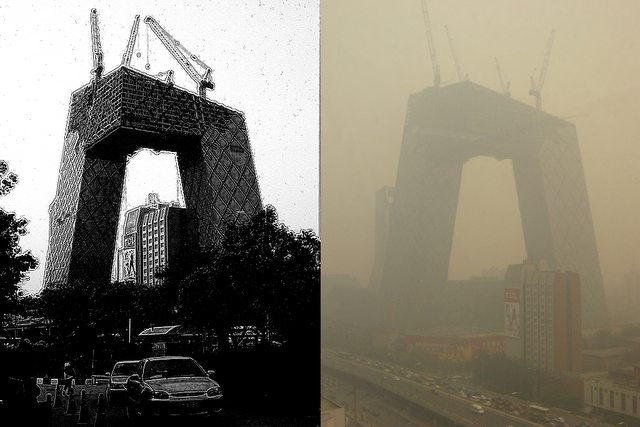
Five-year plans (FYPs), which set down and clarify national strategy, are one of China’s most important policy tools. Just as they have helped to drive China’s economic success over recent decades, so they will play a pivotal role in putting the country on a green development path. The 12th Five-Year Plan, now under consideration by the National People’s Congress, marks the beginning of that process in earnest (Editor’s note: Since this was originally published, the National People’s Congress voted in favor of the plan).
FYPs embody the concept of progressing by degrees, or developing step by step. This approach has been one of the driving forces behind China’s economic progress in recent decades and will now provide the platform for its green development. It is the methodology underpinning China’s socialist modernization: to reach a new step in development every five years. Unstinting efforts over a number of FYPs have driven China’s transformation.
Climate change presents a long-term and all-encompassing challenge for China. It demands a long-term development strategy and broad goals, as well as near-term action plans and concrete policies. Combining these is precisely the idea behind FYPs.
At the global climate change summit in Copenhagen in 2009, China demonstrated it has the long-term political will to respond to climate change; to work with the world to limit global temperatures to no more than two degrees Celsius above pre-industrial temperatures (the goal set out in the Copenhagen Accord). In November that year, the Chinese government formally put forward its medium-term targets on climate change: a reduction in energy intensity of 40 percent to 45 percent on 2005 levels by 2020, and generation of 15 percent of energy from non-fossil fuel sources by the same date.
Continue reading on ChinaDialogue.
Hu Angang is a professor at the Chinese Academy of Sciences and Tsinghua University and the director of the Centre for China Study. He has worked as the chief editor for China Studies Report, a circulated reference for senior officials. Liang Jiaochen is a PhD student at Tsinghua University’s School of Public Policy and Management.
Sources: Business Green, UN Framework Convention on Climate Change, World Resources Institute.
Photo Credit: Adapted from “China: CREME,” courtesy of flickr user IFC Infrastructure (Alejandro Perez/IFC). -
Managing the Planet’s Freshwater
›“The impact of human activities on the planet and on its biology has risen to a scale that deserves a commensurate response,” said Tom Lovejoy, professor at George Mason University, introducing a discussion on “Managing the Planet’s Freshwater,” the second of a monthly series led jointly by George Mason University and the Woodrow Wilson Center. Karin M. Krchnak, director of International Water Policy at The Nature Conservancy (TNC), and Dann Sklarew, sustainability fellow at George Mason University, joined Lovejoy to discuss the increasing stress placed by population growth, urbanization, and environmental change on freshwater resources and potential solutions to global water insecurity. [Video Below]
Water: “A Global Crisis”
Water insecurity and pollution is “a global crisis,” said Sklarew. Water scarcity is growing and aquatic biodiversity is declining around the world. According to the World Water Council, over one billion people do not have safe drinking water.
Inadequate water management contributes to these problems, said Sklarew. But, human activities “impact water connectivity, quality, and flows” at all scales, he said, and combined with climate change, have fundamentally altered the global water cycle.
“The water-rich and the water-poor are intimately connected,” said Sklarew. National, international, and global trade “water transfers” often move water from dry rural areas to urban centers, he said. “We’re taking from areas that don’t have [water] and moving water, by itself or via food products, to places where they might actually have more water in their local environment.”
But there are many opportunities – from the incremental to the bold, exciting, and revolutionary – to address these problems, said Sklarew, including growing more food with less water, reducing destructive subsidies, restoring natural river flows via dam re-design or removal, encouraging greener infrastructure in urban areas, and supporting participatory decision-making about water. He also pointed to promoting lower population growth and allowing migration that “brings the people to the water rather than the water to the people” as additional ways to improve water security. In the future, “bio-mimicking and techno-fixes,” may also provide promising solutions, he said.
Clear national goals and a global-scale response are critical to making these solutions a reality, said Sklarew: “Even though these challenges are often local, in the end, we have one interconnected water system.”
Watershed Protection: Innovative Solutions
“I know we all wish that there was a silver bullet for global water challenges,” said Krchnak, “but there’s not just one solution.”
As population grows by an additional 2 billion people before 2050, “solutions must take population growth into account,” said Krchnak. One-third of the world’s population is now subject to water scarcity, which is expected to double in the next 30 years
More water will be necessary to meet growing demands for food, energy, and other commodities, said Krchnak. In particular, “the poor in urban centers will be the dominant challenge for us in the next decades.”
Krchnak described three possible strategies to protect watersheds: market-based mechanisms, integrated water resource management, and incentive approaches.
Water funds, a market-based mechanism in which downstream water users pay for protection of the upper watershed, are one possible way to better manage freshwater, said Krchnak. With the help of local partners, TNC’s Quito Water Fund, for example, creates a sustainable finance mechanism and protects watersheds that supply 2 million people. Similar programs “can be taken to other geographies and replicated across the globe,” she said.
Another TNC program, the Great River Partnership, uses an integrated water resource management strategy that focuses on stakeholder collaboration and working with public and private partners to help create “one vision” for major rivers like the Mississippi, Magdalena, Paraguay-Parana, Yangtze, and Zambezi, said Krchnak.
The Alliance for Water Stewardship uses an incentive-based approach to promote “responsible use of fresh water that is socially beneficial and environmentally and economically sustainable.” One of the main objectives of the Alliance is to develop performance standards and create a certification program that recognizes water providers who work to protect freshwater resources.
Strategies like these may not be appropriate everywhere, and programs need to be adapted to make local implementation possible, said Krchnak, but effectively managing the planet’s freshwater is vital for human health, spiritual and cultural well-being, ecosystems and biodiversity, and economic opportunity.
Sources: World Water Council, UNDP.
Photo Credit: “Rio Magdalena,” courtesy of flickr user Esparta. -
Engineering Solutions to the Infrastructure and Scarcity Challenges of Population Seven Billion (and Beyond)
›March 9, 2011 // By Hannah MarquseeA recent Institution of Mechanical Engineers (IME) report, Population: One Planet, Too Many People?, argues that “sustainable engineering solutions largely exist for many of the anticipated challenges” of a world population scheduled to top seven billion this year and projected to reach upwards of nine billion by 2050. “What is needed,” write the authors, “is political and social will, innovative financing mechanisms, and the transfer of best practice through localization to achieve a successful outcome.”City lights on the French-Italian border, from the International Space Station.
Since nearly all of the population growth in the next 40 years will occur in the developing world, the report recommends nations adopt five “Engineering Development Goals” (listed below), alongside the Millennium Development Goals, to meet the needs of the world’s growing poor. The report also recommends that developed countries provide technical engineering expertise to developing countries in the model of the UK Department for International Development’s Resource Centers. This assistance will help them implement these goals and “leapfrog” the “resource-hungry, dirty phase of industrialization.”
Population Growth a Threat?
While the report issues a clear call to action for engineers and governments, it does not address the issue of population growth per se, which has caused some to argue that population growth might not be the problem after all. The Independent, for example, initially headlined their article about the report, “Population Growth Not a Threat, Say Engineers,” but changed it after publication to “Population Growth a Threat, Say Engineers.”
The IME authors clearly state that “population increase is likely to be the defining challenge of the 21st century,” and the report provides practical steps governments can take given current population trends. But its focus on “engineering solutions” highlights the ongoing debate between those who argue that technological fixes alone can solve the world’s social and environmental problems, and those who advocate for contraception as a low-cost path to a sustainable world.
“I would love there to be technological solutions to all our problems,” said Nobel Laureate Sir John Sulston at a recent ECSP event on the UK Royal Society’s forthcoming People and the Planet study, but “we’ve got to make sure that population is recognized, while not the sole problem, as a multiplier of many others. We’ve got to make sure that population really does peak out when we hope it will.”
The projections on which the report is based will be difficult to hit without dramatic reductions in fertility, mainly in sub-Saharan Africa – a goal that is nigh impossible without increased investment in access to voluntary family planning. The UN high variant projection, which calculates a much less dramatic decrease in current fertility levels, has world population reaching 11 billion by 2050.
“There is no need to delay action while waiting for the next greatest technical discovery,” write the IME authors. “If action is not taken before a crisis point is reached there will be significant human hardship. Failure to act will place billions of people around the world at risk of hunger, thirst, and conflict as capacity tries to catch up with demand.”
Engineering Development Goals
1. “Energy: Use existing sustainable energy technologies and reduce energy waste.”
Currently, “over 1.5 billion people in the world do not have access to energy,” says the IME report. In addition, global demand for energy is expected to rise by 46 percent by 2030, and the world will need to invest $46 trillion over the next 40 years to shift towards renewable energy sources. The report points out that “there are no insurmountable technical issues in sourcing enough energy for an increasingly affluent larger global population.” Instead, “the difficulties lie in the areas of regulation, financing, politics, social ethics, and international relations.”
2. “Water: Replenish groundwater sources, improve storage of excess water and increase energy efficiencies of desalination.”
Global water consumption, write the IME authors, is predicted to rise 30 percent by 2030 due to population growth and increased energy and agricultural consumption. These numbers are troubling, considering that a recent study in Nature found that more than 1.7 billion people, almost entirely from the developing world, already face chronically high water scarcity.
However, this problem is not simply one of a shortage of water, rather “a case of supply not matching demand at a certain time and place where people are living,” says the IME report. Engineering solutions must involve the capturing and storage of rain water, more cost-effective desalination techniques, and aquifer storage and recovery techniques, says the report. But more importantly, “decision-makers need to become more aware of the issues of water scarcity and work more closely with the engineering profession in finding localized solutions.”
3. “Food: Reduce food waste and resolve the politics of hunger.”
The IME report cites the World Bank’s prediction that demand for agricultural production will double by 2050, due to a combination of population growth, more people turning to meat-heavy diets, and agricultural shortages from extreme weather events. Efficiencies can go a long way towards filling this supply-demand gap, says the IME report. In developed countries an average of 25 percent of edible food is thrown away in the home after purchase, while in developing countries, as much as half of crops are lost before ever reaching market due to lack of adequate transportation and storage infrastructure.
For example, the authors point out that in India, “between 35 percent and 40 percent of fruit and vegetable production is lost each year between the farm and the consumer” – an amount greater than the entire annual consumption of the UK. Americans are also big food wasters. A USDA study found that in one year, 27 percent of all edible food was thrown away in the United States after purchase. Developed countries can significantly increase efficiency “through behavioral change that recognizes the value of food,” says the report.
4. “Urbanization: Meet the challenge of slums and defending against sea-level rises.”
Urbanization “presents one of the greatest societal challenges of the coming decades,” write the IME authors, but cities also represent a “significant opportunity…to be very efficient places to live in terms of a person’s environmental impact.”
According to the World Bank, by 2050, three quarters of the world will live in cities, and nearly all of this growth will occur in the developing world. Already, one third of the world’s urban population live in “appalling slum conditions,” says the IME report. Challenges for the urban poor are especially severe in coastal areas – home to three quarters of the world’s large cities – where they are vulnerable to flooding and extreme weather events, which according to new studies, have increased as a result of climate change.
The report calls for nations to use an “integrated, holistic approach” that brings in engineering expertise early in the planning process to create infrastructure that is individualized to a city’s unique cultural, geographical, and economic needs.
5. “Finance: Empower communities and enable implementation.”
Implementation of the above four goals will require “innovative soft loans and micro-financing, ‘zero-cost’ transition packages, and new models of personal and community ownership, such as trusts,” write the IME authors. Furthermore, communities must play a central role in decision-making in order to find appropriate and local solutions.
In all five of these goals, “barriers to deploying solutions are not technological,” says the report. Instead, they are political and social. Better international cooperation, dialogue, and sharing of expertise between and amongst engineers, decision-makers, and the public, is crucial to implementation.
Sources: Department for International Development, Guardian, The Independent, Institution of Mechanical Engineers, Nature, The New York Times, UN Habitat, United Nations, USDA, World Bank.
Image Credit: “City Lights, France-Italy Border (NASA, International Space Station Science, 04/28/10),” courtesy of flickr user NASA’s Marshall Space Flight Center. -
Watch: Geoff Dabelko and John Sewell on Integrating Environment, Development, and Security and the QDDR
›“We all must check our stereotypes of the other communities at the door…we’re not talking about hugging trees and hugging pandas,” said Geoff Dabelko, director of the Wilson Center’s Environmental Change and Security Program, in a panel discussion on Foreign Policy Challenges in the 112th Congress as part of the Wilson Center on the Hill series. Dabelko argued for a more multi-dimensional and integrated approach to addressing environmental issues.
“To tackle these problems, these connections between, say, natural resources, development, and security, it really does require that we have an integrated approach to our analysis [and] an integrated approach to our responses,” Dabelko said.
In dealing with climate change, for example, “a more diversified view would be one where we spend more time trying to understand adaptation,” said Dabelko. “How are we going to deal with the expected impacts of these problems?” he asked.
Dabelko called on policymakers to seek “triple bottom lines,” pointing out that “if you’re worried about climate change, or you’re worried about development, or you’re worried about fragile states, some of the same governance interventions and strong institutions in these fragile or weak states are going be the ones that will get you benefits in these multiple sectors.”
The Political Space
Fortunately, the current political environment is one in which “there is political space for integration,” said Dabelko, as demonstrated by, for example, the Quadrennial Diplomacy and Development Review (QDDR), which Wilson Center Senior Scholar John Sewell addressed in his remarks.
“All of you who are directly or indirectly engaged in Congress are going to be faced with a very important opportunity in the next 12 to 24 months,” Sewell said, “to focus both diplomacy and development on the major challenges that are going to face all of us in the first half of the century.”
Calling the QDDR a “major rethink of both American diplomacy and American development,” Sewell applauded its conceptual alignment, but cautioned that the review leaves many questions unanswered about its implementation.
“The QDDR sets no criteria,” said Sewell. “Are we going to continue to put large sums of money into countries that aren’t developing? Are we going to follow the choice of issues – food, environment, and so on and so forth? It’s a question that is not answered in any of these documents.”
Sewell also pointed to potential clashes over budgeting, USAID/State leadership, and the lack of coordination with other large development agencies, like the World Bank and International Monetary Fund.
For more on Sewell’s analysis of the QDDR, see his recent blog post “Reading the QDDR: Is the Glass Half Full or Half Empty?” -
Civilian Power in a Complex, Uncertain World
›Leading Through Civilian Power: The First Quadrennial Diplomacy and Development Review (QDDR) initiates an encouraging process of rethinking and restructuring that is long overdue. It explicitly links itself to the 2010 National Security Strategy and echoes the latter’s commitment to “national renewal and global leadership.” It refers briefly to the obvious companion document, the Quadrennial Defense Review, although it resists engaging with some key aspects.
-
Climate-Induced Migration: Catastrophe or Adaptation Strategy?
›February 11, 2011 // By Kayly OberThe claims on climate change-induced migration have often been hyperbolic: “one billion people will be displaced from now until 2050”, “200 million people overtaken by…monsoon systems…droughts…sea-level rise and coastal flooding”, “500 million people are at extreme risk” from sea-level rise. However, hard data is difficult to come by or underdeveloped. The International Institute of Environment and Development (IIED) have set out to fill this gap with their newest publication, “Not Only Climate Change: Mobility, Vulnerability and Socio-Economic Transformations in Environmentally Fragile Areas of Bolivia, Senegal and Tanzania.” As the title suggests, the author, Cecilia Tacoli, traveled to Bolivia, Senegal, and Tanzania in order to see how environmental change affects migration patterns in real world case studies. What she found was a bit more nuanced than the headlines.
Case Studies: Bolivia, Senegal, and Tanzania
Despite existing predictions of doom and gloom, the report found that there has been no dramatic change in mobilization in each community, even in the face of recurring droughts. Instead, those who rely heavily on agriculture for subsistence have turned to seasonal or temporary migration. While previously considered a last resort, moving locally from rural to urban areas has become more common. The motivation for following this option, however, seems to be couched more in socio-economic concerns and only marginally exacerbated by the environment.
“All the case study locations,” writes Tacoli, “are in areas affected by long-term environmental change (desertification, soil degradation, deforestation) rather than extreme weather events. However, in the majority of locations residents identify a precipitating event – a particularly severe drought, an epidemic of livestock disease, the unintended impact of infrastructure – as the tipping point that results in drastic changes in local livelihoods. In all cases, socio-economic factors are what make these precipitating environmental events so catastrophic.”
Practical Policy Prescriptions
Although the report finds that the environment wasn’t currently the main driver of migration in Bolivia, Senegal, or Tanzania, it acknowledges that it may play a larger role in the future: “Environmental change undoubtedly increases the number of people mobile,” Tacoli told BBC News. “But catastrophe like droughts and floods tend to overlap with social and structural upheaval, like the closure of other sources of local employment that might have protected people against total dependence on the land.”
As such, Tacoli suggests treating migration as a practical adaptation strategy rather than a problem. “The concentration of population in both large and small urban centers has the potential to reduce pressure on natural resources for domestic and productive uses,” she writes.
For example, Tacoli argues that the resulting remittances and investments from migrants in urban centers fuel “a crucial engine of economic growth” in smaller towns where land prices are cheaper. This, in turn, creates further employment opportunities.
The report also encourages policymakers to focus on local interventions, such as ensuring more equitable access to land, promoting the sustainable management of natural resources to reduce vulnerability, and investing in education, access to roads, and transportation to markets. These programs would help diversify and bolster non-agricultural livelihoods, thus reducing to the risks of climate variability.
“Local non-farm activities,” writes Tacoli, “can be an important part of adaptation to climate change for the poorer groups, and the nature of the activities can contribute to a relative reduction in local environmental change.”
Avoiding Backlash
Tacoli points out that “by downplaying political and socio-economic factors in favor of an emphasis on environmental ones, alarmist predictions of climate change-induced migration can result in inappropriate policies, for example forced resettlement programmes, that will do little to protect the rights of those vulnerable to environmental change.”
However, Tacoli is careful not to over-extend her policy prescriptions. In an email to the New Security Beat she emphasized that the case studies were not intended to be representative:The emphasis is on the need to have a detailed understanding of the local context – socio-economic, cultural and political – to understand the impacts of climate change on migration and mobility…Generalizations are not usually helpful for policy-making, and a grounded understanding of the local factors that influence livelihood responses (of which mobility and migration are one aspect) is certainly a better starting point. The aim of the report is to contribute to the building of collective knowledge on these issues, rather than provide a definitive account.
Sources: BBC News, Christian Aid, Commission on Climate Change and Development, Global Humanitarian Forum, Organization for Security and Co-operation in Europe.
Photo Credit: “Villager in Tanzania,” courtesy of flickr user vredeseilanden. -
A Dialogue on Managing the Planet
›“Collectively, the impact of humanity on the way the planet works is enormous and headed in disturbing directions,” said George Mason University professor Thomas Lovejoy in January at the first in a monthly series, “Managing the Planet,” led jointly by George Mason University and the Woodrow Wilson Center. The series will focus on how to take “environmental management to the scale of the entire planet,” as climate change, increasing energy consumption, and population growth place increasing stress on natural resources. We need to “chart a better course for the human future,” said Lovejoy.
Joining Lovejoy at the kickoff meeting were Dennis Dimick, executive environment editor at National Geographic, and Professor Molly Jahn of the University of Wisconsin-Madison. [Video Below]
Signs From Earth
“The entire human enterprise is based on the assumption of a stable climate,” said Lovejoy. The “most dramatic part of the story” in recent decades has been the melting of ice in the Arctic and in the mountain ranges of tropical zones. At current rates, tropical glaciers will completely disappear within the next 15 years. Though scientists predicted it would last until at least 2015, Bolivia’s Chacaltaya glacier – once renowned as the world’s highest elevation ski area – was reduced to a “few lumps of ice” in 2009, according to the BBC.
Glacial melt has raised water temperatures, altered species migrations, and threatened water supplies, coastal ecosystems, and the communities that depend on them, said Lovejoy. Higher ocean temperatures also cause the “fundamental partnership” between coral reefs and algae to break down, and “the Technicolor world essentially goes black and white,” he said.
Ocean acidification, fresh water shortages, melting glaciers, pollution, forest fires, and a “vast whipsaw” of temperature and weather extremes are just some of the effects human consumption has had on the planet, said Dimick. “It’s a sign from the Earth. It is telling us, ‘not all is well.’”
Finding Balance
As the world’s population nears seven billion this year, “we have one planet, yet we live like we live on four,” said Dimick. National Geographic’s new series “Population 7 Billion” seeks to answer the questions, he said, of “how do we find balance? How do we find ways to lower the intensity of our demands on an Earth that is telling us it is strained?”
Finding solutions to these challenges will require us to “look forward and confront the future,” said Dimick. “We need to rethink our whole global energy system,” he said, and “rethink our basic premise about what we need, as opposed to what we want.”
The global emissions limit of 450 parts per million (ppm) of carbon – the level needed to achieve the two-degree warming limit agreed upon at Cancun and Copenhagen – “is probably too high,” said Lovejoy. Most scientists agree that 350 ppm is a safer level; however, the world is already at “390 and climbing,” he noted, and global temperatures are projected to rise two degrees Celsius by 2035. If we want global warming to stop at two degrees, carbon emissions will need to stop growing by 2016, he said.
Figuring Out “Plan B”
“We have a problem that is presenting itself in a whole host of ways, with urgency that cannot be denied or dismissed,” said Jahn. “The way we do agriculture is a very significant contributor” to that problem, she said. Today, in the United States, “we waste 40 percent of the food we grow,” she said.
“Plan A…was about maximizing productivity at all costs,” said Jahn. “It looks like we may need another plan.” But figuring out “Plan B” will require steps by both policy and science communities. “We still have enormous gaps in our understanding towards even the basic science platform upon which these very important decisions about ways forward lie,” she said.
Managing the planet must begin with managing data so that we can “transition between data, information, and knowledge, and march this information out to…those making decisions that matter,” said Jahn. The information management structure that developed in the medical sciences and led to the creation of the National Library of Medicine is a useful model for managing the planet, she argued. “Personalized medicine” for the planet would allow people to use data to make better decisions about who should be doing what and where.
Using and expanding the knowledge base is a crucial step towards bringing together the science and policy communities on an international scale in search of solutions to managing the planet. “If we work together, we can change the world,” said Dimick.
Sources: 350 Science, BBC, Earth System Research Laboratory, United Nations Environment Program, United Nations Framework Convention on Climate Change.
Photo Credit: “Sun Over Earth (NASA, International Space Station, 07/21/03),” courtesy of flickr user NASA’s Marshall Space Flight Center.