-
Full Extent of Africa’s Groundwater Resources Visualized for the First Time
›“In Africa, groundwater is the major source of drinking water and its use for irrigation is forecast to increase substantially to combat growing food insecurity,” yet, a lack of quantitative data has meant that “groundwater storage is consequently omitted from assessments of freshwater availability,” according Alan Macdonald, Helen Bonsor, and Brighid Dochartaigh of the British Geological Survey, and Richard Taylor of University College London, writing in Environmental Research Letters.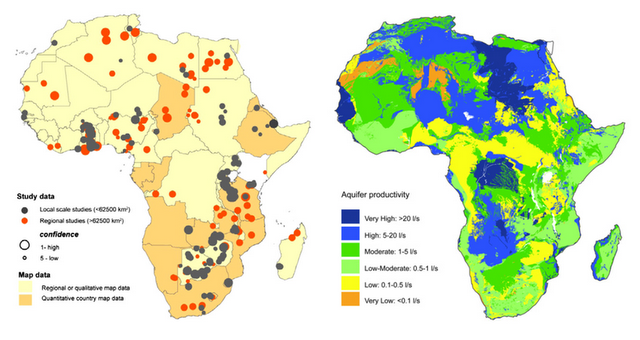
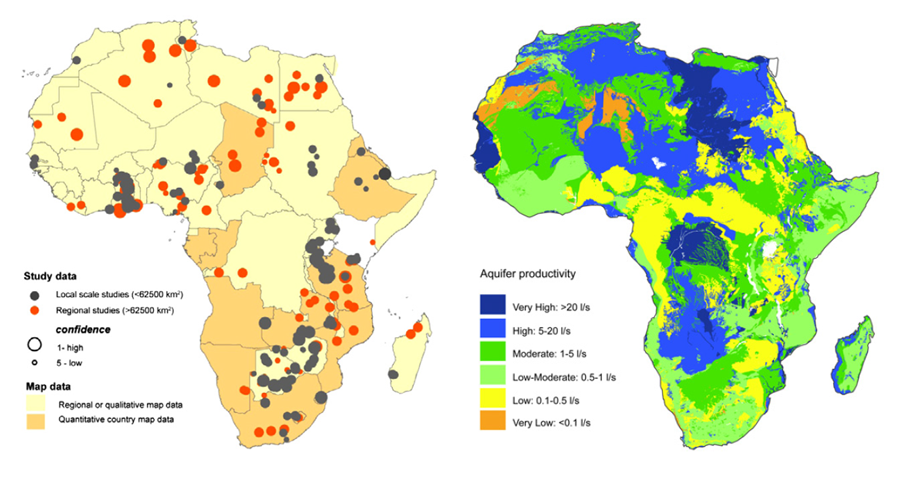
The authors hope to remedy this with new research presented in “Quantitative Maps of Groundwater Resources in Africa.” They used estimates compiled from geologic data and 283 aquifer summaries from 152 different publications to quantitatively visualize, for the first time, the full extent of Africa’s groundwater resources.
Tapping a Hidden Resource
The study estimates the scale of the continent’s groundwater resources at around 0.66 million km3. This volume, the authors explain, is “more than 100 times the annual renewable freshwater resources, and 20 times the freshwater stored in African lakes.”
Tapping into this massive resource is not always straightforward, however. The largest aquifers, and those most able to support high yielding bores, are concentrated in the arid regions of North Africa. The depth of these aquifers and their distance from major populations creates substantial economic challenges for extraction.
The geographic distribution of aquifers across sub-Saharan Africa is also quite variable, and local geology can determine not just the availability and accessibility of water but also its quality. For instance, geologic specificities can result in elevated levels of arsenic and other undesirable chemicals. Furthermore, “contamination…is common in urban areas from widespread and dispersed faecal effluent from on-site sanitation and leaking sewers.”
Tempering Expectations
Throughout Africa, “groundwater provides an important buffer to climate variability and change,” say the authors. But these buffers are not a singular solution to the threat of future water scarcity.
As the analysis shows, most aquifers, especially south of the Sahara, are unlikely to sustain boreholes of a higher capacity than that required by community-level hand pumps (one liter per second of flow at minimum). Yet, commercial irrigations schemes and urban towns typically demand boreholes greater than five liters per second, according to the study.
So, groundwater extraction may help communities and some small-scale farmers maintain access to water, particularly because many aquifers are found to possess the storage capacity required “to sustain abstraction through inter-annual variations in recharge,” however, “strategies for increasing irrigation or supplying water to rapidly urbanizing cities that are predicted on the widespread drilling of high yielding boreholes are likely to be unsuccessful.” Especially, the authors assert, where drilling precedes detailed local scale mapping of the available resources.
Sources: Environmental Research Letters.
Image Credit: Figures 1 and 3, courtesy of Environmental Research Letters. -
Digging for Crumbs: Michael Klare on the Global Scramble for the World’s Last Resources
›May 25, 2012 // By Stuart KentYale Environment 360 has a good interview up with Hampshire College Professor Michael Klare about the thinking behind his recent book, The Race for What’s Left: The Global Scramble for the World’s Last Resources. According to Klare, increased scarcity and a surging global appetite for natural resources have led us into an unprecedented period of exploitation where maintaining a supply of crucial resources means exploiting ever more remote, fragile, and dangerous regions of the globe (Afghanistan and the Arctic, for example).
Touching on everything from Canada’s tar sands and “fracking” in the United States, to rare earth minerals and agricultural land grabs, Klare explains the security implications of this newest resource “scramble” and his hopes for future solutions.
We’ve excerpted the first question and answer of the interview, by Diane Toomey, below, but the complete discussion is worth a read.Yale Environment 360: You make the point that when it comes to the age-old competition for raw materials, we’re in an unprecedented age. How so?
Continue reading on Yale Environment 360.
Michael Klare: I do believe that’s the case. Humans have been struggling to gain control of vital resources since the beginning of time, but I think we’re in a new era because we’re running out of places to go. Humans have constantly moved to new areas, to new continents, when they’ve run out of things in their home territory. But there aren’t any more new continents to go to. We’re going now to the last places left on earth that haven’t been exploited: the Arctic, the deep oceans, the inner jungles in Africa, Afghanistan. There are very few places left that haven’t been fully tapped, so this is humanity’s last chance to exploit the earth, and after this there’s nowhere else to go.
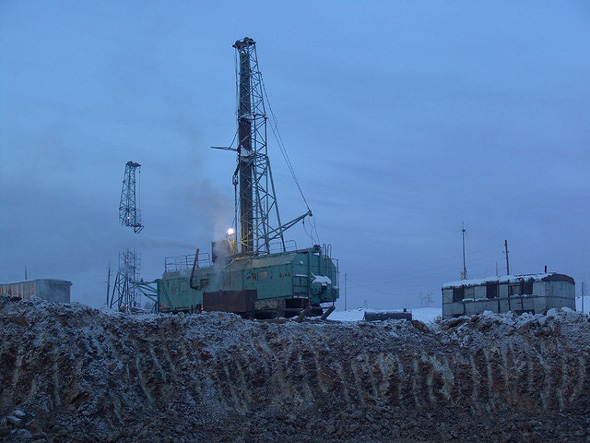
Photo Credit: Drilling in Siberia, courtesy of flickr user MOBmole. -
Imelda Abano on Environmental Reporting in the Philippines
›“What we are trying to do is to explore more strategies on how to improve environmental reporting in the Philippines – and on how to reach the government and communities as well,” said Imelda Abano, president of the Philippine Network of Environmental Journalists, Inc. (PNEJ) and senior correspondent at Business Mirror, in an interview with ECSP.
With an overwhelmingly coastal population of around 95 million, the 7,150 island archipelago of the Philippines is seen as highly vulnerable to environmental and climate-related threats. One of Albano’s major aims as president of the PNEJ is therefore to “empower local journalists to report more on environmental issues like biodiversity, climate change, disaster, and other environmental challenges in the Philippines,” she said.
Compelling reporting, she said, comes from “try[ing] to understand what the government is trying to say or what researchers or other organizations are trying to say,” and then relating that information back to the people “in the layman’s terms.”
Environmental issues require a lot of context, she said. One of the most important related issues in the Philippines is population growth.
“When you talk about environment issues, it really resonates or links to population issues,” Abano said. Current UN projections estimate that by 2050, the population could balloon to nearly 155 million. “This really affects our jobs, women, culture, and of course the population around the coastal areas.” -
Improving Food Security Through Land Rights and Access to Family Planning
›“In a future world affected by climate change, population growth is one lever that can be addressed to ameliorate the impacts of climate change, particularly in the area of food security,” write Scott Moreland and Ellen Smith in “Modeling Climate Change, Food Security, and Population,” a recent study for MEASURE Evaluation and USAID. Moreland and Smith combine demographic changes, food needs, and economic capacity into a single aggregate model to assess how family planning and climate change might affect food security from now until 2050. Using Ethiopia as an example, the model finds that if access to family planning services were increased to meet existing needs, the subsequent decrease in demand for food would reduce child malnutrition and effectively counteract a projected 25 percent shortfall in caloric availability from climate change’s impact on agriculture. Programs designed to increase access to family planning should therefore be incorporated into national adaptation and food security strategies, they conclude. “Family planning, especially in countries with high unmet need, provides a potential solution not only for women’s reproductive health, but also for adapting to the effects of climate change.”The Food and Agriculture Organization’s Committee on World Food Security recently endorsed a set of voluntary guidelines for land tenure governance in the context of food security that aims to strike a balance between encouraging productive investment and ensuring equitable and sustainable development. Population growth, climate change, and environmental degradation are putting pressure on the legal and cultural systems that govern land rights, resulting in “inadequate and insecure tenure rights” which can “increase vulnerability, hunger and poverty, and can lead to conflict and environmental degradation when competing users fight for control of these resources.” The guidelines, drawn from consultations with hundreds of people from both the private and public spheres and representing more than 130 countries, emphasize the need to safeguard access to land, fisheries, and forests – as well as the resources they provide – in a way that respects customary tenure systems, which are not always reflected in official tenure policies or records. They also emphasize strengthening the ownership rights of women and other traditionally marginalized groups in order to enhance food security and minimize the risk of instability and conflict in the future. -
The Global Water Security Assessment and U.S. National Security Implications
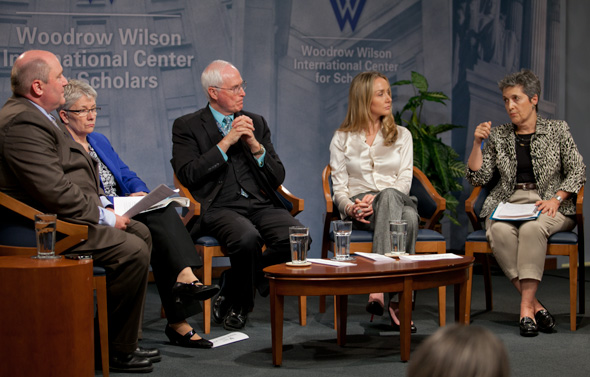
›“Water security is about much more than access to H2O,” said Jane Harman, director, president, and CEO of the Wilson Center at the May 9 meeting, “Global Water Security: The Intelligence Community Assessment.” The event – part of the Wilson Center’s National Conversation Series – brought together a number of experts to discuss a recently released intelligence community assessment of global water security. [Video Below]
-
Nigeria Beyond the Headlines: Environment and Security [Part Two]
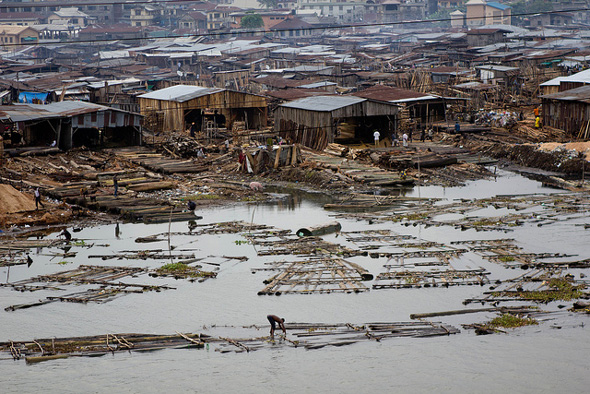
›In the coming years, Nigeria’s cohort of unemployed youth has equal potential to “be converted into either a religious or a regional clash, as certain youths get opportunities and other youths do not,” said Pauline Baker, President Emeritus of the Fund for Peace, during the day-long “Nigeria Behind the Headlines” event at the Wilson Center on the April 25 (read part one here). [Video Below]
-
Roger-Mark De Souza, Climate and Development Knowledge Network
Population-Climate Dynamics: From Planet Under Pressure to Rio
›May 11, 2012 // By Wilson Center StaffThe original version of this article, by Roger-Mark De Souza, appeared on the Climate and Development Knowledge Network (CDKN).
In late May, I presented research on population and climate dynamics in hotspots at the Planet Under Pressure conference in London, in a session organized by the Climate and Development Knowledge Network. As we prepare for the Rio+20 Earth Summit in June, I reflect on the roles of population dynamics and climate-compatible development for ensuring a future where we can increase the resilience of the most vulnerable to the impacts of climate change.- Improving our well-being and the future we can have is within our reach: We can take action to improve well-being through specific actions that can produce short term results. This is a key message encapsulated in the concept of climate-compatible development, reflected in many presentations and discussions that I heard at Planet Under Pressure. Even though others were not calling it “climate-compatible development,” the essence and the meaning behind the research was the same – small concrete discrete steps are possible, and taking action on population dynamics is one of them.
- Population is on the agenda: Population issues – growth, density, distribution, aging, gender – were a constant at Planet Under Pressure – and in more ways than just looking at population as a driver. It is clear that there is interest, and a need, to address population as a key component of climate-compatible development.
- But those concerns and issues must be location specific, and must be contextualized for the policy and programmatic environment: Population issues must be framed in the appropriate context – and must move beyond academic exploration. I attended one session where a paper presented an academic supposition of whether we should invest in consumption versus fertility reduction to produce short-term returns for climate, but the analysis was completely devoid of any political, policy, or programmatic truth-testing. We must factor in those considerations when making recommendations, if ultimately we are really looking to make the difference that we can.
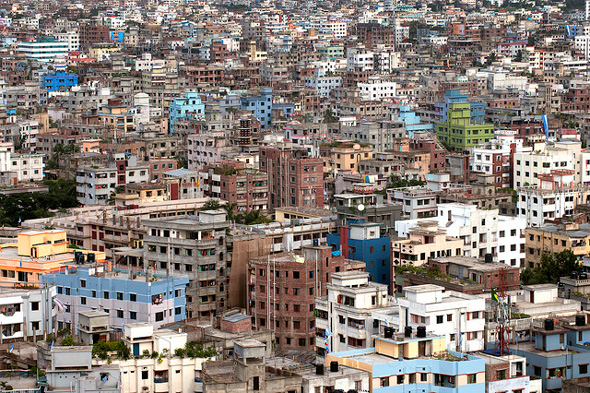
Photo Credit: “Urbanization in Asia,” courtesy of United Nations Photo. -
Michael Kugelman, AfPak Channel
Pakistan’s Climate Change Challenge
›May 11, 2012 // By Wilson Center StaffLast month, an avalanche on the Siachen glacier in Kashmir killed 124 Pakistani soldiers and 11 civilians. The tragedy has intensified debate about the logic of stationing Pakistani and Indian troops on such inhospitable terrain. And it has also brought attention to Pakistan’s environmental insecurity.
Siachen is rife with glacial melt; one study concludes the icy peak has retreated nearly two kilometers in less than 20 years. It has also been described as “the world’s highest waste dump.” Much of this waste-generated from soldiers’ food, fuel, and equipment-eventually finds its way to the Indus River Basin, Pakistan’s chief water source.
Siachen, in fact, serves as a microcosm of Pakistan’s environmental troubles. The nation experiences record-breaking temperatures, torrential rains (nearly 60 percent of Pakistan’s annual rainfall comes from monsoons), drought, and glacial melt (Pakistan’s United Nations representative, Hussain Haroon, contends that glacial recession on Pakistani mountains has increased by 23 percent over the past decade). Experts estimate that about a quarter of Pakistan’s land area and half of its population are vulnerable to climate change-related disasters, and several weeks ago Sindh’s environment minister said that millions of people across the province face “acute environmental threats.”
Continue reading on the AfPak Channel.
Sources: Daily Times, Dawn.com, Environment News Service, The Express Tribune, The New York Times, Remote Sensing Technology Center of Japan.
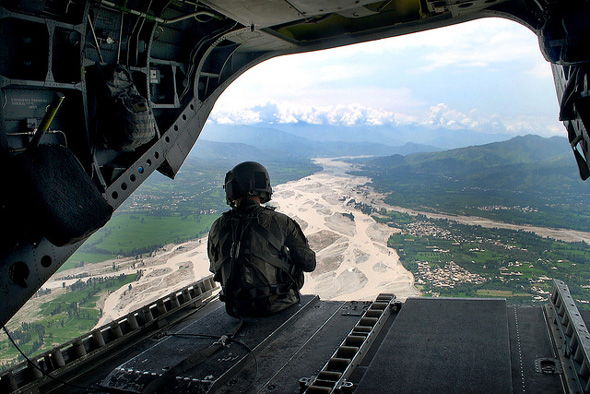
Photo Credit: “Surveying damage in Pakistan,” courtesy of the U.S. Army.
Showing posts from category climate change.