Showing posts from category climate change.
-
UNHCR Report on East African Environmental Migrants: Long on Anecdotes, Short on Data
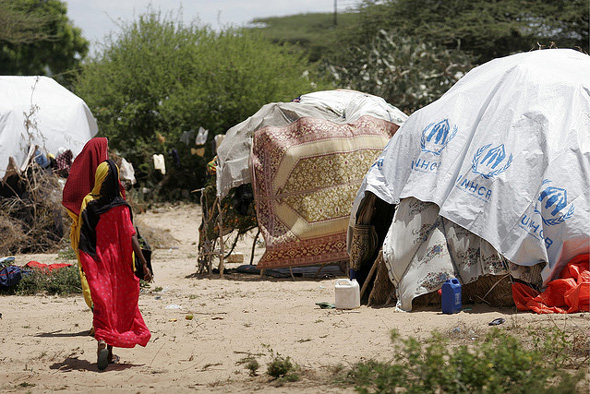
›July 6, 2012 // By Graham NorwoodAs part of the recently-concluded Rio+20 Conference on Sustainable Development, the UN High Commissioner for Refugees (UNHCR) presented a new report last week, titled Climate Change, Vulnerability, and Human Mobility: Perspectives of Refugees From the East and Horn of Africa. The report was created in order to “understand the extent to which refugees and IDPs (internally displaced persons) in the East and Horn of Africa have perceived, experienced, and responded to climatic events and trends in recent years.”
In order to achieve this goal, UNHCR and its collaborators (including the United Nations University Institute for Environment and Human Security, the London School of Economics, and the University of Bonn) interviewed approximately 150 refugees and IDPs in parts of Ethiopia and Uganda.
While the narrative is more anecdotal than data-driven, it nevertheless identifies several apparent trends in climate-related migration:Overwhelmingly, stories of mobility associated with moving away from worsening impacts associated with climate variability followed a specific pattern. That is, where movement related to climatic stressors did occur, such movement was taken as a last resort (only after all efforts to remain and adopt other methods of adaptation had been exhausted), particularly where the land being left was self-owned and only after all efforts to remain and try a number of alternative forms of adaptation had failed. Where movement occurred, in most cases it was likely to be internal, circular, and temporary rather than cross-border and permanent.
Stories of international migration were rare, and generally occurred either because migrants already lived near a border and were familiar with the area, or because they had encountered violent conflict (often of a political nature) during an earlier intra-state relocation.
The report also mentions that a majority of those interviewed claimed to have noticed significant changes in weather patterns over a 10- to 15-year period. In fact, many interviewees frequently claimed to be able to distinguish “normal” climate variability from more “permanent” changes.
Significantly, Climate Change, Vulnerability, and Human Mobility highlights several ongoing sources of debate and controversy regarding the issue of climate-induced migration as well.
The links between climate change, migration, and violent conflict are not well understood. And the question of whether climate change precipitates conflict or merely exacerbates it is still unresolved, though research on the subject is ongoing.
The terminology used to describe climate migrants remains a hotly-contested issue as well. While terms like “environmental refugee” and the especially popular “climate refugee” can make for good headlines, the UNHCR report strongly disapproves of such terms, given that the word “refugee” has a very specific legal definition.
Indeed, there is still much debate over how to classify climate migrants. It has been pointed out, for instance, that it is virtually impossible to separate out the various factors that induce migration, and questions as to whether migration is forced or voluntary also persist. For the most part, the UNHCR report shies away from such contentious questions, aiming instead to present a general and “human” narrative designed to call attention to the plight of climate migrants.
Definitional debates aside, the issue of climate-induced migration has been in headlines recently. The Asian Development Bank reported in March that 42 million people were displaced in the region during the last two years due to storms, floods, and other extreme weather events. And Israel signaled a tougher stance on immigration by deporting South Sudanese refugees in the wake of a major Israeli Ministry of Environmental Protection report warning of future climate-induced migration.
The particular vulnerability of women too is drawing increased interest. An article in Environmental Research Letters points out that “women tend to be poorer, less educated, have a lower health status, and have limited direct access to or ownership of natural resources,” and will therefore be disproportionately affected by climate change. Gender disparities must be accounted for in policymaking then, to ensure that future climate migration policies are equitable and inclusive, the author, Namrata Chindarkar, argues.
The challenges of defining and measuring the phenomenon remain – the UN Environment Program’s 2006 prediction of 50 million climate migrants by 2010 has not come true, and has even been a source of some embarrassment for the organization – but the recent UNHCR report is a timely reminder that climate-induced migration remains a major issue with tremendous long-term implications.
Sources: Asian Development Bank, Environmental Research Letters, Human Rights Education Association (HREA), The Jerusalem Post, The New Republic, National Geographic, OECD, Scientific American, Der Spiegel, UNHCR, The Washington Post.
Photo Credit: Displaced Somalis, courtesy of UNHCR. -
IFPRI Launches First ‘Global Food Policy Report’
›June 27, 2012 // By Carolyn Lamere“The Global Food Policy Report is the first publication that represents the major, major food policy developments in the past year and the outlook for 2012,” said Director of the International Food Policy Research Institute (IFPRI) Shenggen Fan in a video to promote the launch of the institute’s most comprehensive policy publication yet. The report is focused on regional developments, new research, debates, and legislation regarding food security both within individual states and at the international level.
A Guidebook for Policy
The 2008 global food crisis launched food security back onto the global agenda. A rapid rise in food prices contributed to instability around the world, and policymakers began to realize that access to food is an important security issue (high food prices have been linked to riots, for example).
“For 2012, food prices will remain very high and volatile, and some of the long-term trends like climate change, population growth, and demographic shifts towards more urbanized and higher income [populations] will continue to put pressure on global food security,” predicted Fan.
But the report notes that much of the fluctuation in global food prices is due to a lack of knowledge, not necessarily scarcity. The authors point to issues of preparedness and regulation as exacerbating factors and suggest that more detailed information, like that provided in the report, can help provide better solutions to policymakers.
Fan said that, by design, the report is “nontechnical, so the nontechnical person such as politicians, policymakers, practitioners, or anybody else who is interested in food security can use it as a comprehensive handbook.”
Making Connections Between Disciplines
The report draws on the expertise of dozens of authors who discuss topics ranging from biofuels to climate change. Rajul Pandya-Lorch, head of IFPRI’s 2020 Vision Initiative, spoke about the utility of collaboration among different disciplines in an interview with IFPRI: “I think for me 2011 was the time when we began to realize that we cannot think of agriculture simply for agriculture; we need to think of agriculture as a way in which we can impact on other development outcomes, especially nutrition and health,” she said.
Kathy Spahn, president and CEO of Helen Keller International, a speaker at the launch event, agreed. “The development community is beginning to realize that achieving food security is about more than just growing more food. It is also about growing more nutritious foods and making sure these foods are available and accessible to the families in need,” she wrote for Helen Keller International.
Fan emphasized that although agriculture has become more prominently featured in discussions of development, it is important to continue to link it to other outcomes. “We must find new ways to exploit the links between agriculture and other sectors, including health, nutrition, water, and energy,” he wrote in the overview of the report.
Past Developments and Future Outlook
Several key developments are highlighted that shaped food security in 2011. Food prices were particularly volatile – rising for the first half of the year then dropping – which caused a renewed global emphasis on food from policymakers.
New players ranging from emerging economies to the private sector “are increasingly reshaping the structure and nature of the global food landscape,” write the authors. The G-20 is “claiming a growing role” to help manage economic issues, and states like China, Brazil, and India are becoming more vocal regarding global food policy. Partnerships between governments and private companies have also become more common.
These and other developments described in the report will have an impact into 2012 and beyond. The report points out that “food emergencies” caused by natural disasters like the 2011 drought in the Horn of Africa will likely occur in 2012 as well, but also emphasizes that these cannot overshadow more long-term drivers of food insecurity, like land degradation.
The report describes four “high-priority areas of action” for this year. First, the G-20 should try to reduce price volatility (although some have argued volatility is less a problem than consistently high prices). Second, policymakers should work to improve agricultural production specifically through strategies like soil nutrient management which provide high yields but are more sustainable than high use of fertilizers. States should also ensure that the infrastructure necessary to make these strategies successful is in place. The next target is based on the Rio+20 conference, namely that participants should “integrate economic, social, and environmental sustainability efforts” to improve outcomes like nutrition and health. There were in fact several seminars on cross-discipline partnerships at the conference, and the importance of integration was mentioned in the outcome text that emerged.
Finally, the report calls for further collaboration across disciplines, in emulation of the internal IFPRI effort for the report which included a wide variety of expertise. The authors emphasized that though progress has been made, the challenge of achieving global food security will remain a concern for the near future, and cooperation across communities will be critical.
“The idea and the impact of the report is to make people aware of the problems that we are facing and the concerns…clearly the problem is not resolved and it’s something that we need to take very seriously,” said contributor Maximo Torero in an interview with IFPRI. “There’s a lot of work to be done to try to do this.”
Sources: Bill & Melinda Gates Foundation, CNN, Hellen Keller International, International Food Policy Research Institute, UN Conference on Sustainable Development.
Video Credit: IFPRI. -
Climate-Conflict Thresholds and Water as a Casualty of Conflict
›While numerous studies have examined the perils faced by businesses operating in conflict-affected or high-risk locations, Water as a Casualty of Conflict: Threats to Business and Society in High-Risk Areas, written by Kristina Donnelly, Mai-Lan Ha, Heather Cooley, and Jason Morrison, is the first such report to focus specifically on water. The report – a collaborative effort between the UN Global Compact and the Pacific Institute – aims to provide a framework for understanding the conflict-water-business nexus by first tracing the ways in which conflict and high-risk areas can adversely impact local and regional water systems and then illustrating the challenges such impacts can pose to businesses in conflict-affected or high-risk areas. Water as a Casualty of Conflict was published online this week and was introduced at a Rio+20 Corporate Sustainability Forum panel session.In an article titled “Climate Change and Violent Conflict,” appearing in the May 18th edition of Science, authors Jürgen Scheffran, Michael Brzoska, Jasmin Kominek, Michael Link, and Janpeter Schilling attempt to sort out some of the controversy surrounding the intersection of climate change and violent conflict. They urge greater interdisciplinary research to identify and provide solutions for possible “tipping points” where the impacts of climate change may prove too great for human adaptive capacity. Such research has been scarce due to difficulties in collecting sufficient data. Moreover, the authors note that many of the extant studies on climate change and conflict are flawed because of how they define violent conflict. The commonly-used Uppsala Conflict Data Program and Peace Research Institute Oslo (UCDP-PRIO) Armed Conflict dataset, for instance, excludes by definition many riots, protests, incidences of livestock theft, and other violent or potentially violent behaviors. This is problematic because, as the authors point out, “in recent decades, climate variability may have been more associated with low-level violence and internal civil war – which fall below the UCDP-PRIO definition cutoff – than with armed conflict or war between countries.” -
Pop at Rio+20: Cairo, Rio, and Beyond
›June 18, 2012 // By Sandeep BathalaGreetings from Rio de Janeiro! I will be blogging from the UN Conference on Sustainable Development throughout the week, tracking the inclusion of reproductive health and rights in the agenda.
Population dynamics have significant influence on sustainable development but the two have not always been seen as connected.
This year’s conference is the follow-on to the original UN Earth Summit held in Rio in 1992 (thus Rio+20). The resulting documents from that conference – Agenda 21, the Rio Declaration on Environment and Development, and the Statement of Principles for the Sustainable Management of Forests – were adopted by more than 178 governments and have done much to set the sustainable development agenda over the last two decades. Population dynamics were largely left off the table and instead were taken on separately, and in parallel, at the International Conference on Population and Development in Cairo in 1994.
This year, watchers from across the spectrum are eager to see these two issues talked about in a more integrated fashion. The official proceedings don’t start until the 20th, but side events have already begun.
At the first of Population Action International’s side events, appropriately named “From Rio to Cairo to Rio…and Beyond,” Eliya Zulu, executive director of the African Institute for Development Policy, said that virtually all development policies in sub-Saharan Africa cite population growth as an inhibitor to sustainable development and efforts to alleviate poverty, ensure food security, and preserve the environment. Furthermore, climate change is increasingly seen as a major threat to sustainable development in Africa. Policymakers in the region recognize the linkages between population, climate change, and sustainable development; however, little integration of these issues – operationally or conceptually – has been achieved.
Michael Herman, a technical adviser on population and economic development at the United Nations Population Fund, reminded audience members that demographic projections, like those predicting 10 billion by mid-century, are not destiny: population growth or decline is affected by policies, which should include human rights-based access to voluntary family planning.
Doris Mpoumou, an international policy officer at International Planned Parenthood Federation’s Western Hemisphere Regional Office, concluded the event by describing efforts to ensure that the Rio+20 outcome document being negotiated recognizes several key points. First, that population dynamics influence production and consumption rates; second, that population dynamics are relevant to the management of resources and sustainable development planning; and third, that population dynamics should be carefully integrated into development strategies and environmental planning with a focus on human rights.
Stay tuned here for more updates from Rio+20 and follow us on Twitter. I’ll be at every population-environment event I can get to and will also be visiting a favela with IPPF to see first-hand the ways Brazilians cope with the challenges of sustainable development.
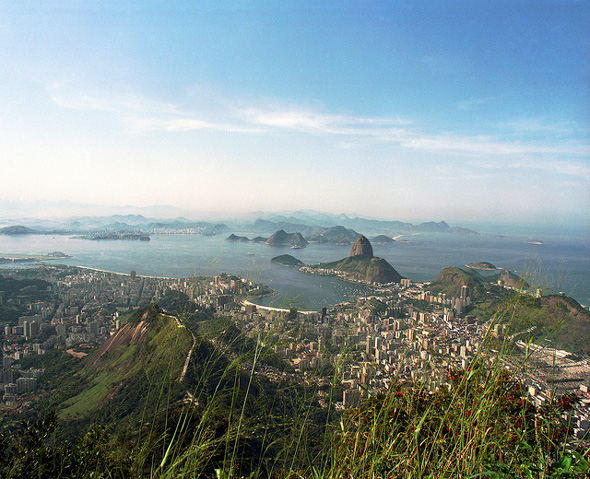
Photo Credit: View of Rio de Janeiro from a mountain in Tijuca National Forest, courtesy of Michos Tzovaras/UN Photo. -
Sex and Sustainability on the Road to Rio+20
›When it comes to the public conversation about sustainable development, we can’t tell the story with only half the world’s population. Women’s voices are key – and women must have a seat at the table. Earlier this week I was honored to join Musimbi Kanyoro of the Global Fund for Women and Carmen Barroso of International Planned Parenthood Federation to brief bloggers and reporters about the linkages between sex and sustainability. The three of us are heading down to the landmark Rio+20 conference to track the inclusion of reproductive health and rights in the sustainable development agenda.
Some highlights from our call:- Musimbi noted that though the linkages between the environment – particularly climate change – and reproductive health issues can be contentious, we must remember that we are talking about real people with real needs – not abstract ideas.
- Carmen argued that women’s health and rights should be included in the upcoming Sustainable Development Goals, because health is intrinsic to sustainability, and reproductive rights are intrinsic to health.
- Musimbi remarked that climate change, urbanization, energy, and food security are all connected to population, our planet, and reproductive health. She highlighted the need for an open discussion about these linkages, especially for the 200 million women who want access to family planning.
- I pointed out that development projects that address population, health, and environmental issues are making a difference in remote communities around the world.
Follow me to Rio+20 here on the blog and the New Security Beat Twitter feed.
Image Credit: Adapted from UNSCD 2012 official logo. -
PHE and Community-Based Adaptation to Climate Change: Stronger Together
›Over the past several years, community-based adaptation has emerged alongside national and regional climate change initiatives as a strategic, localized approach to building resilience and adaptive capacity in areas vulnerable to climate change.
-
Bringing Environment and Climate to the 2012 Population Association of America Annual Meeting
›June 5, 2012 // By Sandeep BathalaOver 2,100 participants attended the 2012 Population Association of America (PAA) annual meeting in San Francisco this May. PAA was established in 1930 to research issues related to human population. This year, for the first time, the meeting featured a notable contingent of demographers, sociologists, and public health professionals working on environmental connections.
I followed as many of the environment-population discussions on newly published or prospective research papers as possible (about 20 in total). I found four papers particularly noteworthy for the connections made to women, family planning, and climate change adaptation.
Samuel Codjoe of the University of Ghana spoke about adaptation to climate extremes in the Afram Plains during one of the population, health, and environment (PHE) panels organized by Population Action International. Although developed nations are historically the major contributors of greenhouse gases due to comparatively high levels of consumptions, developing countries are the most vulnerable to the consequences of climate change – in part because of continued population growth. As a result, adaptation strategies in countries like Ghana are particularly important; and given women’s often-outsized role in water and natural resource issues, a focus on gender-specific adaptation even more so.
Codjoe presented an analysis of preferred adaptation strategies to flood and drought, broken down by gender and three common occupations – farming, fishing, and charcoal production). He said he hopes his assessment – part of a collaborative research effort with Lucy K.A. Adzoyi-Atidoh of Lincoln University – will aid in the selection and implementation of successful adaptation options for communities and households in the future.
“Understanding differences in the priorities that women place on adaptation may prove to be important in the effectiveness of climate change adaptation – and the sustainability of communities,” he said.
David López-Carr of the University of California, Santa Barbara, speaking on behalf of a group of researchers with World Wildlife Fund, teased out the gender dynamic further when he presented on ways to help the conservation sector determine next steps for existing PHE projects. Practitioners from seven of the eight PHE projects currently implemented by conservation organizations (defined by having been involved for at least three years in bringing family planning to local communities) recently said the links to women’s empowerment were among the most important aspects of successful projects.
López-Carr therefore emphasized the need for additional research on how PHE projects can support and empower women, both economically and socially. He also noted, like Codjoe, the potential impact women often have on the management of their community’s natural resources, saying this was another area where research on the empowering effect of PHE programs can provide further backing for integrated programs.
Karen Hardee of Futures Group spoke about how the experiences of integrated PHE projects, despite most not being designed to respond to climate change specifically, have lessons to offer climate change efforts. Her work was done in partnership with the Population Reference Bureau, Population Action International, and U.S. Agency for International Development. She concluded that community-based adaptation approaches should consider population dynamics in vulnerability assessments. Meeting unmet need for family planning, she said, can assist communities adapting to climate change by building resilience. And as result, “PHE approaches should be able to qualify for funding under community-based adaptation programs.”
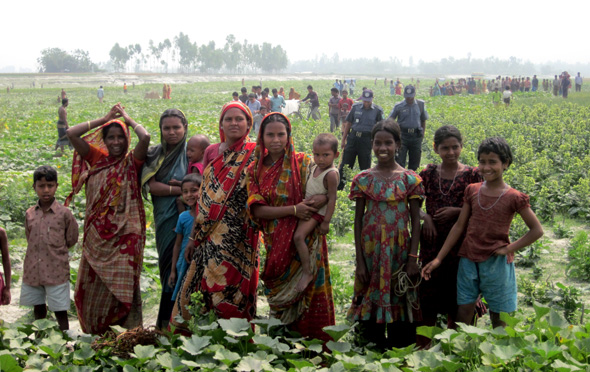
Shah Md. Atiqul Haq of the City University of Hong Kong presented research he conducted in Bangladesh that found that women tended to feel that a large family size was not advantageous during floods. This, he said, was indicative of their increased understanding of vulnerability and an endorsement of providing knowledge and access to family planning services as part of climate change adaptation strategies.
The inclusion of more environment, and particularly PHE, related presentations at this year’s conference was good to see – perhaps a sign that demography is becoming a more complex and comprehensive field, with a focus more on population structure and its interactions with other issues, rather than a singular fascination with growth.
In particular, panelists showed that the nexus between demography, gender equity, and climate change continues to grow in importance, both in the research and practitioner communities.
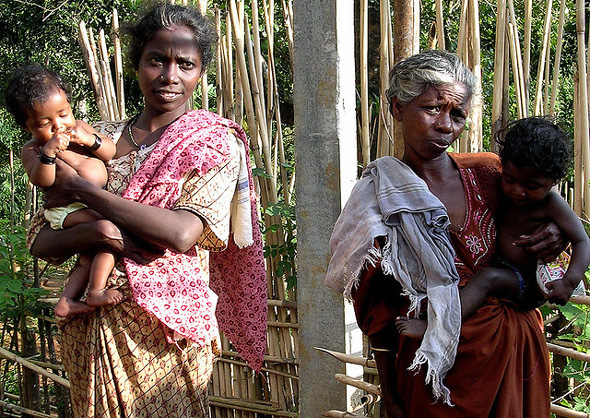
Photo Credit: Tribal women and children in Kerala state, India, courtesy of flickr user Eileen Delhi. -
Environment, Natural Resource Guidelines for Peacekeepers Moves UN Closer to ‘Greening the Blue Helmets’
›May 30, 2012 // By Stuart KentUN peacekeepers not only operate in conflicts where land and natural resources are a component of the fighting but their own bases and operations can also impact the local environment. As well as documenting practical steps to minimize the footprint of field missions, a new report from the United Nations Environment Program (UNEP) reviews the relationship between natural resources and conflict and what it means for peacekeeping.
While there’s been talk about “greening” UN peacekeeping for years, the details about the economic, environmental, and mission benefits contained in Greening the Blue Helmets: Environment, Natural Resources and UN Peacekeeping Operations suggest that this talk is getting closer to reality.
As of December 2011, the UN’s Department of Peacekeeping Operations was responsible for 121,591 personnel, 17,000 vehicles, and 257 aircraft across 16 different operations worldwide. These forces account for more than half of the entire UN system’s carbon emissions and can significantly strain the resources of fragile host communities, according to the report.
Building on the 2009 Environmental Policy for UN Field Missions, the UNEP report provides a dozen best practice examples from ongoing missions.
Field cases serve as evidence of how increasing water and energy efficiency, safely discarding solid and hazardous wastes, protecting cultural and historical sites, and ensuring a limited footprint after the closing down of camps, can save environmental and financial resources. These measures, the report claims, also reduce the risk of tension with host communities, such as occurred in Haiti when an outbreak of Cholera was traced to unsanitary water management practices at a UN camp.
Technologies recommended include better waste management systems, improved water systems, energy efficient buildings, and green energy capacities. However, some improvements can be made by simply encouraging behavioral changes; the UN mission in Timor-Leste reduced energy consumption by 15 percent over 12 months using a “CarLog” system to encourage fuel efficiency. With a 2009 global fuel bill of $638 million, even a 15 percent margin relates to a significant figure (much like the logic behind similar efficiency efforts within the U.S. military).
However, uncertain mission lengths are a major barrier to the adoption of more efficient technologies. Despite UN operations lasting an average of seven years and evidence indicating that capital investments could be recovered within one to five years in some cases, year-to-year mandates complicate long-term planning.
Natural Resource Nexus
Conceptually, the nexus of natural resources, conflict, and peacebuilding must be a central concern of peacekeeping operations, asserts the report.
In Africa alone, 13 operations have been conducted in response to conflicts associated with natural resources, at a cost of around $32 billion. Exploitation of natural resources such as diamonds, timber, and oil has financed and fueled conflicts in Sierra Leone, the Democratic Republic of the Congo, and Liberia. Communal tensions over access to scarce land and water resources are also considered an exacerbating influence on conflict dynamics in much of Sudan and now South Sudan, according to the report.
Addressing this nexus can also provide opportunities to reduce and redress conflict. In Darfur, firewood collection is a dangerous task for women and girls. By making “firewood patrols” a regular feature of the UN forces’ protection, the prevalence of sexual violence has been limited.
The UN Assistance Mission in Afghanistan is cited in the report for its efforts to hire ex-combatant and vulnerable populations to aid in the reforestation of extensively degraded pistachio woodlands from 2003 to 2009.
“Natural resources can provide opportunities for emergency employment and…sustainable livelihoods for former combatants,” write the authors.
Countries recovering from episodes of violence tend to have a low capacity to effectively and equitably manage a natural resource base that itself may have been degraded by conflict. Recent attention, however, is being paid to the peacebuilding potential of managing shared resources.
According to the report, “while only 54 percent of peace agreements reached between 1989 and 2004 contained provisions on natural resources, all of the major agreements concluded between 2005 and 2010 included such provisions.” This includes the renovation of land tenure systems, management of valuable extractive industries, and reallocation of resource rents.
Preventing Predatory Extraction
As peace begins to take hold, “access to land may be a key determining factor affecting the successful reintegration of a former combatant into a community.”
According to interview data from Northern Uganda, 93 percent of male LRA ex-combatants were unable to access land after demobilization. Often due to the death of an elder relative, sale of land by a family member, or land grabs by other members of the community.
While shared resources can build trust between communities, spoiler groups that use aggressive means to secure resource rents in the aftermath of conflict can endanger a fragile peace. The report identifies a role here for peacekeeping forces – and in particular for their civilian contingent – to identify these potential risks and opportunities for action.
In particular, the report recommends a higher level of clarity about the relationship between peacekeeping forces and so called “expert panels” – groups of civilian specialists called upon by the Security Council to provide advice on an official basis about natural resources in the aftermath of conflict.
The UN mission in the Democratic Republic of Congo, for instance, was given a direct mandate in 2008 to work with the DRC expert panel and to “use its monitoring and inspection capacities to curtail the provision of support to illegal armed groups derived from illicit trade in natural resources.”
UNEP Program Officer Matti Lehtonen, in an email interview, called the panels a “tremendous asset that is not yet used up to its full potential.” However, he noted, “expert panels and peacekeeping missions are different tools with different objectives so there is also a need to maintain a degree of independence.”
The report identifies a set of key recommendations for the UN moving forward:- Ensure that pre-deployment and in-mission training includes instruction on environment and natural resource management
- Aid and encourage disarmament, demobilization, and reintegration programs to look closely at emergency employment and sustainable livelihoods related to natural resources and the environment
- Support and encourage civil affairs personnel to seek ways to capitalize on peacebuilding opportunities around natural resources and the environment
- Systematically inform the Security Council of linkages between natural resources and conflict in states where the Council may be considering action
- Where natural resources have fueled or financed conflict, provide peacekeepers with a more systemic mandate to act on these issues
- Effectively implement best practices identified in the 2009 environmental policy
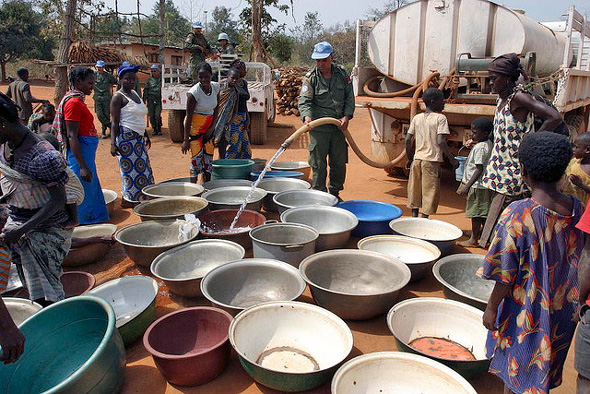
Photo Credit: UN peacekeepers in Côte d’Ivoire distribute water during a 2007 mission, courtesy of United Nations Photo.