• woodrow wilson center
  • ecsp

New Security Beat

Subscribe:
  • rss
  • mail-to
  • Who We Are
  • Topics
    • Population
    • Environment
    • Security
    • Health
    • Development
  • Columns
    • China Environment Forum
    • Choke Point
    • Dot-Mom
    • Friday Podcasts
    • Navigating the Poles
    • Reading Radar
  • Multimedia
    • Water Stories (Podcast Series)
    • Backdraft (Podcast Series)
    • Tracking the Energy Titans (Interactive)
  • Films
    • Water, Conflict, and Peacebuilding (Animated Short)
    • Paving the Way (Ethiopia)
    • Broken Landscape (India)
    • Scaling the Mountain (Nepal)
    • Healthy People, Healthy Environment (Tanzania)
  • Publications
  • Events
  • Contact Us

NewSecurityBeat

The blog of the Wilson Center's Environmental Change and Security Program
Showing posts from category climate change.

  • PODCAST – A Discussion on Climate Change and Security: Arctic Links and U.S. Intelligence Community Responses

    ›
    February 24, 2009  //  By Wilson Center Staff
    “The climate issue also very clearly illustrates the whole complexity of the security issue,” says Henrik Selin. “Arctic melting is a national security issue in the traditional national security kind of way.” In this podcast from the Environmental Change and Security Program, Selin, assistant professor of international relations at Boston University, and Stacy VanDeveer, associate professor of political science at the University of New Hampshire, sat down with ECSP Director Geoff Dabelko to discuss the resonance of climate change in the U.S. security community.

    VanDeveer and Selin were in Washington to speak at a January 12 event, “Governing the Climate: Lessons From the National Conference on Climate Governance.” VanDeveer has frequently coauthored articles with Dabelko, including “It’s Capacity, Stupid: International Assistance and National Implementation” in Global Governance, “European Insecurities: Can’t Live With ’Em, Can’t Shoot ‘Em” in Security Dialogue, and “Environmental Cooperation and Regional Peace: Baltic Politics, Programs, and Prospects” in Environmental Peacemaking.
    MORE
  • Weekly Reading

    ›
    Reading Radar  //  February 20, 2009  //  By Wilson Center Staff
    From Conflict to Peacebuilding: The Role of Natural Resources and the Environment, based on the work of the UN Environment Programme’s Expert Advisory Group on Environment, Conflict and Peacebuilding, summarizes the links between the environment, conflict, and peacebuilding, and includes 14 case studies of how natural resources affect—or are affected by—conflict.

    The authors of “On Population Growth Near Protected Areas” come to an opposite conclusion from Wittemyer et al., who found a pattern of higher population growth near protected areas in Africa and Latin America. “To understand the disagreement, we re-analyzed the protected areas in Wittemyer et al.’s paper. Their results are simply artifacts of mixing two incompatible datasets,” write the authors. “Protected areas may experience unusual population pressures near their edges; indeed, individual case studies provide examples. There is no evidence, however, of a general pattern of disproportionate population growth near protected areas.”

    “The President and I agreed to a new initiative that will further cross-border cooperation on environmental protection and environmental security,” said Canadian Prime Minister Stephen Harper yesterday, announcing plans for a U.S.-Canada Clean Energy Dialogue.

    Scientists at Purdue University have teamed up with Google Earth to create an interactive map of U.S. CO2 emissions.

    Mark Weston, who writes for the Global Dashboard blog, posted an edited version of a recent talk he gave on West African demography and security.
    MORE
  • New Director of National Intelligence Assesses Climate, Energy, Food, Water, Health

    ›
    February 18, 2009  //  By Rachel Weisshaar
    In the annual threat assessment he presented last week to the Senate Select Committee on Intelligence, new Director of National Intelligence Dennis Blair named the global economic crisis—not terrorism—the primary near-term threat to U.S. national security, prompting accusations of partisanship from the Washington Times. Yet as the U.S. Naval War College’s Derek Reveron notes, “the economic turmoil of the early 20th century fueled global instability and war,” and today’s economic collapse could strengthen extremists and deprive U.S. allies of the funds they need to deploy troops or increase foreign assistance to vulnerable regions.

    Further down the list of potential catastrophes—after terrorism, cybersecurity, and the “arc of instability” that stretches from the Middle East to South Asia—the assessment tackles environmental security threats. The four-page section, which likely draws on sections of the recent National Intelligence Council report Global Trends 2025: A Transformed World, summarizes the interrelated natural-resource and population challenges—including energy, food, water, demography, climate change, and global health—the U.S. intelligence community is tracking.

    The world will face mounting resource scarcity, warns Blair. “Access to relatively secure and clean energy sources and management of chronic food and water shortages will assume increasing importance for a growing number of countries. Adding well over a billion people to the world’s population by 2025 will itself put pressure on these vital resources,” he writes.

    Drawing on the conclusions of the 2008 National Intelligence Assessment on the impacts of global climate change to 2030, Blair portrays climate change as a variable that could place additional strain on already-stressed agricultural, energy, and water systems: “We assess climate change alone is unlikely to trigger state failure in any state out to 2030, but the impacts will worsen existing problems such as poverty, social tensions, environmental degradation, ineffectual leadership, and weak political institutions.” Direct impacts to the United States include “warming temperatures, changes in precipitation patterns, and possible increases in the severity of storms in the Gulf, increased demand for energy resources, disruptions in US and Arctic infrastructure, and increases in immigration from resource-scarce regions of the world,” writes Blair.

    Africa, as usual, is the last of the world’s regions to be analyzed in the assessment. Blair notes that “a shortage of skilled medical personnel, deteriorating health systems, and inadequate budgets to deal with diseases like HIV/AIDS, malaria, and tuberculosis” is threatening stability in sub-Saharan Africa, and explains that agriculture, which he rightly calls “the foundation of most African economies,” is not yet self-sufficient, although some countries have made significant improvements in infrastructure and technology. He highlights ongoing conflicts in the Democratic Republic of the Congo, Nigeria, Sudan, and Somalia as the most serious security challenges in Africa. He fails to note, however, that all four have environmental/natural resource dimensions (see above links for details).
    MORE
  • Weekly Reading

    ›
    Reading Radar  //  February 13, 2009  //  By Wilson Center Staff
    An article in Conservation Letters examining the effect of war on wildlife in Cambodia finds that “the legacy of conflict for wildlife can be profound and destructive. To address post-conflict challenges more effectively, conservation must be integrated within broader peacebuilding processes, including disarmament, demobilization, and reintegration of combatants.”

    New York Times environmental reporter Andrew Revkin shares a recent nightmare on his blog, Dot Earth: If human beings achieve inexpensive, renewable energy, will this spur environmentally destructive population growth and consumption?

    “Today, one-third of the world’s population has to contend with water scarcity, and there are ominous signs that this proportion could quickly increase,” writes the International Water Management Institute’s David Molden in the BBC’s Green Room. “Up to twice as much water will be required to provide enough food to eliminate hunger and feed the additional 2.5 billion people that will soon join our ranks. The demands will be particularly overwhelming as a wealthier, urbanised population demands a richer diet of more meat, fish, and milk.”

    “Climate Wars” is a three-part podcast series by the Canadian Broadcasting Corporation.

    Circle of Blue has launched the online radio series “5 in 15”; one episode features water expert Peter Gleick, head of the Pacific Institute, while another highlights Mark Turrell, CEO of technology company Imaginatik.
    MORE
  • Pacific Institute’s Peter Gleick Piques Interest With “Peak Water”

    ›
    February 12, 2009  //  By Rachel Weisshaar
    Bringing clean water and improved sanitation to the billions who lack them is “not a question of money, it’s not a question of technology, it’s a question of governance, of commitment, will—all of those things. And that, in many ways, is the worst part of the world’s water crisis,” said Peter Gleick, president of the Pacific Institute, at the February 4, 2009, launch of The World’s Water 2008-2009: The Biennial Report on Freshwater Resources. Gleick began by showing No Reason, a short video produced by the Pacific Institute and Circle of Blue for this year’s World Economic Forum in Davos, Switzerland, which examined water issues in several sessions.

    What is the Water Crisis?

    According to Gleick, the global water crisis comprises many problems, including:
    • The failure to meet basic human needs for water, which leads to diseases like cholera and typhoid;
    • Local water scarcity and resource depletion;
    • Contamination by industrial and human wastes;
    • The effects of climate change and extreme events;
    • Reduced production of food, goods, and services caused by water scarcity, poor water quality, or inequitable water allocation;
    • Ecosystem degradation and destruction; and
    • Threats to international, national, and subnational security posed by conflict over water.
    Three Kinds of Peak Water

    Because water is a largely renewable resource, we will not completely run out of water. However, Gleick warned that non-renewable water sources such as fossil aquifers are limited. Thus, “peak non-renewable water” could occur if we use fossil groundwater faster than it is recharged; by some estimates, 30-40 percent of today’s global agricultural production comes from non-renewable water, which will become increasingly difficult to extract, said Gleick. “That’s a real challenge from a food point of view, especially in a world that is going from 6.5 billion to 7 billion to 9 billion people.”

    Eventually, we will also run up against the ecological and economic flow limits of renewable water sources, which include streams and rivers, Gleick said. And before either non-renewable or renewable peak water, we could reach “peak ecological water,” which occurs when using additional water “causes more ecological damage than it provides human benefit, and the total value of using more water starts to decline,” he explained.

    China: Water Challenges Writ Large

    China’s stunning economic growth in recent years has come “at an enormous environmental cost…to their air quality, to human health, and especially to water resources,” said Gleick. China’s water is over-allocated, poorly managed, and severely polluted by industrial and human wastes. Desertification in northern China is increasing rapidly, due to deforestation and the excessive withdrawal of groundwater. According to Gleick, some companies have cancelled plans to build plants in China because they cannot obtain sufficient water of high enough quality.

    Public protests over environmental degradation in China are becoming increasingly common. According to Gleick, there have been as many as 50,000 protests over environmental issues in a single year, with the majority of these relating to water quality or allocations.

    Solutions to the Water Crisis

    Gleick recommended a series of actions:
    • Develop more water sources, while ensuring that environmental and community concerns are addressed;
    • Improve water infrastructure, including the installation of low-flow toilets and efficient drip-irrigation systems;
    • Improve water-use efficiency;
    • Update the Clean Water Act and the Safe Drinking Water Act to include new contaminants, and actively enforce the standards already in place;
    • Price water more accurately, with the understanding that water is a human right and should be subsidized for basic human needs;
    • Improve and expand public participation in environmental decision-making; and
    • Strengthen water institutions and improve communication between them.
    Photo: Peter Gleick. Courtesy of Dave Hawxhurst and the Wilson Center.

    For more information, including a webcast of this event, visit ECSP’s website. To receive invitations to future events, e-mail ecsp@wilsoncenter.org.
    MORE
  • For Many, Sea-Level Rise Already an Issue

    ›
    February 11, 2009  //  By Will Rogers

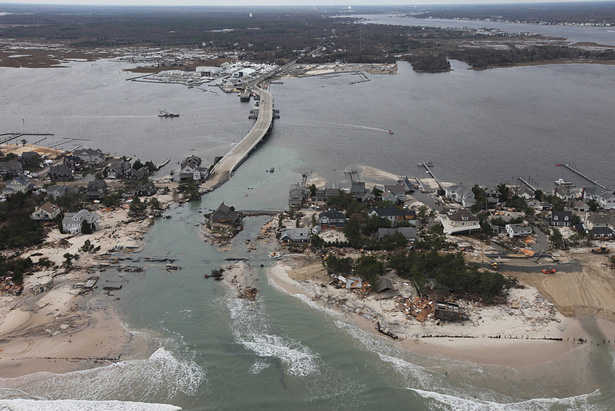
    Global sea level is projected to rise between 7 and 23 inches by 2100, according to the Intergovernmental Panel on Climate Change (IPCC). Recent melting of the Antarctic ice sheet has prompted geophysicists at the University of Toronto and Oregon State University to warn that global sea level could rise 25 percent beyond the IPCC projections. These catastrophic long-term predictions tend to overshadow the potentially devastating near-term impacts of global sea-level rise that have, in some places, already begun.

    MORE
  • Weekly Reading

    ›
    Reading Radar  //  February 7, 2009  //  By Wilson Center Staff
    Conflicts among pastoralists over water and land have increased in drought-stricken northeastern Kenya, reports IRIN News.

    Country for Sale, a report by Global Witness, alleges that Cambodia’s oil, gas, and mineral industries are highly corrupt.

    Foreign Policy features an interview with General William “Kip” Ward, the commander of the new U.S. Africa Command. The New Security Beat covered General Ward’s recent comments on civilian-military cooperation.

    Healthy Familes, Healthy Forests: Improving Human Health and Biodiversity Conservation details Conservation International’s integrated population-health-environment projects in Cambodia, Madagascar, and the Philippines.

    Double Jeopardy: What the Climate Crisis Means for the Poor, a new report on climate change and poverty alleviation, synthesizes insights from an August 2008 roundtable convened by Richard C. Blum and the Brookings Institution’s Global Economy and Development Program at the Aspen Institute.

    “Although the long-term implications of climate change and the retreating ice cap in the Arctic are still unclear, what is very clear is that the High North is going to require even more of the Alliance’s attention in the coming years,” said NATO Secretary General Jaap de Hoop Scheffer at a seminar on security prospects in the High North hosted by the Icelandic government in Reykjavik.

    “I think we will work our way towards a position that says that having more than two children is irresponsible. It is the ghost at the table. We have all these big issues that everybody is looking at and then you don’t really hear anyone say the “p” word,” says UK Sustainable Development Commission Chair Jonathon Porrit, speaking about population’s impact on the environment. Porrit has drawn criticism for his remarks.

    A local priest has warned that a Norwegian company’s proposed nickel mines will threaten food security on the Philippine island of Mindoro.
    MORE
  • VIDEO: Kent Butts on Climate Change, Security, and the U.S. Military

    ›
    February 5, 2009  //  By Wilson Center Staff

    “Climate change is an important issue that can be addressed by all three elements of the national security equation: defense, diplomacy, and development,” says Kent Butts, in this short expert analysis from the Environmental Change and Security Program. Kent Butts, professor of political-military strategy at the Center for Strategic Leadership, U.S. Army War College, makes the case for considering global climate change a nontraditional threat to security and discusses how the U.S. military is reacting to a changing climate.

    MORE
Newer Posts   Older Posts
View full site

Join the Conversation

  • RSS
  • subscribe
  • facebook
  • G+
  • twitter
  • iTunes
  • podomatic
  • youtube
Tweets by NewSecurityBeat

Trending Stories

  • unfccclogo1
  • Pop at COP: Population and Family Planning at the UN Climate Negotiations

Featured Media

Backdraft Podcast

play Backdraft
Podcasts

More »

What You're Saying

  • Volunteers,At,The,Lagos,Food,Bank,Initiative,Outreach,To,Ikotun, Pan-African Response to COVID-19: New Forms of Environmental Peacebuilding Emerge
    Rashida Salifu: Great piece 👍🏾 Africa as a continent has suffered this unfortunate pandemic.But it has also...
  • A desert road near Kuqa An Unholy Trinity: Xinjiang’s Unhealthy Relationship With Coal, Water, and the Quest for Development
    Ismail: It is more historically accurate to refer to Xinjiang as East Turkistan.
  • shutterstock_1779654803 Leverage COVID-19 Data Collection Networks for Environmental Peacebuilding
    Carsten Pran: Thanks for reading! It will be interesting to see how society adapts to droves of new information in...

What We’re Reading

  • Rising rates of food instability in Latin America threaten women and Venezuelan migrants
  • Treetop sensors help Indonesia eavesdrop on forests to cut logging
  • 'Seat at the table': Women's land rights seen as key to climate fight
  • A Surprise in Africa: Air Pollution Falls as Economies Rise
  • Himalayan glacier disaster highlights climate change risks
More »
  • woodrow
  • ecsp
  • RSS Feed
  • YouTube
  • Twitter
  • Facebook
  • Home
  • Who We Are
  • Publications
  • Events
  • Wilson Center
  • Contact Us
  • Print Friendly Page

© Copyright 2007-2021. Environmental Change and Security Program.

Woodrow Wilson International Center for Scholars. All rights reserved.

Developed by Vico Rock Media

Environmental Change and Security Program

Woodrow Wilson International Center for Scholars

Ronald Reagan Building and International Trade Center

  • One Woodrow Wilson Plaza
  • 1300 Pennsylvania Ave., NW
  • Washington, DC 20004-3027

T 202-691-4000