Showing posts from category climate change.
-
Climate Diplomacy in Perspective
›December 20, 2011 // By Lukas RüttingerClimate policy on the international level often seems to be largely limited to negotiations within the United Nations Framework Convention on Climate Change (UNFCCC). However, in the shadow of these negotiations, a new approach merging climate and foreign policy is developing. Calling it “climate diplomacy,” proponents of this approach argue that tackling climate change is inherently a political struggle and one in which classic diplomatic instruments should play a role. This is especially true, since the challenges posed by climate change are so huge and the solutions so far reaching that the climate conversation also has to be a diplomatic one. Yet negotiations and treaties are just one instrument of foreign policy and they are only as successful and strong as the political foundation upon which they are built.
The German Federal Foreign Office, supported by adelphi, invited representatives from the European Union, the Organization for Security and Cooperation in Europe, and the United Nations, as well as over 30 countries for a two-day conference in Berlin this October, “Climate Diplomacy in Perspective – From Early Warning to Early Action,” to discuss what climate diplomacy looks like in practice, what its added value is, and what challenges it is best suited to address.
In working groups on water diplomacy, food security, and coastal stability, common themes and questions quickly emerged. In particular, the value and danger of securitizing the climate change discourse was a prominent issue.
On the one hand, the securitization of issues such as transnational water sharing can raise threat perception to a level that makes it very hard to tackle and may even foster conflict. On the other hand, participants noted that framing climate change as a security challenge might help to finally create the political leverage needed for far-reaching action.
Confronting Complexity
Another common theme was the complexity and linked nature of the climate challenges faced. Although covering different aspects, each working group quickly recognized systems with multiple feedback loops, such as the water-food-energy nexus. The same point was underlined in discussions around complex emergencies and crises, such as the 2010 floods in Pakistan.
However, the discussion did not stop at an analysis of challenges, the working groups also developed many suggestions of what climate diplomacy could and should look like.
One shared recommendation was that the complexity of and links between issues require sectoral policies and institutions to reach beyond their traditional, thematic, and even geographic focus. In regards to cross-border water cooperation, for example, this means that regional political institutions are often better suited than water institutions because of their broader mandate and focus. Where classic diplomacy and regional cooperation do not work, for example because national governments are blocking these efforts, participants proposed that informal diplomacy, track two initiatives, and cooperation on lower administrative levels such as municipalities can provide alternatives.
The complexity of the challenges is daunting but when asked to summarize why diplomats should tackle climate change, John Ashton, the special representative for climate change for the British Commonwealth Foreign Office, summed up his understanding in a simple but to-the-point answer: “Because it is our job.”
Lukas Rüttinger is a project manager for adelphi, mainly focusing on the fields of conflict analysis and peacebuilding as well as resources and governance.
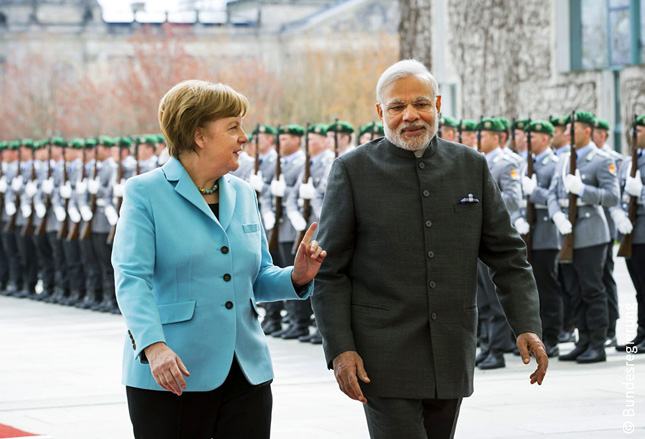
Photo Credit: German Federal Foreign Office. -
Ruth Greenspan Bell and Barry Blechman for Foreign Affairs
How Much Did the Climate Talks in Durban Accomplish?
›December 16, 2011 // By Wilson Center StaffThe original version of this article, by Ruth Greenspan Bell and Barry Blechman, appeared on Foreign Affairs.
The outcome of the recent Durban climate conference represents a victory, of sorts, for a particular vision of how the community of nations might eventually gain control over greenhouse gases. But that vision is flawed, perpetuating an approach that, after more than 20 years of negotiations, has not reversed warming trends. Of particular concern is the continued insistence on a comprehensive deal negotiated by all nations through a UN process. The degree to which the meme of a “legally-binding” agreement has dominated thinking is likewise troubling.
Our October article, “Beyond the Durban Climate Talks,” examined an alternative negotiating pathway – one based on the effective model of nuclear arms control. There, specific issues were opportunistically segmented for resolution. And, in some cases, negotiators achieved progress by working in alternative fora that were not wedded to the UN ground rules, especially the ones that give every country, no matter how small, a potential veto on the results. Unfortunately, the Durban result continues the well-trod UN pathway.
The meetings saw protracted debate about how precisely to characterize the “legal” and “binding” nature of a future agreement that might emerge in 2015 from yet another “new” round of negotiations. Indeed, the supposed distinction between “political” or “voluntary” and “legally binding” agreements has dominated United Nations Framework Convention on Climate Change negotiations for years. Yet such distinctions break down upon closer examination.
Continue reading on Foreign Affairs.
Ruth Greenspan Bell is public policy scholar at the Wilson Center.
Photo Credit: “Oxfam hungry for climate action at Durban Climate Conference,” courtesy of Oxfam International and Ainhoa Goma. -
Can “Climate-Smart Agriculture” Help Feed Africa’s Growing Population?
›December 13, 2011 // By Brenda ZuluFood production needs to increase 70 percent by 2050 to meet the demands of a growing world population, said former UN Secretary-General Kofi Annan in a keynote address on “climate-smart agriculture” at a COP-17 event hosted by the World Bank and African Union. Annan, who is now chairman of the Alliance for a Green Revolution in Africa (AGRA), said this was a particular concern in Africa, where four out of five citizens are dependent on agriculture for their livelihoods.
One in seven people in the world do not have enough food to eat, Annan said, and climate change is expected to make this challenge more difficult to overcome. Climate-smart agriculture includes a wide variety of techniques that help increase the resilience of communities and protect them from extreme weather events, such as terracing to prevent soil erosion, improving weather forecasting, managing water runoff, and developing irrigation systems.
“Climate change affects us by undermining our resource base through water and soil degradation,” said Prime Minister of Ethiopia Meles Zenawi at the event. “There is need to protect the resources and to rehabilitate green areas of our land.” He said that since 70 percent of Africans are small-scale farmers and that most of the poor in Africa were farmers, there is no better way to fight poverty on the continent than through agriculture.
South African President Jacob Zuma said at the event that given that the UN projects a population of more than nine billion people in the world by 2050, agriculture should be a priority as it is more vulnerable to climate change than any other sector.
“Climate-smart agriculture includes proven practical techniques such as mulching, intercropping, conservation agriculture, integrated crop management and agro forestry, improved grazing, and innovative better weather management,” he said, all of which have the potential to help increase crop yields.
Mary Robinson, chair of the Global Leaders Council for Reproductive Health, said there could be no smart agriculture without integrating women’s issues, because climate change affects women disproportionately. “Women make the connection between climate-smart agriculture, food security, and gender,” she said.
“Our ability to feed the growing population under climate variability and change will require new expertise and harmonized efforts,” said Robinson.
Annan agreed, saying African women should be fully involved in early action that can support technical assistance, such as screening agriculture plans to ensure they are “climate smart” as well as integrating climate resilience and mitigation into ongoing poverty-reduction programs and testing new approaches.
But according to Brylyne Chitsunge, a farmer from Pretoria speaking on the panel, things will need to change considerably from the status quo. “The small-scale farmer remains very much marginalized in institutions,” she said. “They exist on paper but they really don’t exist.”
Brenda Zulu is a member of Women’s Edition for Population Reference Bureau and a freelance writer based in Zambia. Her reporting from the COP-17 meeting in Durban (see the “From Durban” series on New Security Beat) is part of a joint effort by the Aspen Institute, Population Action International, and the Wilson Center.
Sources: World Bank, World Food Programme.
Photo Credit: “Cultivated hillsides,” courtesy of flickr user coda (Damien du Toit). -
Climate Change, Uncertainty, and Conflict in the Niger River Basin
›New research on the Niger River Basin finds that the effects of climate change in the region are pervasive and that “latent conflict” between groups – disagreements and disputes over damage to farmland and restricted access to water, but not physical violence – is common.
“You’ve got vulnerable people, vulnerable households, vulnerable communities living within…fragile systems – governance systems [and] environmental systems,” said Phil Vernon, International Alert’s director of programs for Africa and peacebuilding issues, at “Climate Change, Water, and Conflict in the Niger River Basin,” an event hosted by the Wilson Center on November 17. [Video Below]
Together with his colleagues Lulsegged Abebe and Marisa Goulden of the University of Anglia, Vernon examined how communities in Mali, Nigeria, and Niger have been impacted by climate change, how they have adapted to those impacts, and whether these changes spurred conflict.
Competition Over Dwindling Resources
Climate change destabilizes communities by adding uncertainty and stress, Vernon said, and when a community is already vulnerable, the impacts of those uncertainties and stresses are amplified and the potential for conflict is greater. In every community examined in the study, climate-induced vulnerability led to some kind of conflict. More often than not, however, that conflict took the form of disagreements, or “latent conflict,” rather than violent conflict – a reason for optimism in the face of dire predictions that an era of climate wars is upon us.
Throughout the basin, river flows and rainfall have been decreasing since the 1970s, said Goulden, creating tension between two of the major communities living in the basin – farmers and pastoralists. Pastoralists are forced to travel farther to bring their herds to water, while farmers are expanding their cropland to feed growing populations, reducing the pathways available to herders and their livestock.
Unfortunately, poor policy decisions have made tensions worse in some places. In Lokoja, Nigeria, for example, the government began dredging the Niger River in 2009 to improve commercial shipping. Officials said the dredging would reduce flooding, but in 2010, farmers suffered immensely from floods. The government’s false promises increased the farmers’ vulnerability, said Goulden, because, expecting to be protected from flooding, they were not adequately prepared, making the damage worse.
As a result, farmers are now building homes and developing cropland further away from the river, reducing land available to pastoralists and increasing the potential for conflict between the two communities.
Increased Resilience Is a “No-Brainer”
Climate in the Niger River Basin is marked by a high degree of variability – rainfall, river flows, and temperature already fluctuate a great deal and could become even more variable in the future, said Goulden.
That uncertainty has important implications for how people think about responding to climate change, said Abebe. “Development and adaptation policies must be flexible enough to cope with extreme variability both in the wetter and the dry conditions in the Niger River Basin,” he said.
Boosting resilience will be key to ensuring that vulnerable communities have the flexibility they need to respond to future crises, Vernon said.
“If the interaction of stress and vulnerability is the problem…it’s somewhat of a no-brainer that increased resilience is part of the answer,” said Vernon. And decisions on how to increase resilience “should be made at the lowest appropriate level…from high policy down to household and individual decisions.”
Different People, Different Levels of Resilience
Vernon’s emphasis on making decisions at the “lowest appropriate level” reflects the reality that various communities – and individual community members – experience climate change in different ways. Fostering adaptation strategies that take these variations into consideration will be an essential strategy for avoiding climate-driven conflict in the future.
In Mali, the Niger River flooded downstream of the Selingué Dam in 2001 and 2010, and in each case, researchers found divergent responses to the crises.
In the lead-up to the 2001 flood, dam operators had been intentionally keeping reservoir levels high in anticipation of increased demand for hydroelectric power during an upcoming soccer championship match. When heavy rains hit the area, though, the operators were forced to release huge amounts of water over a short period of time, causing massive flooding downstream.
In the flood’s aftermath, downstream farmers were able to successfully sue the power company for their losses, but downstream pastoralists had no comparable option. The pastoralists were therefore more vulnerable to the flood’s long-term impacts.
Responses differed within communities as well, often breaking down along gender lines. In 2010, when floods hit Mali again, men “were trying to help people move away from the flood water, and then afterward with rebuilding of homes,” said Goulden, “whilst women are concerned with finding shelter, cooking, and caring for the sick, elderly, and children.”
No “Massive Risk of Violence” in the Near Future
Policymakers are left with an urgent crisis – climate change – and a solution that is inherently time-intensive: building resilience in vulnerable communities down to the individual level, said Vernon.
“There is a risk of undermining the elements of resilience which exist already in responding too rapidly and too urgently based on the anxieties we have to the problem of climate change and insecurity,” he cautioned.
Fortunately, although the threat of climate change is urgent, Vernon said that the risk of that threat spilling over into violent conflict is still a long way off. “I think policymakers have got to be thinking about where might this lead,” he said, “but at the moment, in terms of this research, there was no evidence that there’s a massive risk of violence happening any time soon.”
Event Resources
Sources: AlertNet, BBC, International Alert.
Photo Credit: “Cattle manure millet field in Niger,” courtesy of flickr user ILRI (International Livestock Research Institute). -
Youth Need More Information on Climate, Population Links
›December 9, 2011 // By Brenda ZuluYouth need more information about climate change, but also on its links to reproductive health and gender, said Esther Agbarakwe, technical advisor for the Africa Youth Initiative on Climate Change. Speaking at the joint Aspen Institute, Population Action International, and Wilson Center side event, “Healthy Women, Healthy Planet,” at the COP-17 climate conference, Agbarakwe pointed out that “there are critical issues, like demography, the number of young people, and young women in this population, that should be discussed.” But, she said, they would likely not be brought up in any official manner at the conference because of fears about “population control.”
In Nigeria, young people, and particularly young girls, are frequently excluded from formal discussions about climate change and sustainable development. Growing up, Agbarakwe said she was aware of environmental change due to pollution in the Niger Delta, but her parents did not talk to her about reproductive health. In her community, many young girls had unplanned pregnancies and boys dropped out of school. It was only through a child rights activists’ club that she learned about how she could protect herself.
“That is why there is need to have young women in this discussion,” she said.
Giving a Voice to the Most Affected
Wendy Mnyandu, a student from Durban’s Zwelibanzi High School attending the side event, noted in an interview that climate changes have affected mothers more because they are dependent on the forest for energy.
“It is important for villagers to adapt to new technologies [such as] cook stoves, where they can use less fuelwood that will not take away the forest,” she said.
At the Wilson Center earlier this year, Agbarakwe explained how insufficient rain has led to longer trips to collect water, increasing women’s vulnerability. A friend of hers was raped while walking to the next village to fetch water after her own community’s well dried up – an ordeal that was not only emotionally and physically traumatizing, but also isolated her from her community and jeopardized her future plans and dreams.
“It is important for more men to talk about this topic,” said Roger-Mark De Souza, vice president of research at Population Action international, who also spoke at the side event. “I am talking on behalf of my mother, my daughters, my wife, and my granddaughters, for their voices are not often heard. I am a father of two young teenage boys and they know how to talk about this. By talking about it, we can see how family planning is very effective,” he said.
Talking About Population to Climate Experts, and Vice Versa
“Just last week I was in Dakar, Senegal, at the International Conference on Family Planning,” said De Souza. “I was talking to specialists and I was getting them interested in climate change.” Similarly, “more and more we find that climate change activists and specialists are appreciating that climate change is important to women and their wellbeing,” he said.
Population Action International (PAI) has mapped agricultural production, water stress, and increased vulnerability to climate change. “We see that there are 26 global hotspots where these issues are critical. What we have also done is look at these hotspots to determine where there is a very high unmet need for family planning,” said De Souza. PAI is using these maps to show the climate change community that a cost-effective investment in family planning could increase resilience in these areas.
De Souza said that in order to build support for programs that address these issues, it is important to look at national adaptation programs of action and their funding needs. “Funding is critical, and these types of interventions produce results – we need to understand where those missed opportunities are and tell that story to our policymakers and our delegations that are here in Durban and to keep with that message when we go back home,” he said.
Empowering Young African Women
Agbarakwe became interested in these issues after meeting former president of Ireland Mary Robinson, who also spoke at the side event. “I had met a Nigerian young man who challenged me that it was difficult for a woman to realize her career dreams because one day she will have to be married and bear children,” said Agbarakwe:When I saw my passion, I was confused and asked questions of Robinson on what she would do if she found herself at the crossroads like me. She told me as a young woman, I will find myself at a crossroad. That is why I am very determined about this issue, and that is what is needed, because when young women are empowered they actually can make decisions.
Robinson, the chair of the Global Leaders Council for Reproductive Health, said in an interview that she was heartened to see the number of youth at the side event. In Durban, she spoke with a group of young women who were part of Oxfam’s Project Empower:We met young women and several of them had come from the Eastern Cape [of South Africa]. They had come to Durban to look for work. Instead they found themselves in rural poverty. They had dreams of a better life for themselves, but their daily reality they talked to us about was nobody’s dream. They talked to us about negative impacts of their communities – the violence against women that is very prevalent, the unplanned pregnancies, and the reality of women who even have to use their bodies to gain money.
African women are looking for contraceptives, such as the female condom, where they can be in control, said Robinson; there are about 215 million women in the world who do not want to get pregnant but are not using modern contraception. “If we were to solve that problem, women [would not only] be better mothers, but also be better leaders in their communities,” she said.
The good thing was that they were ready to talk about the problems and did not consider themselves to be victims. They were strong women. They had learned to say ‘no’ and to say ‘respect me.’ They talked about going into some of the clinics and facing encounters with the police and that the police did not respect them. ‘We do not accept that anymore. We know now that we are members of the community who wish to be respected,’ they explained.
Brenda Zulu is a member of Women’s Edition for Population Reference Bureau and a freelance writer based in Zambia. Her reporting from the COP-17 meeting in Durban (see the “From Durban” series on New Security Beat) is part of a joint effort by the Aspen Institute, Population Action International, and the Wilson Center.
Sources: Population Action International, World Health Organization.
Photo Credit: “Viet Nam and Primary Education,” courtesy of flickr user United Nations Photo; video courtesy of Population Action International. -
Watch ‘Mother Jones’’ Kate Sheppard on Covering the Evolving Environment and Reproductive Rights Beat
›
“My author bio says I cover energy, environment, and reproductive rights,” said Kate Sheppard of Mother Jones in an interview with ECSP. “One of the biggest challenges in covering that beat is even just articulating what that means.”
Fundamentally, Sheppard said she is interested in covering how policy decisions shape the future, which involves examining the intersections between these key issues. She spoke at a November 1 Wilson Center event on the challenges of reporting on population and environment, especially this year, when a great deal of media covered the world population reaching seven billion.
Sheppard is currently reporting on adaptation to climate change, looking at how human societies are responding to the changes that they are already experiencing, whether it be changes in migration patterns, resource availability, or food security. “I’m seeing this as a really ripe area where these things intersect, when we are talking about just how many people we are going to have in the future, and where they are going to be, and whether we can meet their needs in a society that is constantly changing,” she said.
Energy is another important area of intersection, said Sheppard. Access to energy is critical to ensuring a better future for the world’s inhabitants, but policy decisions must also take into account the fact that our fossil fuel resources are finite, she said. “We need to start thinking about ways we are going to do this sustainably for the world population in the future.” -
Gender, Family Planning Should Be Part of Climate Discussions, Says Mary Robinson
›December 6, 2011 // By Brenda ZuluSpeaking at a side event on “Healthy Women, Healthy Planet” in Durban, South Africa, Mary Robinson, chair of the Global Leaders Council for Reproductive Health, said they were seeing more female leadership at this year’s UN climate change conference (COP-17).
But Robinson, who is also chair of the Mary Robinson Foundation – Climate Justice, said there needs to be more explicit gender language in the COP-17 text to ensure that green climate funds support gender equity and money gets to women on the ground for adaptation.
“Our foundation has been helping to bring out women’s leadership at the top level in this conference to match women’s leadership at the community level,” explained Robinson, pointing out that the heads of the last three COPs are women.
Though the role of gender in climate adaptation and mitigation will likely not be prominently discussed on the floor at COP-17, Robinson said she looked forward to side conversations about a stronger focus on these issues.
Family planning, she argued, should also play a larger role. “There have been so many attempts to deflect from commitments and get into other kinds of issues that bring about some kind of stigma in this area,” said Robinson. But “those of us on the Global Leaders Council on Reproductive Health fundamentally believe in the central role played by reproductive health, access to knowledge about how to space children, and having choices about number of children.”
There are about 215 million women in the world who do not want to get pregnant but are not using modern contraception. Family planning and reproductive health services help build up a woman’s resilience to climate changes, Robinson explained.
These services are vital to improving women’s health and enable women to seek educational and work opportunities, unleashing their potential to help solve problems associated with climate change.
Brenda Zulu is a member of Women’s Edition for Population Reference Bureau and a freelance writer based in Zambia. Her reporting from the COP-17 meeting in Durban (see the “From Durban” series on New Security Beat) is part of a joint effort by the Aspen Institute, Population Action International, and the Wilson Center.
Sources: World Health Organization.
Image Credit: “Mary Robinson and Constance Okollet” at COP-17, used with permission courtesy of the Mary Robinson Foundation – Climate Justice (MRFCJ). -
Susanna Murley for The Huffington Post
Compromise Is Hard: The Problems and Promise of REDD+
›December 6, 2011 // By Wilson Center StaffThe original version of this article, by Susanna Murley, appeared on The Huffington Post.
In Durban this week delegates from around the world are examining the options to mitigate carbon emissions. What looks like the best chance for progress? REDD+ (for Reduced Emissions from Deforestation and Degradation, plus co-benefits – like conservation, sustainable management of forests, and enhancement of forest carbon stocks). REDD+ has been seen as a potentially powerful solution to solve both poverty and deforestation – in one fell swoop.
How does it work? Essentially, these programs would be funded by developed nations to help pay for community forestry projects in developing countries, if the communities can demonstrate – with verifiable data – that their efforts are saving forests that would have been destroyed or if they are planting trees that would permanently sequester carbon.
Will this work? Many other systems have tried and failed to reduce deforestation. In Indonesia, where an area of forest about the size of Nevada has been destroyed since 1990, activists have participated in demonstrations, legal actions, blockades and destruction of property to protest timber production. Many international NGOs have joined them in their campaigns against the forestry practices in Indonesia, releasing report after report on the “State of the Forest.” The World Bank and the International Monetary Fund have attempted to regulate forestry as conditions of their loans. None of it worked, and Indonesia continues to see massive amounts of illegal logging and deforestation.
Continue reading on The Huffington Post.
Sources: Center for International Forestry Research, Gellert (2010), MongaBay.com
Photo Credit: “Oil palm plantation,” courtesy of flickr user CIFOR (Ryan Woo).