-
Clearing the Air: Is Natural Gas a Game Changer for Coal in China?
›
On the heels of a landmark U.S.-China climate agreement, 2015 will be a critical year for China’s environmental and energy policy. A revised and much stricter Environmental Protection Law went into force on January 1; new amendments to the Air Pollution Law are likely to be put in place; and the National Development and Reform Commission will draft a new five-year plan.
-
Two Decades Trying to Solve China’s Environmental Problems: An Interview With WWF’s Tao Hu
›
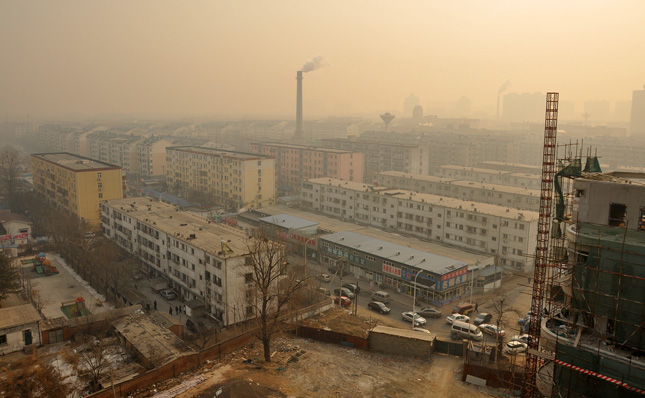
Despite some critics, the recent U.S.-China agreement over carbon emissions has sparked remarkable optimism in global climate negotiations. It’s also opened the door to new bilateral engagement between the U.S. and Chinese environmental communities on other issues, including China’s massive air pollution problems (16 of the world’s 20 most polluted cities are in China).
-
While China Waits on Shale Gas, Soaring Energy Demands Create Regional Tensions
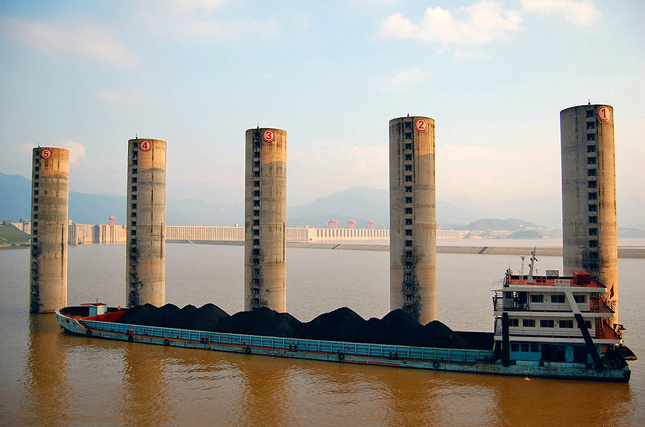
›China’s energy investments are on the move, touching nearly every region of the globe from coal and liquefied natural gas imports from Australia to a recent natural gas agreement with Russia and expanded oil drilling in the South China Sea. [Video Below]
-
Cautious Optimism: China’s Nuclear Energy Safety Measures Improving
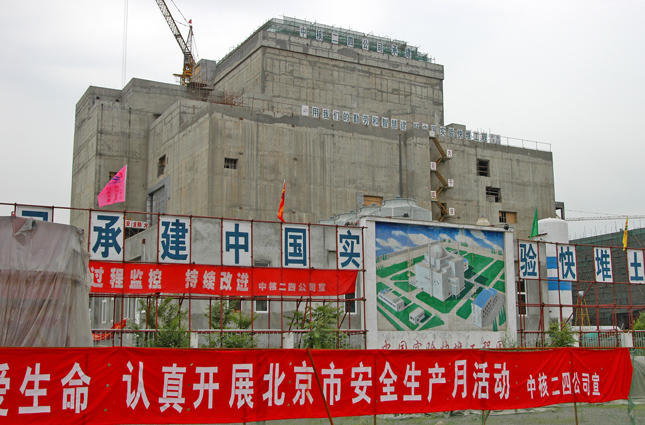
›Motivated in part by mounting public pressure to cut down on the smog created by more than 600 coal-fired power plants, China’s nuclear energy capacity is growing faster than any other country in the world.
-
Infographic: The Rise of U.S.-China Agricultural Trade
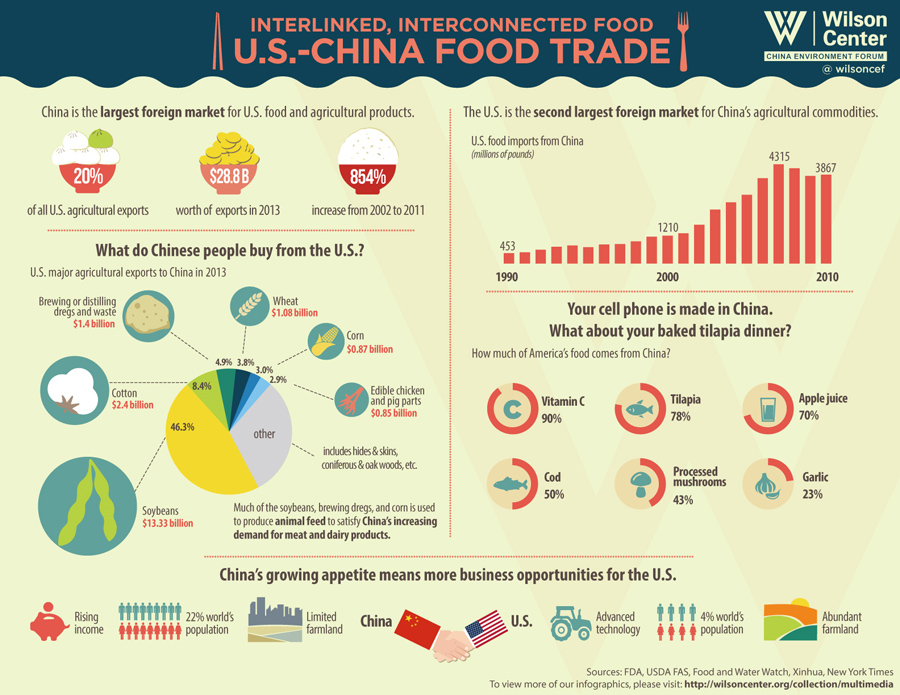
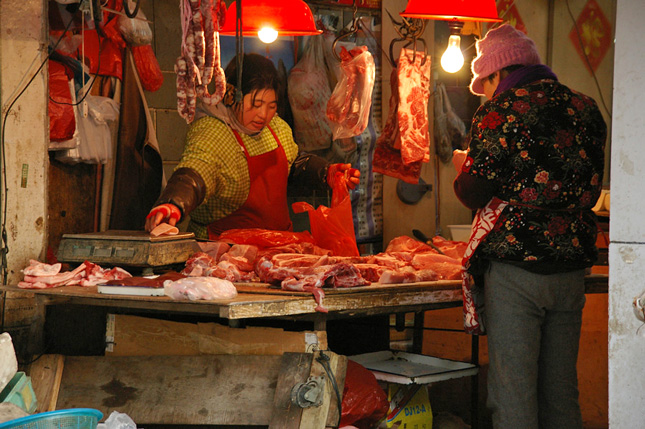
›China faces a dilemma. It is home to 20 percent of the world’s population but only seven percent of the world’s water resources and nine percent of the world’s arable land. At the same time, a rising middle class is demanding more food. Over the last 30 years, China’s meat demand has quadrupled.
-
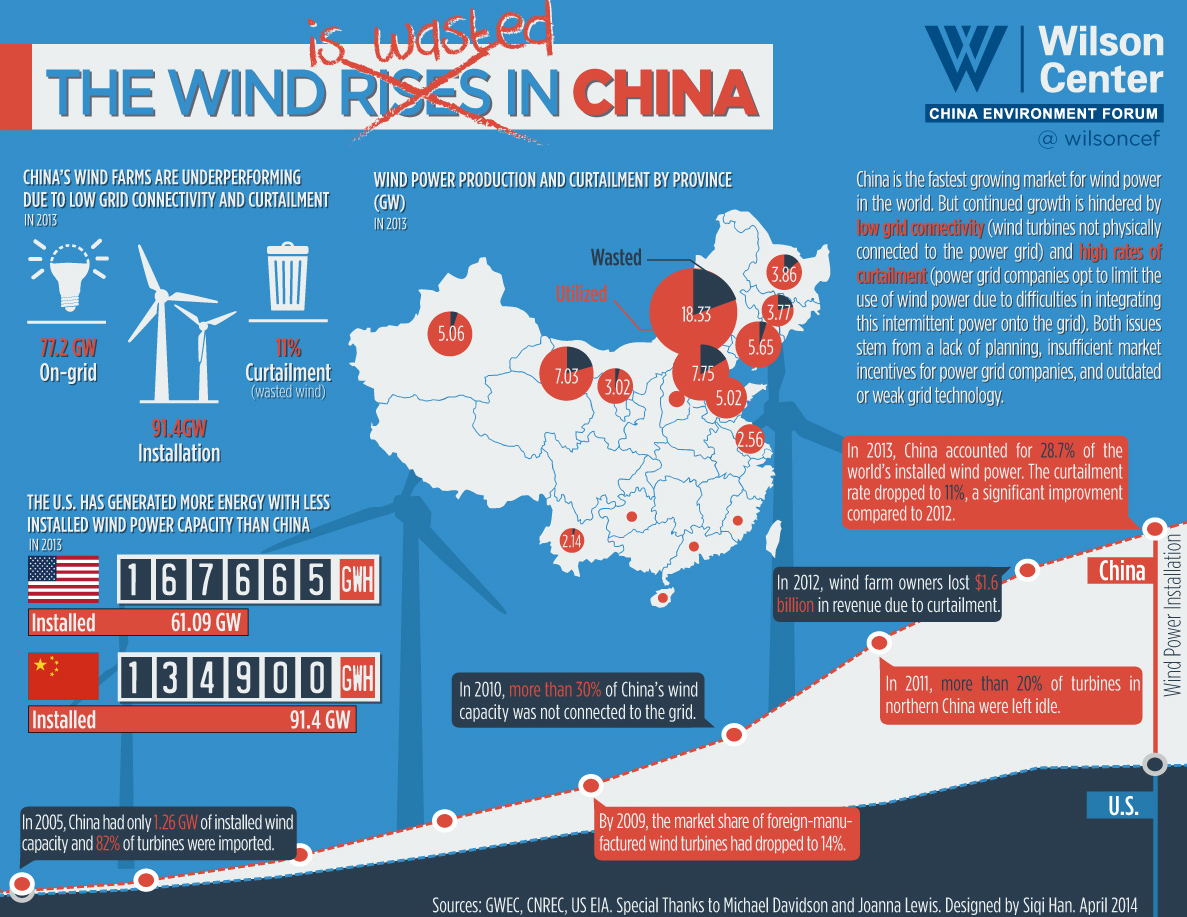
Infographic: Waste, Poor Planning Blunt China’s Wind Energy Ambitions
›China leads the world in installed wind power by a wide margin, but last year, when it came to actual generation, China produced 20 percent less electricity from wind than the United States.
-
China’s Coal-to-Gas Plants Trade Urban Air Quality for Higher Carbon Emissions
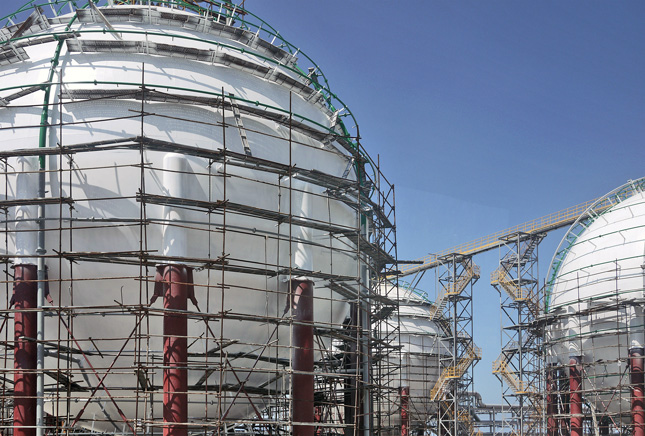
›Last September, facing a growing public outcry to ease smog, China’s State Council called for the accelerated development of a new energy industry that turns coal into methane gas. Piped to Beijing and other cities, this gas could help cut down on smog by replacing dirtier fuels now used to cook meals, heat homes, and produce electricity. But embracing it involves a major environmental trade-off in overall carbon emissions.
-
Surf and Turf: The Environmental Impacts of China’s Growing Appetite for Pork and Seafood
›Half the world’s pigs – 476 million – reside in China. Increasingly prosperous consumers are eating fewer grains and demanding a more protein-rich diet, ballooning the pork industry to 15 times its 1960s-era size. In the last 30 years, Chinese demand for meat has quadrupled and China is now the largest consumer of seafood in the world.
Showing posts from category China Environment Forum.