

Showing posts from category *Blog Columns.
-
Weekly Reading
›“Over the next twenty years physical pressures – population, resource, energy, climatic, and environmental – could combine with rapid social, cultural, technological, and geopolitical change to create greater uncertainty,” warns the newly released 2008 National Defense Strategy. Demographic trends, resource scarcity, and environmental change all inform the updated strategy, which encourages international cooperation to address these impending challenges.
The “Population Forum” in the September issue of WorldWatch Magazine “reveals that empowering women to make their own family size choices…is the best strategy to tackle population growth” and the environmental and security problems linked to it. A short history of population trends is available online; the website offers free previews of Lori Hunter’s article on PHE and gender, as well as “Population and Security” by Elizabeth Leahy and ECSP’s own Sean Peoples. Bernard Orimbo links population growth and environmental degradation in his native Kenya, and PAI staff discuss urbanization.
Climate change threatens to exaggerate the challenges faced by the billions of people worldwide who depend upon natural resources for their survival. But the competition and, at times, violent conflict that results from increased resource scarcity is not a given; the recently released World Resources Report 2008 finds that “well-designed, community-based enterprises” can ease the environmental burden on natural resources and pave the way for sustainable dependence on the land.
At the 2008 World Expo’s “Water and Conflict Resolution” week, municipal representatives working with Friends of the Earth Middle East (FoEME) presented case studies from its “Good Water Neighbors” programs: cross-border solutions for the Lower Jordan River; the Jordan River Peace Park project; and the town of Auja in the Jordan River Valley. Speaking about these programs the Wilson Center, FOEME’s Gidon Bromberg said that “by working together, not only do we advance the environmental issues…we also advance peace between our peoples.” -
Population, Natural Resource Pressures Could Ignite Human-Wildlife Conflict in Laos
›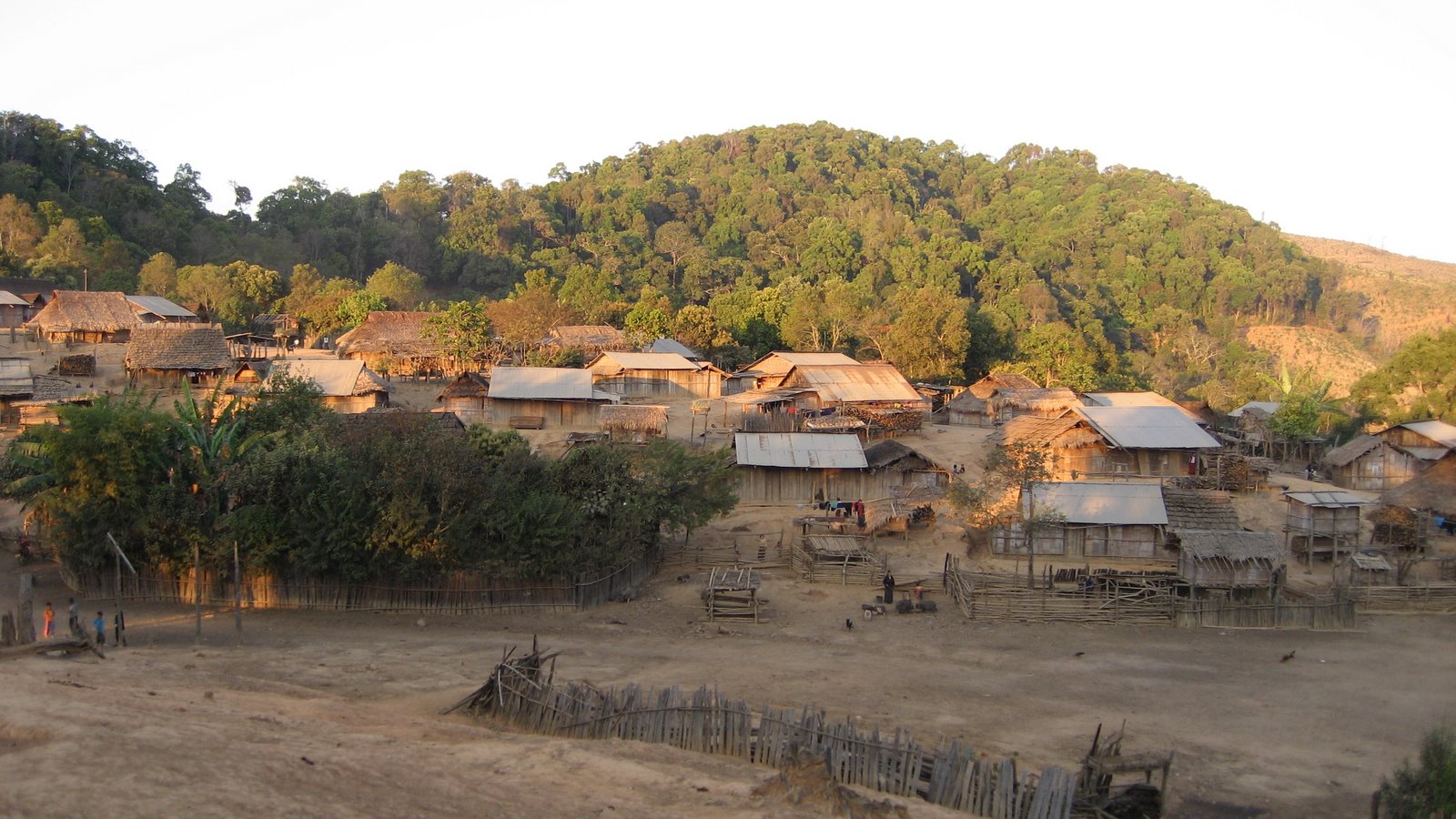 High population growth, limited arable land, and soaring rice prices in Lao People’s Democratic Republic mean that land access is critical for food security. At the same time, there is immense pressure to convert forests and small-scale agricultural land into commercial plantations for rubber, coffee, and other valuable crops. Together, these factors are significant threats not only to people, but to wildlife and biodiversity as well. They are also resulting in the emergence of new tensions between people and wildlife across the Lao landscape.
 -
Weekly Reading
›“Some argue that global demographic trends are progressively pushing the world toward greater peace and prosperity. They are wrong. The risks of both chaotic state collapse and neoauthoritarian reaction are rising,” argue Neil Howe and Richard Jackson in “Battle of the (Youth) Bulge,” published in the National Interest.
A recent online discussion with the Population Reference Bureau’s Jason Bremner covered a variety of topics related to environmental change and migration, including climate change migrants, rural-to-rural migration, and disease vectors.
Rising food and fuel prices could trigger turmoil in Guinea-Bissau, says the latest report from the International Monetary Fund. The country already suffers from chronic food insecurity, reports IRIN News. -
Weekly Reading
›“The term ‘climate refugees’ implies a mono-causality rarely found in human reality,” argue the authors of a report on climate change and forced migration released by the Norwegian Refugee Council. The report’s authors urge additional research on the links between climate change, migration, and conflict, and strongly emphasize the importance of helping developing countries adapt to climate change’s impacts.
According to a report released by the Internal Displacement Monitoring Centre of the Norwegian Refugee Council, the number of internally displaced persons (IDPs) reached 26 million in 2007, despite an overall decline in the number of violent conflicts around the world.
The Philippine government reached a deal with a Muslim rebel group that will expand an autonomous region in the southern Philippines. “The proposed homeland will be entitled to a large share of the resources in the area,” reports the BBC. -
Weekly Reading
›“Women are key to the development challenge,” says Strategies for Promoting Gender Equity in Developing Countries, but “gender mainstreaming has been associated with more failures than gains.” Detailing findings from an April 2007 conference co-sponsored by the Wilson Center and the Inter-American Foundation, the report calls for a redesigned approach operating on multiple fronts. Blogging about the report, About.com’s Linda Lowen dubs the gap between women and men in developing countries a “Grand Canyon-like divide” compared to the “crack in the sidewalk” faced by Western women.
A Council on Foreign Relations backgrounder on Angola—now Africa’s leading oil producer—tackles the familiar paradox of extreme poverty in resource-rich countries. Burdened by “an opaque financial system rife with corruption,” Angola’s leaky coffers are filling up with Chinese currency. As Angolan President Jose Eduardo dos Santos put it, “China needs natural resources, and Angola wants development.” FastCompany.com’s “Special Report: China In Africa” criticizes the overwhelming Chinese presence in Africa: “The sub-Sahara is now the scene of one of the most sweeping, bare-knuckled, and ingenious resource grabs the world has ever seen.”
In Scientific American’s “Facing the Freshwater Crisis,” Peter Rogers writes that the demands of increasing population, along with increasingly frequent droughts due to climate change, signal rough waters ahead, and calls for major infrastructure investments to prevent catastrophe. Closer to home, Circle of Blue reports on a new era of water scarcity in the United States, and director Jim Thebaut’s documentary “Running Dry: The American Southwest” takes a look at the hard-hit region.
Pastoralists are socially marginalized in many countries, making them highly vulnerable to climate change despite their well-developed ability to adapt to changing conditions, reports the International Institute for Environment and Development in “Browsing on fences: Pastoral land rights, livelihoods and adaptation to climate change.” The paper notes that the “high rate of development intervention failure” has worsened the situation, and calls for giving pastoralists “a wider range of resources, agro-ecological as well as socio-economic,” to protect them.
-
Weekly Reading
›In a foreign policy speech on Tuesday attended by several of the New Security Beat’s authors, Senator Barack Obama said the danger posed by the price of oil “is eclipsed only by the long-term threat from climate change, which will lead to devastating weather patterns, terrible storms, drought, and famine. That means people competing for food and water in the next 50 years in the very places that have known horrific violence in the last fifty: Africa, the Middle East, and South Asia. Most disastrously, that could mean destructive storms on our shores, and the disappearance of our coastline. This is not just an economic issue or an environmental concern—this is a national security crisis.”
“The US security community has been looking at environment and security links for much longer than the current attention around climate/security linkages would suggest,” ECSP Director Geoff Dabelko told the Yale Forum on Climate Change & the Media, which published a piece examining climate change and national security earlier this week.
“The next president must strengthen civilian professional capacity to carry out diplomatic and development operations. More funding is needed to address the current 17 to 1 spending imbalance in staffing and resources between defense and diplomatic/development operations, and to reduce the use of contractors in foreign assistance programs,” argues a report from Refugees International, U.S. Civil-Military Imbalance for Global Engagement: Lessons From the Operational Level in Africa.
An opinion piece by Laurie Mazur and Priscilla Huang argues against blaming immigrants for environmental degradation. “Environmental impact is determined not just by our numbers, but by how we use resources—our systems of production and consumption and the policies that shape them,” they write. “It’s laughable to blame immigrants and population growth for traffic, as the [anti-immigrant] ads do, without mentioning, say, our chronic neglect of public transportation.” -
Weekly Reading
›The authors of an article in the most recent issue of Science report that population tends to grow, not decline, around protected areas. Population growth means increased donor funding for conservation programs, they say, but high population density can negatively impact the effectiveness of such programs.
The latest volume of the journal Population and Environment, featuring contributions from former ECSP speakers Lori Hunter, Roger-Mark De Souza, and Judy Oglethorpe, examines the links between the environment and HIV/AIDS in Africa, calling for greater attention to the connections between these seemingly disparate issues.
Population growth rates and conservation are closely and inextricably linked, says a new UN Population Fund fact sheet that argues that slowing growth rates worldwide through family planning programming is a vital, and currently underfunded, component of the fight against environmental degradation.
“Countries have historically been quick to rattle their sabers over water, but they have nevertheless been content to keep them sheathed,” write ECSP Director Geoff Dabelko and ECSP Program Assistant Karin Bencala in “Water Wars: Obscuring Opportunities,” published in the Spring/Summer 2008 issue of Columbia University’s Journal of International Affairs (PDF previews), which focuses on global water issues. -
Weekly Reading
›Mark Jenkins explores the July 2007 murders of the Virunga mountain gorillas in a piece in National Geographic. The piece is accompanied by a stunning photo slideshow by photographer Brent Stirton.
The Toronto Star takes a look at female feticide and infanticide in India, and how young women are now being trafficked from rural areas to serve as brides in areas where the gender gap is widest.
Climate change is responsible for an upswing in malaria in Kenya’s highlands, reports IPS News. “There is a clear correlation between climatic variations and malaria epidemics,” said Dr. Willis Akhwale, head of Kenya’s National Malaria Control Programme.
A New York Times article explores the causes of low birthrates in Europe—and particularly low ones in southern Europe.
The World Health Organization has released Safer water, better health, the first report to provide country-level estimates of the burden of disease caused by unsafe water and inadequate sanitation and hygiene.


